Showing posts with label Action Cameras. Show all posts
Showing posts with label Action Cameras. Show all posts
1/15/2017
Video: GoPro Hero 5 and Karma Drone Launch Video
A few weeks back GoPro announced the launch of its latest line of Hero cameras and its first ever drone – the Karma. What exactly do these new toys bring to the table for adventure filmmakers? Check out the launch video below to get a sense of what they offer. As you'll see, the image quality is stunning and the potential is limitless. The Hero 5 went on sale earlier this week, so if you want one you can grab it now. The Karma will be available on October 23. Interesting times indeed.

11/28/2015
Video: Intova Duo Waterproof Action Camera

Before we go too far, I'll say right of the bat that if you're expecting GoPro level of performance and video quality, this won't be the action cam for you. On the other hand, if you understand that you're getting a solid substitute for a fraction of the price, your expectations will be more in line with Intova's device.
So how much does the Duo cost exactly? It sells for just $49.95, which is considerably cheaper than even the lowest price camera from GoPro. For that price, you'll get a camera that can shoot 720p video footage and shoot 5 mega-pixels till photos as well. It has a battery life of about two hours, a 4x zoom, and it comes with a 1.77" LCD screen for accessing images, video footage, and settings.
As if that wasn't enough, the Duo also comes with a waterproof housing that keeps it safe down to 100 feet (30 meters). That same housing allows the camera to float, which certainly comes in handy when operating around water, when one accidental drop can mean the loss of the device. The camera is very easy to use, both above and below the water, and because the 720p video is fairly lightweight, it is easy to edit on just about any device, including a tablet or smartphone.
The Duo is small, measuring just 2.6 inches (6.7 cm) across and it weighs just 1.6 ounces (46g). That means it easy to toss in a pack and carry with you just about anywhere. It also makes it a great companion device for your other photography equipment, allowing you to capture video and still photographs with ease. And while I personally felt that the video quality of this camera was better than the still photos, the fact that it can take 5MP snaps was nice in a pinch.
Make no mistake, this isn't a camera that will replace a GoPro Hero 4 Black with professional filmmakers, but it is a camera that delivers plenty of quality video for those of us who don't need everything that the high end, $500 GoPro camera offers, or even the $200 Hero Session. The Duo is a great option for those who don't want to break the bank for an action cam, but do want to take something with them on their travels that can capture solid images and is rugged enough to survive in the outdoors.
If you've been looking for an affordable solution to shoot your outdoor adventures, the Intova Duo is a worth taking a look at, especially since it costs less than $50. It is a surprisingly fun camera to use, and I think a lot of people will be surprised at how well it performs for the price.
9/22/2015
Gear Closet: Nikon AW130 Digital Camera
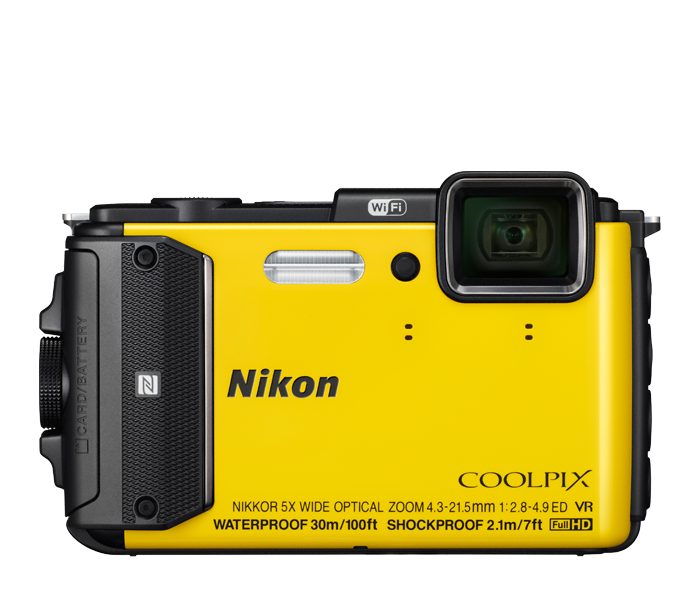
The AW130 is Nikon's most recent generation of rugged camera. I also happen to own the AW100, which is a few years old now, but is still a solid camera to take with me on some of trips. But, the new model shows that Nikon has listened to critics of its earlier models, and has addressed some of their concerns. The results are a camera that has evolved nicely from my older model, while retaining some of the characteristics that made the original stand out.
So what exactly does the AW130 bring to the table for adventure travelers? For starters, it is waterproof down to 100 feet (30 meters), freeze proof down to 14ºF (-10ºC) and drop proof from a height of 7 feet (2.1 meters). Those characteristics alone make it a good option for challenging environments. For instance, I took the camera with me on a kayaking excursion along the Russian River and Pacific Coast in California, and didn't have to worry about getting it wet. It can even shoot photos underwater too. And since it can function in cold weather and is well protected from accidental drops, you'll have a camera that can survive just about anything you throw at it.
This camera isn't just tough however. It features plenty of other useful features too, including a 16 megapixel sensor, a 3" OLED display, and a 5x glass zoom. It also has a built-in GPS receiver for geotagging photos, as well as WiFi and NFC connections for sharing images with your smartphone or tablet. The AW130 is capable of shooting five images per second, and can capture video at full 1080p resolutions. As if that wasn't enough, it also has onboard vibration reduction for steadier photos and video, as well as a fast autofocus that is always ready to shoot.
The design of the camera makes it easy to hold in your hand, even when you're taking part in active sports. It has an small, but useful, textured grip that comes in handy in slick conditions, and the buttons and switches are all large enough that they can be easily operated, even while wearing a pair of gloves. The operating system is typical for point and shoot cameras, which is to say it isn't overly intuitive, but it is fairly easy to find what you're looking for on those rare occasions when you need to go delving into its menus.
Putting the camera to the test in the field, I found it to be a solid point and shoot that was responsive and quick. It is easy to use, and snapping photos is a lot of fun in general with the AW130. The fact that you know you can take it with you anywhere is big plus, as its rugged design brings a nice sense of freedom about how and where you can use it.
In terms of image quality, the photos taken with the AW130 are good, but won't necessarily blow you away. In fact, there were times when I felt my iPhone did a better job of capturing a similar image, with better color reproduction and less noise. On the other hand, there were also times when the Nikon's zoom and glass lens took better photos as well, so performance is certainly impacted by the location and setting. All in all, you won't be disappointed by the photos taken by this camera, just don't expect DSLR levels of quality.
The battery life on my old AW100 was always a bit of a disappointment. It tended to run out of power at the most inopportune times, and far too quickly for my liking. That has been addressed in subsequent generations to a degree however, as I found the AW130 to have far better battery life than my older model. Of course, certain features such at GPS can really kill the battery quickly, so its best to turn it off unless you absolutely need the geotagging features or plan on recharging the camera regularly. Nikon says the AW130 can take 370 photos between charges, but that number drops substantially with GPS or even WiFi use.
The camera's 5x zoom is another source of irritation for me. On the one hand, I'm glad that it has any kind of mechanical zoom, as I far prefer it to digital zoom on any camera. But 5x is hardly anything to get too excited about, and I would have liked to have seen a longer zoom added to the latest model of Nikon's rugged line-up. But, some limitations come along with the design. If you want a waterproof camera, you'll need to make sacrifices in other areas, and this is one of them. Adding something with a longer zoom would compromise the ability to survive in water, which is ultimately one of the main functions of this camera.
Indeed, the one thing you constantly have to keep in mind when it comes to the AW130 is that in making it rugged and durable, Nikon had to make compromises elsewhere. If you want a better camera in terms of speed, features, battery life, and image quality, there are plenty of point and shoots on the market that will fulfill those needs, with most costing less than this one. But if you truly need a camera that can survive in the outdoors, and take very good photos along the way, this is great option.
Personally, I tend to carry the AW130 (or AW100) with me a secondary, companion camera. Depending on the trip, I'll take my DSLR and this one, as they compliment one another quite well. It also happens to make a good companion with a smartphone, surviving in places you'll want to keep your mobile device away from, while being able to share images wirelessly. As a stand alone camera it is still versatile enough to get the job done, just know ahead of time that you'll be trading some functionality in favor of ruggedness.
Wit its $300 price tag, the AW130 is on the more expensive side of the P&S market, particularly as that segment continues to be eaten away by smartphone usage. But, that price delivers a camera that is very rugged and built to survive in some very demanding environments. In the end, that's exactly what you're buying the AW130 for, and recognizing that ahead of time hells to make it the right tool for the job in most instances.
The bottomline is that this is the camera you want with you when white water rafting through the Grand Canyon, skiing in the backcountry, or hiking in the desert. It can handle each of those roles with equal aplomb and capture some good photos of those journeys as well. This is a camera made for those of us who have to leave our smartphones at home, because quite honestly they just won't survive where we're going.
1/03/2015
Adventure Tech: GoPro Unveils the Karma Drone at Long Last
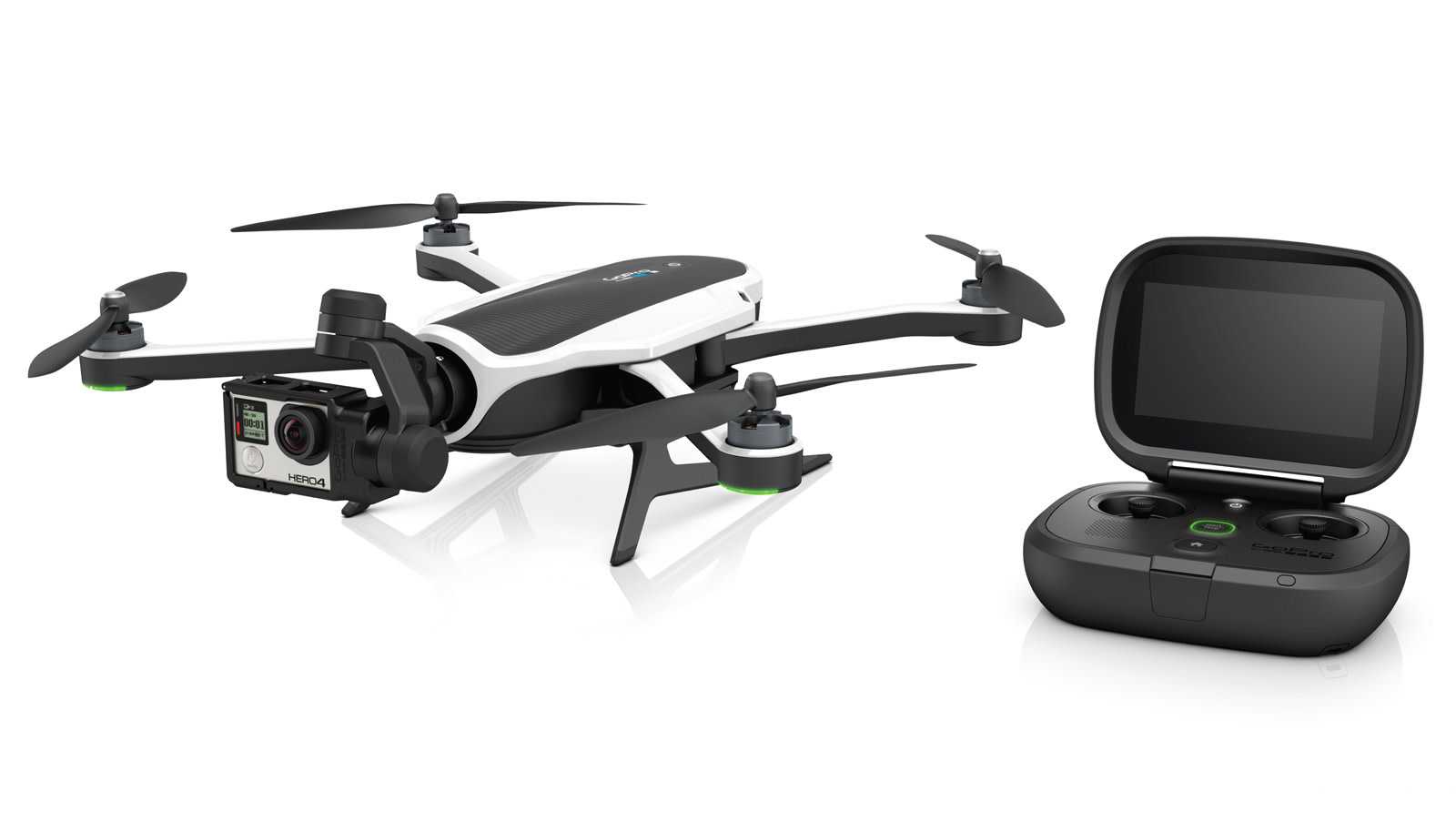
By now, we all know what a drone is, and how it can be used in a variety of ways. Over the past few years, the drone market has matured dramatically, with companies like DJI leading the way. But this is GoPro's first foray into UAV's, and in order for the company to make a dent in the industry – and possibly reverse its flagging fortunes – it knew that had to deliver something different and unique. Was the Karma worth the wait? We'll have to hold on a bit longer to know for sure, but it certainly is intriguing.
The Karma is a small, sleek looking quadcopter with a foldable design that makes it easy to transport. It comes with its own custom built controller, complete with a touchscreen built right in. The controller is said to be very beginner friendly, and the drone has a number of autonomous features that help to make it easy to fly. Still, it doesn't appear to have anything close to the level of independent control as something like the DJI Phantom 4, which is equipped with a host of sensors to allow it to safely navigate on its own without a pilot.
Being a camera company first and foremost, GoPro clearly put a lot of thought into capturing outstanding footage from its other devices. With that in mind, the Karma comes with a specially built 3-axis stabilizer designed to hold an action camera. This stabilizer can also be removed and attached to a new product called the Karma Grip, which can be mounted on a vehicle or held in your hand to get great, super-stable shots as well.
One area that the Karma may score big over its competition is in price. The drone on its own will retail for $799, which is a good price for something as small and transportable as this UAV. There will also be a $999 bundle that will include the new Hero5 Session camera, and a $1099 version that will come with the new Hero5 Black, both of which were announced today too. It isn't clear when the drone will be available for sale, but it is expected to hit the market in late October.
In terms of what these new cameras bring to the table, those looking to upgrade will have some intriguing incentives to do just that. The Hero5 Black comes equipped with 12MP sensors, voice control options, a 2" touchscreen, electronic image stabilization, 4K video at 30 fps, and possibly even GPS baked right in. Best of all, it is now waterproof without the need for an additional housing. The smaller, more affordable Hero5 Session shares most of these same features, but has a 10MP sensor for photos and video instead. Both will ship on October 2.
Both cameras now have the ability to automatically upload video to the cloud for sharing and editing as well. This new service gives you access from just about any computer, smartphone, or tablet, but will require a subscription fee to use.
I'm looking forward to seeing how he Karma performs and get some reviews. It definitely looks intriguing. As for the new cameras, they received some nice upgrades, but appear to mostly be evolutionary steps. I'm sure they'll continue to perform up to GoPro's high standards.
Subscribe to:
Posts (Atom)