Showing posts with label Alaska. Show all posts
Showing posts with label Alaska. Show all posts
9/18/2017
Video: Official Trailer for "Crisp" - A Film About the Iditarod Trail Invitational
The Iditarod Trail Invitational is an epic test of endurance. For those not familiar with the event, it is a 1000-mile long bike race through the wilds of Alaska that takes place each March at the same time as the Iditarod sled dog race. This video is a preview for a new film called Crisp that follows riders Ausilia Vistarini and Sebastian Favaro as they compete in this unique, one of a kind, and incredibly demanding event.
Crisp - Official Trailer from Explore MediaLab on Vimeo.

6/11/2017
Two Adventurers Attempting Winter Traverse Of The Brooks Range
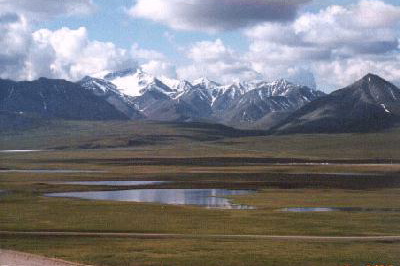
On Tuesday, January 7, John Cantor and Evan Howard began what will eventually be a two-month long expedition that will cover approximately 1700 km (1056 miles) of total distance. Traveling on dogsleds and skis, while pulling sleds filled with supplies and gear behind them, they will attempt to make the first winter traverse of the Brooks Range. They set off from the village of Kotzebue and hope to eventually wrap things up in Kaktovik, provided the weather cooperates with them over the next eight weeks.
John and Evan are posting updates to their Facebook page and two days in, they are already finding the expedition to be tough going. So far, strong headwinds have made it difficult to make much progress, and John has indicated that it has been even tougher than they had anticipated. Considering where they are at, I would expect they'll face similar conditions in the days ahead, but hopefully they'll get their legs under them after a week or so on the trail. Much like traveling in the polar regions, I'm sure it'll take some time to acclimate to the conditions.
Last year, the two men went on a training expedition to the Brooks Range to get an understanding of what they'd be dealing with. The video below is footage from that exploratory excursion. It looks like a beautiful place but also one that will be testing them at every step of the way.
Thanks to reader Jack McClure for sharing this great adventure.
5/03/2017
Video: Exploring Alaska from Above with Paraglider Paul Guschlbauer
Paul Guschlbauer is an Austrian paraglider who traveled to Alaska – one of the world's last great frontiers – to explore the region from above. What he found there was an epic wilderness that remains remote and untamed, even in the 21st century. Paul flew across this amazing place in a 60-year old airplane, finding beautiful landscapes and amazing adventures along the way. This short video takes us along for the ride, and will leave you wanting more. See Alaska the way the famous bush pilots do, and marvel and just how spectacularly beautiful the state truly is.
2/20/2017
Help Expedition Alaska Crowdfunding Efforts, Get Some Cool Gear

The race was filmed by a talented crew of faculty and students from the University of Cincinnati, which has a unique and innovative Production Master Class that is taught by CCM Professor Kevin Burke, DAAP Professor Yoshiko Burke and UC/CCM Alumnus and Emmy award-winning producer Brian J. Leitten. That group spent days in the field filming the race, capturing some amazing footage in the process. Now, they're looking to crowdfund a documentary, offering adventure racing fans a look at this amazing event.
A few days ago, the team behind the documentary launched an Indiegogo campaign to raise $25,000 that will allow them to finish the project and produce 4 half-hour long episodes that show the drama and challenge of Expedition Alaska. There are multiple levels of pledges to be had - starting as low as $5 – which deliver some great perks to those who contribute to the cause. Those perks include everything from copies of the finished product, digital downloads of a "making of" documentary, and even some excellent outdoor gear.
In an effort to help out the cause, I am donating some gear to help raise funds. In fact, there is a special "The Adventure Blogger" perk for someone who is willing to donate $500 to the campaign. If you select this perk, I will send you a mystery gear package that will definitely exceed the amount that you are contributing. You'll also receive all of the other perks that fall below that funding level too.
The video below is the trailer for Expedition Alaska, and gives you a good idea of what to expect from this project. If you'd like to learn more, check out the Indiegogo page here.
2/19/2017
Winter Climbs 2017: Climbers in Base Camps and Moving Up

Last week, the small group of climbers, support staff, and documentarians arrived in Base Camp on Everest, and immediately went to work establishing a base of operations there. It did't take them long to get ready however, and within a few days they were already moving up the mountain to begin their acclimatization efforts. The team then spent four days building a route through the treacherous Khumbu Icefall, before they were then presented with favorable weather conditions that allowed them to move up further.
Taking advantage of these good conditions, the climbers moved through the Icefall and up to 5870 meters (19,258 ft), where they spent the night at a provisional location. The following morning, they continued up to 6050 meters (19,849 ft), where they established Camp 1. Since then, they have climbed a bit higher as they scout the route, install ropes, and work to reach Camp 2 further up the slopes.
Reportedly, the climbing is even more difficult and demanding than they had thought, but things are proceeding according to plan. They should return to BC for rest shortly, but are continuing to try to make progress while the weather cooperates. For now, they are happy with how things are going, and the idea of a winter ascent of Everest remains a very high possibility.
Meanwhile, Elisabeth Revol is now in Base Camp on Manaslu too, where she reports heavy snow making progress very difficult. In fact, she says that it has snowed there everyday since the start of January, with 2.5 meters (8.2 feet) of accumulation over that time. Despite that however, she says that everything is going well and as expected on a winter expedition to the Himalaya. There is now indication yet of how much progress they are making in moving up the mountain however.
Finally, the last time we checked in on Lonnie Dupre he was just arriving on Mt. Hunter in Alaska in preparation for a solo winter ascent of that difficult peak. In the brief time I was away, he has already called off that attempt however. It seems that Lonnie made two attempts on the summit, both of which were thwarted by conditions, before taking a nasty fall. That was enough to convince him that it was time to pull the plug and consider some other projects instead. The polar explorer and mountaineer is currently in Canmore, Alberta where he is regrouping, considering what he could do differently, and preparing for some other adventures. Hunter won't be climbed during the winter this season it would seem.
You may recall that Lonnie made a solo ascent of Denali in January a few years back, going up that mountain in alpine style. During that expedition he eschewed the use of tents and used snow caves instead. He had hoped to make a similar approach to Hunter, which isn't as tall as Denali, but is considered more technical. Unfortunately, the mountain was able to win this round, but something tells me Dupre may be back to give it another go in the future. For now though, one of the winter expeditions that we were watching closely is already over.
More updates to come as the remaining teams make progress.
1/13/2017
Video: A Thin White Line - A Documentary of the Iditasport Adventure Race
In terms of impressive feats of human endurance, the Iditasport trail race has always been intriguing one. It pits athletes against one another as they travel on bike, skis and foot to follow the entire 1000-mile route of the Iditarod sled dog race. It is a grueling and demanding race, which you'll discover for yourself in this hour-long documentary on the 2001 edition of the race. This is one you'll want to grab a snack and get comfortable for. It is definitely well worth watching!
A Thin White Line from Brüdder on Vimeo.
1/04/2017
Video: Meet The Bush Pilots of Ketchikan
Even in the 21st century there are plenty of places in Alaska that remain cut-off from the rest of the world. The wild and expansive landscapes of that state makes it impossible to build a road system that can accommodate everyone. That's why so many people own airplanes there and use them to fly between destinations. In this video, we meet some of the bush pilots of Ketchikan, which have a reputation for being able to fly anywhere, anytime, and do it with style. This short documentary tells their story, and offers some amazing looks at the great scenery that is so common in Alaska. Get comfortable for this one, you're going to want to watch it all the way through.
Ketchikan: The Bush Pilots from Ketchikan Visitors Bureau on Vimeo.
9/25/2015
Video: Whale Encounters Don't Come Any Closer Than This!
We've seen some interesting whale encounters captured on video over the years, but none of them are as close as this one. A feeding humpback wandered into Knudson Cove in Ketchikan, Alaska and when it breached it was right inside the harbor. It isn't often that you see a whale this closely, let alone capture it on video. Wow!
6/03/2015
Brooks Range Traverse Cancelled

Early on, John and Evan admitted that the conditions were more challenging than they had expected. Posting to their Facebook page, the hinted that the extremely cold temperatures and high winds were making progress incredibly difficult. But as the week progressed, they seemed to hit their stride to a degree and gained confidence in their ability to make progress across the arctic landscape they were passing through. Weather conditions improved a bit as well, with the winds dying down to a degree.
But last night, they posted a new update that indicated that Cantor had contracted frostbite in one of his fingers early on and it has continued to worsen over the days. If he were to stay out on the trail, there is the real possibility that he could lose the finger altogether, and put both himself and Evan at greater risk. On top of that, the chance of a rescue operation being safely conducted in their remote location became a factor too. So, with that in mind, they decided the wisest option was to pull the plug and head home.
This is a good reminder that not all expeditions are successful. The world is still filled with wild and difficult places, and the Brooks Range is one of them. The conditions there are trying at the best of times, and during the winter they are all but inhospitable. I'm sure John and Evan are disappointed in having to go home, but it sounds like it was the right decision.
3/13/2015
Video: Adventure Travel in the Alaskan Arctic
I came across this video on Richard Bang's YouTube Channel and thought it was worth sharing. It is a short film made be adventure traveler Connor Callaghan, who takes us along with him to Alaska where we enjoy a taste of some of the amazing scenery and activities that are available there. Alaska happens to be one of my favorite destinations, as it is brimming with great opportunities for outdoor adventure. Take a look at the clip, then put it on your list of places to see.
3/07/2015
Video: Crisp - A Film About Mountain Biking The Iditarod Trail
Yesterday I posted a video from the 2001 Iditasport adventure race along the Iditarod sled dog trail. In the years since that video was made, the event has morphed into the Iditarod Trail International, which is amongst the most grueling endurance events in the world. Last year, European mountain bikers Ausilia Vistarini and Sebastiano Favaro took on the 1800 km (1100 mile) trail in the dead of winter. It tested their resolve and pushed them to their limits as they rode their bikes through one of the harshest winter environments on the planet. The creative team and Explore MediaLab made a documenter about that experience and the trailer for the film can be found below. It looks amazing.
Thanks to Filippo Salvioni for sharing this with me!
Crisp - Official Trailer from Explore MediaLab on Vimeo.
Thanks to Filippo Salvioni for sharing this with me!
2/19/2015
Video: Lonnie Dupre Approches Base Camp on Mt. Hunter
One of the winter climbs that we'll be following closely in the days ahead is Lonnie Dupre's attempt to summit Mt. Hunter in Alaska. Yesterday, he arrived in Base Camp, having been delivered there by bush plane. He also posted this video of the approach so you can get an idea of what he'll be facing in the days ahead. Hunter is a technically difficult mountain to climb, and as you can see there is plenty of snow to contend with too. This isn't going to be easy, but that's why he's doing it. More updates to come soon.
1/19/2015
Video: The Problem of the Wilderness in Alaska
Take a scenic journey through Alaska with this video, which is set to a famous quote from Bob Marshall called The Problem of the Wilderness. His words are extremely fitting as we wander through some of the most beautiful landscapes on Earth. Alaska is an amazing place, with a wilderness like no other. It is a place that anyone who values truly wild places should see but for today, we'll just have to settle for this video. Enjoy.
The Problem of the Wilderness from Tom Welsh on Vimeo.
1/04/2015
Lonnie Dupre Headed Back to Alaska for Winter Climb of Mt. Hunter
.jpg/1280px-Mt._Hunter_from_NW_(Kahilta_Base_Camp).jpg)
In January, Dupre will travel to the Alaska Range to attempt to scale Mt. Hunter, perhaps the most technical of all the peaks within the national park, and one of the toughest in North America. The 4441-meter (14,573-foot) mountain is known for its very steep slopes and heavily corniced ridges, which can make an ascent at any time of the year treacherous. In winter, climbers also face harsh weather conditions as well, including heavy snow, high winds, and subzero temperatures.
Those conditions are nothing new for Dupre however, who has traveled in many of the extreme locations of out planet during the winter. His experience on Denali (it took him several attempts to complete that climb) will pay off here as well, although he'll be facing even more difficult climbing conditions, although the Mt. Hunter isn't nearly as tall.
Dupre has dubbed this expedition "Cold Hunter One," and he aims to head toward the mountain in the first week of January. From there, he'll begin making the ascent in alpine style, carrying all of his gear and supplies with him as he goes. Of the expedition he says: “This project is the culmination of all my years of experience wrapped into one challenge, where every ounce of food, fuel, gear and clothing matters.” He goes on to add, “All calculations are based on the absolute minimum my body needs to survive. I’ve allowed 4 days for storms; weather will be a leading factor to the success of the climb."
We can add this expedition to our list of major winter climbs this year, along with the just announced attempt by Alex Txikon on Everest without bottled oxygen. Both should be interesting to watch unfold.
11/04/2014
Winter Climbs 2017: Expeditions Now Underway

Spanish climber Alex Txikon and climbing partner Carlos Rubio, along with a small support team, spent the New Year in Nepal, where they are currently trekking to Everest Base Camp. They plan to climb the highest mountain on the planet during the toughest season of them all. Alex and his team arrived in the Khumbu Valley on December 29, and have slowly been making their way towards Everest ever since. The trek is the start of the acclimatization process, but they should reach Base Camp later this week. Once there, they'll likely spend a day or two getting settled and surveying the landscape before they start the process of moving through the Khumbu Icefall and traveling up to Camp 1 as the climb truly begins.
Meanwhile, Elisabeth Revol has set her sights on climbing Manaslu during the winter. She trekked to BC on that mountain last week, and arrived there on December 28. Since that time, she's been focused on acclimatizing and getting settled in preparation for her first rotation up the mountain, which should come soon. Elisabeth says that conditions are cold and windy, as you would expect in the Himalaya during the winter months.
Solo climber Lonnie Dupre is preparing to depart on his winter expedition as well. Dubbed Cold Hunter One, he plans to climb the 4441 meter (14,573 ft) Mt. Hunter in Alaska, which is a cold, remote, and technically difficult mountain in just about any season, let alone winter. You may recall that Lonnie made a solo summit of Denali in January a couple of years back, and he expects this expedition to be just as challenging, despite the big difference in altitude. He is preparing to depart for Base Camp today, weather permitting. As usual, he'll catch a bush plane out to this starting point when conditions allow.
Finally, ExWeb is reporting that a pair of climbers have launched a winter expedition in the Karakoram as well. Qudrat Ali and Samiya Rafiq first planned to take on an unclimbed 6200 meter (20,341 ft) peak in the region near Khurdopin Pass. The two climbers will then push on up through that pass as well, which is the highest in the mountain range at 5790 meters (18,996 ft). Conditions are expected to be brutal with temperatures dropping as low as -30ºC/-22ºF, with high winds and heavy snow likely. The expedition began back on December 24, and is set to wrap up on January 12, so it is a brief but tough excursion into the mountains.
That's it for today. Expect more updates on these expeditions as the season unfolds.
7/17/2014
I Am Alaska Bound!

This trip kicks off what will be a busy few months for me in terms of travel. I will be updating the site as often as I can in the weeks ahead, but there will be some extended periods from time to time when I'll be off the grid and unable to post. But stay patient and I'll share all the new from the world of outdoor adventure and exploration as much as I can.
While I'm away, I hope you get outside and enjoy some adventures of your own. Now is a great time to be riding, running, hiking, camping, and exploring. Have a great time, and I'll be back before you know it.
4/19/2014
Video: Snowboarder Xavier De Le Rue Paramotors into the Alaskan Wilderness
Extreme mountain snowboarder Xavier De Le Rue is well known for going to great lengths to reach some of the most remote areas of the world. In this video, he shows that spirit once again as he and his team use paramotors to fly into the Alaskan wilderness to reach places that no one has ever snowboarded before. This is certainly a unique way to travel, and very different from taking a helicopter into the backcountry, which is the way many of these videos are shot. In the clip below, you'll fly along with Xavier and his crew through some beautiful landscapes before they drop off and snowboard down some incredibly steep slopes. It is an impressive display all around.
3/13/2014
Video: Bagging an Unclimbed Peak in Alaska
In May of 2015, Austrian mountaineers Hansjörg Auer and Much Mayr traveled to the Neacola Range in Alaska to take on Mt. Reaper, a previous unclimbed peak in a remote region of that state. The two men found conditions to be great for climbing, and made their ascent along a route called "Sugar Man" (M7, 85°, A1, 750m). In this video, we join them on the mountain as they make their way up. It is a wonderful look at the challenges they faced in a place that has rarely been visited by man and still has dozens of mountains that have not been climbed before.
Hansjörg Auer and Much Mayr - 'Ice like Sugar' - Mt. Reaper - Alaska 2015 from Hansjörg Auer on Vimeo.
2/09/2014
Video: Exit Glacier in Alaska - A Tale of Shifting Fortunes
Located in the Kenai Fjords of Alaska, Exit Glacier has been a beautiful fixture for adventurers for decades. But, the glacier is now in full retreat, and as you'll see in this video it is doing so at an alarming rate. What once took years to accomplish now takes just months, and the changing nature of the surrounding area is having a profound impact of the environment there. At this rate, Exit will shrink to a mere fraction of its former size well within our lifetime, and there doesn't seem to be much we can do about it.
This video seems appropriate for Inauguration Day, when a President who isn't exactly committed to stopping climate change is taking office.
GLACIER EXIT from Raphael Rogers on Vimeo.
This video seems appropriate for Inauguration Day, when a President who isn't exactly committed to stopping climate change is taking office.
2/04/2014
Video: Kite Skiing in Alaska
If you've read my updates on the progress of the explorers in Antarctica this season, you've no doubt seen a few mentions of kite skiers out on the ice. What is kite skiing actually? It is the use of a large kite to catch the wind, and pull you along across the snow and ice. If wind speeds are good, it can provide a lot of speed, allowing skiers to cover surprising distances in a short amount of time.
In this video we travel to another frozen landscape, as we follow skier Damien Leroy to Alaska where he does some kite-skiing of his own. In the two-minute clip you'll get a chance to see how kite-skiing works, and just how fast it can propel someone along. The results just might surprise you.
In this video we travel to another frozen landscape, as we follow skier Damien Leroy to Alaska where he does some kite-skiing of his own. In the two-minute clip you'll get a chance to see how kite-skiing works, and just how fast it can propel someone along. The results just might surprise you.
Subscribe to:
Posts (Atom)