Showing posts with label Technology. Show all posts

12/23/2017

Gear Closet: Travel Tech From iClever

As someone who travels frequently for his job, I'm always on the look out for new items that can help make my life on the road more convenient and enjoyable. That often takes the form of some new tech gadget that is designed specifically with travelers in mind. Recently, I received a number of products from a company called iClever that definitely meet that description, delivering some great features at prices that are very affordable. Here's some thoughts on what I tested.

USB Wall Chargers (Prices Vary)
When traveling these days we usually carry a variety of tech gear with us. Everything from smartphones to tablets to digital cameras, not to mention portable game systems, e-readers, GPS devices, and host of other items. While each of them are wonderful for helping us to stay informed and entertained while on long flights or spending time in a tent, those gadgets are only useful as long as they can hold a charge. Fortunately, practically everything these days is charged using USB cables, and iClever offers some excellent wall chargers to help keep your technology up and running.

I received the 4-port BoostCube and 2-Port BoostCube, both of which function pretty much identically, other than the number of gadgets they can charge at the same time. Both of the chargers have SmartID technology that automatically detects the fastest speed your device can be charged, and adjusts the wattage provided accordingly. They both also have the ability to provide 2.4 amps per port, which means your gadgets will be powered up as quickly as possible. Similar devices from competitors often split the power between ports, increasing charge times as a result.


Both models of the BoostCube offer great build quality and feel great in your hand. They're also durable and include foldout power plugs for inserting them into wall outlets. They are also priced perfectly, with the 4-port model selling for $17.99 while the 2-port version is just $10.99.

Additionally, iClever also has a single port version called the BoostCube Quick Charge, which has the ability to power up a device up to four times faster than regard chargers. It uses a special process that is safe for your gadgets, and can power them up to 80% of their full charge in as little as 35 minutes. When you need to get your phone up and running as quickly as possible, this is the charger you'll want. And at $16.99, it is affordable too.

All of the chargers come with a full year warranty and work great. In fact, I've gotten to the point where I leave my devices' OEM chargers at home and just carry iClever's versions with me instead. Because they are small, compact, and easy to use, they make great travel accessories for sure.

Tri-Folding Bluetooth Keyboard ($54.99)
As a travel writer who routinely finds himself in a remote destination, I'm always looking for ways to cut weight from my bags. For instance, I often like to leave my laptop at home and just take my iPad along with me instead. The problem is, the onscreen keyboard isn't always the best for getting serious work done. That's where the iClever Folding Bluetooth Keyboard comes in handy.

This product is lightweight, yet very durable. So much so, that I wouldn't hesitate to take it with me anywhere I'm going. The keyboard is cleverly designed to fold up into a surprisingly small footprint, but when it is opened it transforms into a full-sized keyboard. The device actually allows me to easily get work done, using productivity apps on my tablet to write stories and articles, take notes, even compose emails.

The keyboard comes with a built-in rechargeable battery that takes about 4 hours to fully power up, but can provide up to 80 hours of actual wireless use. It can also be connected to your laptop or desktop computer via USB to serve as a standard keyboard for those devices too. It even has a fantastic backlight mode (with three different colors) that makes it easier to use in the dark. But the backlighting eats into the battery life, so I tend to work with it off.

iClever sells the keyboard for $54.99 and ships it with a soft carrying case, making it even easier to take with you on the road.

Outdoor Wireless Speaker ($29.99)
These days, Bluetooth speakers are a dime a dozen, with plenty of good options for consumers to choose from. But iClever's Outdoor Wireless Speaker offers a few nice features that help set it apart from the competition and make it a good option for travelers and outdoor enthusiasts. For instance, it is lightweight, compact in size, and offers IP65 water resistance. That's enough protection from moisture that you can even use it in the shower if you'd like.

The speaker comes equipped with a rechargeable lithium-ion battery that can power it for up to 10 hours. It offers solid performance with clear playback of music across the full audio spectrum, even at higher lives of volume. And since it is built to survive in the outdoors, you can take it with you to the beach, a remote campsite, or for use around a hotel room without fear of damaging it.

What I like most about this speaker is that it isn't overly large or heavy, which means you can toss it into your pack without really realizing that its there. And while it offers solid battery life, I wouldn't mind getting more hours out of it so I don't have to worry about it running out of juice while in the backcountry. But the price is great and the performance is very good too, making it a great travel buddy for sure.

Find out more about all of these products and more at iClever.com.

11/09/2017

Gear Closet: ASAP Dash - The Fastest USB Battery Charger On the Market?

For me, one of the most life-altering pieces of technology that has appeared in my lifetime is the smartphone. Sure, mobile phones existed before the iPhone and Android appeared on the market, but those devices, coupled with great mobile operating systems and a creative app ecosystem, have fundamentally altered the way we work, play, and communicate on a daily basis.

But if those gadgets still have one fundamental flaw, its the with their battery life. As we use them throughout our day, they can run out of charge very quickly, ending up useless. Fortunately there are a wide array of portable USB battery chargers on the market that give us a quick boost of power when we start to run low. The downside of most of them however, is that they are yet another device that we need to keep charged, and if you've ever used one, they can take awhile to gather power too.

Enter the ASAP Dash, a portable USB charger that promises to be the fastest charging battery pack the market. The device is currently in the crowdfunding stage, but is well on its way of achieving the $30,000 goal that its designers need to get it into production. What sets the Dash apart from the competition is that it can save enough power to recharge an iPhone in under five minutes, or completely fill its 5000 mAh battery in just 15. That means you don't have to wait long for it to be ready, which is different from most other battery packs that I've used, which can often take hours to fully charge.

So how does it do it? Well, unlike most other portable chargers, the Dash doesn't rely on a slow micro-USB port to provide it with energy. Instead, it ships with a high capacity adapter of its own, which is capable of filling the internal battery in a matter of a few minutes. The final product will even ship with a car adapter so you can fill it up while on the road too.


In terms of design, the ASAP Dash is sleek, small, and light. It is also very rugged, and has been build to survive a drop of more than one meter, with its anodized aluminum shell keeping it safe from harm. That makes it great for travel, where weight and durability are always an issue.

I got the chance to test an early prototype model, and came away very impressed. The actual build quality of the Dash is quite nice, and it looks very classy. My model didn't quite charge as quickly as the final version, but it was close enough to get the idea of how it will function once everything is finalized. Is it fast? Most certainly so. My test unit came with a half-charge, and I was able to fill it up completely in well under ten minutes. That's not something I can say about any other charge I've used in the past.

Its clear that a lot of attention was put into the details of the Dash. For instance, in addition to the adapter charging port, there is also a micro-USB port as well, which will allow you to charge it the old fashioned way, albeit at a much slower pace. The standard USB port that is used for charging your devices is also of the smart variety, which means it auto detects the fastest speed your smartphone or tablet is capable of gathering a charge, and tunes its flow of power accordingly. And since it has 3 Amps of power, it can recharge your devices very quickly too.

That's not to say there isn't room for improvement in the ASAP Dash. For instance, I would have preferred to have two USB ports for charging rather than one so that you and a friend can use it at the same time. That's fairly standard on most chargers these days. And while the 5000 mAh battery is capable of charging most smartphones up to three times, it will hardly put a dent in the battery life of a tablet. I'd like to see a higher capacity Dash at some point down the line so I can share the rapid-charging love with my iPad too.

The Indiegogo campaign for the Dash has been underway for a few days now, and it is already more than 80% of the way towards its goal. If you order one while in the crowdfunding phase, you can get the charger for just $69. When the Dash hits retail in June it is expected to sell for $119, so this is a real bargain.

Find out more at ChargeASAP.com and in the video below.


9/25/2017

15-Year Old Canadian Boy Discovers Lost City in Mexico

A 15-year old boy from Quebec is making headlines today for discovering a lost Mayan city in Mexico. The boy used knowledge of ancient astronomy and Google Earth to locate what appears to be remnants of the civilization that thrived across Central America 2000 years ago. 

While looking at maps of the locations of Mayan cities, William Gadoury learned that those cities lined up with the constellations in the sky as they appeared when the Mayan civilization was flourishing. Using that knowledge, he then began searching satellite imagery on Google Earth looking for structures in specific locations, discovering that one city that should have lined up with a specific star was missing. But after careful examination of a spot in the Yucatan Peninsula, he was able to identify what appears to be man-made object hidden under the dense jungle there.

The actual existence of the lost city has yet to be confirmed on the ground, but other researchers are hailing the discovery as a significant one, and are giving William the credit. Experts say that it appears that there are quite a few man-made structures hidden under a thick canopy of vegetation, including buildings, a road, a town square, and possibly even a pyramid. 

 The teenager has named the city K'aak Chi, which means "Mouth of Fire," and he will present his findings at a scientific gathering in Brazil next year. Meanwhile, archaeologists are already applying his technique of matching star charts to maps in hopes of finding other lost cities as well. 

This is another amazing story that reminds us that there are some things that are still hidden away from us, even in the 21st century. It's hard not to be impressed with this young man and his ingenuity. It's a wonder that no one else has discovered the connection between the stars and the Mayan cities before. 

9/23/2017

Gear Closet: Under Armour Bluetooth Wireless Earphones

One of the most popular running accessories amongst my friends in recent months has been wireless Bluetooth earphones. Most of us run with our smartphones these days, listening to music, audiobooks, and podcasts while we workout. But the cable that runs from our earbuds to our mobile device can be annoying at times, and often gets in the way. Wireless headphones eliminate this issue however, bringing a very high level of convenience, while also introducing some challenges of their own. 

Over the past couple of years, I've had the opportunity to test several different models of Bluetooth headsets designed specifically for runners. I've come to love the freedom that these types of headphones bring to the table, but have often found battery life to be a bit underwhelming. Recently, there has been a new entry into this increasingly crowded market, with Under Armour and JBL joining forces to release their own take on the wireless sports earbuds, and for the most part I'm very happy with the results. 

The first thing I noticed about the somewhat generically named Under Armour Headphones Wireless is the build quality. These earbuds feel incredibly solid in your hands, which seems fitting for a product that is meant to be used by frequent runners. We all know that we abuse our gear while out on the run, but these earphones are designed to shrug off the rigors of the road. Additionally, they are also water and sweat proof, keeping the tiny electronics inside safe from the elements. 

Paring these earphone with your mobile device vis Bluetooth is just as simple as you would expect, and takes only a few seconds to complete. Once the pairing process is done, the headphones will automatically connect to the audio device when it is turned on in the future, eliminating the need to repeat the process moving forward. The wireless connection between these earphones and my iPhone was strong, with very few distortions or dropouts. On two occasions (out of dozens of times using these earbuds) I actually had them disconnect from my phone, forcing me to turn them off and on again to re-establish the audio link. 

Unlike most other sports earbuds that I've tried, the Under Armour model only came with two sets of silicon covers that are meant to help find the perfect sizing for your ears. Competitors typically come with five or more, so I was somewhat dubious that they would fit correctly. The larger sizers were too large for my ears, but dropping down to the smaller covers did the trick nicely. Once twisted into place inside my ear, they molded to my personal contours and felt great. The fit was snug and comfortable, and exactly what you would expect from your earphones. 

That said, Under Armour and JBL offer a "guarantee" that these earbuds won't fall out no matter how vigorously you're moving. That hasn't exactly been the case for me, as I've had them bounce out on more than one occasion, and I routinely find myself adjusting the fit in my ear to keep them in place. Eventually I find just the right positioning, and they tend to stay in my ears at that point, but it can take a bit of fidgeting at times to make them work as advertised. Of course, everyone's ears vary in size and dimensions, so you may not find this to be a problem at all. 

These earphones are a bit larger than most other wireless models that I've tried, which some may find a bit distracting while out on a run. I equate that extra bulk to a larger battery, which extends the time between recharges out to 8 hours. That's better than most of the competition, and I've found that in real world testing, I could actually extend that battery life even further. Considering one of my least favorite things about using Bluetooth earbuds is having to recharge them all the time, this extended battery life came as a welcome addition. 

In terms of sound quality, the Under Amour headphones offer solid performance, particularly when compared to other wireless models. Vocals and music are clear and distinct, without just a touch of muddling at higher volume levels. Bass is at a minimum however, which is to be expected on earphones of this size. Wired earbuds still provide better all around performance in terms of audio quality, but most of us won't notice a huge difference, particularly while we're working out. 

As with most other headphones on the market these days, these earbuds have an inline remote that allows users to start and pause their music, adjust volume, power off and on, and pick-up phone calls using the built-in mic. Those features come in handy while out on a run, when using your smartphone directly isn't always convenient. 

With a price tag of $180, the Under Armor wireless headphones are definitely on the premium end of the spectrum. You will find other models that offer similar sound quality and battery performance for less money. You'll be hard pressed to find a set that are as durable and rugged however, which is an important thing to consider for runners. Some of those competitors won't survive nearly as long, which means you'll be plunking down more of your hard-earned cash once again. 

Overall, I really like these wireless earbuds. They are comfortable to wear, offer great battery life, and have good sound quality too. If you've been putting off taking the plunge into wireless audio for running, this is as good as any earbuds that I've tried so far. 

7/18/2017

10 Compact Cameras Specifically Built for Travelers

Photography is an integral part of travel. It not only helps document where we've been, but it captures a moment in time from our adventures that might otherwise have been lost. It is for those reasons that so many avid travelers and outdoors enthusiasts are also aspiring photographers too. But choosing the right camera to take with us on our adventures can be a real challenge. You want some that fast and responsive, with great image quality and color reproduction as well. It doesn't hurt if it is rugged enough to survive in the outdoors either, and if it can also be small and lightweight, it would pretty much be the perfect option. But does such a camera actually exist?

National Geographic has compiled a list of the top ten compact cameras built for travelers, and if you're in the market for a new model – or simply want to see what's new – the article is definitely worth a look. You'll find everything from durable point and shoot models to full-fledged DSLRs, with pretty much everything in between, including the mirrorless options that are so popular today. What's more, most of the major brands are represented on the list, so no matter if you're a fan of Nikon, Olympus, Panasonic, Sony, or something else, chances are you'll find something to your liking while still being able to maintain your brand loyalty.

So which cameras earned a spot on the Nat Geo list? The Fujifilm X-T2 was a particular favorite, as was the Panasonic Lumix DMC-GX8. The Olympus TG-4 took top honors for ruggedized point and shoots, while Sony's A6500 earned praise for being for its all around performance as well. Each of the cameras on the list is accompanied with an explanation of what makes it especially good for travel, as well as technical information on its sensor size and other features. There are also handy "Pro Tips" to help users get the most out of that particular model as well.

Over the years, I've been able to pair down my travel gear in some impressive ways, cutting a lot of weight and learning to leave nonessential items at home. But, a good camera remains a must and by the time you add a body and a lens or two, the weight adds up fast. I'd love to find a camera that helps me shed some weight, without compromising performance and image quality along the way. These new options are a step in the right direction, with 4K video, full-frame sensors, and fast performance. One of these days it's going to be time to get serious and invest in a new unit, and this article will certainly be helpful when that time comes.

1/15/2017

Video: GoPro Hero 5 and Karma Drone Launch Video

A few weeks back GoPro announced the launch of its latest line of Hero cameras and its first ever drone – the Karma. What exactly do these new toys bring to the table for adventure filmmakers? Check out the launch video below to get a sense of what they offer. As you'll see, the image quality is stunning and the potential is limitless. The Hero 5 went on sale earlier this week, so if you want one you can grab it now. The Karma will be available on October 23. Interesting times indeed.

1/12/2017

Adventure Tech: goTenna Extends Backcountry Communication with New goTenna Mesh

Earlier in the year I took a look at an innovative method for staying in communication while in the backcountry called goTenna. This simple, but effective device, connects to your smartphone via Bluetooth technology, and allows you to send text messages and share your GPS location with others who are equipped with a goTenna of their own. In a sense, the device creates its own data network for use in places where shell service is nonexistent, and while it doesn't facilitate voice comms, I found it very useful for staying in touch nonetheless. Now, the team at goTenna is back with a new product, and while it works in much the same way as its predecessor, it has the potential to extend the range of the device much, much further.

Dubbed the goTenna Mesh, this new unit launched on Kickstarter yesterday. A bit smaller than the original model, this new device brings some interesting new technologies to the table that should make it more useful to travelers, backpackers, climbers, and other outdoor enthusiasts. For instance, the Mesh now operates on UHF radio frequencies, which have brought it's out-of-the-box range down slightly, but make it more adaptable to a wider variety of environments, including both the outdoors and interior spaces. Switching to UHF has also allowed goTenna to bring their product abroad too, opening it up for sale in foreign countries where the previous generation's VHF radio waves were not allowed.

But more importantly, as it's name implies, the goTenna Mesh brings "meshing" technology to users as well. This allows the device to relay data that is sent to it on to other users, thereby extending the range almost indefinitely. Where as the original goTenna simply blasted out the messages that it broadcasted to all other goTenna users in range, the Mesh can analyze the data, and then rebroadcast it to others too. In this way a message that is sent can potentially reach a recipient, even if they weren't in range of the original sender.


The first generation goTenna has a range of about 1 mile in urban settings and 4 miles in rural areas, although greater ranges can be achieved depending on elevation and so on. The goTenna Mesh has a similar range when used for peer-to-peer communications, with 1 mile in cities and 3 miles in the backcountry. But, since it has the ability to relay data, a message can hop from one device to the next, provide there are several of them working within range of one another. So while two Mesh devices might have a range of roughly three miles, three or four units working together could stretch that range considerably further.

When goTenna launched the Kickstarter campaign for the new Mesh model it was with the hopes that it would generate $150,000 in crowdfunding to help get the device into production. Just 24 hours later, the campaign has generated $132,000 and climbing. That means that the new product should begin shipping in December as expected, with a price tag of $179 for two units. Of course, a third goTenna Mesh is really needed to see the true benefits of this second generation model, but this is certainly a good start. Early-bird contributors can reserve their goTenna Mesh units for as little as $129 by pledging to support the Kickstarter campaign now however.

In addition to revealing the Mesh, the company is also launching a new service called goTenna Plus. Users who sign up for this plan receive additional benefits from the goTenna app that is installed on their iPhone or Android device, including improved topographic maps for sharing your location, tracking of speed and distance while out hiking, and even sharing your current location with a designated individual on a set schedule, much like a SPOT Satellite Messenger. goTenna Plus users can also take advantage of network relaying which allows a device that is connected to a cell network to pass along goTenna messages to other users in that way too.

goTenna Plus is normally priced at $29 for a year, but is currently available at an introductory price of just $10. Seems like a pretty reasonable rate to me.

Find out more about goTenna and all of its gadgets at goTenna.com.


1/08/2017

Adventure Tech: GoPro Delays Release of Karma Drone

It hasn't been a good year or so for GoPro. The action cam maker has seen a drop in sales, which is now hitting its bottomline in significant ways. Worse yet, one of the company's most anticipated new products – the Karma drone – has now been delayed.

Yesterday, GoPro announced its quarterly results, and to say that they were dire would be an understatement. The tech company saw its revenue drop by nearly 50%, and earnings plummeted from a $22 million profit for this quarter last year, to a $121 million loss this year. A major part of that swing was the company writing off older camera models that it discontinued.

But the news that is most disappointing fans of GoPro is the announcement that the release of the Karma has now been pushed back until the coming winter. It was originally expected to become available to consumers in the first half of 2016, but we'll now have to wait just a bit longer. And since winter doesn't technically start until December 21, it seems likely that the drone won't see the light of day until 2017.

In an effort to diversity its business, GoPro has been looking for other sources of revenue. The Karma is seen as one part of that plan, while investing heavily in virtual reality films is another. The camera maker has also revealed a special system designed to shoot 360º video in stunning 4k resolutions. But the current generation of VR is still in its infancy, and far from a sure bet, so it could be some time before these ventures start to turn around GoPro's fortunes.

Meanwhile, other companies continue to crank out new drones that are only becoming better and better. You have to wonder if the Karma will arrive a bit too late.

1/05/2017

Nat Geo Invites You To Hangout With The Adventurers Of The Year

National Geographic, and the wonders of modern technology, are giving all of us the opportunity to hangout with the 2014 Adventurers of the Year next week. On January 15, Nat Geo will host a Google Hangout with five of these amazing men and women, who will share their stories of courage and determination with us online.

The virtual meeting will take place from 1-2 PM Eastern Standard Time next Wednesday and will include the following adventurers: ultra-runner Kilian Jornet, surfer Greg Long, explorer Sarah Marquis, endurance swimmer Diana Nyad and snowboarder Kevin Pearce. The event will also be hosted by Fitz Cahall, who is the mountaineer and filmmaker who has been instrumental in telling the stories of this year's crop of winners.

Questions for the group can be submitted via Twitter, Google+, Facebook, and YouTube using the hashtag #AdvOfYearChat. Due to time constraints, those questions will be reviewed ahead of time and submitted to the adventurers during the Hangout.

And don't forget you can still cast your votes for the People's Choice Adventurer of the Year. Voting remains open until January 31, with the winner being announced in February.

This should be a fun way to use modern technology to learn more about these amazing athletes and explorers. I know that if I have that hour free, I am going to try to be there for the event.

10/19/2016

Adventure Tech: The iPad As Mandatory Mountaineering Gear

There is no doubt that technological advances have altered expeditions to the remote corners of the globe, giving us lightweight, yet powerful gadgets that we can take with us to the ends of the Earth. This is especially true in mountaineering, where satellite Internet, lightweight laptops, and tablets have become more prevalent in recent years. The iPad in particular seems to be a popular device for those kinds of adventures, something that even Apple has taken notice of.

Recently, Apple launched a fantastic ad campaign with the theme of "What will your verse be?" The crux of the campaign is that we all add a "verse" to the poem that is life, as we share the things that we are passionate about. The iPad can be a tool to help facilitate how we write our own verse, whether its in filmmaking, photography, music, or even mountaineering.

Yesterday, Apple updated their website with a new page dedicated to showing how their tablet can be used on a mountaineering expedition. The story is entitled "Elevating the Expedition" and it shares how climbers Adrian Ballinger and Emily Harrington use their iPads on the mountain. It discusses how the device helps them prepare for a climb, how it aids during the acclimatization process, and how it plays into the summit push. Other interesting segments include a look at their essential gear – iPad included of course – and profiles of some of their favorite mountains, such as Kilimanjaro, Ama Dablam, and Everest.

While this may be a marketing piece for Apple, it is also an interesting case study for the rest of us. It offers interesting insights into how the iPad can be put to good use on a climb. Definitely worth a read for anyone interested in expedition technology.

8/08/2016

Video: Staying Powered Up on North America's 50 Classic Climbs

This video is a bit of a commercial for Goal Zero products, but it is also a case study of what works in the field too. Over the past seven years, Mark and Janelle Smiliey have been committed to completing all 50 of the Classic Climbs of North America. As they went about that project, they found themselves looking for ways to keep their electronic gear (smartphones, tablets, cameras, etc.) powered up in the backcountry. That was a real challenge, until they found Goal Zero. The three-minute video is filled with some great mountaineering and climbing shots, and product placement is kept to a minimum. Definitely worth a watch.

4/18/2016

Adventure Tech: Iridium Announces New Voice And Data Device - the Iridium Go

Earlier today, satellite communication company Iridium announced a great new product that has the potential to revolutionize the way we communicate while in the remote places of the planet. The new device is called the Iridium Go, and the tiny gadget will give you the ability to make voice calls, send text messages, share social media updates, and more, all from the smartphone that you already own.

The Go somewhat resembles a mobile WiFi hotspot that are commonly used to connect laptops and other gadgets to cellular data networks. In this case however, the device actually connects to Iridium's satellite network instead. It then appears as a WiFi base station to your smartphone, allowing it to connect and use the Go's satellite signal to send and receive messages, connect to the web, post updates to Facebook and Twitter, share photos and of course make phone calls.

The Go will allow up to five devices, such as tablets, laptops, and smartphones, to connect at any given time. It also enables GPS location services for those devices, and has a built in SOS service to call for aid should the need arise. It puts all of those features into a small, compact package that won't take up a lot of room in a pack or add much in the way of weight either.


Iridium's approach of creating a device that allows us to use our own smartphones has a number of great advantages. For instance, you can use what ever phone you currently own at any given time, which means you'll be able to upgrade to new technology, while still being able to use the Go. It also means that your favorite apps can operate over the device too. And since it has a range of more than 100 feet, the Go can be set outside, in a location with a clear view of the sky, while you sit comfortably inside your tent, fully connected from your device.

The ruggedized Go is built to withstand the elements. It is water and dust proof, and is designed to withstand the shock of being dropped or jostled about. The device is designed to be taken to the remote corners of the world, and Iridium has built it to withstand the harshest environments, including the Himalaya and Antarctica.

At the moment, Iridium is planning on releasing Go apps for iOS and Android devices. That app will handle most of the communication between your smartphone and the satellite communications device. Those apps will be fully optimized to take advantage of the satellite data connection, compressing photos and messages down for more efficient sharing. The app will also be used to make phone calls, although it will have full access to the contacts you have stored on your device.

I'm told that using the Iridium Go will be simple to use. All you need to do is flip up its built in antenna and power the it on. After it establishes a connection to the satellites overhead, your smartphone will begin using it as its data source. The Go is also built to take advantage of Iridium Next, which is the company's second generation satellite network. Next is still a few years away from going into service, but it will provide much faster data options moving forward.

Iridium has also been working hard to develop an API for the GO, giving app developers the tools they need to make their programs compatible with the device. Those tools are said to have been well received so far, which means we could see some very cool integration with the Go and other apps in the future.

The Iridium Go is scheduled for a second quarter release this year, although no firm date has been set yet. The price is still in fluctuation as the engineers work on the final design and focus on getting battery life fine tuned. I'm told to expect it to be roughly around $800, although that could change before release. Service plans are also being tested at the moment, but Iridium promise that they will be more cost effective than past plans, especially considering the device can be shared with numerous people.

Look for more information on this product in the near future. I personally think that it has a ton of great potential, and I can't wait to hear how it works in the field.

4/17/2016

Climb to the Summit of Mont Blanc with Google Street View

Over the years Google Street View has continued to expand, taking us from the familiar avenues of our hometowns to such iconic locations as Machu Picchu in Peru, Petra in Jordan, and even the Khumbu in Nepal. Now, you can add one more location to that list, as earlier this week the tech giant brought one of Europe's most famous mountains online when they added Mont Blanc to their library of virtual destinations.

To capture these amazing places in full 360º images, Google uses a special backpack called the Street View Trekker. This special pack comes equipped with a device that includes 15 different cameras, each snapping images at the same time. Once the data is collected, software is used to stitch the data back together, creating a seamless experience of the various locations that the Trekker records.

In order to capture Mont Blanc in all of its glory, Google decided to enlist some specialists to help them out. They brought in mountain athletes Kilian Jornet, Ueli Steck, and Candide Thovex – amongst others – to get a streamlined version of the Trekker to the summit. The results are nothing short of spectacular.

The video below gives you a bit of insight into the project that brought Mont Blanc online. To explore it for yourself in Street View, simply click here.


4/13/2016

Video: Introducing the GoPro Karma

Last week, just before I left for my backpacking trip to Bryce Canyon, GoPro introduced its first drone, the Karma. I barely had enough time to share some thoughts on this new UAV before I skipped town, but this video does a great job of showing off what it can do. While it doesn't look like a revolution in drone technology, it does appear that it will be an affordable solution that has a lot to offer those looking to add a drone to their collection of gear. From what I've heard, the footage that it captures is quite good, and the fact that it can fold up and be easily transported makes it a good choice for use in remote locations. Looking forward to learning more about it in the days ahead. It should go on sale on October 23. Here's a sneak peek at what to expect.

2/06/2016

Reminder: Hangout With Nat Geo's Adventurers Of The Year Tomorrow!

I posted about this last week, but I wanted to remind everyone that National Geographic will be hosting a Google Hangout tomorrow with five of its 2014 Adventurers of the Year. That means, that through the use of modern technology, we'll all get the chance to attend a virtual meeting with some pretty impressive people.

Amongst those scheduled to be in attendance at the hangout are ultrarunner Kilian Jornet, surfer Greg Long, long-distance swimmer Diana Nyad, snowboarder Kevin Pearce and explorer Sarah Marquis. Climber, storyteller and adventure filmmaker Fitz Cahall, who did the individual pieces on the Adventurers for Nat Geo, will also be in attendance.

The Google Hangout will take place from 1-2 PM Eastern Standard Time tomorrow. Questions for the group can be submitted through all the usual social media outlets, including Twitter, Google+ and Facebook using the hashtag #AdvOfYearChat. If there is something you'd like to ask these folks, it is best to get your questions in ahead of time so they can be reviewed and asked during the online meeting.

And as always, don't forget to cast your vote for the People's Choice Adventurer of the Year. Voting will run through the end of January. I know who I'd like to see win, but we'll just have to wait until the winner is announced in February.

1/18/2016

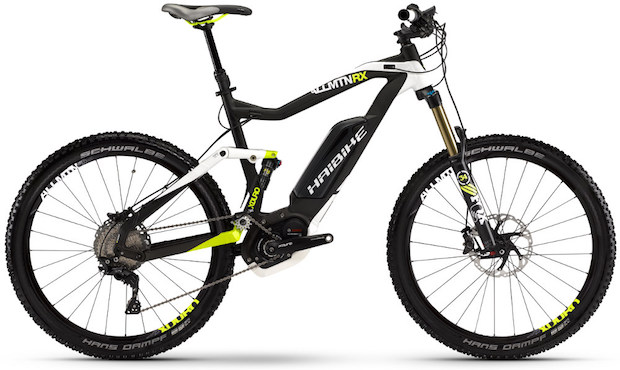
Gear Closet: Haibike Xduro AllMtn RX Electric Mountain Bike

One of the hottest trends in cycling over the past couple of years has been the rise in prominence of the electric bike – more commonly known as the e-bike. At first glance, most of these bikes look like just about any other that you might encounter on the road, although they have a hidden secret. They come equipped with a battery-powered motor that can help you maintain higher speeds with less effort or climb tough hills that would normally leave your legs crying out in agony.

This little speed-boost has made e-bikes especially popular with commuters, many of whom find that the onboard motor helps them travel along with traffic better and allows them to arrive at their destination relatively fresh thanks to not having to exert as much energy.

An avid biker myself, I've been intrigued with e-bikes for some time, but hadn't gotten the chance to try one out for myself. That changed recently when Haibike sent me one of their electric assisted mountain bikes to take for a spin, and I have to say I came away impressed. The bike delivered on everything that was promised – and more – allowing me to power through a ride like never before. But in the end, it also left me reevaluating why I like mountain biking so much in the first place.

For my little e-bike test drive, Haibike sent me a 2015 model known as the Xduro AllMtn RX. The current model that fits pretty much the same specs is the Xduro AllMtn 7.0. Both versions sport Shimano components, 27.5" tires, a full-supsenion, and a slick looking design that looks aggressive and fun to ride. Hidden inside the aluminum frame however, is a 36-volt motor that is powered by a 500 Wh battery that help this bike truly stand out from the crowd.

Before we go too far into this review, it is important to point out that while most e-bikes provide an electric assist, but you still have to do all of the pedaling. You simply don't have to pedal quite so hard in order to get the bike up to speed nor to maintain that speed. Likewise, when climbing a hill, the speed-assist kicks in to lend a hand, making it surprisingly easy to shoot up steep grades, although you still have to put in some work to get to the top.


The motor installed on this bike has five different settings, including Eco, Tour, Sport, and Turbo, as well as off. Yes, you can ride the bike without any type of electrical assist, but since it tips the scales at 49.2 pounds, it does feel a bit slow and ponderous. Eco mode provides the least level of assistance, which doesn't feel like much, although it is there to lend a hand when you need it. Turbo is bit like strapping a rocket to your bike, although it comes at dramatically reduced battery life.

While testing the Xduro, I only switched over to the highest level when tackling a big hill, otherwise I tended to stay in Tour mode most of the time. This allowed me to easily maintain a good rate of speed over a variety of terrains without having to expend a lot of energy in the process. The result was that at the end of my ride, I still felt like I had a good workout, but I wasn't completely wasted, even after riding a tough trail.

The Xduro AllMtn has a built in cycling computer mounted on its handlebars that provides information such as your current speed and time, as well as offering a trip odometer, and life-time odometer all in a digital format. That same display also provides constant updates of how much battery life remains by showing not only a battery indicator but also the amount of range the bike has before it runs out of juice. The screen also has an icon that indicates which level of power that the motor is set too as well.

Getting on the bike for the first time, I was unsure exactly how things worked. The motor was engaged, but there is no throttle that you can control, so I wasn't exactly sure how I'd know if it was working properly. It only took a second to figure that out however, as when I started to pedal you could feel the electric assist kick in with a very noticeable boost, even in Eco mode. That boost only became more noticeable as increased the level of power generated by the motor.

Before too long, I found myself testing the bike to see what it could do in a variety of different conditions, and for the most part it performed very well. It wasn't quite as agile and responsive as my Trek mountain bike back home, then again that bike doesn't power up big hills as easily either. I have to admit, the Xduro AllMtn is fun to ride, and is quite capable of tackling a wide variety of trails types.

Now, all of that said, I have to say that I have a few reservations about this e-bike as well. For starters, it is a heavy beast. As mentioned, it is nearly 50 pounds (22.68 kg), which makes it more than twice as heavy as my normal ride. That added weight becomes more evident on tougher trails where agility can be an important factor. And heaven forbid you should run out of battery power while riding, as it would definitely be quite a workout to get Xduro back to the trailhead without the electric assist.

Despite how much fun I had riding the bike, I also couldn't help but feel like I was cheating a bit out on the trail. Part of the allure of mountain biking for me is taking on the challenges of the route with just my bike. That includes all of the challenges, such as climbing hills and maintaining a good speed. This bike made that so easy to do that it almost felt like an entirely different sport. At the end of my test run, I came to the conclusion that while I wouldn't mind an e-bike for commuting around town, I'm not sure I want one to replace my mountain bike.

That said, for riders who are a little older, or aren't quite as physically fit, the Xduro AllMtn is a good solution that allows them to ride challenging trails much more easily. I can definitely see the allure of this bike under those circumstances.

Durable and well-built, the Haibike Xduro AllMtn 7.0 is competitively priced at $5299. It has quality parts and components at every important spot, and a tough aluminum frame with solid geometry. It also happens to have a secret weapon hidden away in the form of an electric motor. All of that design and technology doesn't come cheap, although I've seen plenty of standard mountain bikes that fall in the same price range, even without a motor. Of course, those bikes are likely to have even better components and a carbon frame, just to put things in perspective.

If you've been considering an e-bike for your mountain biking needs, I'd certainly encourage you to give the Haibike Xduro AllMtn a look. It is a great machine for the right rider. I'm just not sure if that rider is me.

Find out more at Haibike.com.

1/09/2016

Adventure Tech: Beartooth is a New Communication Device for the Backcountry

Looking for a new way to communicate while traveling in remote places? Then check out the newly revealed Beartooth, a device that creates its own cell phone network, allowing users to stay in contact in place where coverage is normally impossible.

Much like the goTenna, which we reviewed back in January, the Beartooth connects to your smartphone via Bluetooth technology. A special app is then installed on your device that allows the user to send text messages to other  Beartooth users who are within range. But unlike the goTenna, this device can actually transmit voice messages as well using a push-to-talk option that is part of the app too. There is even group messaging for both text and voice as well.

Other nice features include GPS tracking that allows the user to share his or her location with others. That point shows up on detailed maps that can be downloaded prior to departure for use offline. The Beartooth even has the capability to serve as a USB battery pack for your smartphone too, providing an extra charge via its 3000 mAh battery.

The Beartooth has a range of 2 miles, which is about half that off the goTenna, but the device is smaller and doesn't need to be dangled from your pack or tent via a carabiner. Instead, you simply activate it and put it inside your backpack. From there, you can pretty much forget about it, using just your smartphone to communicate.

When Beartooth begins shipping later in the year, it'll come with two devices, one for you and one for the person you need to communicate with in the backcountry. The MSRP is expected to be $399, but those who preorder now can get the device for just $249. That seems like a small price to pay for what could be the future of communications in the backcountry.


1/01/2016

Video: Mammut's #Project360 Goes to the Summit of Mt. Everest

We've covered Mammut's #Project360 a couple of times in the past. That's the outdoor gear manufacturer's attempt to bring some of the world's most iconic peaks to the Internet using a high tech camera system that captures images in 360º fashion. After the very successful climbing season in Nepal this spring, #Project360 can now add Mt. Everest to the list. Lakpa Sherpa and Pemba Rinji Sherpa, along with support from Kusang Sherpa and Ang Kaji Sherpa, managed to take Mammut's cameras to the top of the mountain, capturing the entire South Side route in the process. The video below gives us a glimpse of their adventure and the challenges that were overcome to capture the footage, which is already online at the #Project360 website.

12/01/2015

Gear Review: goTenna Personal Communications System

One of the biggest challenges we face while traveling in the backcountry is how to stay in touch with our companions in a place that has unreliable or completely nonexistent cell service. But a new product called the goTenna is looking to change that by giving us the tools we need to create our own personal cell data network that can facilitate messaging between mobile device.

In its purest form, the goTenna is a small, lightweight, portable antenna that connects to your smartphone or tablet (iOS or Android) via Bluetooth technology. Once paired with a mobile device, the goTenna then uses its own custom app to send text messages to other goTenna users who are either in your personal address book, or with the option to broadcast to any other goTenna devices that are within range. It is a simple and elegant solution that actually works quite well in the field.

Paring your smartphone or tablet with the goTenna is a simple affair. Modern Bluetooth connectivity is very easy to use, and it only takes a few seconds to get the two devices communicating with one another. After that, you simply hang the goTenna from your belt or backpack, or perhaps on the exterior of a tent, so that it can start sending and receiving messages.

The goTenna is powered by its own built-in, rechargeable lithium-ion battery. When in use, the device can stay in stand-by mode for approximately 20 hours. Stand-by mode means that it is listening for incoming messages, but isn't sending any out. Once you start communicating with it, the battery life does go down, but not at such a rate that I ever felt like it would run out of juice before the end of the day. Like you're smartphone, you will need to charge it each night however, which means on longer trips you'll need a portable battery pack or solar charger to keep it working.


Many backpackers and campers use two-way radios to stay in contact with one another in remote places, and obviously those devices have their advantages too. But the goTenna has a couple of nice options that help set it apart from those communications systems. For example, when you send a message to someone else using a goTenna you'll also receive a return receipt that lets you know that it was delivered. That way you can be sure that your companion is within range, and has gotten the note that you sent them.

Speaking of range, the powerful little antenna can broadcast to other devices over a surprisingly long distance, although it does have some limitations. In a city, where radio waves can cause interference, the range is limited to about 1 mile (1.6 km), although that can vary depending on your location. In the backcountry, that range extends to 4 miles (6.4 km), and possibly further depending on elevation and obstructions. Generally speaking that should allow you to stay in contact with traveling companions provided you don't wander too far apart.

The goTenna has another trick up its sleeve that could come in handy in the backcountry as well. The device can also share your location, providing others with your GPS coordinates. The goTenna app even has downloadable maps that can display that position, making it easier for you to find the other members of your party in a pinch.

It is important to point out that if you are completely off the grid, and without cell service, the goTenna won't provide the ability to make voice calls or pull data from a satellite or any other source. It is strictly used for direct communication with other goTenna devices, in a sense creating a personal network for you and your friends, as well as anyone else who might be in range. But if you can accept that limitation of the device, and realize that it is actually an affordable method for staying in contact in remote places, you'll find the system works quite well.

The device is built to be rugged enough to withstand the challenges of adventure travel, although as with most electronics some care is needed in handling it. The units themselves are lightweight, but durable, with solid protection from the elements. Having tested the goTenna myself, I'd be more worried about the survival of my iPhone in the backcountry than I would this product.

The goTenna is sold in pairs and is currently available for $199. Out of the box you have everything you need to get it up and working, including two charging cables. In terms of simple and effective communications solutions, they don't come any better than this.

11/28/2015

Video: Intova Duo Waterproof Action Camera

There is no question that GoPro is the market leader in terms of the action camera market. Their devices are used by thousands of people, ranging from professional filmmakers all the way down to weekend warriors hoping to catch a great shot of their own travel adventures. But those cameras can come with a large price tag, which makes them an expensive luxury for many people. But what if there was a more affordable option that offered solid performance at a price that would make more of an impulse purchase? That's exactly what the Intova Duo brings to the table, delivering some surprising features for a pice that is tough to beat.

Before we go too far, I'll say right of the bat that if you're expecting GoPro level of performance and video quality, this won't be the action cam for you. On the other hand, if you understand that you're getting a solid substitute for a fraction of the price, your expectations will be more in line with Intova's device.

So how much does the Duo cost exactly? It sells for just $49.95, which is considerably cheaper than even the lowest price camera from GoPro. For that price, you'll get a camera that can shoot 720p video footage and shoot 5 mega-pixels till photos as well. It has a battery life of about two hours, a 4x zoom, and it comes with a 1.77" LCD screen for accessing images, video footage, and settings.


As if that wasn't enough, the Duo also comes with a waterproof housing that keeps it safe down to 100 feet (30 meters). That same housing allows the camera to float, which certainly comes in handy when operating around water, when one accidental drop can mean the loss of the device. The camera is very easy to use, both above and below the water, and because the 720p video is fairly lightweight, it is easy to edit on just about any device, including a tablet or smartphone.

The Duo is small, measuring just 2.6 inches (6.7 cm) across and it weighs just 1.6 ounces (46g). That means it easy to toss in a pack and carry with you just about anywhere. It also makes it a great companion device for your other photography equipment, allowing you to capture video and still photographs with ease. And while I personally felt that the video quality of this camera was better than the still photos, the fact that it can take 5MP snaps was nice in a pinch.

Make no mistake, this isn't a camera that will replace a GoPro Hero 4 Black with professional filmmakers, but it is a camera that delivers plenty of quality video for those of us who don't need everything that the high end, $500 GoPro camera offers, or even the $200 Hero Session. The Duo is a great option for those who don't want to break the bank for an action cam, but do want to take something with them on their travels that can capture solid images and is rugged enough to survive in the outdoors.

If you've been looking for an affordable solution to shoot your outdoor adventures, the Intova Duo is a worth taking a look at, especially since it costs less than $50. It is a surprisingly fun camera to use, and I think a lot of people will be surprised at how well it performs for the price.