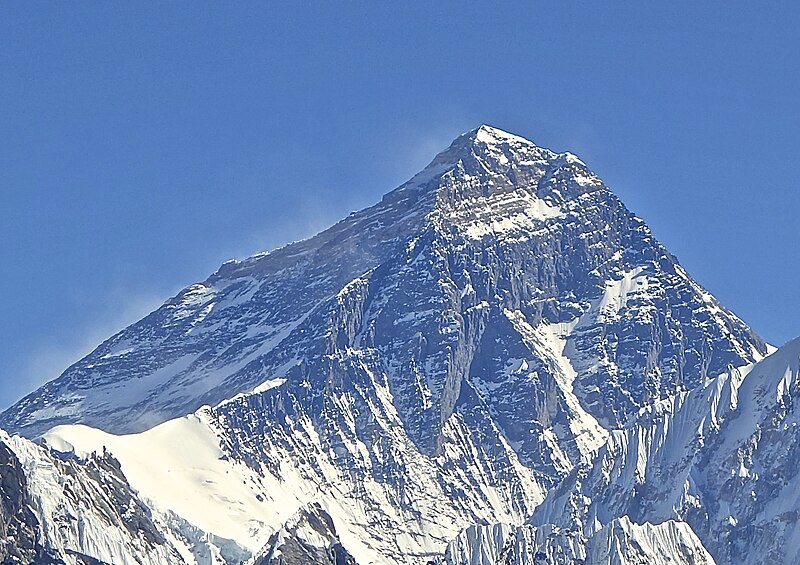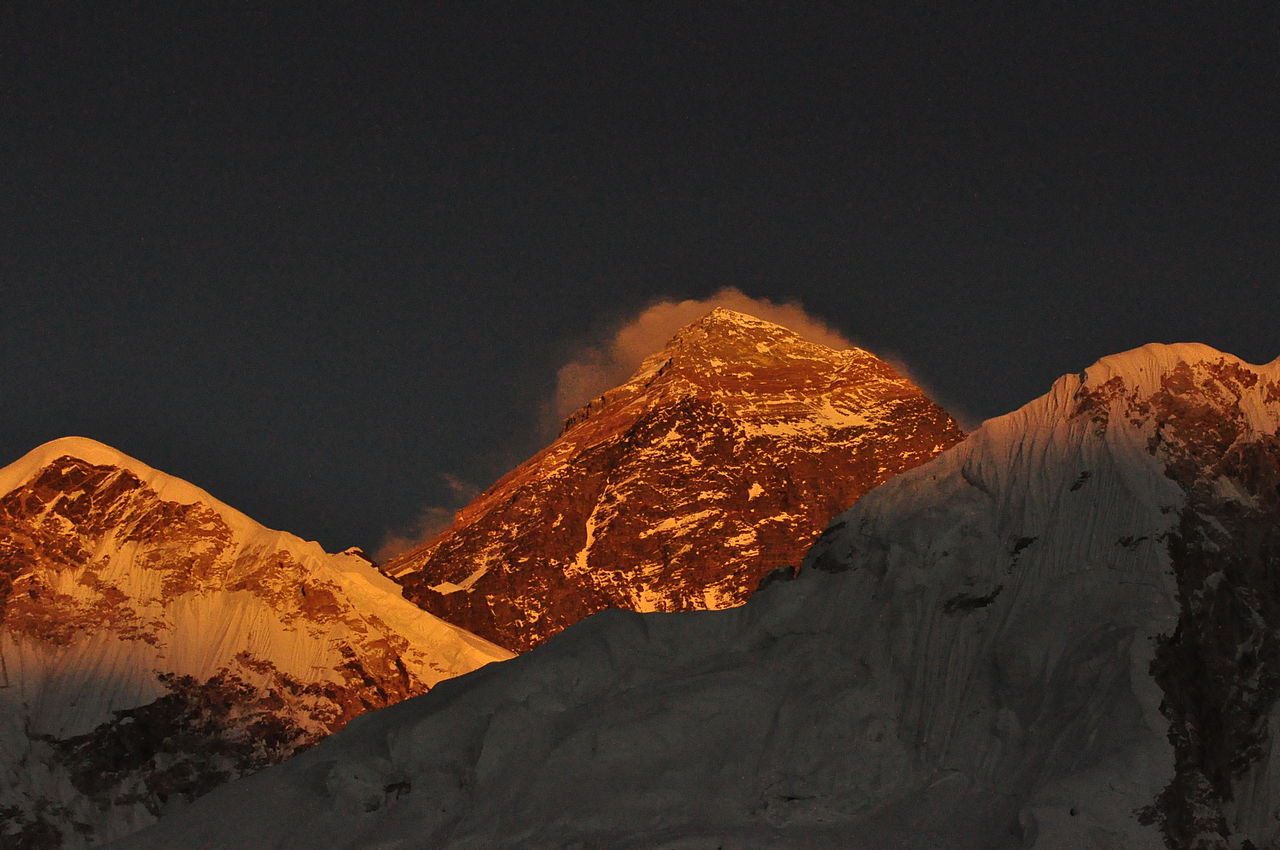
Even though the calendar says that it is only February, the 2016 spring climbing season in the Himalaya really isn't all that far off. In less than two months, climbers from all over the world will be finalizing their travel plans, packing their gear, and saying goodbye to loved ones as they head off to Nepal and Tibet to begin what is sure to be another very interesting year in the tallest mountains on the planet.
By most accounts, it is shaping up to be a quieter year on Everest, where tragedies the past two seasons have put an abrupt end to climbing operations. Several of the leading outfitters that operate on the mountain say that the number of clients they'll be guiding this year are down, as many are taking a wait and see attitude. That said however, I'm sure Everest will still be a very lively place to be this spring, with lots of great stories to follow.
In preparation for the start of the season, Alan Arnette has already kicked off his now legendary coverage of the proceedings on the mountain. Yesterday, Alan posted his preview of the 2016 spring season ahead, which fittingly enough begins with a recap of some of the major stories from the past few years – including a much publicized brawl between Sherpas and prominent climbers, the deaths of 19 Sherpas as a result of the collapse of a serac in 2014, and the devastating aftermath of the deadly earthquake that struck last year.
Each of those events has left its mark on the climbing community on Everest in the past few years, causing some to sour on attempting to summit the tallest mountain on the planet. But many of us believe that these are just temporary setbacks that will be overcome as we move forward.
In his article, Alan takes a look ahead at the 2016 season, which he too expects to have low numbers for several reasons. The lingering impact of the earthquake – at least in terms of public perceptions – is a major one of course, but also because Nepal is in the middle of a significant fuel crisis, with a shortage of gas making its way into the country thanks to a blockade from India. On top of that, expedition companies are being forced to raise their prices too, which of course has an impact on how many people sign up for an expedition as well.
If you're someone who keeps up with the Everest scene each year, you'll definitely want to give this a look. It provides some great insights into what is happening in Nepal presently, and how the currently political culture there is shaping the climbing season ahead. As always, it shouldn't have any shortage of intrigue and surprises.
Showing posts with label Alan Arnette. Show all posts
12/14/2017
9/22/2017
Everest 2014: The Cost Of Climbing Everest
We may be just a week into 2014, but it is never too early to start thinking about the spring Everest climbing season. As many of you already know, year-in and year-out, one of the best sources of information on all things having to do with Everest is Alan Arnette. Each year, Alan provides excellent insights into what it takes to climb the mountain, while providing regular updates on conditions on both the North and South sides, while closely tracking the locations of the numerous teams attempting to scale its impressive slopes. Over the past few years, Alan has kicked off his annual coverage by first giving us a run down of just how much it costs to undertake an Everest expedition, and each year it is an interesting read. Yesterday, he posted the 2014 version of that report, and for those unfamiliar with the expenses of a major climb in the Himalaya, it can sometimes cause sticker shock.
As usual, the costs for climbing Everest have increased on both the North and South side of the mountain this year. But what's different for 2014 is that while the guide services at the high end of the spectrum have mostly held steady, it is the low-end companies that seem to have hiked their rates for 2014. He is also quick to point out that this type of expedition is not one in which you want to go cut-rate, but with prices ranging from $30,000 - $100,000 it can be confusing to decide to who to go with.
Alan breaks down the costs into different categories, giving readers estimates on climbing solo vs. as part of an organized team. He also discusses the differences in teams as well, which include Sherpa supported climbs, Sherpa guided expeditions and Western guided options. Each of those provides a different level of service, with some willing to spend less to do more on their own, while others pay considerably more for a safer, more full-service attempt on the summit.
With guided climbs costing in the neighborhood of $40,000 to $65,000, it is sometimes tough to see where the cost differences come from. Alan points out that sometimes it is just in the form of profit to help pay the overhead required to operate on the mountain, but it also often comes at the expense of services such as Sherpa support on the upper slopes or no bottled oxygen included in the price.
One of the more interesting elements of Alan's report is his comparison chart of the companies that operate on Everest. It gives the name of the organization, average team size, types of guides, previous summit success and of course the costs. The prices range from as low as $28,450 for an expedition on the North Side with Summit Climb, to $89,000 with AlpenGlow on the South Side that includes Western guides.
If you've ever considered climbing Everest yourself, then Alan's Cost to Climb guide is a must read. It'll give you all the information you need for selecting the right guide service for your own climb, while weighing in all the factors to think about, including safety considering, which route to take, which company to go with and much more.
It also serves to get the adrenaline flowing for a new Everest climbing season. For fans of the mountain, April can't come fast enough!
As usual, the costs for climbing Everest have increased on both the North and South side of the mountain this year. But what's different for 2014 is that while the guide services at the high end of the spectrum have mostly held steady, it is the low-end companies that seem to have hiked their rates for 2014. He is also quick to point out that this type of expedition is not one in which you want to go cut-rate, but with prices ranging from $30,000 - $100,000 it can be confusing to decide to who to go with.
Alan breaks down the costs into different categories, giving readers estimates on climbing solo vs. as part of an organized team. He also discusses the differences in teams as well, which include Sherpa supported climbs, Sherpa guided expeditions and Western guided options. Each of those provides a different level of service, with some willing to spend less to do more on their own, while others pay considerably more for a safer, more full-service attempt on the summit.
With guided climbs costing in the neighborhood of $40,000 to $65,000, it is sometimes tough to see where the cost differences come from. Alan points out that sometimes it is just in the form of profit to help pay the overhead required to operate on the mountain, but it also often comes at the expense of services such as Sherpa support on the upper slopes or no bottled oxygen included in the price.
One of the more interesting elements of Alan's report is his comparison chart of the companies that operate on Everest. It gives the name of the organization, average team size, types of guides, previous summit success and of course the costs. The prices range from as low as $28,450 for an expedition on the North Side with Summit Climb, to $89,000 with AlpenGlow on the South Side that includes Western guides.
If you've ever considered climbing Everest yourself, then Alan's Cost to Climb guide is a must read. It'll give you all the information you need for selecting the right guide service for your own climb, while weighing in all the factors to think about, including safety considering, which route to take, which company to go with and much more.
It also serves to get the adrenaline flowing for a new Everest climbing season. For fans of the mountain, April can't come fast enough!
Labels:
Alan Arnette,
Everest,
Himalaya,
Mountaineering,
Nepal,
Tibet
6/24/2017
Alan Arnette Answers Common Questions About Everest for 2017
The spring climbing season on Everest is still two months off, but as I write this there are hundreds of climbers around the world who are preparing to leave for the Himalaya in a few short weeks. While they still have plenty of time to get ready, there is always lots of gear to buy and organize, training to conduct, and daily affairs to get in order before leaving for Base Camp for two months. It is a busy, hectic, and exciting time for many of them, with a major challenge looming on the horizon.
Awhile back, mountaineering blogger Alan Arnette posted a Personal Letter to Everest climbers for 2017, in which he posed some serious questions for them to think about before they go. In that letter, Alan urged anyone who was considering making the climb to think long and hard about whether or not they were ready for such a challenge, as he pointed out that most of the deaths on the mountain since 2000 were due to lack of experience. As a follow up to that post, Alan – who has been on Everest numerous times – answered the very questions he posed, providing some insight into what you should know before you go.
One of the most common questions that people have is how high should they have climbed previously before trying Everest. Alan says that it depends on the person of course, but he recommends having at least one other 8000 meter peak under your belt before heading to the Big Hill. But, that is just one of many very specific questions on this list, which includes Alan's thoughts on regulating the flow of oxygen on the way to the summit, what kind of foods you should eat while on the expedition, how long to give fresh snow a chance to settle before moving up, and more. The blog post talks acclimatization strategy, physical conditioning, dealing with fatigue, and lots of other issues that climbers deal with on Everest.
This is one of those blog posts that provides a ton of insight from someone who has been on the mountain. While you can often read about the experience, or even watch it unfold in videos and movies, it is hard to pick up these pearls of wisdom from those sources. The questions and answers that Alan provides are useful on a different level, sometimes addressing minute details that are only learned through years of experience. That makes this an interesting read for those of us who follow the Everest climbing scene closely.
To read those insights for yourself, click here.
Awhile back, mountaineering blogger Alan Arnette posted a Personal Letter to Everest climbers for 2017, in which he posed some serious questions for them to think about before they go. In that letter, Alan urged anyone who was considering making the climb to think long and hard about whether or not they were ready for such a challenge, as he pointed out that most of the deaths on the mountain since 2000 were due to lack of experience. As a follow up to that post, Alan – who has been on Everest numerous times – answered the very questions he posed, providing some insight into what you should know before you go.
One of the most common questions that people have is how high should they have climbed previously before trying Everest. Alan says that it depends on the person of course, but he recommends having at least one other 8000 meter peak under your belt before heading to the Big Hill. But, that is just one of many very specific questions on this list, which includes Alan's thoughts on regulating the flow of oxygen on the way to the summit, what kind of foods you should eat while on the expedition, how long to give fresh snow a chance to settle before moving up, and more. The blog post talks acclimatization strategy, physical conditioning, dealing with fatigue, and lots of other issues that climbers deal with on Everest.
This is one of those blog posts that provides a ton of insight from someone who has been on the mountain. While you can often read about the experience, or even watch it unfold in videos and movies, it is hard to pick up these pearls of wisdom from those sources. The questions and answers that Alan provides are useful on a different level, sometimes addressing minute details that are only learned through years of experience. That makes this an interesting read for those of us who follow the Everest climbing scene closely.
To read those insights for yourself, click here.
Labels:
Alan Arnette,
Everest,
Himalaya,
Mountaineering,
Nepal,
Tibet
6/18/2017
Want To Get Along With Your Mountain Guide? Alan Arnette Explains How!
Climbing a mountain, even one that isn't nearly as large as you find in the Himalaya, can be a frustrating, nerve wracking affair. If you happen to be on a two-month long expedition, those feelings can be heightened even further. Being able to get along with your teammates is of vital importance of course, but probably even more vital is the ability to get along with your mountain guide. In his latest blog post, Alan Arnette gives us the perspective of both the client and the guide, with the hope that it will bring a bit more understanding between both parties and make any climb much more enjoyable all around.
Alan has been on more than 35 expeditions, many of which have taken him to the Himalaya and lasted for weeks on end. During that time, he has seen just about everything you can imagine. On top of that, his years of reporting on the mountaineering scene, particularly on Everest, lends him a unique perspective of the relationship between clients and guides. In this blog post, he discusses the characteristics of both the "nightmare client" and "nightmare guide," both of which he has witnessed in action.
The point of this article isn't to shame either the guides or climbers. On the contrary, it is meant to foster a little understanding of the perspective of both parties, giving them pause to consider each other's viewpoints on future expeditions. If they each have a little more insight into what the other is thinking or feeling, perhaps they'll be able to work more cohesively with one another moving forward.
If you're planning a big expedition in your future, the article is definitely worth a read. But even if you're just an an armchair mountaineer, the story offers some genuine perspective of what happens on a big climb. As usual, Alan does a great job of setting the scene and giving his readers good insights into an expedition to the Himalaya.
This is another of Alan's pre-Everest 2014 blog posts. Last week he also broke down the costs of a climb on the highest mountain on the planet. If you missed that one, it is worth a read as well. You'll find it here.
Alan has been on more than 35 expeditions, many of which have taken him to the Himalaya and lasted for weeks on end. During that time, he has seen just about everything you can imagine. On top of that, his years of reporting on the mountaineering scene, particularly on Everest, lends him a unique perspective of the relationship between clients and guides. In this blog post, he discusses the characteristics of both the "nightmare client" and "nightmare guide," both of which he has witnessed in action.
The point of this article isn't to shame either the guides or climbers. On the contrary, it is meant to foster a little understanding of the perspective of both parties, giving them pause to consider each other's viewpoints on future expeditions. If they each have a little more insight into what the other is thinking or feeling, perhaps they'll be able to work more cohesively with one another moving forward.
If you're planning a big expedition in your future, the article is definitely worth a read. But even if you're just an an armchair mountaineer, the story offers some genuine perspective of what happens on a big climb. As usual, Alan does a great job of setting the scene and giving his readers good insights into an expedition to the Himalaya.
This is another of Alan's pre-Everest 2014 blog posts. Last week he also broke down the costs of a climb on the highest mountain on the planet. If you missed that one, it is worth a read as well. You'll find it here.
5/19/2017
How Much Does it Cost to Climb Everest? (2017 Edition)
As I already mentioned today, as 2016 grinds to an end, it is time to start looking ahead to 2017 and adventures yet to come. A bit part of that will be what happens on Everest next spring, and to get ready for the start of another season of climbing on the Big Hill, Alan Arnette has once again posted his annual look at the cost of climbing Everest. If you've ever wondered how much you'd have to spend to go up the highest mountain on the planet, Alan breaks it down nicely for us, and explains where all of the cash goes. He also takes a look at the trends impacting pricing, and where we're headed in the future too.
As usual, there is a lot to sift through in Alan's report, and he does a much better job of breaking everything down than I could ever possibly hope to do. But, there are a few things that stick out as you examine the price of climbing on Everest in 2017. First, and unsurprisingly, costs are increasing, particularly on the Chinese side of the mountain in Tibet where Alan says the average price of an expedition has gone up 22% over last year. That is largely in part because of higher costs of permits from the North Side this season.
The price of a standard supported climb now ranges from $28,000 to $85,000, with the level of "support" varying greatly of course. The top end of spectrum stretches out to $115,000 for a custom climb, while those who want to mostly go it alone can get by for as little as $20,000. Alan points out that most of the lower-end prices come from Nepali companies who have been competing on price to win customers in recent years, but even their costs are starting to inch up as they realize there is more money to be made. But, if you still want to get a great deal, they are more willing to haggle than their Western competitors.
Following the highly successful 2016, which came after two very tumultuous seasons in 2014 and 2017, the demand for climbing on Everest is expected to be higher than ever. More climbers are now coming to the mountain from China and India, as well as other parts of the world, which is pushing the need for more guides and more options. In the wake of this vacuum, new companies are stepping up to provide services for all of these clients, and as a result pricing is in flux at the moment. In also calls into question the safety of climbing on the mountain, as it continues to become even more crowded. How this impacts things going forward should be interesting, and hopefully not tragic.
Other interesting elements from Alan's price guide include a breakdown of how much each element of the climb costs – including permits, travel, insurance, gear, and so on. He also has a complete list of operators and their expected costs for 2017, as well as some answers to common questions. In short, it is a great primer for understanding the basics of a climb, and just why it costs so much.
If you're thinking about making the climb yourself, you'll definitely want to give this a read. And start saving your pennies of course. Even a "low-end" Everest climb is still quite an investment.
As usual, there is a lot to sift through in Alan's report, and he does a much better job of breaking everything down than I could ever possibly hope to do. But, there are a few things that stick out as you examine the price of climbing on Everest in 2017. First, and unsurprisingly, costs are increasing, particularly on the Chinese side of the mountain in Tibet where Alan says the average price of an expedition has gone up 22% over last year. That is largely in part because of higher costs of permits from the North Side this season.
The price of a standard supported climb now ranges from $28,000 to $85,000, with the level of "support" varying greatly of course. The top end of spectrum stretches out to $115,000 for a custom climb, while those who want to mostly go it alone can get by for as little as $20,000. Alan points out that most of the lower-end prices come from Nepali companies who have been competing on price to win customers in recent years, but even their costs are starting to inch up as they realize there is more money to be made. But, if you still want to get a great deal, they are more willing to haggle than their Western competitors.
Following the highly successful 2016, which came after two very tumultuous seasons in 2014 and 2017, the demand for climbing on Everest is expected to be higher than ever. More climbers are now coming to the mountain from China and India, as well as other parts of the world, which is pushing the need for more guides and more options. In the wake of this vacuum, new companies are stepping up to provide services for all of these clients, and as a result pricing is in flux at the moment. In also calls into question the safety of climbing on the mountain, as it continues to become even more crowded. How this impacts things going forward should be interesting, and hopefully not tragic.
Other interesting elements from Alan's price guide include a breakdown of how much each element of the climb costs – including permits, travel, insurance, gear, and so on. He also has a complete list of operators and their expected costs for 2017, as well as some answers to common questions. In short, it is a great primer for understanding the basics of a climb, and just why it costs so much.
If you're thinking about making the climb yourself, you'll definitely want to give this a read. And start saving your pennies of course. Even a "low-end" Everest climb is still quite an investment.
Labels:
Alan Arnette,
Everest,
Himalaya,
Mountaineering,
Nepal,
Tibet
1/26/2017
Watch Alan Arnette's Summiting Manaslu Presentation Live On YouTube Tonight!
Last fall, Alan Arnette added another 8000 meter peak to his already impressive resumé when he successfully reached the summit of Manaslu. At 8156 m (26,759 ft) in height, it is the eighth highest mountain in the world and a challenging climb, although not in the same league as some of the other big Himalayan peaks.
Since his return from the climb last October, Alan has been giving a series of talks about the expedition, sharing his insights about climbing in the Himalaya in general and about Manaslu specifically. But unless you live in Colorado, chance are you haven't gotten a chance to see Alan's presentation. That can change tonight, as the slide show is going to be broadcast live over the Internet starting at 6 PM local time, which 8 PM EST/7PM CST.
The event is being broadcast on the Rest of Everest YouTube channel, which you can access by clicking here. This will be a great opportunity to see Alan in action and learn more about climbing in the Himalaya. It should be a fun and interesting experience for sure.
12/08/2016
Is it More Important to be Mentally or Physically Tough For Everest?
The spring Everest season may still be a couple of months off, but it is approaching rapidly at the moment. In order to get us ready for the start of what should be another interesting and exciting year on the Big Hill, Alan Arnette continues his pre-season coverage with another excellent blog post about the experience of climbing the tallest mountain on the planet. This time out, he asks the question of whether or not it is more important to be mentally or physically tough.
Alan, who has been on four expeditions to Everest, shares his own personal experiences as he wrestled with the sometimes overwhelming mental and physical challenges. Those experiences helped him to understand what it takes to climb an 8000 meter peak, which goes well beyond simply putting in the work in the gym. He says that it isn't about how strong you are, but about how well prepared.
He also talks about how important it is to keep your body in balance when climbing at higher altitudes. It is a precarious equilibrium with not pushing yourself too hard that you kill your chances of reaching the summit, but still moving at a fast enough pace to safely make it up and down in the allotted time. Your heart and lungs help to keep the body moving, but your mind must overcome self doubt and indecision in order to continue going up.
Everest junkies will find Alan's break down of each stage of an Everest climb to be very interesting. It mentions all of the major milestones of a summit push from the South Side, and indicates the specific challenges that they present. For instance, he says that the trek to Everest Base Camp in the Khumbu Valley is one of the best parts of the climb, as you enjoy a leisurely walk through the Himalaya. But later, when you're on the Lhotse Face, you face a real test of determination in getting up that impossibly vertical wall. He offers similar insights on the Khumbu Icefall, the Western Cwm, the South Col and all of he other important steps up to the summit.
We're now about two months away from the start of the teams gathering in Kathmandu. At this point, most are still working on their physical and mental training ahead of the start of their expeditions. Alan's blog postings leading up to the beginning of the season continue to bring excellent insights into what an Everest climb is all about, and while most of us will never be able to attempt such a climb for ourselves, we can get a better understanding of what the climbers go through in these stories.
Alan, who has been on four expeditions to Everest, shares his own personal experiences as he wrestled with the sometimes overwhelming mental and physical challenges. Those experiences helped him to understand what it takes to climb an 8000 meter peak, which goes well beyond simply putting in the work in the gym. He says that it isn't about how strong you are, but about how well prepared.
He also talks about how important it is to keep your body in balance when climbing at higher altitudes. It is a precarious equilibrium with not pushing yourself too hard that you kill your chances of reaching the summit, but still moving at a fast enough pace to safely make it up and down in the allotted time. Your heart and lungs help to keep the body moving, but your mind must overcome self doubt and indecision in order to continue going up.
Everest junkies will find Alan's break down of each stage of an Everest climb to be very interesting. It mentions all of the major milestones of a summit push from the South Side, and indicates the specific challenges that they present. For instance, he says that the trek to Everest Base Camp in the Khumbu Valley is one of the best parts of the climb, as you enjoy a leisurely walk through the Himalaya. But later, when you're on the Lhotse Face, you face a real test of determination in getting up that impossibly vertical wall. He offers similar insights on the Khumbu Icefall, the Western Cwm, the South Col and all of he other important steps up to the summit.
We're now about two months away from the start of the teams gathering in Kathmandu. At this point, most are still working on their physical and mental training ahead of the start of their expeditions. Alan's blog postings leading up to the beginning of the season continue to bring excellent insights into what an Everest climb is all about, and while most of us will never be able to attempt such a climb for ourselves, we can get a better understanding of what the climbers go through in these stories.
Labels:
Alan Arnette,
Everest,
Himalaya,
Mountaineering,
Nepal,
Tibet
8/16/2016
Everest Summit Statistics Updated Ahead Of The Spring Season
The spring climbing season on Mt. Everest is still a little more than a month from getting underway, but already anticipation is starting to build for what promises to be another busy year on the world's highest peak. In preparation for the start of that season, the Himalayan Database – painstakingly maintained by the indomitable Ms. Elizabeth Hawley, was updated at the end of last week, giving us all the latest stats on the Big Hill.
Alan Arnette has taken a look at those numbers and nicely broken them down for us in his latest blog post. According to Ms. Hawley's research, there were 658 official summits of Everest in 2013. Of those, 539 were made from the South Side of the mountain in Nepal, with 119 coming from the North Side in Tibet. Furthermore, 9 of those summits were completed without the use of supplemental oxygen, which obviously remains a rare and impressive feat. Sadly, there were also 8 deaths recorded o the mountain during that time.
The complete history of Everest now stands at 6871 total summits, with 4042 climbers standing at the top of the mountain. As Alan points out, that means that 2739 climbers have summited multiple times. Of those, 4416 came from the Nepali side of the mountain, with 2455 successful climbs from Tibet.
Between 1921 and 2013, a total of 248 people have died on Everest, with 161 of those being westerners and 87 Sherpas. But despite the increasing numbers of climbers on Everest, the mountain continues to get safer. Alan says that since 1990, the number of summits to deaths ratio has dropped to just 3.6%, which is far below what the mainstream media would lead you to believe at times, and not nearly as dangerous as K2 or Annapurna, which Alan points out has a 2:1 death to summit ratio.
This is just scratching the surface of some of the interesting facts that Alan has shared on the mountain. Be sure to head over to his site and read up on Everest. Until the climbers begin to arrive in Kathmandu in another month, thats about all the news we'll have for awhile.
Alan Arnette has taken a look at those numbers and nicely broken them down for us in his latest blog post. According to Ms. Hawley's research, there were 658 official summits of Everest in 2013. Of those, 539 were made from the South Side of the mountain in Nepal, with 119 coming from the North Side in Tibet. Furthermore, 9 of those summits were completed without the use of supplemental oxygen, which obviously remains a rare and impressive feat. Sadly, there were also 8 deaths recorded o the mountain during that time.
The complete history of Everest now stands at 6871 total summits, with 4042 climbers standing at the top of the mountain. As Alan points out, that means that 2739 climbers have summited multiple times. Of those, 4416 came from the Nepali side of the mountain, with 2455 successful climbs from Tibet.
Between 1921 and 2013, a total of 248 people have died on Everest, with 161 of those being westerners and 87 Sherpas. But despite the increasing numbers of climbers on Everest, the mountain continues to get safer. Alan says that since 1990, the number of summits to deaths ratio has dropped to just 3.6%, which is far below what the mainstream media would lead you to believe at times, and not nearly as dangerous as K2 or Annapurna, which Alan points out has a 2:1 death to summit ratio.
This is just scratching the surface of some of the interesting facts that Alan has shared on the mountain. Be sure to head over to his site and read up on Everest. Until the climbers begin to arrive in Kathmandu in another month, thats about all the news we'll have for awhile.
Labels:
Alan Arnette,
Everest,
Himalaya,
Mountaineering,
Nepal,
Tibet
11/09/2014
Will the Everest 2017 Season Be One for the Record Books?
The start of the 2017 spring climbing season on Everest is still a couple of months off, but already there are climbers, guides, and Everest junkies all over the world who are gearing up for its start. Amongst them is mountaineer/blogger Alan Arnette, who always follows the climbing scene on the Big Hill closely and provides excellent insights as to what to expect and thoughts on events as they are developing. With a new season on the horizon, Alan is currently looking ahead and says that we can expect big things this year.
In an article posted to his blog yesterday, Alan says that 2017 is looking like a year for the record books. Two months before the first climbers start to arrive in Kathmandu, he is already predicting a record number of summits and many new climbers in Base Camp. This is in part because of the low cost operators who have begun taking over the mountain. This has allowed an influx of climbers from India and China in particular, and since those operators don't mind dealing with large groups of clients. In some cases, more than 100 at a time.
But beyond that, there are a number of stories to watch this year that should prove of interest. For instance, Alan notes (as we have here at The Adventure Blog) that Ueli Steck is planning to return to attempt an Everest-Lhotse Traverse. He also mentions the Indian survey team that will be measuring the current height of Everest to see if the 2015 earthquake has had an impact on that number. And as if that wasn't enough, Alan also notes that Nepali Min Bahadur Sherchan will be on the mountain in an attempt to set a new record for the oldest person to summit. At the age of 86, Min Bahadur says he is still in good shape and ready to go.
Of course, this is probably just the tip of the iceberg in terms of storylines and drama that we'll see on Everest this spring. As always, it will be a never ending source of inspiration and motivation, and probably a bit of controversy along the way too. It wouldn't be Everest otherwise. Stay tuned for regular reports throughout the spring as events unfold.
In an article posted to his blog yesterday, Alan says that 2017 is looking like a year for the record books. Two months before the first climbers start to arrive in Kathmandu, he is already predicting a record number of summits and many new climbers in Base Camp. This is in part because of the low cost operators who have begun taking over the mountain. This has allowed an influx of climbers from India and China in particular, and since those operators don't mind dealing with large groups of clients. In some cases, more than 100 at a time.
But beyond that, there are a number of stories to watch this year that should prove of interest. For instance, Alan notes (as we have here at The Adventure Blog) that Ueli Steck is planning to return to attempt an Everest-Lhotse Traverse. He also mentions the Indian survey team that will be measuring the current height of Everest to see if the 2015 earthquake has had an impact on that number. And as if that wasn't enough, Alan also notes that Nepali Min Bahadur Sherchan will be on the mountain in an attempt to set a new record for the oldest person to summit. At the age of 86, Min Bahadur says he is still in good shape and ready to go.
Of course, this is probably just the tip of the iceberg in terms of storylines and drama that we'll see on Everest this spring. As always, it will be a never ending source of inspiration and motivation, and probably a bit of controversy along the way too. It wouldn't be Everest otherwise. Stay tuned for regular reports throughout the spring as events unfold.
Labels:
Alan Arnette,
Everest,
Himalaya,
Mountaineering,
Nepal,
Tibet
5/03/2014
Video: Alan Arnette Presents Summiting Nepal's Manaslu
A few days back I shared details of a live stream of Alan Arnette's presentation of his Summiting Manaslu slideshow that was brought to us courtesy of Jon Miller of the Rest of Everest Fame. The event was your opportunity to not only learn about an 8000 meter climb, but also get to hear Alan speak. It was a fun, interesting experience for sure, and it included a major announcement about a Himalayan expedition that 16-year old Matt Moniz that you'll be hearing a lot about in the weeks ahead. Both spoke at a fundraiser for the dzi Foundation, an organization dedicated to improving the lives people living in Nepal.
If you missed the event, Jon has kindly posted it online so you can watch it for yourself. It contains some great info about climbing Manaslu specifically and 8000 meter peaks in general. The video is more than an hour in length, so get comfortable.
Subscribe to:
Comments (Atom)