Showing posts with label Arctic Ocean. Show all posts

7/16/2017

Russian Teens Skied to the North Pole in Just 5 Days

The 2016 Arctic Season may be over, but there are still a few interesting stories to share. For instance, ExWeb has posted an article about a team of Russian teens who skied to the North Pole (last degree) in just 5 days following a host of delays that cut into their planned time out on the ice.

The group of seven teens had planned to make a last-degree ski expedition to the North Pole via the Barneo Ice Camp. Their original schedule gave them 7-10 days to complete the journey, which covered roughly 125 km (77.6 miles) over the frozen Arctic Ocean. That means they were able to sustain a pace of about 25 km (15.5 miles) per day, which is an excellent pace considering the conditions they encountered on the ice.

The challenges of the Barneo Ice Camp have been well documented on this blog, and elsewhere, this year. The ice flows that the temporary base is built on were being buffeted by ocean currents throughout the season, causing the blue ice runway there to crack multiple times. That caused a lot of delays, causing the Russian teens, and a number of other teams, to back up while they waited for their chance to fly out to the camp. Eventually the runway was completed, and the flights started arriving, but it took awhile to catch up on the backlog of people who were waiting to arrive in the Arctic. This cut into the time that the skiers had to reach the Pole.

According to ExWeb, when the team was retrieved from their finish line at 90ºN, they did not look tired or exhausted. In fact, they still had a lot of energy and were so excited to have reached the North Pole. It was quite a journey for these young adventurers, many of whom have wanted to ski through the Arctic for the better part of their lives.

I know that this is "only" a last degree ski expedition, but it is still an impressive feat to see these teenagers make that journey in such a quick pace. Five days to cover a degree of latitude is quite a short time frame, and I know a few polar explorers who would be hard pressed to maintain that same pace themselves. Also, how cool is it to be a teenager and get to go to the North Pole. I clearly went to the wrong high school.

6/05/2017

North Pole 2016: Race Against Time Team Faces Big Challenges

After overcoming a series of challenges just to get to the starting line, the Race Against Time team is now out on the Arctic ice and making their way towards the North Pole. But as expected, this journey to the top of the world hasn't been an easy one so far as a number of natural obstacles force the team to earn every mile.

Last week, the team of Mark Wood, Paul Vicary, and Mark Langridge were finally dropped off on the ice after facing unprecedented delays to the start of their expedition due to issues with the runway at the Barneo Ice Camp that serves as the gateway to the Arctic each season from the Russian side of the ice. That caused the trio of explorers to rethink their journey for a second time, switching from the original plan of a full-distance ski journey to the North Pole to an expedition that actually began at 90ºN and would head south to Ward Hunt Island in Canada, before finally settling in on their current route, a two-degree ski expedition back to the Pole.

The squad has now been out on the ice for five days, and they've discovered that the Arctic is everything they had expected and more. In the first few days they faced rubble fields of disrupted ice, with many blocks the size of cars and even a few larger than a house. As they inched north however, other obstacles have begun to appear. For instance, yesterday the team only gained 4 nautical miles of distance thanks to a large lead of open water that they had to cross. The only way to do so is to don drysuits, enter the water and swim across while pulling their gear in inflatable rafts.

As if that wasn't enough, the men have also come across a set of footprints left behind by a polar bear. That means that one of these big carnivores is in the area, and they have been known to stalk polar explorers that pass through their domain. So far, no sight of the creature but they will remain wary and vigilant on the trail.

The hope is that the team can reach the North Pole sometime next week. When they originally set out, they thought it would take 12-15 days, and they are still on track to reach their goal. What else they'll find on the way north remains to be seen.

1/27/2017

North Pole 2016: British Trio Close in on 90ºN, Barneo in Transition

The 2016 North Pole season has been a strange one to say the least, and it appears that it is quickly coming to an end. It now looks like operations will begin to wrap up in the next week or so, with the final expeditions heading towards the finish line. But it is clear that the North Pole is a place that remains in transition, with new challenges to the logistics of getting there.

One of the teams that is nearing the completion of its journey is the Race Against Time squad. If all goes according to plan, polar explorers Mark Wood, Paul Vicary, and Mark Langridge should reach the North Pole sometime today. They've been closing in on the top of the world for the past few days, but the final miles haven't been easy ones. Just yesterday they faced their largest lead of open water yet, covering as many as 3 or 4 football pitches across. Those leads slow down their progress greatly, and can be dangerous to cross, but the real news here is that they are finding these areas of open water so close to the Pole. That should be one of the coldest places on Earth, and not a place where the ice is failing so quickly, but it is happening and it is going to make any future expeditions to the North Pole even more difficult, if not impossible. It won't be too long before these journeys could come to an end altogether.

Meanwhile, ExWeb is reporting that there will be no more flights to the Barneo Ice Camp from Svalbard, Norway. Instead, future flights will likely be conducted through Franz Josef Land, which is a remote Russian island. Barneo has had its share of issues being built this year thanks to the health of the ice and its movement atop the Arctic Ocean. But, it turns out there have been some political issues that also challenge the future of the temporary base, which has been in operation for 15 years.


A few weeks back, a team of Ukrainian commandos traveled to the Arctic to conduct a training exercise. Officials from Barneo say that those soldiers flew to the camp aboard a special flight that did not depart from Svalbard in Norway, which is where the majority of the commercial flights to Barneo originate. But the Norwegian government aren't convinced that that wast he case, so they revoked the flight permits citing national security. They then imposed a new set of rules that require the flights heading to Barneo to share the exact contents of its cargo, and all passengers, 48 hours before the flight. Due to the fluid nature of those flights however, Barneo officials say those requirements are impossible to meet, so future flights will no longer depart from Svalbard. That starts now, and seems likely to continue through all future operations in the Arctic as well.

This means that in addition to changing conditions in the Arctic, this shift in regulations it making it logistically more challenging to get there as well. These new flights could cost more as well, which could potentially sink some future expeditions. Traveling to the North Pole is already expensive enough, and sponsors seem more reluctant to back such a journey. This is all speculation at this point of course, and we'll have to see how this all shakes out.

Either way, its clear that operations in the Arctic for 2016 are starting to wind down now. It won't be long before Bareno is closed once again for the year.

9/27/2016

Japanese Polar Explorer Yasu Ogita Completes Canada to Greenland Expedition

Way back in March I told you about Japanese polar explorer Yasunaga Ogita's plans to ski from northern Canada to Greenland across the frozen sea ice of the Arctic Ocean. At the time, he was just preparing to set out, but now, two months later, he's finished the journey at long last, covering more than 830 km (515 miles) in the process.

Yasu initially set out from Grise Fjord on Ellesmere Island back on March 30. He then spent the next 48 days skiing to Greenland, crossing the frozen expanse of the Arctic Ocean along the way. He told ExWeb that his biggest challenge while en route was the fast moving arctic ice that was pushed along by a strong current. Crossing those moving floes can be difficult unless you're traveling at high speed, which isn't possible on foot when dragging a heavy sled behind.

Along the way, the Japanese polar veteran also encountered plenty of polar bears and even an arctic wolf who took an interest in his travels. He also saw seals, musk ox, caribou, and other creatures as well, proving that this part of the world isn't quite so empty as some would think.

To prepare for the crossing Yasu spoke to other explorers who had traveled in the region before, as well as locals in both Canada and Greenland. But much of the path was completely unknown, with very few people ever crossing through this part of the world. The crossing isn't completely unknown, but it is a very rare occurrence to say the least.

Yeas wrapped up his journey on May 16 and just recently traveled home to Japan. He is no doubt already thinking about his next adventure.

7/20/2016

North Pole 2016: Barneo Ice Camp Begins Regular Operations

It has been a challenging season in the Arctic so far with lots of delays for the explorers, researchers, and adventurers who planned to travel their this year. The Barneo Ice Camp, a temporary base built at roughly 89ºN each spring has experienced its share of issues, which resulted in some unprecedented delays to the start of the season. But now, things are finally back on track and regular flights have resumed, as support teams race to complete a busy schedule as quickly as possible.

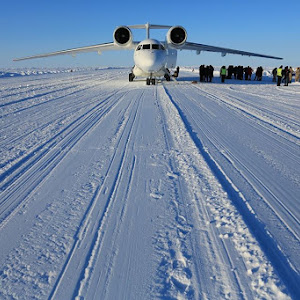
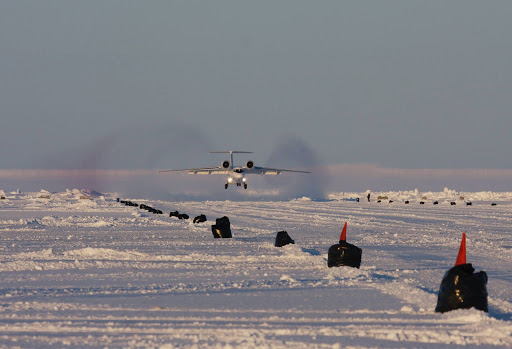
ExWeb is reporting that the runway at Barneo is complete and stable at long last, which is allowing the Russian built Antonov AN-74 aircraft to safely land and deliver important supplies and people to the Arctic. You may recall that the team of engineers who build the Barneo camp experienced issues with the blue ice landing strip, which cracked on four separate occasions, even forcing it to be relocated twice.

Amongst the groups that have now flown to Barneo so far are guided last degree ski teams that will spend the next ten days or so traveling across the frozen Arctic Ocean on their way to 90ºN. Several research teams are also out on the ice, as were Arctic marathon runners who were able to complete their race after several delays.

Because of the long delays to the start of the season, it looks like Barneo could stay open later than normal. Typically it begins to wind down operations by late April, but it is now looking like it could stay open into early May due to the backlog of people waiting to reach the ice.

Meanwhile, the Race Against Time team reports that ice conditions are now improving dramatically. They have moved away from open water and are now skiing over solid ice, which is allowing them to make better time, covering 10 nautical miles yesterday. But the continue to see foot prints from polar bears and even arctic foxes, reminding them that they are not alone out on the ice. The team is on its way to the North Pole and should arrive there late this week or early next.

12/20/2015

North Pole 2016: British Team Completes Expedition

As expected, the British Race Against Time team completed its journey yesterday, reaching the North Pole after 13 days out on the ice. The Pole marked the finish line for what was a demanding trek that began long before they ever set foot in the Arctic, and culminated at 90ºN early yesterday.

It took Mark Wood, Paul Vicary, and Mark Langridge just 4 hours to complete the final push to the Pole yesterday, facing more ice rubble and fields along the way. The squad saw plenty of that, plus plenty of other obstacles over their two weeks of skiing north, including open leads of water and blocks of ice the size of a house. They also witnessed the effects of climate change, with thinning ice, warming temperatures, and the Arctic Ocean uncovered in surpassingly large areas.

The 13-day expedition was far shorter than the trio of explorers originally envisioned. Initially the plan was to ski the full distance to the North Pole via the Russian side of the ice. Later, they decided to change directions, and travel from the Pole to Ward Hunt Island in Canada instead. But delays to the start of the expedition pushed back their start, making that much longer journey an impossibility. Instead, they elected to complete a journey that crossed two degrees of latitude instead. The shortened trip still allowed them to observe the environmental impact they had hoped to learn more about, but they had hoped to collect more data over a larger area of the Arctic.

The three men didn't spend much time at the Pole. They were picked up by helicopter last night, and flown back to the Barneo Ice Camp where they now are waiting for transportation back to Europe. It might take another day or two for that to happen, but soon they'll be on their way home.

The North Pole season will continue for another week or so as some "last degree" teams continue to ski to the Pole and some research teams wrap up their projects. Soon though, the Barneo camp will pick up for another year, and the Arctic will be abandoned once again. At this point, it is impossible not to wonder if the age of Arctic exploration is quickly coming to an end as climate change alters the landscape their forever.

7/18/2015

North Pole 2016: Race Against Time Team Changes Direction Again, Delays at Barneo Continue

After a number of false starts and delays, the North Pole season is underway at long last. But while the first team has now hit the ice, challenges remain at the Barneo Ice Camp, where regular flights are just now starting after bureaucratic issues caused even more issues.

First, an update on the Race Against Time team, which was finally dropped off on the ice yesterday, although they have once against changed direction due to their shortened window for skiing across the Arctic. Originally the plan was for British explorers Mark Wood, Paul Vicary, and Mark Langridge to ski from the Russian side of the Arctic Ocean to the North Pole. When that route started look tenuous, they elected to change their plans and fly to the North Pole to ski south to Ward Hunt Island in Canada instead.

Now, thanks to all of the delays in flights and at the Barneo camp, the team has roughly two weeks to conduct their expedition. This has caused them to switch their plans once again, now skiing the final two degrees to the North Pole instead. The trio were dropped at 88ºN yesterday, and will now spend the next 12-15 days skiing to the top of the world. Along the way they'll conduct research on the impact of climate change on the Arctic while documenting current conditions there.


Meanwhile, the team of engineers at Barneo have now completed their fourth runway made of blue ice. The previous landing strips suffered cracks due to the movement of the ice, making them unsafe for incoming flights. The team was in desperate need of resupply, and immediately called for a large aircraft to bring them food and fuel.

But after that flight, the first aircraft carrying skiers, explorers, researchers, and other people was scheduled to take off in an attempt to get things back on schedule in the Arctic. Unfortunately, the Norwegian government scrubbed that flight and required the Barneo team to fill out permits for all 11 flights that they had already scheduled. This paperwork has caused further delays, but the first five flights are now on the docket with the others to follow.

It seems highly likely that Barneo will stay in operation for longer than usual. Typically it begins to wrap up operations in late April, but with these long delays it seems the Arctic season will probably stretch into May. How this will impact travel there remains to be seen, but with the spring melt already underway, it seems likely that this will continue to be a very unusual year indeed.

5/26/2015

Arctic 2016: North Pole Team Changes Direction, Now Heading South Instead

Back in January I told you about the Race Against Time team, a group of three polar explorers who were planning on skiing to the North Pole from the Russian side of the ice this season. They had originally planned to set out this month on what promised to be an arduous journey that has become increasingly more difficult in recent years due to climate change. But now, the objective of the expedition has changed, as has the direction they'll be traveling.

This past weekend, the team – which consists of Mark Wood, Paul Vicary and Mark Langridge – announced that instead of setting out from Russia in February, they will now fly to the North Pole in April, and ski south to Canada instead.

The expedition remains aptly named, as the trio of explorers will still be racing against time. If all goes according to plan, they'll set off from the Pole on April 1, and will have just 35 days to reach their pick-up point at Ward Hunt Island, which falls just along the Arctic Circle. Why they tight constraints on the travel? Because after May 5, the Canadian aircraft won't be able to land on the ice as the spring thaw begins. That leaves them no choice but to cover the 470 nautical miles (870 km/540 miles) in just 35 days, which would beat the current record for this route by 3 full days.


I've said for sometime now that the toughest challenge in exploration and adventure right now is a ski expedition to the North Pole. It has only been done once in recent years, and as the Earth's climate changes it is only becoming more difficult. So, when this expedition was originally announced, I was looking forward to seeing how this team would do. Now, their entire journey has changed dramatically, and as a result this will be a very different one than was originally proposed.

That isn't to say that traveling south will be any easier. The team will still face massive challenges on their expedition, including melting Arctic oceans, unpredictable weather, massive ice flows to overcome, and more. But heading south does allow them to use negative drift to their benefit, as they'll often continue to make up ground even while sleeping as the ice they camp on floats away from the North Pole.

As of right now, I'm unaware of any other teams that are planning expeditions to the Arctic this season. If more come forward, I'll be sure to share their stories and follow them as they make their journeys. But considering the costs, challenges, and dangers of such a trip, I don't anticipate too many others joining the party. We'll have to wait to see however, as there will certainly be "last degree" skiers and a few other unique expeditions.

In the meantime, we'll have to wait to see how things unfold.

2/11/2015

Barneo Ice Camp Closes for 2016

The 2016 Arctic exploration season came to an end last week when the Barneo Ice Camp closed for another season. The temporary ice base is built on an ice flow in the Arctic Ocean each year, and for several weeks it serves as the launching point for various expeditions, research teams, and well-heeled adventure travelers to travel to the North Pole or explore the region. This year it was clear that the Arctic continues to be a place in transition, with the future of travel there seeming more difficult than ever.

For the second year in a row there were now full-distance skiers to the North Pole. The logistics of such an expedition seems to be getting more challenging with each passing year, and climate change is making that journey more difficult than ever. I've said before that the toughest expedition on the planet is skiing to the North Pole, and we may actually have seen the last team to do that a few years back. Others have announced plans to attempt that journey, but no one has been able to duplicate it. That was the case this season as well with the Race Against Time squad, and I think it will probably be the same for future teams too.

2016 was a difficult year for the team that builds and operates the Barneo base as well. Not only did they have problems building and maintaining the ice runway there, they also ran into issues dealing with the Norwegian government too. The challenges with the runway were the result of the Arctic Ocean churning the increasingly thinning ice there, causing the landing strip to crack. Those problems aren't going away, and will probably continue to get worse in the years ahead.

The Barneo team has announced that they'll avoid traveling through Svalbard in Norway moving forward, and will instead use Franz Josef Land for their logistics starting in 2017. The friction with the Norwegians began when a reporter claimed that a team of Ukrainian commandos passed through Norway on their way to Barneo – something the Barneo staff denies – which calls into question whether or not the flights from Svalbard to the ice camp posed a security threat. As a result, the Norwegian government put new restrictions on the Barneo flights, which ultimately forced the change of direction for future seasons.

The 2016 Arctic season was reasonably successful with marathon runners, researchers, explorers, adventure travelers, and more passing through Barneo. Now, it'll be another year before we'll see if anyone can make the journey to the North Pole again. Good luck to the explorers aiming for that feat in 2017.

11/19/2014

Trio of Adventurers Set to Travel From the Arctic to the Atacama

A trio of adventurers is heading north to start an epic journey that will span more 1500 km (932 miles) under their own power, and take them to environments that range more than 100 degrees celsius in temperatures.

The team consists of ultrarunners Ray Zahab, Jen Segger, and Stefano Gregoretti, who are currently en route to Qikiqtarjuaq, a Canadian island located in the Arctic Ocean, where they will begin the first stage of the expedition. Once there, they'll start heading south over the frozen landscape by fat bike and foot. Their route will take them to Baffin Island, which they'll traverse on their way to the community of Pangnirtung. Along he way, they'll cross 300 km (186 miles) through harsh arctic conditions where temperatures are expected to plummet as low as -50ºC (-58ºF).

Immediately after finishing the first leg of their journey, the three endurance athletes will next travel to South America to begin the second phase of the adventure. They'll be heading to northern Chile, where they'll make a traverse of the Atacama Desert, the driest place on the planet. They'll follow the same route that Zahab used when he ran across the Atacama on foot back in 2011. This time out though, they'll cover the 1200 km (745 miles) on mountain bike. While in the desert, the thermometer will reach 50ºC (120ºF), a stark contrast to the northern stage of the expedition.

The expedition has been dubbed Arctic 2 Atacama, and it should be officially underway in just a few days. The website is still filling in with information, but once things go live, expect daily updates on the team's progress, including status updates and videos from the trail. This promises to be quite the grueling journey, but a fun one to follow.

Good luck to Ray, Jen, and Stefano.

3/14/2014

Arctic Explorers Bring Bad News After Sailing Northwest and Northeast Passages

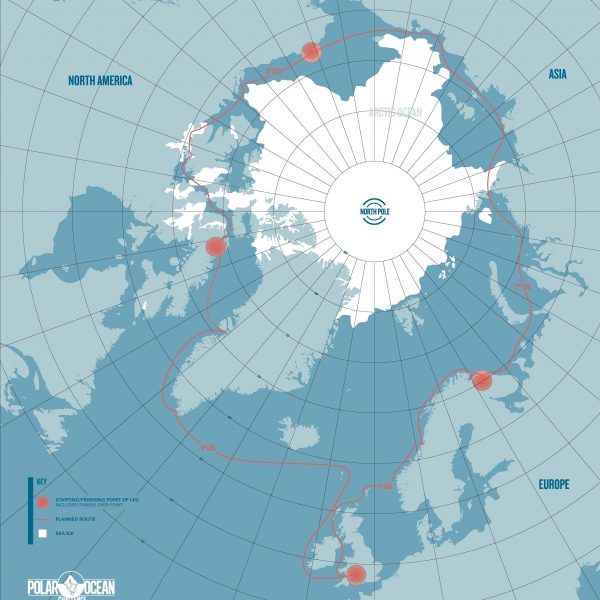
One of the most ambitious and interesting adventures of the summer has been the Polar Ocean Challenge. Led by famed explorer David Hempleman-Adams, the objective of the expedition was to sail both the Northeast and Northwest passages in a single year, circumnavigating the North Pole and taking stock of the arctic sea ice along the way. A few days back the crew of adventurers, sailors, and researchers completed a major milestone of their journey, and they brought back some sobering news about the state of ice in the Arctic Ocean.

The sailing ship Northabout set sail from Bristol, in the U.K. back June, making way for Norway before proceeding on to Russia to the start of the Northeast Passage. The ship ran into a delay at that point due to pack ice still blocking the route. That isn't too uncommon in the early part of summer, as it generally takes a few weeks before the passage clears. From there, they navigated on through the icy waters of the Arctic before exiting into the Northern Pacific and crossing over to Alaska. The next stage of the journey was through the Northwest Passage above Canada, which is the section that was just completed. Now, the plan is to sail on to Greenland, and then back home to Bristol.

By successfully navigating through the both the Northwest and Northeast passages, the crew proved that those once mythical routes are now fully open, and accessible. They also became the first ship to make such a journey in a single season, although they certainly won't be the last. Climatologists now predict that both passages will see increasing numbers of commercial traffic before the middle of the century, even by ships that are not hardened against ice.


On the Polar Ocean Challenge website the team posted a press release a few days back sharing the news of their successful completion of the Northwest Passage, which took just 14 days to finish. That's an incredibly fast time through that part of the world, but the team revealed that they had encountered almost no ice along the entire route. In fact, in the two weeks that they spent there, they came across ice only twice in 1800 nautical miles (3333 km/2071 miles).

This news is both astonishing and troubling at the same time. It now seems pretty clear that both the Northwest and Northeast Passages will soon be open for longer periods of time each year, and that they will be safer than ever to pass through. The Arctic sea ice is a bit like the canary in the coal mine, giving us an indicator of just how much impact climate change is having on our planet.

The crew of the Northabout is on the home stretch now, having completed the most difficult sections of their voyage. The team's website shares some important information about their expedition, which has now been at sea for more than 20 weeks and covered over 13,500 nautical miles (24,076 km /14,960 miles). Perhaps the most startling statistic of all however, is that researchers about the ship have recorded a 13.4% drop in the sea ice levels, which is a faster and higher rate than was expected.

I suspect these kinds of reports will become the norm moving forward. It is still troubling to read however.