Showing posts with label Expedition. Show all posts

12/14/2017

Himalaya Spring 2016: Alan Arnette Posts Pre-Season Preview

Even though the calendar says that it is only February, the 2016 spring climbing season in the Himalaya really isn't all that far off. In less than two months, climbers from all over the world will be finalizing their travel plans, packing their gear, and saying goodbye to loved ones as they head off to Nepal and Tibet to begin what is sure to be another very interesting year in the tallest mountains on the planet.

By most accounts, it is shaping up to be a quieter year on Everest, where tragedies the past two seasons have put an abrupt end to climbing operations. Several of the leading outfitters that operate on the mountain say that the number of clients they'll be guiding this year are down, as many are taking a wait and see attitude. That said however, I'm sure Everest will still be a very lively place to be this spring, with lots of great stories to follow.

In preparation for the start of the season, Alan Arnette has already kicked off his now legendary coverage of the proceedings on the mountain. Yesterday, Alan posted his preview of the 2016 spring season ahead, which fittingly enough begins with a recap of some of the major stories from the past few years – including a much publicized brawl between Sherpas and prominent climbers, the deaths of 19 Sherpas as a result of the collapse of a serac in 2014, and the devastating aftermath of the deadly earthquake that struck last year.

Each of those events has left its mark on the climbing community on Everest in the past few years, causing some to sour on attempting to summit the tallest mountain on the planet. But many of us believe that these are just temporary setbacks that will be overcome as we move forward.

In his article, Alan takes a look ahead at the 2016 season, which he too expects to have low numbers for several reasons. The lingering impact of the earthquake – at least in terms of public perceptions – is a major one of course, but also because Nepal is in the middle of a significant fuel crisis, with a shortage of gas making its way into the country thanks to a blockade from India. On top of that, expedition companies are being forced to raise their prices too, which of course has an impact on how many people sign up for an expedition as well.

If you're someone who keeps up with the Everest scene each year, you'll definitely want to give this a look. It provides some great insights into what is happening in Nepal presently, and how the currently political culture there is shaping the climbing season ahead. As always, it shouldn't have any shortage of intrigue and surprises.

12/12/2017

Antarctica 2016: Interactive Map Explains Ski Routes to the South Pole

This week intrepid men and women from all over the world are putting the finishing touches on their preparation and planning for a slew of upcoming ski expeditions to the South Pole. In a matter of days they'll be jetting off to Punta Arenas, Chile or Cape Town, South Africa where they'll then catch a flight to Antarctica to begin a journey that will take them weeks to complete. Most will begin at Hercules Inlet and will cover approximately 1130 km (702 miles) on their way to 90ºS. But others will take alternate routes that offer different levels of difficult and unique paths to that same goal. Now, on the eve of the start of the new Antarctic season, we have an interactive map that shows all of the various routes that are used to ski across the frozen continent.

The map is hosted at ExplorersHouse.com and includes 9 different paths that explorers use when traveling to the the South Pole as well as 1 path to reach the Pole of Inaccessibility. Clicking on any of the routes will provide information about its length, who first pioneered it, and the year in which it was traveled. For instance, both Amundsen and Scott Routes are marked on the map, which were first opened back in 1911-1912, when the two legendary explorers were battling one another to be the first to reach the South Pole.

Explorer House included some text with the map that provides context on what exactly a "valid" expedition truly means. In this case, that is defined as starting anywhere along the Antarctic coast and skiing all the way to the South Pole. This rules out a "last degree" journey of course, which  is exactly what it sounds like – a short ski expedition from 89ºS to 90ºS. Those "tourist trips" are typically only about 100 km (62 miles) in length, while a full expedition covers more than 1000 km (620 miles).

As we head into the start of a new Antarctic season, you'll find that the vast majority of the skiers are using the Hercules Inlet Route, which has become the standard for these types of expeditions. They'll fly out of Punta Arenas and land at the ice camp that is built and maintained by ALE at Union Glacier. From there, they'll catch another short flight to ferry them out to their starting point. If they are going solo and unsupported, they'll all be dropped off at unique locations to begin the journey, as the rules for adventure state that they can't have any contact with another individual along the way in order to maintain that status.

Later this week – weather permitting – the first teams will begin their march to the Pole. Once they're underway, we'll provide regular updates on their progress. There are a number of goods stories to follow, so it should be an interesting year in the Antarctic.

11/24/2017

Winter Climbs 2016: Playing the Waiting Game on Nanga Parbat

The winter season has arrived in full force on Nanga Parbat, where a handful of teams are still hoping to complete the first winter ascent of that mountain. Unfortunately, their chances don't look good over the next few days, as a massive storm has arrived in the region bringing high winds, extremely cold temperatures, and plenty of snow with it. So for now, the climbers are all stuck in Base Camp, waiting for a weather window open. That isn't expected to happen for another few days at the earliest, but after that another summit push could potentially begin.

Perhaps the biggest news from the mountain is that the Polish Justice For All team has left the Rupal Face and are heading for home. The squad was the first to arrive on Nanga this winter, and had been making steady progress, even reaching as high as 7500 meters (24,606 ft). But upon descending, they team realized that they were running low on essential supplies, and that their time was getting short. With bad weather in the forecast, they knew they wouldn't get another chance, so they elected to leave BC last week.

The Rupal Face hasn't been completely abandoned however, as just as the Poles were departing, another climber arrived. Brazil-born, U.S. citizen Cleo Weidlich reached Base Camp late last week, bringing three Nepali Sherpas along with her. She's hoping to become the first to stand on the summit of Nanga Parbat in winter, but will be doing so in a light and fast fashion. Reportedly, she acclimatized in Nepal before heading to Pakistan, but her late arrival puts the potential for success in question.

Over on the Kinshofer Route, two strong teams have now officially joined forces. A five-person group consisting of Alex Txikon, Daniele Nardi, Ali Sadpara, Simone Moro, and Tamara Lunger are cooperating with one another in an attempt to reach the top. For now though, they are all huddled together in BC, waiting for the weather to clear. Alex, Daniele, and Ali are acclimated and ready to go, although Simone and Tamara may need a bit more time at altitude before they are ready.

For now, each of the teams is sitting, waiting, and watching the weather. The forecasts calls for conditions to remain mostly unchanged until the weekend, but after that things are a bit murky. As you can imagine, conditions have to be right to climb Nanga Parbat during the summer, let alone the harsh winter season. And as of right now, it looks like the first winter ascent is as far off as it has ever been.

10/26/2017

Video: Climbing the South Face of Annapurna

In terms of pure altitude, Annapurna ranks 10th amongst the 8000 meter peaks, topping out at 8091 meters (26,545 ft). But when it comes to level of difficulty to climb, it ranks second to perhaps only K2. In fact, it is considered the most dangerous mountain on the planet by many thanks to its frequent avalanches and technical challenges, and yet it continues to hold an allure over many climbers who travel to its flanks each spring to have a go at the summit.

This video a short documentary about such a climb. In it, we join famed Swiss mountaineer Jean Troillet as he attempts Annapurna back in 2012. The clips gives us some impressive shots of the mountain, and provides plenty of insights into what it takes to take on such a difficult and dangerous climb. If you're a fan of Himalayan expeditions to the big peaks, you'll definitely want to watch this short-film, which takes us along on one of the toughest climbs of all.

10/24/2017

Video: Take a Tour of a Himalayan Base Camp

Ever wonder what it is like to live in Base Camp on a Himalayan climb? Than you'll definitely want to watch this video. It takes us to 15,000 feet (4572 meters) on Ama Dablam, where Adrian Ballinger of Alpenglow Expeditions takes us on a tour of BC. While obviously located in a remote – and very scenic – location, you might be surprised at how comfortable and accommodating Base Camp life can be.

9/23/2017

Video: Dave Cornthwaite's Expedition 1000 Project

If you've been reading this blog for any length of time, you've no doubt seen me mention Dave Cornthwaite and his Expedition 1000 project on more than one occasion. The concept is a simple one: Dave wants to undertake a series of expeditions, covering 1000 miles (1609 km) or more, completely under his own power. He's already been successful at a number of those expeditions and he is always planning his next one too. The beautiful and inspiring video below shares the philosophy behind Expedition 1000 – where it came from and where it is going. It also gives us a glimpse at some of the things Dave has accomplished so far on his amazing adventures.

Dave isn't letting up however. Later this year he has a 2000 mile recumbent bike ride through Chile's Atacama Desert scheduled and another 1000 mile non-motorized expedition in Europe as well. After that, it'll be 2000 miles of kitesurfing in Brazil.

At this point, I'm not sure if he ever stops moving.

Dave Cornthwaite's Expedition1000 from davecornthwaite on Vimeo.

9/08/2017

Antarctica 2016: Two More Skiers Complete Their Antarctic Expeditions

The final days of the 2016 Antarctic season are truly upon us now, as the last plane scheduled to leave the frozen continent – weather permitting of course – will fly out today or tomorrow, bringing an end to an eventful few months there. As the final days tick away, two more skiers have completed their expeditions at long last, and are now preparing to head home.

Finnish adventurer Risto Hallikainen has finished his return journey to Hercules Inlet, arriving back at that point on January 24, 71 days after he began his round-trip journey via the South Pole. Along the way, he covered 2260 km (1404 miles), becoming the first Finn to make the there-and-back-again Antarctic trip. After camping at Hercules briefly, he was picked up and flown back to Union Glacier, where he should be on the last flight out to Punta Arenas, Chile.

Similarly, ExWeb is reporting that Polish solo skier Malgorzata Wojtaczka has reached the South Pole as well, brining an end to her expedition, which also began at Hercules Inlet. She started on November 18, and reached 90ºS on yesterday, on January 25. Her expedition took 69 days.

I tried to follow Malgorzata throughout her journey, but didn't end up reporting on her progress much, mostly because updates were few and far between. It is good to know that she has now arrived safely, and will be flying back to Union Glacier from the Pole as well.

Also awaiting the final flight out is the British Military Team, which also completed a traverse of the Antarctic continent. The boys arrived back at Union Glacier a few days ago, and are now eager to start making their way home. They spent 67 days out on the ice, covering the journey to the South Pole and the return trip across the Shackleton Glacier. After resting up, they're eager to return to the U.K.

Finally, Mike Horn will soon be the last of the skiers out on the ice. As everyone else prepares to leave aboard an ALE aircraft, he continues to kite-ski across the continent to meet his waiting ship. The winds have returned to help push him along, but he still has some miles yet to cover before he's done. From there, he'll sail into the South Pacific where other adventures await. Eventually he'll make his way north though, where he hopes to traverse the Arctic icecap in similar fashion. You know we'll be following that adventure closely too.

That's all for today. More updates over the next few days as the news warrants.

9/01/2017

Antarctica 2015: Emma Kelty at the Pole

It wasn't easy, and it took longer than expected, but South Pole skier Emma Kelty has finally reached her goal. The British adventurer skied the last 12.5 nautical miles (23 km/14.3 miles) yesterday, capping a 700+ mile (1126 km) journey that began back in November. Over that period of time she has traveled with a teammate who came and went, and two different guides, but her focus, determination, and persistence eventually paid off. Congratulations to Emma on a job well done. She'll now hop a flight back to Union Glacier before proceed to Punta Arenas, and then home.

I'd been saying for a couple of weeks now that her arrival at the Pole would pretty much drop the curtain on the current Antarctic season but as we learned a few days ago, there is yet one more expedition to come. Australian Charles Werb will set out from Brisbane tomorrow on his way to Cape Town, where he'll have a brief stop over before leaving for Novo Station. His plan is to drive part of the way to the South Pole, and then use a specially designed sled with a sail to propel him the final leg of the trip. It should only take him about 7-14 days to make the journey, and if everything goes as expected, he'll get underway on Sunday of this week.

It has certainly been a very long, and at times eventful, season in the Antarctic. Of course, it will mostly be remembered for the tragic death of Henry Worsley, who succumbed to illness that he picked up on his long journey. He will not soon be forgotten.

I'll be keeping an eye on Charles' progress over the next few weeks as well. While not quite as long and grueling as some of the others we've followed this year, it should be interesting nonetheless.

8/18/2017

Antarctica 2015: British Explorer Henry Worsley Dies Following Evacuation From the Antarctic

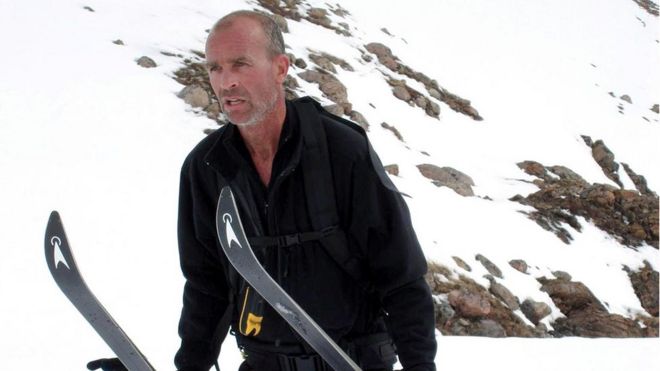
There is very sad news to report from Punta Arenas, Chile today. British polar explorer Henry Worsley has passed away from exhaustion and other ailments as a result of his attempt to complete a solo and unsupported crossing of Antarctica. He was 55 years old. 

Worsley set out on his journey back in early November with the goal of becoming to the first to traverse the frozen continent alone and without assistance. He was out on the ice for more than 71 days, and had covered over 900 miles (1448 km) completely on his own. He was just 30 miles (48 km) shy of reaching his goal when he called for evacuation last Friday, January 22. At that point he was exhausted beyond measure, and couldn't find the strength to push on any longer. A flight was dispatched to retrieve him, and he was flown back to the Union Glacier camp before continuing on to Punta Arenas.

Once he arrived back in Chile, Worsley was taken to a hospital where he was diagnosed with peritonitis, which is an inflammation of the peritoneum, a thin later of tissue that lines the inside of the abdomen. The condition is generally caused by a bacterial infection in another part of the body. 

Henry's wife Joanna flew from the U.K. to join him, and doctors performed surgery in an attempt to save his life, but the condition was too advanced and his exhausted body had no strength to fight off the attack. Joanna released a statement saying she was "heartbroken with sadness" and that her husband had passes away due to "complete organ failure."

We've been following Henry's progress in the Antarctic here at The Adventure Blog since before he even set out on his journey. It was a difficult endeavor to say the least, but when he reached the South Pole back on January 4th he seemed strong and in good spirits. In recent days it became evident that he was struggling however, as the long journey truly took its toll. He skied in near whiteout conditions his last few days on the ice, and photos of him in his tent showed a man who was gaunt and weary beyond measure. 

I never met Henry in person, but I followed his expeditions closely and cheered him on in his adventures. With this Antarctic crossing I read his expedition updates nearly every day, and wrote numerous times about his progress. When I read the news that he had passed away I felt incredibly sad. He was strong, adventurous spirit who challenged himself to amazing things, and he will continue to serve as an inspiration to many of us. 

Worsley's story will also serve as a reminder. Despite what we might think, we haven' quite conquered the planet just yet. There are still some tasks that remain incredibly difficult, and Mother Nature is the most formidable opponent of all. 

I want to express my sincerest condolences to Henry's wife Joanna, and all of his friends and family. We lost a great man today, and he will be missed. 

7/20/2017

Antarctica 2016: Johanna Davidsson at the Pole and in Record Time!

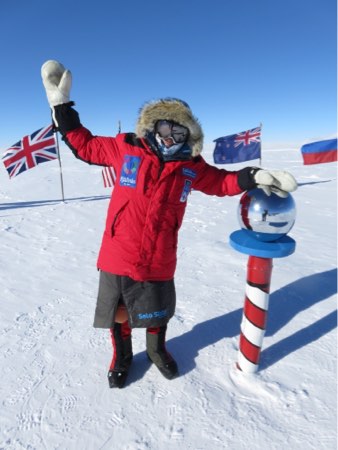
Before taking a hiatus for the holidays last Friday, I posted a story about Swedish adventurer Johanna Davidsson, who was on the verge of reaching the South Pole, and breaking the speed record for a female skier to reach that point on the planet. Now, we can confirm that she has indeed completed that stage of her journey, and has established a new mark for the fastest time from Hercules Inlet to 90ºS by a woman.

In the original story that I posted, I wrote that Johanna was aiming to reach the South Pole by December 25 – Christmas Day. Instead, she crossed the finish line on December 24, which mean that her journey took 38 days, 23 hours, and 5 minutes. That's 10 full hours faster than Hannah McKeand did it back in 2006.

ExWeb reports that for Johanna, this was a completely unexpected record. It was never part of her plan to set a ski to the Pole in such a quick time, and had originally told the website that she planned on a 50 day journey. Instead, she found that her training and gear were more than up to the task, and while conditions were challenging at times, she was able to cover further distances than she had originally intended on daily basis.

The final stretch wasn't an easy one however. Whiteout conditions made skiing a challenge, and the snow was soft enough that it slowed Johanna's progress. But, she pushed on with her goal in sight, and was able to finish one very long day of skiing to make it the research station located at the bottom of the world, where she was welcomed by the staff there with a hot meal and champaign.

The journey isn't quite done just yet however. She'll rest briefly at the Pole before turning around and heading back to her starting point at Hercules Inlet. If she's successful, she'll become the first Swede to complete the round-trip journey.

Congrats to Johanna on an amazing job setting a new speed record. We'll be following along as you head back to the coast.

7/16/2017

Russian Teens Skied to the North Pole in Just 5 Days

The 2016 Arctic Season may be over, but there are still a few interesting stories to share. For instance, ExWeb has posted an article about a team of Russian teens who skied to the North Pole (last degree) in just 5 days following a host of delays that cut into their planned time out on the ice.

The group of seven teens had planned to make a last-degree ski expedition to the North Pole via the Barneo Ice Camp. Their original schedule gave them 7-10 days to complete the journey, which covered roughly 125 km (77.6 miles) over the frozen Arctic Ocean. That means they were able to sustain a pace of about 25 km (15.5 miles) per day, which is an excellent pace considering the conditions they encountered on the ice.

The challenges of the Barneo Ice Camp have been well documented on this blog, and elsewhere, this year. The ice flows that the temporary base is built on were being buffeted by ocean currents throughout the season, causing the blue ice runway there to crack multiple times. That caused a lot of delays, causing the Russian teens, and a number of other teams, to back up while they waited for their chance to fly out to the camp. Eventually the runway was completed, and the flights started arriving, but it took awhile to catch up on the backlog of people who were waiting to arrive in the Arctic. This cut into the time that the skiers had to reach the Pole.

According to ExWeb, when the team was retrieved from their finish line at 90ºN, they did not look tired or exhausted. In fact, they still had a lot of energy and were so excited to have reached the North Pole. It was quite a journey for these young adventurers, many of whom have wanted to ski through the Arctic for the better part of their lives.

I know that this is "only" a last degree ski expedition, but it is still an impressive feat to see these teenagers make that journey in such a quick pace. Five days to cover a degree of latitude is quite a short time frame, and I know a few polar explorers who would be hard pressed to maintain that same pace themselves. Also, how cool is it to be a teenager and get to go to the North Pole. I clearly went to the wrong high school.

6/18/2017

Want To Get Along With Your Mountain Guide? Alan Arnette Explains How!

Climbing a mountain, even one that isn't nearly as large as you find in the Himalaya, can be a frustrating, nerve wracking affair. If you happen to be on a two-month long expedition, those feelings can be heightened even further. Being able to get along with your teammates is of vital importance of course, but probably even more vital is the ability to get along with your mountain guide. In his latest blog post, Alan Arnette gives us the perspective of both the client and the guide, with the hope that it will bring a bit more understanding between both parties and make any climb much more enjoyable all around.

Alan has been on more than 35 expeditions, many of which have taken him to the Himalaya and lasted for weeks on end. During that time, he has seen just about everything you can imagine. On top of that, his years of reporting on the mountaineering scene, particularly on Everest, lends him a unique perspective of the relationship between clients and guides. In this blog post, he discusses the characteristics of both the "nightmare client" and "nightmare guide," both of which he has witnessed in action.

The point of this article isn't to shame either the guides or climbers. On the contrary, it is meant to foster a little understanding of the perspective of both parties, giving them pause to consider each other's viewpoints on future expeditions. If they each have a little more insight into what the other is thinking or feeling, perhaps they'll be able to work more cohesively with one another moving forward.

If you're planning a big expedition in your future, the article is definitely worth a read. But even if you're just an an armchair mountaineer, the story offers some genuine perspective of what happens on a big climb. As usual, Alan does a great job of setting the scene and giving his readers good insights into an expedition to the Himalaya.

This is another of Alan's pre-Everest 2014 blog posts. Last week he also broke down the costs of a climb on the highest mountain on the planet. If you missed that one, it is worth a read as well. You'll find it here.

6/11/2017

Two Adventurers Attempting Winter Traverse Of The Brooks Range

Located in the extreme northerly regions of North America, the Brooks Range is an 1100 km (683 mile) mountain range that stretches across parts of Alaska and Canada. Largely uninhabited, save for a few inuit villages, these mountains are remote, rugged and demanding in the best of times. During the winter, the extreme cold and large amounts of snow, makes them an incredibly inhospitable place that few people ever experience. Earlier this week, a pair of intrepid explorers set out on an epic journey to attempt to traverse the region during the coldest, most demanding time of year.

On Tuesday, January 7, John Cantor and Evan Howard began what will eventually be a two-month long expedition that will cover approximately 1700 km (1056 miles) of total distance. Traveling on dogsleds and skis, while pulling sleds filled with supplies and gear behind them, they will attempt to make the first winter traverse of the Brooks Range. They set off from the village of Kotzebue and hope to eventually wrap things up in Kaktovik, provided the weather cooperates with them over the next eight weeks.

John and Evan are posting updates to their Facebook page and two days in, they are already finding the expedition to be tough going. So far, strong headwinds have made it difficult to make much progress, and John has indicated that it has been even tougher than they had anticipated. Considering where they are at, I would expect they'll face similar conditions in the days ahead, but hopefully they'll get their legs under them after a week or so on the trail. Much like traveling in the polar regions, I'm sure it'll take some time to acclimate to the conditions.

Last year, the two men went on a training expedition to the Brooks Range to get an understanding of what they'd be dealing with. The video below is footage from that exploratory excursion. It looks like a beautiful place but also one that will be testing them at every step of the way.

Thanks to reader Jack McClure for sharing this great adventure.


6/05/2017

North Pole 2016: Race Against Time Team Faces Big Challenges

After overcoming a series of challenges just to get to the starting line, the Race Against Time team is now out on the Arctic ice and making their way towards the North Pole. But as expected, this journey to the top of the world hasn't been an easy one so far as a number of natural obstacles force the team to earn every mile.

Last week, the team of Mark Wood, Paul Vicary, and Mark Langridge were finally dropped off on the ice after facing unprecedented delays to the start of their expedition due to issues with the runway at the Barneo Ice Camp that serves as the gateway to the Arctic each season from the Russian side of the ice. That caused the trio of explorers to rethink their journey for a second time, switching from the original plan of a full-distance ski journey to the North Pole to an expedition that actually began at 90ºN and would head south to Ward Hunt Island in Canada, before finally settling in on their current route, a two-degree ski expedition back to the Pole.

The squad has now been out on the ice for five days, and they've discovered that the Arctic is everything they had expected and more. In the first few days they faced rubble fields of disrupted ice, with many blocks the size of cars and even a few larger than a house. As they inched north however, other obstacles have begun to appear. For instance, yesterday the team only gained 4 nautical miles of distance thanks to a large lead of open water that they had to cross. The only way to do so is to don drysuits, enter the water and swim across while pulling their gear in inflatable rafts.

As if that wasn't enough, the men have also come across a set of footprints left behind by a polar bear. That means that one of these big carnivores is in the area, and they have been known to stalk polar explorers that pass through their domain. So far, no sight of the creature but they will remain wary and vigilant on the trail.

The hope is that the team can reach the North Pole sometime next week. When they originally set out, they thought it would take 12-15 days, and they are still on track to reach their goal. What else they'll find on the way north remains to be seen.

5/24/2017

Walking The Nile Update: Into Uganda

It has been awhile since we checked in with Levison Wood, the British explorer who is walking the length of the Nile River in Africa. The journey began back on December 3rd, and Wood has been making steady progress through often challenging and difficult conditions. Starting at the furthest source of the river, located in the highlands of Rwanda and Burundi, the trek will eventually cover more than 4000 miles (6440 km) and require a year to complete, making it one of the most amazing expeditions in recent memory.

Currently, Lev is in Uganda, where he has been enjoying a bit of downtime in the capital city of Kampala. There, he has found himself to be a bit of a celebrity, and had a very nice welcome party a few days back. He even received a ritual blessing from one of the more well-known local witch doctors, that was performed to keep him safe and give him strength on his journey.

Wood has now been joined on his expedition by a local Ugandan man named Boston. He has been traveling with the Brit for some time, and was reunited with his family when they arrived in Kampala as well. It isn't clear how long Boston will continue to walk with Lev, but his addition to the expedition reminds me a bit of Cho, the constant companion of Ed Stafford, the explorer who walked the Amazon a few years ago.

Wood and Boston have now completed the first 1000km (621 miles) of the walk, which means they still have a very long way to go before they reach the Nile Delta in the Mediterranean Sea. They are expected to attend a large festival in the town of Jinja this weekend before returning to the trail next week to resume the walk. After they leave Uganda, they'll face the uncertainty of travel in South Sudan, where political upheaval and old rivalries are making things difficult at the moment. They are still weeks away from crossing the border however, so hopefully things will have quieted down by then, and they'll be able to pass without too much difficulty.

You can follow the Walking the Nile expedition on Twitter, Facebook and on a special Channel 4 page dedicated specifically for the journey. Lev is posted regular updates, with good information from the field. It should be a lot of fun to follow along with his progress.

5/20/2017

Belgian Adventurer Completes Solo, Unsupported Trek Across Simpson Desert

A couple of weeks back I wrote about Belgian adventurer Louis-Philippe Loncke attempt to cross the Simpson Desert in Australia on foot and without the use of a cart to carry his supplies and gear. At the time, he was just preparing to set out for Oz to begin his odyssey, but now just a couple of weeks later, the expedition has come to a successful conclusion, breaking new ground in the process.

Just as polar explorers pull sleds filled with gear and supplies behind them when they head to the North and South Pole, desert explorers often use specially designed carts. These contraptions are built to roll over sand and dirt, and have enough capacity to hold all of the important supplies – including water – that are needed on such an expedition. They are also incredibly difficult to pull for prolonged periods of time, but are a necessary component for anyone traveling "unsupported" in those types of environments.

Loncke, who first crossed the desert back in 2008, was determined to prove that it was possible to walk through the "Dead Heart of Australia" without using a cart to support his efforts. To that end, he elected to use a backpack instead. This forced him to get creative with how he packed and approached this trek, as he had to carry 40 liters of water with him for the journey.

His water alone weighed 40 kg (88 pounds), which didn't leave much room for other gear. In order to save weight he eschewed the use of a stove and carried only 8 kg (16 pounds) of food which consisted mostly of muesli bars, figs, and chocolate. He did carry a tent, sleeping pad, and sleeping bag however, as well as a video camera, several battery packs, and two 360º cameras that captured the Simpson Desert in a way that is hasn't been seen before. All told, his backpack tipped the scales at  60 kg (132 pounds), when he set off on the journey.

While in the desert, Loncke managed to trek 300 km (186 miles) through one of the most inhospitable regions in Australia. The walk began at Old Andado Station and ended at Poeppel Corner, passing through the geographical center of the desert in the process. He had hoped to continue another 135 km (83 miles) to Birdsville, but when Loncke reached the ranger station in Poeppel Corner he was low on food and water and didn't have enough supplies to continue pressing on.

In addition to the usual challenges that the Simpson Desert poses, Loncke experienced something completely unexpected - rain! He says that it rained hard for three days and two nights, with tremendous lightning strikes across the region. The unexpected precipitation made it harder to walk each day, slowing his pace dramatically. He also reports that it led to soaked clothing and wet feet for those three days, which made for a cold, miserable experience at times. But the unexpected rain also brought a wild flower bloom, something else that was unexpected but much appreciated.

You can read more about Lou-Phi's experiences in the Simpson Desert on his blog site dedicated to the expedition. He is currently en route back home to Belgium, but will likely update it with more information going forward.

Congratulations to Loncke for achieving this impressive feat. He has potentially shown us another approach to desert exploration, and it will be interesting to see if anyone else follows suit moving forward.

3/26/2017

Antarctica 2016: Mike Horn Completes Longest Kite Ski Expedition Ever

As reported a few days back, Mike Horn has completed his traverse of the Antarctic continent by kite ski, and is now waiting for pick-up by his ship the Pangaea. It has been a very long couple of months out on the ice, but the first leg of his epic Pole 2 Pole expedition is done, although he is not safely off the frozen continent just yet, and it is unclear as to when exactly he'll be able to depart.

According to ExWeb, Mike covered approximately 5100 km (3168 miles) over the course of his 57 day journey. Of that, 2215 km (1376 miles) were just spent reaching the South Pole, while the other 2885 km (1792 miles) were covered continuing on to the far coast. If those distances are accurate – and there is no reason to believe they aren't – Horn's expedition will mark the longest kite ski journey across the Antarctic ever. ExWeb does point out however that Mike received some meals while at the South Pole, so his journey isn't considered solo or unassisted, even though both legs coming and going from the Pole fall into those categories.

The final few days of the journey were not easy ones. Whiteout conditions persisted throughout and massive sastrugi – hard ridges on the ice – made it tough to make progress. At times, Mike's kite would pull him along at a rapid pace, but his sled would get caught on the sastrugi, creating a tug-of-war situation with Horn in the middle. There were also points where his kite would suddenly come to a stop, and the heavy sled would barrel into the back of the skier, knocking him to the ground. Those must have been very frustrating moments to say the least.

Now, Mike is believed to be at Dumon d'Urville, a French science station along the coast. He is waiting for Pangaea to pick him up, but at this point it is unclear as to when that will happen. As reported earlier in the week, the ship experienced electrical failure and was forced to set sail for Tasmania for repairs. There is no word yet on when those repairs will be completed and how long it will take to return to get Horn. One thing is for certain however, the austral winter is on its way, and it will become much more challenging to come and go from the Antarctic in the days ahead.

Once he is retrieved from the ice, the original plan was to sail to Australia and New Zealand for some exploration and adventures there before turning north to the Arctic and the second phase of the Pole 2 Pole expedition. That will involve a crossing of the Arctic Icecap in much the same fashion as the Antarctic. We'll have to wait to see if those plans change in any way, but the Arctic season will be up on us soon enough, and that season has already gotten shorter and more dangerous than years past.

I'll post more updates when we have further news of the Pangaea and Mike's situation.

1/22/2017

Antarctica 2015: Running Out of Time

Following the sad news of the passing of Henry Worsley yesterday, there are still two teams out on the ice in the Antarctic, struggling to reach their respective finish lines. But the clock is most definitely ticking as the season grinds to a halt later this week. The last flight out is scheduled for Thursday – weather permitting of course. But depending on conditions, that deadline could get extended, although once this weather window closes, it doesn't open again for 10 months.

At the Union Glacier camp the staff and crew are busy packing up and preparing to leave the Antarctic once again. It has been another long and challenging season as they support the teams out on the ice, and no doubt more than a few of them are feeling the loss of Henry. But they are also a very professional team, and they know that there is a job to do before they head home once again.

South Pole skier Emma Kelty is still trudging ahead, slowly but surely making her way towards her goal. She's running a bit behind schedule, and feeling the pinch of time slipping away, but is also doing her best to reach 90ºS before the season runs out. As of her most recent update, posted on Friday of last week, she still had two degrees to cover before she reaches her goal. That equates to 222 km (138 miles) which is an awful long way to cover with such little time left on the clock. Personally, I'm not sure how she gets it done before the deadline, but we'll watch closely and hope for the best.

At the end of last week she not only received a resupply, complete with all kinds of goodies to help get her to the finish line, but she is now skiing with a new guide too. Apparently her pervious guide – Carl Alvy – had to depart Antarctica, so a new guide – named Patchi – has stepped in to take his place. The duo are now pushing hard to reach the finish line, and we'll just have to wait to see if they make it.

Meanwhile, elsewhere Devon McDiarmid and Stew Edge arrived back at Union Glacier earlier today. You may recall, the two men skied to the South Pole along with Mostafa Salameh, and Shahrom Abdullah, reaching that point back on January 17. While their companions hopped a flight back home, Dev and Stew used kites to travel back to their starting point. Their final push was an 18-hour day that ended with their arrival at the ice camp, which means they managed to ski the full distance back in less than 9 days. That's pretty impressive to say the least. They'll now get a few days rest before flying out to Punta Arenas, Chile.

As you can see, the 2015 Antarctic season is quickly coming to an end. In another day or two things will be wrapping up for the season, with everyone heading home. Hopefully Emma gets a chance at reaching the South Pole. She's worked very hard to get there, but time is definitely no on her side.

1/01/2017

Men's Journal Gives Us a Three-Year Plan for Climbing Everest

For a lot of people, climbing Mt. Everest is the dream of a lifetime. But thinking about everything that goes into preparing and planning for such an expedition can be overwhelming. Fortunately, Men's Journal is here to help, giving us a three-year plan to making Everest not just a dream, but a reality.

MJ's article was actually written back in 2014, with the plan of reaching the summit of Everest in the spring of 2017. But, if you ignore the precise dates, and focus just on the plan itself, the schedule can remain the same. And fortunately for all of us, the training starts in May.

The first stage of the Everest prep plan is to start getting into shape. The article says that you should start getting ready by building a strong fitness base of cardio, strength, and balance. Over the course of the three year program, that will be the focus of getting your body ready for the challenges of the Himalaya.

Next up, you'll also need to start seeing how your body does at altitude, so the plan is to bag a 14er, or a fourteen-thousand foot peak. This will not only allow you to put your fitness gains to the test, it'll let you build leg strength and lung capacity. With its 53 different 14ers, Colorado is a natural destination to bag one of these mountains, but there are plenty of others around as well.


The rest of the plan includes pushing your physical boundaries even higher by attempting more challenging peaks (Mt. Rainier for instance) and adding altitude. The Men's Journal schedule recommends traveling to Ecuador to climb Cotopaxi to get a taste for altitudes above 19,000 feet, although Tanzania's Kilimanjaro will do too. From there, it's on to Denali in Alaska – described as a "mini-Everest" – before attempting an easier 8000-meter peak like Cho Oyu. After that, Everest will be in reach.

In terms of creating a strategy for getting yourself ready to climb the Big Hill, this is about as good of a plan as any. You could literally go from zero mountaineering experience, to Everest in just three years if you stick to the schedule closely. What it doesn't offer is advice on how to pay for it all. Mountaineering expeditions aren't cheap, and even travel to and from these locations can be pricey. For most of us, that would turn this three year plan into one that would probably take a decade or more to wrap up.

12/25/2016

Excavation of Lost City Begins in Honduras

Last February a team of explorers and archaeologists traveled deep into the jungles of Honduras in search of a lost city. They had spotted what looked like the remains of ancient structures on satellite photos back in 2012, and after months of planning had finally set off to find what could be an important  archaeological site. They spent days in the dense rainforest, facing numerous challenges that include picking up a nasty local parasite that left their health in jeopardy. But at long last they found the site they were looking for, and their hard work seemed justified.

But exhausted, low on supplies, and in failing health, they were forced to retreat. The plan was to return with more supplies and better equipment to begin excavation of the site. They team of researchers kept the location of the ruins hidden, and the Honduran government dispatched a military detail to guard it day and night to ensure that it remained undisturbed until a proper archaeological dig could begin.

Last week the team of explorers who discovered the hidden city returned at long last, and the excavation is now underway. According to National Geographic, Honduran President Juan Orlando Hernández was on hand this past Tuesday to remove the first stone sculpture from its ancient resting place, even as other archaeologists uncovered other artifacts all around him.

According to Nat Geo, the ancient relic that Hernández uncovered is an impressive piece. It is described as a jar that has been carved out of basalt, and painted ornamentally. The sides of the container show two animals, one of which is believed to be a vulture that is commonly seen in the area. The artifact is one of 52 that were originally found at the foot of an earthen pyramid that is just one small part of a larger city that mostly remains covered by the dense jungle.


The lost city, which is in the Valley of the Jaguars in Honduras, is believed to be between 500 and 800 years old, but who built it remains a mystery. The fact that it is in such a remote area, far from almost any other signs of human habitation, is also interesting. The archeologists hope to learn more about the civilization that lived there as they uncover the artifacts that they left behind.

Using the same satellite imagery that was used to locate this site, the research team believes it has found a second, even larger city nearby. No one has visited that location yet however, although a preliminary scouting mission is expected to take place next week. That place could hold even more clues about this mysterious civilization that was living in this remote region of Honduras.

These stories continue to fascinate me. I personally can't wait to hear more about what these archeologists find in the jungle. I also can't help but wonder what else is out there, just waiting for us to find it. Are there sites as impressive as Machu Picchu or Chichen Itza that have yet to be identified? I'd like to think there are, and that they hold important clues about the people that inhabited the Americas hundreds of years ago.

This story is also a good reminder of why exploration is still important, even in the 21st century.