Showing posts with label Boots. Show all posts

6/02/2016

Gear Closet: Lowa Renegade Ice GTX Boots

In a few weeks, I'm setting off on an trip to Quebec, Canada that will see me snowshoeing, dogsledding, and generally having a good time in the snow. To say I'm looking forward to that experience would be a vast understatement, as it isn't often that I get to go play in those kinds of conditions. Knowing that I would be heading up north for a week of outdoor adventure, I figured it would be a good time to test some new gear in prime winter weather. I knew that I wanted to take some new clothing with me to try out, but I also thought it would be a great opportunity to put a new set of winter boots to the test as well. Lucky for me, my friends over at Lowa were willing to ship me a pair of their Renegade Ice GTX boots to take along on that trip. Little did I know that my opportunity to see how they would perform would come sooner than I expected.

While I wasn't completely caught up in the massive blizzard that struck the eastern United States last week, my city did see more than 8 inches (20 cm) of powder fall in a very short time. That was enough to bring the town to a halt for a couple of days, and it was a good excuse to get outside and enjoy winter weather that isn't all too common here. Luckily for me, I have all the right gear to do just that, including my new Lowa boots.

The Renegade Ice is an updated version of Lowa's Renegade GTX that has been specifically designed for use in the snow. As such, they are taller than the original GTX to provide extra support – and keep snow out – when you wade into deeper powder. They also have a Gore-Tex liner to keep moisture at bay, and a fleece lining on the interior for added warmth. The Renegade Ice also features a specially designed frame that is meant to give them added stability on snow and ice, while still keeping them lightweight and durable.

Putting these boots on for the first time, I found them a bit stiff out of the box. This isn't uncommon on winter boots in particular however, especially with the taller ankle support. It didn't take long for them to start to loosen up though, and after wearing them for an hour or so I didn't find them stiff to walk in at all, although they did continue to provide a nice level of support.


In terms of comfort, you couldn't ask for more out of a winter boot. The interior is soft and warm, and offers plenty of room for your toes, even while wearing a thicker sock. And despite all of the extra padding and thick soles, my foot still felt well connected to the ground, making it easy to keep my footing while walking across icy surfaces. In fact, these boots were practically all I wore for a three day period, which should tell you something about how well they actually feel on your feet.

Speaking of maintaining footing, the Renegade Ice incorporates Lowa's G3 winter sole, which features special lugs and fibers that are meant to hold it in place on snow and ice. While wearing them outside I experienced very little slipping at all, even when transitioning from different types of surfaces. The sole held me firmly in place when walking up and down hills too, which is often where you notice a boot struggling to maintain its footing. But that wasn't an issue at all here, as I hiked through deep powder and walked on thick ice without missing a beat.

In terms of durability, the Renegade Ice GTX boots feel extremely well made. Their leather uppers are tough as nails, and even though I wore them nonstop for three days in icy conditions, they still look like they're brand new. Judging from the time that I've spent with them so far, they seem like a boot that is built to survive in tough conditions, and I expect that a pair will see you through many winter adventures.

Because of their lightweight – yet warm – design, these boots would be perfect for snowshoeing, winter hiking, or other fast paced winter activities. In fact, the only time my feet ever got cold in them at all, was when I was standing in one place for an extended period of time. While moving, they were warm and cozy, and didn't cause any problems whatsoever.

The Renegade Ice GTX typically sell for $285, which is a competitive price for a boot that is designed for winter use. They can be found online for less however if you do a little searching. If you're in the market for a lightweight and warm boot for your active winter pursuits, this is a great option. I think you'll find they are up to just about anything that you throw at them.

12/16/2015

Gear Closet: DryGuy Force Dry DX and Travel Dry DX - Never Have Wet Boots Again!

Winter can be an amazing season for playing outdoors, provided you have all of the year you need to keep you warm and comfortable in the snow and cold temperatures. That includes a good set of baselayers, a warm coat, and of course a great pair of boots. But even the best boots can get soaked through after hours of fun in the snow, which can make putting them back on the next day for another outdoor excursion a dreadful affair. Fortunately, there is away to avoid that, and always have warm, dry boots at all times.

A company called DryGuy makes some excellent solutions for keeping your shoes and boots dry and comfortable all year round. Yes, their products are fantastic for use in the winter, but I've also found that they come in handy for drying my running shoes after a run in the rain or even a humid workout during the summer too. I've been using a couple of their products for awhile now, and have come to appreciate the simple joys of never having to worry about wet footwear ever again. Here are two devices that can help you achieve the same feeling.

Force Dry DX ($80)
DryGuy's flagship product is the Force Dry DX, a device that was specifically built to not only warm your boots, but dry-out your gloves and other gear too. This handy little machine uses the company's signature "forced air" process to blow heated air into your boots as a way to remove moisture without harming the shoes in any way.

It does this by first drawing air into the Force Dry DX, where it flows past a heading element, before being expelled into the shoes that are placed on its extension tubes, which have vents on the end. That heated air (warmed up to 105ºF/40.5ºC) then goes to work removing moisture from your boots, running shoes, or gloves, making them far more comfortable to put on again when you need them. The process takes between 1-3 hours to complete depending on the garment being dried and how soaked it is. But, once complete, the device not only removes the dampness, but also prevents the growth of bacteria and fungi that could lead to foul odors too.


The Force Dry DX includes four individual pillars built into the device, each of which can accept a show, glove, or other item. That means you can dry as many as two pairs of shoes at any given time. DryGuy even offers several accessories, such as a helmet holder or an adapter to dry your fishing waders, to extend the functionality of the machine a bit further. This helps to make this product an all around solution for keeping you warm and dry, no matter what your favorite outdoor activity happens to be.

The DryGuy team says that dry garments are 25 times warmer than wet ones. I don't know if that number is accurate, but anyone who has spent any time outdoors in wet shoes, socks, or gloves can tell you how uncomfortable that can be. Chances are, if you're outside in the winter, you'll experience this at some point in your life. But thanks to the Force Dry DX, you don't have to start your day out with wet feet before you've even gone outside. Simply set this gadget up in your garage or some out of the way corner, and let it work its magic. You'll be amazed at how useful it is not just in the winter, but all year round. And price at $80, it might be the best investment you've made in a long time as well.

Travel Dry DX ($40)
Of course, our outdoor adventures aren't just confined to when we're close at home. We often have to endure wet footwear while on the road too, which is why DryGuy has invented the Travel Dry DX, a portable version of the Force Dry DX that you can take with you anywhere.

The Travel Dry DX works under the same principle, but rather than placing your shoes on the drying pillars, it actually comes with two small devices that slide into your boots to help remove moisture in the same way. A small fan efficiently and silently draws air into a heating element, which then pushes it into the shoe to help dry it out. While not quite as warm as the more powerful Force Dry DX, the Travel Dry does accomplish the same task, albeit at a bit slower pace.

DryGuy thought ahead while designing the Travel Dry, allowing it to be powered by either AC wall outlet or by plugging it into the 12V DC outlet (read cigarette lighter) port in your car. This makes it easy to warm your boots while on the road, allowing you to even arrive at the ski resort or tail head with dry shoes. I would have liked to have seen an option to power this model with USB as well, which would make the use of a portable battery pack a viable one. But, I'm not sure how efficient that would be for using the Travel Dry DX for extended periods of time.

I had a chance to use this product last week while I was on the road in Aspen, Colorado attending the X Games, and have to say I was extremely glad to have it with me. At the end of a long day outside in the snow, my boots were indeed cold and damp. But, I simply dropped the Travel Dry DX heating elements into each shoe and let them run over night. The next day, they were dry and comfortable and ready to go once again. And at just $40, this is once again a very affordable option for frequent travelers.

On its website, DryGuy offers a few other options, including the Simple Dry, which is a basic boot dryer for $40. I haven't used that particular model, but from what I understand, it uses simple convection drying methods rather than the forced air method employed by the Force Dry DX. That means that it will remove the moisture from your footwear, but it isn't quite so fast and efficient. But unless you're on a strict budget, I'd recommend purchasing the flagship model, as you'll likely to be happier with its improved performance.

Find out more about these products, and all of the DryGuy line-up, at DryGuy.com.

11/17/2015

Gear Closet: Merrell Capra Venture Hiking Boots

As many of you know, last week I traveled to Bryce Canyon in Utah to test out a bunch of new gear from my friends at REI. I knew that while I was out there we would be backpacking through remote sections of the national park and camping in the wild. I saw that as the perfect opportunity to try out some new hiking boots as well, thinking that a couple of days on the trail would make the perfect testing grounds. Turns out the weather we encountered in Bryce was wild too, ranging from light rain to heavy downpours, followed by hail, gale-force winds, flash floods, tornadoes, and the occasional bout of sunshine. In short, it was exactly the kind of weather you need to see just how good your gear truly is. Thankfully, I made a good decision when it came to footwear.

For this trip, my boot of choice was the new Capra Venture from Merrell. These lightweight and very comfortable boots are a new addition to the company's line-up this fall, and being a big fan of the footwear that Merrell produces, I was eager to see how well they performed on what was expected to be a challenging, but dry, hiking trail in Bryce. It was far from that however, and over the course of two days of backpacking, we encountered conditions that would test the resolve of any boot. Thankfully, the Capra Venture met that challenge nicely, and kept my feet well protected the entire time.

This boot features a couple of new components to the outdoor industry that I was looking forward to putting to the test. Those included the new Gore-Tex Surround materials and the Vibram Megagrip outsole. Gore-Tex Surrounded as been specifically designed to create a more breathable, yet still waterproof, boot that can be worn in warmer environments. That's exactly what I had in mind when I chose it to take with me to Bryce Canyon, but due to heavy rains and cooler temperatures, my Capra Ventures were forced to deal with far more water and moisture than anticipated.

So how did they hold up? Very well for the most part. The shoes kept my feet warm and dry for the bulk of the trip, which included crossing through swollen streams, walking in lots of mud, and hiking in incessant rainstorms. Late in the afternoon on our first day out in Bryce my feed did start to get a little damp, but considering the amount of moisture we were facing on the trail this was more of a case of the boots soaking out, and possibly getting some moisture in over the top from y saturated shell pants, more than anything else. Either way, it wasn't a great deal of water that made its way inside of the boots, but it was worth noting nonetheless.


In terms of traction, the Vibram Megagrip performed extremely well too. Walking on slick trails throughout both days in the park, I was able to keep my footing without too much trouble at all. That is to say, when the outsoles had a chance to actually grip the ground. There was so much mud collecting on the bottom of the boots that it was difficult to keep them clean. This happened to everyone on the trip, no matter what type of boots they were wearing at the time. But when the soles of the Capra Venture actually touched the surface of the ground, they held firm and reliably, instilling a great deal of confidence in the guy wearing them.

Aside from these two new innovations, Merrell has brought a great deal of other design elements that I appreciated greatly. For instance, the boot has a nice low profile that looks good and feels very comfortable on your feet. It also happens to be fairly lightweight when you consider the level of protection it brings to the table. While the ultralight backpacking crowd are sure to prefer something else, those of us who would rather hike in boots will certainly enjoy the lack of bulk and weight here. Best of all, Merrell has still built the shoe to provide plenty of protection and cushioning, as at the end of the day my feet and legs still felt strong and ready to go.

Built with a bellows tongue to help keep debris out of the interior of the boot, the Capra Venture also comes a nicely molded footbed to provide comfort and support. As a result, these boots were comfortable on my feet immediately and required a very minimal amount of break-in time before they were ready to go. I experienced no hotspots, blisters, or abrasions after two hard days on the trail, and thankfully I didn't end up getting any mud, dirt, rocks, or any other unwanted debris inside the shoe. At the end of the trek, my feet were in just as good of condition as they were went they set out, which is about all you can ask for out of a pair of boots.

In terms of durability, the Capra Venture once again impresses. I wouldn't expect a boot to show much wear and tear after just a couple of days on the trail, but my pair was put through the wringer and still managed to come out looking practically brand new. That is, after I hosed off all of the mud and dirt that had accumulated along just about every surface. Once cleaned and dry, I was hard pressed to be able to tell that they had not been just taken out of the box, despite miles of hiking in poor weather conditions.

If you're in the market for a new pair of backpacking or trekking boots, and you're looking for something that can provide plenty of protection without a lot of weight, the Merrell Capra Venture is a great choice. It not only comes packed with the latest fabrics from Gore and a new outsole from Vibram, it has decades of Merrell's heritage behind its design too. The result is a boot that is meant for those of us who hike longer distances while carrying a sizable load in in our backpacks. On the Bryce Canyon trip my pack was stuffed with all kinds of gear, including a new three-person tent that I was carrying by myself, but these boots still kept me fresh, moving fast, and feeling strong.

Priced at $230, the Capra Venture is about inline with what I would expect to pay for a very good backpacking boot. The fact that they are so lightweight and comfortable however puts them in a bit of a class all their own, and in my eyes makes them well worth the cost for someone who needs this level of performance. This isn't a boot designed for a short hike on a perfectly groomed trail on a Saturday morning – although it would do just fine in that environment. Instead, this is outdoor footwear built for adventures in rough and tumble places. It's meant for hiking longer distances and for trekking in remote places. If that's where you find yourself heading on a regular basis, the Capra Venture is definitely a boot for you.


1/24/2015

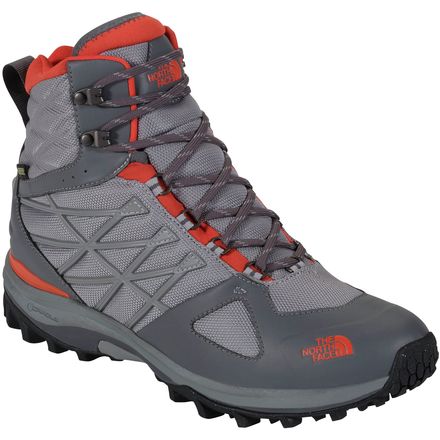
Gear Closet: North Face Ultra Extreme II GTX Hiking Boots

Finding the right boot for winter activities can be a real challenge sometimes. You obviously want something warm and comfortable that can provide good traction on snow and ice, but all too many times that comes at the expense of weight and bulk. That isn't the case with the new Ultra Extreme II GTX boots from The North Face however, as this is footwear designed for the cold and snowy season that doesn't have to make compromises for the sake of performance.

One thing is for certain, these boots definitely know how to make a first impression. Taking them out of the box for the first time, I was struck with just how lightweight they are, but was a little dubious about how well they would perform as a result. The boots look great too, and feature TNF's signature high quality build construction.

Last week I took these boots with me to Utah for a little pre-Outdoor Retailer adventure in the mountains near Park City. With plenty of snow on the ground I figured that would make a great test for this lightweight winter boot. I discovered that they performed better than I expected in most areas, particularly when taking part in winter activities such as snowshoeing and fat bike riding.

The boots feature a Gore-Tex liner that provides not only warmth and insulation, but a layer of waterproofing as well. My winter camping trip began with an evening of outdoor cooking and dinner shared with other writers and media folks, which ended up with most of staying out in the cold for more than four hours. Throughout that time, my feet stayed warm and dry, although by the time we were ready to call it quits for the night, my toes were starting to get a little frosty. But that is to be someone expected when you're standing around in cold weather conditions for extended periods of time. The next day when I set out on the trail for some snowshoeing, my feed remained plenty warm throughout the hike. Better yet, they also stayed dry, despite the fact the snow was quite deep.


Because these boots are so lightweight, they are also incredibly comfortable to wear, even on active excursions. Prior to setting out for Utah, I had only taken them out of the box and worn them around the house for a bit, but that was enough to tell me they wouldn't take long to break in. That turned out to be true, as after only wearing them for an hour or two, they were pretty much ready to go once I reached my destination. By the time I strapped on my snowshoes they already felt completely natural on my feet.

To give the Ultra Extreme II GTX boots plenty of grip on a variety of surfaces, The North Face uses a Vibram Icetrek outsole. This helps the shoes to stay stable in a variety of conditions, ranging from completely dry, to soaking wet, to frozen solid. Hiking in these boots on snow and ice, even without snowshoes, was a breeze, and I never once felt like they weren't up to the task. If anything, the grippy nature of the soles provided more confidence when tackling those conditions.

One of the the things that I like most about these boots is that they don't actually feel like you're wearing boots. The fit and comfort levels are more akin to an athletic shoe, albeit one with lots of ankle support. In fact, the UE II GTX's felt so good on my feet that I didn't bother to take them off for hours after we had left our snowy campground. Because they felt so great on my feet, and provided a nice level of warmth, there was simply no need, even after I had returned to Salt Lake City for the start of the convention.

If you're in the market for a lightweight hiking boot for active winter sports, these boots are more than up to the task, and with a price tag of $150, they are also quite a bargain in my opinion. Winter boots aren't cheap, and a good pair will generally set you back more than what The North Face is asking here. But as comfortable as these are on your feet, and as lightweight as they are in your pack, it is easy to recommend them for anyone who enjoys winter outdoor activities.

That said however, the Ultra Extreme II GTX is probably a bit too lightweight for extremely cold conditions. I used them in temperatures hovering around 20ºF (-6ºC) and had absolutely no problems, particularly when I was on the move. But if the temperatures dropped below 10ºF (-12ºC) I would have definitely wanted warmer socks at the bare minimum, and possibly warmer boots all around. Aside from that however, they performed exceptionally well, and I found myself truly falling in love with them. This is a great boot not just for winter sports, but cooler weather hikes as well, and I have a feeling I'll be getting a lot of use out of them in the weeks to come.