Subscription box services become all the rage over the past couple of years, with options ranging from geeky gifts for your favorite nerd to high fashion options. Heck, we've even seen some made for outdoor enthusiasts, including Cairn and BivySak. But now, a new subscription box is on the scene, and it wants to send you healthy, nutritious snacks to take with you on all of your outdoor adventures.
TrailFoody is a recent start-up that hopes to take the drudgery out of picking food to take with you on your hikes, mountain bike rides, paddling excursions, and camp outings. Each month, the service will send you a box filled with energy bars, dried fruits, nuts, trail mix, energy drinks, and more. Those treats come from such partners as Tanka, Justin's, and Epic Provisions, and everything is stored in a nice little compression sack that makes it all very easy to pack and carry. Best of all, the items that are sent to you in the box are specifically selected to provide energy for active pursuits, and most avoid artificial preservatives of any kind, nor are they genetically modified in any way. Many are completely organic too.
The subscription service offers three tiers starting with "The Wanderer," which offers enough goodies for 1-2 outings at a price of $21.95. That box includes 1 trail lunch and the equivalent of 4 energy bars. The second tier is dubbed "The Pathfinder" and offers enough food for 3 outings, including 3 trail lunches and 6 energy bars for $43.95, while "The Intrepid" level provides 4 trail lunches and 8 energy bars each month at a cost of $53.95.
Recently I received a sampling of the TrailFoody offering, and I have to be honest. Prior to getting my own box, I thought that the prices were pretty steep for products that we all probably keep around the house anyway. But, after sifting through the package that was sent my way, I have to admit that I'm pretty impressed. My TrailFoody box was filled with more goodies than I expected, and I've been happily munching away on them for awhile now. Sure, spending $22 a month to have energy bars and other assorted snacks sent to your door is a bit lavish, but if you lead a busy lifestyle, and don't have time to shop for these items yourself, you'll probably really appreciate it the next time you're heading out to the trail.
If this sounds like something you'd be interested in trying, TrailFoody is giving Adventure Blog readers half off their first month. Simply enter the promo code: ADVENTUREBLOG in at checkout to receive the discount.
Happy trail and happy snacking!
Showing posts with label Hiking. Show all posts
11/22/2017
10/19/2017
Gear Closet: Osprey Manta AG 28 Daypack
If you're a regular reader of my "Gear Closet" stories here at The Adventure Blog, you probably already know the I have a habit of going on at great length about the product that I'm writing a review for. That is likely to be the case with the Manta AG 28 from Osprey as well, but for those of you who would rather get to the bottom line on this bag, I thought I would save you some time. So, for those folks wondering whether or not this pack will get a good review, let me just tell you now. It is amazing. Go buy one. Thank me later.
For those of you who are still around, we can now get into the details.
The Manta line of packs have been a part of the Osprey catalog for some time. But this pack, which was released this past spring, adds a nice new dimension that truly helps to separate it from the crowd. The "AG" in the bag's title stands for "Anti-Gravity" which is the name given to Osprey's innovative suspension that not only helps the pack to sit more comfortably and naturally on your body, but it can effectively carry more weight over a longer distance too.
The Anti-Gravity suspension was first introduced on Osprey's Atmos series, which is designed for backpacking and adventure travel. But now, it has trickled down to these daypacks as well. The suspension really does make a noticeable difference, and the integration of the mesh backpanel plays a big role in keeping you cooler and drier while hiking.
I have to say that I was a bit skeptical that the AG system would have as big of an impact on a daypack as it does on the larger backpacking models. But, after putting this bag to the test in the field, I can honestly say that my doubts were unfounded. The suspension is remarkable, and I think you'll find yourself coming off the trail at the end of the day feeling much better than you would with a traditional daypack without AG integration.
The Manta comes in three sizes – 20L, 28L, and 36L. (There is also a women's specific model called the Mira that comes in 18, 26, 34-liter models.) For me, the 28L version is the sweet spot for a daypack, offering plenty of room to carry everything you need, without getting so large that its starting to infringe on the small backpacking pack level. Of course, your particular needs may be a bit different than mine, but I found the 28L Manta to be just right.
As you would expect from a pack from Osprey, the Manta comes with a wide variety of pockets to store all of your gear. From its cavernous main chamber to the front pocket with mesh organizational sleeves – complete with key fob – this pack has plenty of ways to keep all of your important items organized and close at hand. There are also two surprisingly large pockets on the hipbelt as well, which I always appreciate for storage of small items such as snacks or my phone.
In terms of staying hydrated, the Manta comes with dual water bottle holders that can be found on each side of the bag, as well as a dedicated hydration sleeve. Osprey even throws in a high-quality 2.5 liter hydration bladder, which is a nice addition considering many companies require you to buy one separately. Considering the price of this pack, and all of the features it brings to the table, it was really nice to open the hydration sleeve and find the bladder tucked away inside.
That isn't the only nice little detail that Osprey has included on this pack. It also comes with its own integrated rainfly, which should be a common practice these days, but surprisingly isn't. There is also a helmet attachment loop for when you're cycling or climbing, and stretch mesh front pockets for quickly storing away extra gear, including a spare pare of shoes. Of course, Osprey has made always been good about paying attention to details, but it is nice to see that tradition continue here.
All of these features aside, the best thing about this pack is just how comfortable it feels when you're out on a hike. I can load it up with just a few small items, or stuff it to the brim with way more gear than I'll need, and it not only happily swallows up everything I throw at it, it feels good on your back too. The AG suspension is a true revelation, and a welcome addition to the daypack line. And of course, this being Osprey, the pack is very durable too, but still comes backed with the All Mighty Guarantee, which says the company will repair or replace the bag for its lifetime. You can't ask for better coverage than that.
As if all of that weren't enough, the Manta AG 28 costs just $165, which is a relative bargain when you consider everything this pack brings to the table. It is filled with excellent design decisions, includes the best suspension system on the market, offers lots of carrying capacity, and it is durable enough to survive just about anything you throw at it. It also comes with a built-in rain cover and has an excellent hydration sleeve that you'll want to use in all of your other packs as well. All of that adds up to an excellent daypack that you'll certainly want to have with you on your future hikes and adventure travel excursions.
This is the best daypack I've ever used, bar none. I think you're going to love it too. But it now at REI.com, CampSaver, or Backwoods.
Osprey Packs | Manta/Mira AG™ Product Tour from Osprey Packs on Vimeo.
For those of you who are still around, we can now get into the details.
The Manta line of packs have been a part of the Osprey catalog for some time. But this pack, which was released this past spring, adds a nice new dimension that truly helps to separate it from the crowd. The "AG" in the bag's title stands for "Anti-Gravity" which is the name given to Osprey's innovative suspension that not only helps the pack to sit more comfortably and naturally on your body, but it can effectively carry more weight over a longer distance too.
The Anti-Gravity suspension was first introduced on Osprey's Atmos series, which is designed for backpacking and adventure travel. But now, it has trickled down to these daypacks as well. The suspension really does make a noticeable difference, and the integration of the mesh backpanel plays a big role in keeping you cooler and drier while hiking.
I have to say that I was a bit skeptical that the AG system would have as big of an impact on a daypack as it does on the larger backpacking models. But, after putting this bag to the test in the field, I can honestly say that my doubts were unfounded. The suspension is remarkable, and I think you'll find yourself coming off the trail at the end of the day feeling much better than you would with a traditional daypack without AG integration.
The Manta comes in three sizes – 20L, 28L, and 36L. (There is also a women's specific model called the Mira that comes in 18, 26, 34-liter models.) For me, the 28L version is the sweet spot for a daypack, offering plenty of room to carry everything you need, without getting so large that its starting to infringe on the small backpacking pack level. Of course, your particular needs may be a bit different than mine, but I found the 28L Manta to be just right.
As you would expect from a pack from Osprey, the Manta comes with a wide variety of pockets to store all of your gear. From its cavernous main chamber to the front pocket with mesh organizational sleeves – complete with key fob – this pack has plenty of ways to keep all of your important items organized and close at hand. There are also two surprisingly large pockets on the hipbelt as well, which I always appreciate for storage of small items such as snacks or my phone.
In terms of staying hydrated, the Manta comes with dual water bottle holders that can be found on each side of the bag, as well as a dedicated hydration sleeve. Osprey even throws in a high-quality 2.5 liter hydration bladder, which is a nice addition considering many companies require you to buy one separately. Considering the price of this pack, and all of the features it brings to the table, it was really nice to open the hydration sleeve and find the bladder tucked away inside.
That isn't the only nice little detail that Osprey has included on this pack. It also comes with its own integrated rainfly, which should be a common practice these days, but surprisingly isn't. There is also a helmet attachment loop for when you're cycling or climbing, and stretch mesh front pockets for quickly storing away extra gear, including a spare pare of shoes. Of course, Osprey has made always been good about paying attention to details, but it is nice to see that tradition continue here.
All of these features aside, the best thing about this pack is just how comfortable it feels when you're out on a hike. I can load it up with just a few small items, or stuff it to the brim with way more gear than I'll need, and it not only happily swallows up everything I throw at it, it feels good on your back too. The AG suspension is a true revelation, and a welcome addition to the daypack line. And of course, this being Osprey, the pack is very durable too, but still comes backed with the All Mighty Guarantee, which says the company will repair or replace the bag for its lifetime. You can't ask for better coverage than that.
As if all of that weren't enough, the Manta AG 28 costs just $165, which is a relative bargain when you consider everything this pack brings to the table. It is filled with excellent design decisions, includes the best suspension system on the market, offers lots of carrying capacity, and it is durable enough to survive just about anything you throw at it. It also comes with a built-in rain cover and has an excellent hydration sleeve that you'll want to use in all of your other packs as well. All of that adds up to an excellent daypack that you'll certainly want to have with you on your future hikes and adventure travel excursions.
This is the best daypack I've ever used, bar none. I think you're going to love it too. But it now at REI.com, CampSaver, or Backwoods.
8/02/2017
Video: Hiking The Appalachian Trail In 3.5 Minutes
Ever wanted to thru-hike the Appalachian Trail but just don't have the time? Then you'll certainly enjoy the video below, which features an end-to-end trek along the 2200 mile (3500 km) route that stretches from Georgia to Maine. It may not be as enjoyable as the real thing, but it certainly isn't bad when you're stuck inside on Friday.
8/01/2017
Nat. Geo Offers 10 New Trails to Explore in 2016
Still looking for a new challenge in the New Year? Why not let National Geographic Adventure help? The website has published a list of 10 long distance hiking trails that can be found all over the world, many of which have only been conceived and designed over the past few years. These new trails take hikers into remote areas, serving up amazing views and a healthy dose of cultural immersion along the way. And they just might be your new favorite destination for 2016.
Amongst the new trails that make the list is the Alpe Adria Trail, which opened in 2011 and stretches for 260 km (162 miles) across Austria, Slovenia, and Italy. Broken into 43 individual stages of roughly 19 km (12 miles), the trail has been designed to make logistics a non-factor. Most of the stages take just one day to hike, although they link into one another in such a way that through hikers will have no problem pushing forward. Each stage also ends in a local village where hikers will find places to stay and resupply as well.
Other new hikes on the list include The Bigfoot Trail in California, which stretches for 579 km (360 miles) through six wilderness areas and the Redwood National Park. It's joined by Scotland's John Muir Way, which opened in 2014, and the Sir Samuel and Lady Florence Baker Historical Trail in Africa, which runs for 805 km (500 miles) along a route that crosses through Sudan, South Sudan, and Uganda in Africa.
I'll leave the remainder of the trails on the list up to you to discover, but it is safe to say there are some great hikes on the list that I haven't even mentioned yet that will be of interest to many of you. Because most of these trails have only opened in the past few years, they remain relatively unknown, which means they'll also be most empty too. Go before the crowds and enjoy these wilderness areas as they are meant to be – pristine, tranquil, and mostly unexplored.
View the whole list here.
7/05/2017
Video: Trail Angel - Finding Inner Peace on the Appalachian Trail
For many of us, the outdoors provide solitude and tranquility that we don't always get in our daily lives. They are an escape that reconnects us with nature and the world around us. In this video – brought to us by REI – we meet Paul Stiffler, better known as Ponytail Paul, who discovers his own personal peace on the Appalachian Trail, where he has taken on the role of "Trail Angel" helping many thru-hikers to accomplish their goal of walking the AT end-to-end. The short film shares Paul's story, and gives us a glimpse of the joy he gets from helping others.
Trail Angel from REI on Vimeo.
7/02/2017
Video: Hiking Angels Landing In Zion National Park
Angels Landing is easily one of the most popular hiking trails in Zion National Park. The five-mile long route offers stunning views throughout the walk, but the trail is very narrow, making it a fun, but sometimes scary endeavor. The video below gives you a taste of that, as well as a glimpse of what to expect when you visit Zion itself.
Angels Landing from David Lerman on Vimeo.
5/20/2017
10 Last Minute Travel Gift Suggestions from The Adventure Blog
Christmas is now in sight and the clock is most definitely ticking. If you find yourself still scrambling to find the perfect gift for the adventure traveler or outdoor enthusiast on your holiday shopping list this year, we have some suggestions for what they might like. Here are 10 list minute gifts that are sure to make them happy, all of which are under $100.
Ledlenser SEO 7R Headlamp
Every outdoor adventurer can use a good headlamp, and Ledlenser's SEO 7R is one of the best I've seen in awhile. Powered by either a rechargeable battery pack or standards AAA batteries, this lamp is capable of putting out as much as 220 lumens and is built to be water resistant too. It is comfortable to wear, lightweight, great for travel, and comes with a 5 year warranty as well. Price: $90
Dog & Bone LockSmart Travel Bluetooth Padlock
Keeping your valuables safe and secure while on the road can be a challenge, but Dog & Bone's LockSmart Travel high-tech padlock can help. This Bluetooth enabled lock connects to your smartphone for keyless unlocking from anywhere in the world. It also has location tracking properties and is TSA compliant, meaning you can place it on your bad and not worry about nefarious individuals gaining access to your belongings. Price: $59.95
LifeStraw Go Water Bottle
Everyone can use a good water bottle of course, but the LifeStraw Go isn't just a handy way to stay hydrated, it also features a two-stage filtration system that removes 99.99% of all harmful bacteria, protozoa, and viruses that could be lurking in water. This makes it a great choice for both backcountry excursions and travelers who might be visiting countries where finding clean drinking water might be a challenge. Price: $49.95
Power Practical Luminoodle Plus Camp Lighting System
Keep the campsite well lit with a Luminoodle light rope from Power Practical. Flexible and waterproof, these lights are easy to hang in a tent, on branches, or just about anywhere else you need them, delivering 180 lumens of light without blinding anyone in the process. The Luminoodle Plus kit comes complete with a 5-foot set of lights and a 4400 mAh battery to keep them powered on. Price: $39.95
Global Entry
Frequent travelers know how long it takes to get through security lines at the airport, and customs when returning to the country when traveling abroad. But a Global Entry membership from the Transportation Security Administration lets them bypass those bottlenecks quickly and efficiently. The process does require an interview and a bit of a wait time, but it is worth it. Price: $100
Champion Duofold THERMatrix Baselayers
Baselayers are always handy no matter what outdoor activities your favorite adventurer is into. They provide the first line of defense in keeping us warm and dry in the backcountry, and are an indispensable part of any gear closet. Champion makes high quality baselayers that are also affordable and good looking too. Price: $23.99
Yaktrax Cabin Socks
Soft and warm, the Yaktrax Cabin Socks just might be the most comfortable sock your outdoor lover will ever put on his or her feet. If the cold chill of winter is leaving their toes a bit chilly, get them a pair of these to help them recover. They are so comfortable (and affordable!) that you'll even want a pair for yourself. Price: $12.99
Stacked iPhone Wireless Charging System
For the traveler looking for a convenient way to keep their iPhone charged while on the road, the Stacked wireless charging system is a godsend. Modular in design, this iPhone case uses powerful magnets to connect with chargers, portable battery packs, and a handy car mount that is fantastic for navigating on long road trips. Buy the Stacked bundle for $99.99 or individual pieces as needed.
Dry Guy Warm 'n Charge
The cold weather isn't just hard on our bodies, it's hard on the batteries in our electronic devices too. That's why Dry Guy invented the Warm 'n Charge, a battery operated hand warmer that is also capable of recharging a smartphone too. The device uses a 4400 mAh battery for up to five hours of warming or two phone charges. Price: $40
Stanley Pocket Steel Adventure Flask
Let's face it, we all like to rough it in the woods on occasion, but that doesn't mean we have to be completely uncivilized. The Pocket Flask from Stanley is a lightweight and compact way to carry a little extra something into the backcountry with us for those celebrations when you bag a peak or are just toasting to your good fortune. Price: $18
5/18/2017
Gear Closet: 5.11 Tactical Taclite Anorak Jacket
This past weekend was an interesting one where I live. While we weren't caught up in the massive blizzard that hit the East Coast, we did catch the edge of the storm and ended up receiving 8 inches (20 cm) of snow, which was enough to set a new record for my location. For many of my friends and neighbors, this was a good opportunity to hunker down at home and enjoy a few snow days with a break from work and school. But for me, it was a chance to test out some of the winter gear that has been sent my way, and enjoy a bit of winter weather that I don't get a chance to play in as much as I'd like.
One of the pieces of gear that I had the opportunity to try out is the new Taclite Anorak Jacket from 5.11 Tactical, a versatile and surprisingly warm pullover that comes with that company's trademark high quality design and construction.
I've reviewed a couple of products from 5.11 Tactical in the past, including their Rush 12 backpack and awesome Stryke Pants. The company makes products that are popular with the military and law enforcement agents, but have elements that make them a great choice for civilian outdoor enthusiasts too. For instance, the Taclite jacket has a nice, clean cut to it, and is designed to allow the wearer to move unimpeded. That is something we can all appreciate, regardless of what activities we have planned for the day.
Another indication of 5.11 Tactical's focus on versatility for both the military and civilian population is the inclusion of what it calls "Quixip" side vents. For most of us, this is a nice feature that allows us to vent out heat when things get a little active. But for some of the company's other customers, it also provides quick and easy access to a firearm. Not something that most of us have to worry about, but definitely a feature that 5.11's core audience appreciates.
One of the most impressive things about this jacket is just how durable it is. It uses proprietary "Taclite" fabrics which are designed to take a beating and yet not show the wear and tear that you would associate with daily use. This is the kind of jacket you can wear out and about around town, on a trail, or on your daily commute, and it will continue to look good and perform well for years to come. Those fabrics are also treated with a Teflon coating, which helps to repel moisture and makes the jacket easy to keep clean.
Despite its rugged exterior however, the Taclite Anorak has a soft, and very comfortable, cotton liner that feels great against the skin, and provides plenty of warmth too. This helped to make it cozy to wear on chilly days, and when paired with a good baselayer, I was more than comfortable even when the mercury took a plunge.
The Taclite Anorak includes some other nice features too. For instance, its spacious pass-through kangaroo pocket is also quite warm and offers a good amount of storage. Two document pockets located on the chest are also very handy for keeping important items – such as a smartphone or passport – close at hand, while their Velcro seals allow for quick access of the interior. Even the three-panel hood shows that a lot of thought went into the design of this garment, providing extra comfort and warmth where a lot of other gear manufacturers would have just added a hood as an afterthought.
Having used some of 5.11 Tactical's other products in the past, I was already a fan of their gear. They often take a no-frills approach to the design of their gear, but they still manage to put plenty of thought into the fine details and offer high quality construction too. This jacket is no exception, as its uses metal buttons, a YKK zipper complete with a leather pull, and exceptional stitching to hold everything together. The result is an Anorak that doesn't try to be the lightest or most breathable on the market, but instead offers excellent all around performance, durable protection from the elements, and classic good looks that will make it feel right at home just about anywhere you want to wear it.
If that wasn't enough, I was also impressed with the Taclite Anorak's price tag too. At just $140, it feels like quite a steal. Considering everything that went into making this jacket, and what it brings to the table, I wouldn't have been surprised to if it cost over $200. But 5.11 Tactical has managed to deliver a great product at a great price, and if you happen to fall into their core customer base, you're absolutely going to love it. If you haven't tried 5.11 Tactical gear before, this is a great product to serve as an entry point as well. You won't be disappointed.
3/12/2017
Nat Geo Tells Us Where to Backpack in 2016
2016 is just a month old, but if you haven't started planning your travel yet, you're probably missing out on precious time. Thankfully, National Geographic is here to lend us a helping hand with some great suggestions of where to go backpacking in 2016.
The complete list contains ten total designations, ranging from Argentina and Patagonia in South America, to Zimbabwe in Africa, to Vietnam in Asia, with plenty of other options inbetween. In fact, every continent is represented on the list with the exception of Antarctica, which means just about no matter where you go, there will be some exceptional hiking spots nearby.
Beyond just creating a list of excellent backpacking places, Nat Geo also offers some great travel advice for those visiting these places. For instance, they'll tell you how to get there, how to travel around once you arrive, and just where to stay too. The various write-ups for each destination also include tips on what to eat, when to go, and what activities you absolutely should not miss out on.
All in all, this is a fairly comprehensive travel piece with some good suggestions on where to go backpacking this year. While the individual articles do a good job of setting you on the path to going to that particular place, they also leave plenty of room for you to explore and plan your own excursions and activities too. Think of it as helpful advice from those who have been there before, with just enough information to get you intrigued and started with your planning.
Find out what other destinations made the list by reading the entire article here.
2/25/2017
Trekking The PCT For Multiple Sclerosis
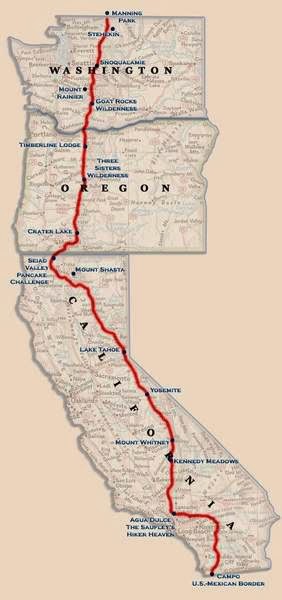
At 2650 miles (4264 km) in length, the Pacific Crest Trail is one of the longest – and most beautiful – trails in the world. Starting at the U.S. border with Mexico and running all the way to Canada, the PCT is considered one of the classic long distance hikes in the entire world, drawing millions of hikers each year, some of whom actually trek the entire length.
That is exactly what backpacker Megan Bullers hopes to accomplish later this year, as she intends to walk end-to-end on the PCT to raise money for the National Multiple Sclerosis Society. She'll set out on April 24 of this year, and she estimates it will take between four and five months to complete the entire hike. Along the way, she hopes to raise $50,000 for the charity.
Hiking the Pacific Crest Trail is a long and challenging endeavor that requires a solid amount of inspiration to make it through. In this case, Megan is not just raising funds for MS, but is doing so to potentially help her father, who has suffered from the disease since 2000.
If you want to help her reach her goals, you can contribute to this very worthy cause on Megan's donations page. You'll also be able to follow along with her adventure on her blog as well.
Good luck Megan!
2/24/2017
Video: Thru-Hiking the Grand Canyon - A 650-Mile Challenge (Part 1)
Throughout 2015 and 2016, photographer Pete McBride and journalist Kevin Fedarko set off to make a sectional thru-hike of the Grand Canyon in an effort to document the threats that that National Park now faces. Along the way, they faced more challenges than they had anticipated, as the journey was more difficult and dangerous than they had ever impinged. This video takes us along with them into the canyon, to experience much of what they saw while they were there. It is Part 1 of a 3 part series, which promises to be an amazing adventure with some important revelations to be had along the way.
1/12/2017
Adventure Tech: goTenna Extends Backcountry Communication with New goTenna Mesh
Earlier in the year I took a look at an innovative method for staying in communication while in the backcountry called goTenna. This simple, but effective device, connects to your smartphone via Bluetooth technology, and allows you to send text messages and share your GPS location with others who are equipped with a goTenna of their own. In a sense, the device creates its own data network for use in places where shell service is nonexistent, and while it doesn't facilitate voice comms, I found it very useful for staying in touch nonetheless. Now, the team at goTenna is back with a new product, and while it works in much the same way as its predecessor, it has the potential to extend the range of the device much, much further.
Dubbed the goTenna Mesh, this new unit launched on Kickstarter yesterday. A bit smaller than the original model, this new device brings some interesting new technologies to the table that should make it more useful to travelers, backpackers, climbers, and other outdoor enthusiasts. For instance, the Mesh now operates on UHF radio frequencies, which have brought it's out-of-the-box range down slightly, but make it more adaptable to a wider variety of environments, including both the outdoors and interior spaces. Switching to UHF has also allowed goTenna to bring their product abroad too, opening it up for sale in foreign countries where the previous generation's VHF radio waves were not allowed.
But more importantly, as it's name implies, the goTenna Mesh brings "meshing" technology to users as well. This allows the device to relay data that is sent to it on to other users, thereby extending the range almost indefinitely. Where as the original goTenna simply blasted out the messages that it broadcasted to all other goTenna users in range, the Mesh can analyze the data, and then rebroadcast it to others too. In this way a message that is sent can potentially reach a recipient, even if they weren't in range of the original sender.
The first generation goTenna has a range of about 1 mile in urban settings and 4 miles in rural areas, although greater ranges can be achieved depending on elevation and so on. The goTenna Mesh has a similar range when used for peer-to-peer communications, with 1 mile in cities and 3 miles in the backcountry. But, since it has the ability to relay data, a message can hop from one device to the next, provide there are several of them working within range of one another. So while two Mesh devices might have a range of roughly three miles, three or four units working together could stretch that range considerably further.
When goTenna launched the Kickstarter campaign for the new Mesh model it was with the hopes that it would generate $150,000 in crowdfunding to help get the device into production. Just 24 hours later, the campaign has generated $132,000 and climbing. That means that the new product should begin shipping in December as expected, with a price tag of $179 for two units. Of course, a third goTenna Mesh is really needed to see the true benefits of this second generation model, but this is certainly a good start. Early-bird contributors can reserve their goTenna Mesh units for as little as $129 by pledging to support the Kickstarter campaign now however.
In addition to revealing the Mesh, the company is also launching a new service called goTenna Plus. Users who sign up for this plan receive additional benefits from the goTenna app that is installed on their iPhone or Android device, including improved topographic maps for sharing your location, tracking of speed and distance while out hiking, and even sharing your current location with a designated individual on a set schedule, much like a SPOT Satellite Messenger. goTenna Plus users can also take advantage of network relaying which allows a device that is connected to a cell network to pass along goTenna messages to other users in that way too.
goTenna Plus is normally priced at $29 for a year, but is currently available at an introductory price of just $10. Seems like a pretty reasonable rate to me.
Find out more about goTenna and all of its gadgets at goTenna.com.
1/04/2017
Tomorrow is the Opening Day for Trails!
Need yet another excuse to get outside and hit a trail this weekend? Than let the Rails to Trails Conservancy provide one. The non-profit has declared Saturday, April 16 Opening Day for Trails in celebration of all of the great trails that are available to outdoor enthusiasts in the U.S.
The Rails to Trails Conservancy is an organization that is dedicated to taking unused railway corridors and converting them to trails for use by hikers, mountain bikers, trail runners, or anyone else is looking for a good place to enjoy nature. Their goal is to have 90% of all Americans living within 3 miles of a trail system by 2020. That's an ambitious, but noble goal for sure and one that I'm sure Adventure Blog readers can relate to.
For Opening Day for Trails there are over 140 free events taking place across the U.S. to celebrate the arrival of spring and our ability to hit the trail once again. Some of the great events on tap include organized bike rides, group hikes, bird watching excursions, and more. Events are scheduled in 25 states and the District of Columbia.
Of course, you don't have to attend one of these outings, as you can also just organize one for you and your friends locally too. The point is to head out on a trail and enjoy the benefits that those routes provide in terms of health and well being. But, if you head over to the Rails to Trails website and take the pledge to get outside, you can also be entered to win one of two Fuji bikes as well.
Seems like as good of a reason as any to get outside this weekend. Find out more at RailstoTrails.org.
1/03/2017
Video: Another Look At Angels Landing In Zion National Park
A few weeks back I posted a great video of Angels Landing in Zion National Park, sharing a glimpse of what that great hike has to offer. The video below shares even more of that impressive trail, which appears to be a "must-do" for anyone who loves to hike, particularly in a national park. It is a beautiful setting, with an adrenaline inducing view.
Angels Landing :: Zion from JC Ferrer on Vimeo.
12/19/2016
Men's Journal Gives Us 14 Epic One Day Adventures
Last Friday was a National Day of Adventure, and while I wasn't in the country to celebrate, you can bet I was off on an adventure of my own that day. Hopefully you took advantage of the opportunity and hit your favorite trail, climbed a new route, paddled some open water, or did something equally fun as part of the celebration. But if not, Men's Journal is here to help with a list of 14 epic adventures that you can do in a single day.
Whether you like ride a mountain or road bike, prefer to hike on your own two feet, or are down for some aquatic adventures, this list has something for you. For instance, some of the suggestions that earn a nod from the MJ editors include a hike to the summit of 5267-foot (1605 meter) Mount Katahdin in Maine or trekking through the Vermilion Cliffs of Arizona. Other options range from riding a section of the Tahoe Rim Trail on your mountain bike to cycling the Blue Ridge Parkway near Asheville, North Carolina. And for those who prefer their adventures to be waterborne, the list suggests running the Upper Gauley River in West Virginia, which is at its peak this time of year with Class III to V rapids.
I won't spoil the entire list, as half the fun is discovering what adventures actually made the cut. Needless to say however, there some great suggestions here with destinations spread out across the entire U.S. Chances are, you live fairly close to several of these places, and could potentially fit one or two of them in on a busy weekend.
Of course, this list is also a good reminder that there are plenty of opportunities for adventure just outside our door at all times. Perhaps its time to head out and explore some of those options and remember why there is no place like home.
12/10/2016
REI Invites Us to #OptOutside Again This Fall
Last fall, gear retailer REI made headlines when it announced that it would close all of its brick and mortar stores, as well as online shop, on the biggest shopping day of the year – Black Friday. Instead of chasing the almighty dollar on a day that should be about spending time with your family, the company elected to give all of its employees the day off, and encourage them – as well as the rest of us – to head outside for an adventure. They even used the hashtag #OptOutside to promote the movement, which was adopted by several other outdoor brands like Outdoor Research as well.
Yesterday, REI announced that it will again be closed on Black Friday, and that it is encouraging its employees and customers to skip the crazy shopping madness that is typical for the day, and instead head outside to enjoy some time with nature. That means that on November 25 all 149 REI stores will be closed, and the company's more than 12,000 employees will be free to spend time with friends and family, as well as pursue their favorite outdoor adventures.
In addition to that, over 275 national and local organizations are joining in on the fun this year as well. Those entities will also be encouraging their communities to #OptOutside on Black Friday too, as this movement seems to be picking up even more steam heading into its second year.
REI has also launched an activity finder on the #OptOutside website to help you find organized events, and other things to do, on November 25. That search engine lists local hikes, trail running outings, organized mountain bike rides, climbing excursions, skiing trips, and more. If you're at a loss for things to do where you live, this will surely help.
Obviously REI received a ton of publicity for its decision to close its doors on Black Friday last year. The company more than made up the revenue it would have made on that day with the exposure it received with the #OptOutside campaign. But it would be easy to dismiss this as just a marketing scheme if I hadn't met some of the representatives of the company a few weeks back. It is clear that the gear retailer genuinely cares about helping its staff, members, and customers to get outside and enjoy their time in nature, and while #OptOutside has been a good marketing campaign, the people who run the company definitely believe in the message they are sharing too. You don't find that in too many companies these days, and it is refreshing to say the least.
This attitude also makes it easy to want to support REI too. Which is exactly what I'll be doing on November 25. Hopefully you will too.
10/25/2016
Gear Closet: Altra StashJack Lightweight Running Jacket
Fall is here, which means cooler weather and unpredictable conditions that can make it much more challenging to know how to dress for our favorite outdoor activities. On some days you need a jacket, and on others you don't. And then of course there are those times when unexpected rain showers strike, making you wish you had brought a jacket with you even though you didn't think it was needed. That's exactly where the new StashJack from Altra comes in handy. It is a super lightweight option that has been so well designed that you won't ever have to decide whether or not you should bring it on your adventures.
A quick look at the technical specs for the StashJack provides some insights into why it is such a nice piece of kit. For example, it weighs just 3.3 ounces (93.5 grams), provides protection from both wind and rain, and it features a loose, tapered fit that gives your body room to move while taking part in fast-paced activities. It also includes some reflective highlights to help keep the wearer more visible in low conditions, and it is made with trimmed and flat locked seams that make it more comfortable to wear.
But, that is really just the beginning. Because what makes the StashJack so special is its ability to be stuffed into a tiny carrying pouch that comes complete with a built-in adjustable belt. This gives you the ability to wear the jacket around your waist until you truly need it, at which time it can be deployed in a matter of seconds without ever having the need to stop moving at all. The jacket even features an open back that is designed to wrap around your pack so you won't even have to remove it to put the jacket on.
This clever design comes our way from the team at Altra, a company focused on making excellent products for runners and hikers. Already this year I have reviewed both their Superior 2.0 trail running shoes and Lone Peak 3.0 hiking boots. In both cases, I came away very impressed with how comfortable and well made those products are. The StashJack doesn't disappoint in anyway either, only further increasing my confidence in Altra gear.
I've worn the StashJack on several runs this fall when I thought there was a chance of rain. On a couple of those occasions I managed to put in my milage before the bad weather set in, which normally would have annoyed me since I had brought a jacket along for no reason. But in this case, the StashJack attached securely to my waist, and because it is so lightweight, I pretty much forgot that it was even there. The included belt kept the jacket from bouncing around while I moved and it did nothing to impede my natural running movements.
On a couple of other occasions dark clouds did decide to open up and drop some rain on me while I ran. It was at those times that I was very happy to have this jacket along for the ride. I was able to quickly and easily pull it out of its stash pouch and put it on, taking just a few seconds to wrap myself in lightweight protection from the elements. This allowed me to happily continue with my workout without getting soaked to the bone.
It should be pointed out that the StashJack is made to be wind and water resistant, which means in more severe storms it can soak through, and heavy winds will still bring a chill to your body. But considering the fact that it weighs just 3.3 ounces, it performs quite well, even in those more demanding situations.
You don't have to be a runner to appreciate what the StashJack brings to the table. Hikers will certainly find this an appealing product as well. It's combination of convenience and svelte design make it a great choice for travel too, allowing you to wear it where ever you go, and instantly have a light jacket that you can pull on at a moments notice.
Priced at $130, the StashJack is more expensive than many will probably want to pay. But it is surprisingly durable for its size and packs in a high level of performance. If you're a daily runner (like me), you'll find this is a jacket you'll want to own. Having it in your gear closet for other occasions, like going on a day hike or traveling to a foreign city where rain is in the forecast, extends its value beyond just my regular workouts. Yes, it is possible to find a rain jacket at lower price, but you'll be hard pressed to find one that offers such versatility as well. For me, that makes the asking price well worth it.
Get one for yourself at Altra.com. And don't forget to grab one for the runner on your holiday shopping list too.
Labels:
Endurance Sports,
Gear,
Hiking,
Jacket,
Running,
Trail Running
7/24/2016
Nat Geo Gives Us the Best Outdoor Towns in the World
Looking for a great town to serve as base camp for your next outdoor adventure? Thinking about relocating to a place that offers more opportunities to pursue the things you love? Why not let National Geographic help with their picks for the world's best towns for outdoor thrills.
Some of the places earning a nod include towns that you would expect. Places like Moab, Utah and El Chaltén, Argentina. Others are a bit more unexpected, such as Niseko, Japan or Ely, Minnesota. It isn't as if those places weren't known for being great outdoor destinations, but to see them ranked amongst the very best (Nat Geo names nine places in total), is refreshing to say the least.
Each place is also accompanied by a nice description of why it deserves a spot on this very distinguished list with details on what it has to offer for visitors. Nat Geo even provided information on when it is the best time of the year to visit to take advantage of the opportunities that each place has to offer. For instance, summer can be hot in Moab, so September is a good time to go, although the author says not to overlook winter as well. Meanwhile, if you're planning on going to Niseko it is probably for the skiing, which is best between December and February.
Of course, with such a short list some places had to be left off, but there were a few surprises for towns that do not appear here. For instance, Chamonix, France is considered one of the great outdoor meccas of the world and yet it doesn't appear on Nat Geo's radar. Similarly, you could just as easily have substituted places like Boulder, Colorado or Jackson Hole, Wyoming, amongst other great mountain towns in the U.S. Still, the places that were selected are very deserving, and bring a nice exotic flair to the list with places like Australia, South Africa, India, and Peru enticing travelers.
To find out which places made the cut, read the entire list here. Then come back and leave a comment with the places that you think should have made the cut. After all, some of your favorite places probably didn't make it.
6/13/2016
Video: Thru-Hiking the Grand Canyon - Between River and Rim (Part 2)
Last week we had the first video in a three part series that follows photographer Pete McBride and journalist Kevin Fedarko as they make the very difficult thru-hike across the Grand Canyon in an effort to explore the challenges that the national park currently faces. In part 2 of the series, we return to the trail, where Pete and Kevin are now 200 miles (321 km) into their journey as winter begins to set in, bringing a new set of obstacles for them to overcome. This is an amazing look at the Grand Canyon as most of us never get a chance to see it, and it is well worth your time to watch in its entirety.
6/09/2016
British Adventurer to Walk the Length of Japan for Charity
At the end of February, British adventurer and photographer Richard Dunwoody will embark on a major undertaking as he sets out to walk the entire length of Japan from south to north. The expedition will see him traveling completely unsupported as he seeks to raise funds for charity.
Dunwoody, who has previously skied to both the North and South Pole, will cover more than 2000 miles (3218 km) as he treks across Japan's three largest islands – Kyushu, Honshu and Hokkaido. The plan is to cover somewhere between 20-30 miles (32-48 km) per day, while spending most nights camping out. The journey should take a little more than three months to complete.
The plan is to set out form Cape Data on February 27 and continue moving north to the furthest point on Hokkaido, a point he hopes to reach by early June. Throughout the trip, Dunwoody – who is also a former champion jockey – will share photos and stories from the road. While most of the journey will be done solo, Richard does hope that some friends will join him throughout the hike as well.
In the past, Dunwoody has raised more than £250,000 ($312,000) for a variety of charities through his adventurous activities. This time out, he's hoping to raise funs for the Sarcoma UK, a nonprofit that provides support for individuals suffering with these forms of cancer. Richard's nephew George has been battling the disease for the past few years, and has undergone a number of therapies in an effort to overcome it. He is just 21 years old, and represented the U.K. Junior World Rowing Championships back in 2014 before taking ill.
If you want to give to the cause, you'll find a Just Giving page has been set up here. The goal is to raise £25,000 and every contribution counts. You can follow Richard's progress through social media on Facebook, Twitter, and Instagram.
Subscribe to:
Posts (Atom)