Showing posts with label Backpacking. Show all posts

11/21/2017

Gear Closet: Rumpl Down Puffy Performance Blanket

When it comes to warmth and comfort in cold weather conditions, it it hard to beat a good puffy jacket. In fact, they are often so cozy that we're sometimes reluctant to take them off, even when we get inside. But what if you had a warm puffy of another kind to help keep you warm after you've pulled your jacket off? That's the premise behind the Down Puffy performance blanket from Rumpl, which is so comfy that you'll want to buy two just to avoid arguments over who gets to wrap up in it.

Much like that down jacket that you love so much, this blanket is made with 20D ripstop nylon complete with a DWR coating to help repel moisture. That same coating also helps it to resist stains and odor too, something that comes in handy not only at home, but around the campsite as well.

Stuffed with 600 fill duck down insulation, the Down Puffy is incredibly soft, warm, and comfortable, without being overly bulky. In fact, it is highly packable, which makes it easy to carry with you anywhere. It even comes with a nice stuff sack to help compress it down to a small footprint when you need to stuff it into a backpack, duffel, or piece of luggage. And since Rumpl uses Dry Down water resistant fill, you literally can take this with you to the backyard, the cabin, or a tent in the backcountry without fear.


Obviously this blanket is very warm and cozy for use in cool and even cold weather conditions, but it can also serve as a sleeping bag replacement for warm weather camp outings as well. Using a blanket allows for more versatility in those conditions, when a regular sleeping bag can feel confining and overly warm, even if it is rated for higher temperatures. You'll also find the Down Puffy to be a great addition to your camp gear when sitting around the fire before retiring for the evening too.

I can tell you from experience that this blanket is so comfortable and warm that you won't want to share, even though it is large enough for two. At my house there have been arguments (mostly in jest of course!) over who stakes claim to the Down Puffy, and I can tell you that I can see us packing it on future travel outings simply because it is so easy to take with you and offers so much versatility.

The Down Puffy is described as a "performance blanket" and it carries a price tag to match. Rumpl sells it for $199, which makes it quite an investment for anyone who wants one. I can tell you that it is definitely worth the money, even if it is a bit of a luxury item for use around the home and campsite. But if dropping that much cash on a down blanket seems like too much, Rumpl also offers other puffy blankets in a variety of colors that start at just $65.

Any of these options are a great investment, and make wonderful gifts too. Find out more at GoRumpl.com.

9/17/2017

Gear Closet: Cocoon Merino Wool Mummy Liner

A good sleeping bag liner is one of the most useful pieces of gear that you can have in your gear closet. Not only does it allow you to add extra warmth to your bag, but it'll do so without breaking the bank in the process. Having a bag liner at your disposal can keep you from buying another sleeping bag, both for cold and warm weather situations. 

If you're in the market for a new sleeping bag liner, Cocoon has a wide variety of options to choose from. They have liners made of silk, fleece, cotton, flannel and even microfiber.  But if you want the absolute best of the bunch, then check out their Merino wool Mummy Liner, which offers warmth, breathability, and unbelievable comfort. 

For those who aren't familiar with sleeping bag liners, they seamlessly slide inside your existing bag, adding extra layer of insulation. Each type of fabric delivers a different type of performance. For instance, the silk version packs down to a small size, provides a few degrees of extra warmth and responds well to changing temperatures. Cotton, on the other hand, is machine washable, very durable and breathes nicely. Merino wool offers most of those qualities and and a few of its own.

As the names implies, the Cocoon's Merino wool Mummy Liner is shaped nicely to fit inside your mummy sleeping. That includes a nicely rounded top to fit inside your bag's hood without bunching up in the process. 

Cocoon says that the Mummy Liner will add approximately 7ºC or 12. 6ºF to any sleeping bag that it is added to. That's a substantial amount of extra warmth out of a product that doesn't add much weight to your backpack, and could potentially keep you from actually buying another sleeping bag for your outdoor adventures. Want to take that cool weather bag on a winter camping trip? Just add a bag liner and you're good to go. 

Using Merino wool in this particular liner was definitely an inspired choice. Not only is that particular fabric soft and comfortable, it also happens to be very warm. On top of that, it breathes very well, making it easy to regulate temperature throughout a long nights sleep. Merino wool also happens to have natural qualities that keep it from holding on to unwanted smells, which can come in handy on extended backpacking trips. 

This particular liner is comfortable enough that it can even be used on its own in warmer weather. The Merino wool is incredibly soft against the skin, and because of its natural ability to breathe, it works great as an extremely lightweight stand-alone sleeping bag for summer camping trips. When camping in environments that are too warm for a traditional sleeping, bag, you can pair this liner with a sleeping pad, and get a good night's sleep without overheating. 

Putting this liner to the test, I came away impressed with a couple of things. First, the Merino wool is very durable, resisting tears and abrasions, and coming away unscathed, even after using it on a couple of camping trips. I also appreciated how stretchy the fabrics were, making it easy to sleep without feeling to restricted. 

If you're an ultralight traveler or hiker who counts every ounce, there are other options available that are both smaller and lighter weight. At 495 grams (17.4 ounces), this is a rather heavy bag liner compared to some of the other options in the Cocoon line-up. When placed inside of its included stuff sack, it also carries a larger footprint than some of the other options as well. But it does deliver on the promise of 12+ extra degrees of warmth, and a super-comfortable nights sleep. If those are qualities you find that you need while backpacking, then this Mummy liner is perfect for your needs. 

At $99.95, the liner isn't the most affordable option on the market. But it does happen to offer some of the best performances you'll find anywhere. Merino wool is one of the best fabrics available for use in our outdoor adventures, and I am happy to see it migrate from clothing, to other products as well. 

8/02/2017

On the Road Again - Backpacking Bryce Canyon


It seems I've been home for an all-too-brief stay, but its time to go on the road again. This time, I'm headed for Bryce Canyon National Park in Utah where I'll be backpacking for the rest of the week with the fine folks at REI Adventures. This trip was actually organized by the REI retail team, so over the next few days I'll be joining some other outdoor writers in testing some of the latest and greatest gear from that company.  That means I'll be off the gird for the rest of the week, with no updates to The Adventure Blog in the meantime. But, I should be back at it next week. In the meantime, I'm looking forward to seeing Bryce, a national park I haven't visited yet. I'm sure I'll have a story or two to share from the experience as well.

Video: Hiking The Appalachian Trail In 3.5 Minutes

Ever wanted to thru-hike the Appalachian Trail but just don't have the time? Then you'll certainly enjoy the video below, which features an end-to-end trek along the 2200 mile (3500 km) route that stretches from Georgia to Maine. It may not be as enjoyable as the real thing, but it certainly isn't bad when you're stuck inside on Friday.

8/01/2017

Nat. Geo Offers 10 New Trails to Explore in 2016

Still looking for a new challenge in the New Year? Why not let National Geographic Adventure help? The website has published a list of 10 long distance hiking trails that can be found all over the world, many of which have only been conceived and designed over the past few years. These new trails take hikers into remote areas, serving up amazing views and a healthy dose of cultural immersion along the way. And they just might be your new favorite destination for 2016.

Amongst the new trails that make the list is the Alpe Adria Trail, which opened in 2011 and stretches for 260 km (162 miles) across Austria, Slovenia, and Italy. Broken into 43 individual stages of roughly 19 km (12 miles), the trail has been designed to make logistics a non-factor. Most of the stages take just one day to hike, although they link into one another in such a way that through hikers will have no problem pushing forward. Each stage also ends in a local village where hikers will find places to stay and resupply as well.

Other new hikes on the list include The Bigfoot Trail in California, which stretches for 579 km (360 miles) through six wilderness areas and the Redwood National Park. It's joined by Scotland's John Muir Way, which opened in 2014, and the Sir Samuel and Lady Florence Baker Historical Trail in Africa, which runs for 805 km (500 miles) along a route that crosses through Sudan, South Sudan, and Uganda in Africa.

I'll leave the remainder of the trails on the list up to you to discover, but it is safe to say there are some great hikes on the list that I haven't even mentioned yet that will be of interest to many of you. Because most of these trails have only opened in the past few years, they remain relatively unknown, which means they'll also be most empty too. Go before the crowds and enjoy these wilderness areas as they are meant to be – pristine, tranquil, and mostly unexplored.

View the whole list here.

7/05/2017

Video: Trail Angel - Finding Inner Peace on the Appalachian Trail

For many of us, the outdoors provide solitude and tranquility that we don't always get in our daily lives. They are an escape that reconnects us with nature and the world around us. In this video – brought to us by REI – we meet Paul Stiffler, better known as Ponytail Paul, who discovers his own personal peace on the Appalachian Trail, where he has taken on the role of "Trail Angel" helping many thru-hikers to accomplish their goal of walking the AT end-to-end. The short film shares Paul's story, and gives us a glimpse of the joy he gets from helping others.

Trail Angel from REI on Vimeo.

5/18/2017

Gear Closet: 5.11 Tactical Taclite Anorak Jacket

This past weekend was an interesting one where I live. While we weren't caught up in the massive blizzard that hit the East Coast, we did catch the edge of the storm and ended up receiving 8 inches (20 cm) of snow, which was enough to set a new record for my location. For many of my friends and neighbors, this was a good opportunity to hunker down at home and enjoy a few snow days with a break from work and school. But for me, it was a chance to test out some of the winter gear that has been sent my way, and enjoy a bit of winter weather that I don't get a chance to play in as much as I'd like.

One of the pieces of gear that I had the opportunity to try out is the new Taclite Anorak Jacket from 5.11 Tactical, a versatile and surprisingly warm pullover that comes with that company's trademark high quality design and construction.

I've reviewed a couple of products from 5.11 Tactical in the past, including their Rush 12 backpack and awesome Stryke Pants. The company makes products that are popular with the military and law enforcement agents, but have elements that make them a great choice for civilian outdoor enthusiasts too. For instance, the Taclite jacket has a nice, clean cut to it, and is designed to allow the wearer to move unimpeded. That is something we can all appreciate, regardless of what activities we have planned for the day.

Another indication of 5.11 Tactical's focus on versatility for both the military and civilian population is the inclusion of what it calls "Quixip" side vents. For most of us, this is a nice feature that allows us to vent out heat when things get a little active. But for some of the company's other customers, it also provides quick and easy access to a firearm. Not something that most of us have to worry about, but definitely a feature that 5.11's core audience appreciates.


One of the most impressive things about this jacket is just how durable it is. It uses proprietary "Taclite" fabrics which are designed to take a beating and yet not show the wear and tear that you would associate with daily use. This is the kind of jacket you can wear out and about around town, on a trail, or on your daily commute, and it will continue to look good and perform well for years to come. Those fabrics are also treated with a Teflon coating, which helps to repel moisture and makes the jacket easy to keep clean.

Despite its rugged exterior however, the Taclite Anorak has a soft, and very comfortable, cotton liner that feels great against the skin, and provides plenty of warmth too. This helped to make it cozy to wear on chilly days, and when paired with a good baselayer, I was more than comfortable even when the mercury took a plunge.

The Taclite Anorak includes some other nice features too. For instance, its spacious pass-through kangaroo pocket is also quite warm and offers a good amount of storage. Two document pockets located on the chest are also very handy for keeping important items – such as a smartphone or passport – close at hand, while their Velcro seals allow for quick access of the interior. Even the three-panel hood shows that a lot of thought went into the design of this garment, providing extra comfort and warmth where a lot of other gear manufacturers would have just added a hood as an afterthought.

Having used some of 5.11 Tactical's other products in the past, I was already a fan of their gear. They often take a no-frills approach to the design of their gear, but they still manage to put plenty of thought into the fine details and offer high quality construction too. This jacket is no exception, as its uses metal buttons, a YKK zipper complete with a leather pull, and exceptional stitching to hold everything together. The result is an Anorak that doesn't try to be the lightest or most breathable on the market, but instead offers excellent all around performance, durable protection from the elements, and classic good looks that will make it feel right at home just about anywhere you want to wear it.

If that wasn't enough, I was also impressed with the Taclite Anorak's price tag too. At just $140, it feels like quite a steal. Considering everything that went into making this jacket, and what it brings to the table, I wouldn't have been surprised to if it cost over $200. But 5.11 Tactical has managed to deliver a great product at a great price, and if you happen to fall into their core customer base, you're absolutely going to love it. If you haven't tried 5.11 Tactical gear before, this is a great product to serve as an entry point as well. You won't be disappointed.

4/14/2017

Gear Closet: Enevu CUBE Utility and Mood Lights

One of the most interesting and fun trends in outdoor gear over the past year or so is the increasing number of lighting options that are coming our way from a variety of companies. Sure, we've all worn headlamps forever, but now a number of gear manufacturers are working on innovative and fun ways to light up our campsite. One such product is the new CUBE utility light from Enevu, which brings some unique features that will come in handy both outdoors and around the house.

As the name implies, the CUBE is a perfectly square light measuring 2" (5 cm) on a side). It also weighs just 3.42 oz. (97 grams), which makes it highly packable and easy to carry with you just about anywhere. And since it has an IPX4 splashproof rating, it can survive a bit of rain, although I wouldn't want to submerge it completely in water.

On its highest setting, the CUBE is capable of putting out 100 lumens of light, which is plenty bright for just about any dark setting. In fact, I actually found that I preferred using the light on its medium or even low settings, as it not only prolonged its battery life – which is over 100 hours on its most efficient level – but also provides a softer light for enjoying your time around the campsite.

In addition to its three different brightness settings, the CUBE also has the ability to change colors. When put into multicolor mode it will slowly cycle through the entire range of the rainbow, and then some. This makes for great mood lighting, particularly when you're enjoying some time outdoors with friends. And if you come across a color that you prefer, a simple click of the button locks the CUBE into that color only for as long as you'd like.


As a safety measure, the CUBE also has a beacon mode, which can be activated in an emergency. When placed in that setting, the light will flash every three seconds for up to 48 hours, indicating that someone is in need of assistance. Hopefully that is one mode that you'll never need to use, but it is nice to have it just in case.

The CUBE ships with 3 AAA batteries to power it, and even comes with a hook to hang it in your tent or from a tree branch. It has been drop tested from 1 meter too, which means that it has been built to take a beating and continue to function.

My wife and I have been using the CUBE light for sometime now, both indoors and out. We not only really enjoy it for use around a campsite, but also in our backyard or just in the living room when we want some mood lighting while enjoying a glass of wine. The color changing mode has been especially popular around my house.

This little light is handy and versatile. It's great for travel, camping, backpacking, or as a useful source of illumination around the home too. And with a price tag of just $29.90, it is highly affordable too.

If you're looking for a fun, inexpensive, and easy to use lighting system for your next camp outing, the CUBE is a great option. And like me, you'll probably find you'll have plenty of uses for it elsewhere too.

4/08/2017

Gear Closet: Petzl Reactik+ Headlamp

It seems all of our electronic gadgets are getting smarter these days. First came the smartphone of course, then tablet computers, and smartwatches too. Now, thanks to the the Reactik+ from Petzl, we can add "smart" headlamps to the list too.

What makes the Reactik+ so smart you ask? Well for starters, it comes with Bluetooth wireless technology baked in that allows it to connect to your smartphone and control its functionality using a special MyPetzl mobile app. That app gives users the ability to control the brightness of their lamp yourself, or tell it what type of activity you'll be doing, and for how long, which gives the device the ability to set its own brightness levels based on how much power is lift it is rechargeable battery. The app has preset profiles for sports like trail running, mountaineering, hiking, or simply just hanging out around the campsite. You can also add your own custom profiles as well, allowing you to dial in exactly the performance you need.

At its brightest setting, the Reactik+ can crank out as much as 300 lumens of light, which is plenty for just about anything you want to do outside. On that level, it the headlamp can run for about 2.5 hours, but you can adjust the burn time for 5 or 10 hours as well, and the lamp will automatically regulate itself to achieve that length of time. This ability to extend the life of the Reactik+'s battery comes in handy if you find yourself out on the trail for longer than you expected, or you don't have a handy way to recharge the device while in the field.


The Reactik+ has several different lighting modes to help you navigate through the darkness. For instance, it features a proximity beam that diffuse the light across a wider area, as well as a focused beam that acts as a bright spotlight for when you just need to see as far ahead as possible. Of course, it also comes with a red light mode, which is handy around he campsite when you don't want to burn out the retinas of your friends who are accompany you on your outdoor adventure.

Designed to be tough and weather resistant, I recently put this headlamp to the test on a backpacking trip to Bryce Canyon where the rain was coming down sideways. Despite those poor conditions however, the Reactik+ performed admirably, surviving some of the worst weather that part of the country has seen in years, and continuing to work well. After that experience, I feel confident that this light will work great in just about any weather, with perhaps the exception of extreme cold. Frigid temps can put a strain on the life of the built in rechargeable battery, although this is something that plagues most other headlamps too.

Other features of this headlamp that I really like include a washable headband, which is a must for those of us who live in warm climates and will run with this light on our heads. I also appreciate the ability to lock-out the power source, preventing the lamps from accidentally turning on while in our packs and running down the battery. Petzl has even given the headlamp the ability to use a standard battery pack that employs AA batteries for power instead. This battery pack is sold separately, but it is nice to have the option none the less.

In terms of performance, I love all of the technology that this headlamp brings to the table. It's "smart" features work great, and I appreciate its ability to dial in just the right level of lighting to get me through a long run or a night hike back to camp. The MyPetzl app is simple to use, connects to the Reactik+ quickly and easily, and is versatile enough to allow you to fine tune things to your own liking. My only complaint is that I wish it had Apple Watch support that would allow me to adjust the light's settings on the fly without having to retrieve my iPhone from my pack or wrist strap.

At $109.95, the Petzl Reactik+ is on the expensive side in terms of headlamps. But, if you're an active outdoor athlete who runs, bikes, climbs, or hikes a lot, you may very well appreciate all of the tech features that it brings to the table. As a gadget-nerd myself, I know I certainly do. However, if you're just looking for a very good headlamp that you can take with you on your adventures, the standard Reactik may be a better choice. It performs much the same way as the "+" model, but without the "smart" features. It also sells for $84.95, making it a bit less expensive. Either way, you'll get an excellent headlamp that is comfortable to wear, versatile to use in the field, and very powerful at lighting your way.

Purchase your Reactik+ at REI.com or CampSaver.com.


REACTIK + Bluetooth headlamp with Reactive Lighting Technology from Petzl-sport on Vimeo.

3/12/2017

Nat Geo Tells Us Where to Backpack in 2016

2016 is just a month old, but if you haven't started planning your travel yet, you're probably missing out on precious time. Thankfully, National Geographic is here to lend us a helping hand with some great suggestions of where to go backpacking in 2016.

The complete list contains ten total designations, ranging from Argentina and Patagonia in South America, to Zimbabwe in Africa, to Vietnam in Asia, with plenty of other options inbetween. In fact, every continent is represented on the list with the exception of Antarctica, which means just about no matter where you go, there will be some exceptional hiking spots nearby.

Beyond just creating a list of excellent backpacking places, Nat Geo also offers some great travel advice for those visiting these places. For instance, they'll tell you how to get there, how to travel around once you arrive, and just where to stay too. The various write-ups for each destination also include tips on what to eat, when to go, and what activities you absolutely should not miss out on.

All in all, this is a fairly comprehensive travel piece with some good suggestions on where to go backpacking this year. While the individual articles do a good job of setting you on the path to going to that particular place, they also leave plenty of room for you to explore and plan your own excursions and activities too. Think of it as helpful advice from those who have been there before, with just enough information to get you intrigued and started with your planning.

Find out what other destinations made the list by reading the entire article here.

2/25/2017

Trekking The PCT For Multiple Sclerosis

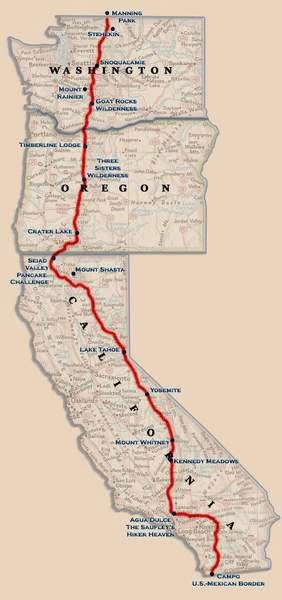
At 2650 miles (4264 km) in length, the Pacific Crest Trail is one of the longest – and most beautiful – trails in the world. Starting at the U.S. border with Mexico and running all the way to Canada, the PCT is considered one of the classic long distance hikes in the entire world, drawing millions of hikers each year, some of whom actually trek the entire length.

That is exactly what backpacker Megan Bullers hopes to accomplish later this year, as she intends to walk end-to-end on the PCT to raise money for the National Multiple Sclerosis Society. She'll set out on April 24 of this year, and she estimates it will take between four and five months to complete the entire hike. Along the way, she hopes to raise $50,000 for the charity.

Hiking the Pacific Crest Trail is a long and challenging endeavor that requires a solid amount of inspiration to make it through. In this case, Megan is not just raising funds for MS, but is doing so to potentially help  her father, who has suffered from the disease since 2000.

If you want to help her reach her goals, you can contribute to this very worthy cause on Megan's donations page. You'll also be able to follow along with her adventure on her blog as well.

Good luck Megan!


2/24/2017

Video: Thru-Hiking the Grand Canyon - A 650-Mile Challenge (Part 1)

Throughout 2015 and 2016, photographer Pete McBride and journalist Kevin Fedarko set off to make a sectional thru-hike of the Grand Canyon in an effort to document the threats that that National Park now faces. Along the way, they faced more challenges than they had anticipated, as the journey was more difficult and dangerous than they had ever impinged. This video takes us along with them into the canyon, to experience much of what they saw while they were there. It is Part 1 of a 3 part series, which promises to be an amazing adventure with some important revelations to be had along the way.

1/12/2017

Adventure Tech: goTenna Extends Backcountry Communication with New goTenna Mesh

Earlier in the year I took a look at an innovative method for staying in communication while in the backcountry called goTenna. This simple, but effective device, connects to your smartphone via Bluetooth technology, and allows you to send text messages and share your GPS location with others who are equipped with a goTenna of their own. In a sense, the device creates its own data network for use in places where shell service is nonexistent, and while it doesn't facilitate voice comms, I found it very useful for staying in touch nonetheless. Now, the team at goTenna is back with a new product, and while it works in much the same way as its predecessor, it has the potential to extend the range of the device much, much further.

Dubbed the goTenna Mesh, this new unit launched on Kickstarter yesterday. A bit smaller than the original model, this new device brings some interesting new technologies to the table that should make it more useful to travelers, backpackers, climbers, and other outdoor enthusiasts. For instance, the Mesh now operates on UHF radio frequencies, which have brought it's out-of-the-box range down slightly, but make it more adaptable to a wider variety of environments, including both the outdoors and interior spaces. Switching to UHF has also allowed goTenna to bring their product abroad too, opening it up for sale in foreign countries where the previous generation's VHF radio waves were not allowed.

But more importantly, as it's name implies, the goTenna Mesh brings "meshing" technology to users as well. This allows the device to relay data that is sent to it on to other users, thereby extending the range almost indefinitely. Where as the original goTenna simply blasted out the messages that it broadcasted to all other goTenna users in range, the Mesh can analyze the data, and then rebroadcast it to others too. In this way a message that is sent can potentially reach a recipient, even if they weren't in range of the original sender.


The first generation goTenna has a range of about 1 mile in urban settings and 4 miles in rural areas, although greater ranges can be achieved depending on elevation and so on. The goTenna Mesh has a similar range when used for peer-to-peer communications, with 1 mile in cities and 3 miles in the backcountry. But, since it has the ability to relay data, a message can hop from one device to the next, provide there are several of them working within range of one another. So while two Mesh devices might have a range of roughly three miles, three or four units working together could stretch that range considerably further.

When goTenna launched the Kickstarter campaign for the new Mesh model it was with the hopes that it would generate $150,000 in crowdfunding to help get the device into production. Just 24 hours later, the campaign has generated $132,000 and climbing. That means that the new product should begin shipping in December as expected, with a price tag of $179 for two units. Of course, a third goTenna Mesh is really needed to see the true benefits of this second generation model, but this is certainly a good start. Early-bird contributors can reserve their goTenna Mesh units for as little as $129 by pledging to support the Kickstarter campaign now however.

In addition to revealing the Mesh, the company is also launching a new service called goTenna Plus. Users who sign up for this plan receive additional benefits from the goTenna app that is installed on their iPhone or Android device, including improved topographic maps for sharing your location, tracking of speed and distance while out hiking, and even sharing your current location with a designated individual on a set schedule, much like a SPOT Satellite Messenger. goTenna Plus users can also take advantage of network relaying which allows a device that is connected to a cell network to pass along goTenna messages to other users in that way too.

goTenna Plus is normally priced at $29 for a year, but is currently available at an introductory price of just $10. Seems like a pretty reasonable rate to me.

Find out more about goTenna and all of its gadgets at goTenna.com.


8/22/2016

Video: Exploring Utah with Ace and His Desert Dog

Last year, Ace Kvale turned 60 and to celebrate, he planned a 60 day journey through Utah's wonderful canyon country with his dog, a ten-year old Australian Blue Heeler named Genghis Kahn. Other friends came and went throughout the hike, but Genghis stayed with him the entire way. Their story is told brilliantly in this video, which reminds us why our favorite adventure dogs are definitely man's best friend.

7/27/2016

Gear Closet: Gear Aid Flux LED Light and Power Station

When I traveled to the 2016 Outdoor Retailer convention in Salt Lake City this past summer I had the opportunity to meet with a number of companies who are making great gear for use in our outdoor pursuits. As usual, there were a number of trends that shone through, including gear getting lighter, more eco-friendly, and improving performance in inclement weather. But, there was also another trend that was easy to notice with numerous gear manufacturers putting an emphasis on better lighting solutions for use around our campsites. In the weeks ahead, you're going to see some of these products begin to make their way onto the market, and several of them are truly going to revolutionize the way we illuminate the campgrounds. The first of these to cross my desk is an incredibly bright and powerful LED lantern from a company called Gear Aid, whose new Flux light will prove very handy in a wide variety of situations.

The first thing you'll notice about the Flux is that it is extremely rugged and durable. Gear Aid spared no expense in creating a light that can survive in just about any environment, including a campsite, warehouse, or garage. Housed in a tough plastic suit of armor, my test unit has survived several serious drops onto a variety of hard surfaces, and has come away without nary a scratch. On top of that, the Flux is also water resistant, which means you should have a bright source of light no matter the weather conditions.

Did I mention that this lantern was bright? With 82 individual LEDs onboard, it can crank out as much as 640 lumens of light on its highest setting. At that level of brightness, the Flux's built-in rechargeable battery – which is rated at a whopping 20,800 mAh – can power the light for up to 13 hours. Turn it down to a much more modest 20 lumens – the Flux's lowest setting – and the burn time increases to an impressive 192 hours. That should be enough to get you through just about any camp outing. And since it has 10 brightness settings, and three color temperatures, you'll always be able to find just the right lighting for to meet your needs.


That massive rechargeable lithium-ion battery can be put to other uses too however. The Flux comes equipped with 1.5-amp USB port that can be used to power-up your electronic devices, including smartphones, tablets, cameras, headlamps, and other gadgets. In fact, the Flux can recharge your iPhone 10 times over, and still have some juice left to power the light.

To add yet another level of versatility to this lantern, Gear Aid has created a series of mounts that allow you use the Flux in a number of different settings. For instance, I tested a magnetic mount that comes in hand when you need to attach the lantern to a car for instance, while a claw mount clips to a pole or similarly shaped attachment. The Flux also comes with a handy built-in kickstand, and a special adapter that is sold separately allows it to work with any GoPro mounts as well.

As if that wasn't enough, the Flux has a couple of other nice tricks up its sleeve. For instance, it can be set to SOS mode to signal for help should you find yourself in trouble in the backcountry, and it ships with a hanging hook and diffuser bag for use inside a tent too. In short, it seems Gear Aid has considered just about everything when designing this lantern.

The Flux doesn't come without a few compromises however, the biggest of which is its size. It is a burly beast when compared to some other camp lights on the market, and those amongst us who count every ounce will likely want to pass on this option. It does take up a considerable amount of room in your pack, and adds some weight too. That will make some hesitate when carrying it into the backcountry, although if you don't mind a slightly heavier load, it does deliver a lot of functionality.

Personally, I like the Flux a lot because it can be used in so many different ways. Yes, it is great to have at a campsite, as it can obviously light up a large space with ease. It is also nice to have a portable power generator to keep electronic devices working too. But, this light is also really handy for working in the garage or basement too, especially if light is at a premium.

The Flux is just one lighting option in a new series of lanterns from Gear Aid. It's siblings, the ARC and Spark offer similar performance in smaller and lighter packages, with the trade-off being lower brightness and less burn time due to smaller batteries. If you like what you see in the Flux, but would like something smaller and lighter, one of those options just might fit the bill instead.

Priced at $149.95, the Flux is very competitively priced, particularly when you consider everything that it brings to the table. It is bright, extremely durable, water resistant, and has great battery life. It can also recharge your other electronic devices and thanks to a clever mounting system, it can be used in a wide variety of ways. If you're in need of a good lamp around the campsite or elsewhere, this is a worthy option to consider. In terms of pure, raw performance, it is tough to beat the Flux right now.

6/02/2016

Gear Closet: Lowa Renegade Ice GTX Boots

In a few weeks, I'm setting off on an trip to Quebec, Canada that will see me snowshoeing, dogsledding, and generally having a good time in the snow. To say I'm looking forward to that experience would be a vast understatement, as it isn't often that I get to go play in those kinds of conditions. Knowing that I would be heading up north for a week of outdoor adventure, I figured it would be a good time to test some new gear in prime winter weather. I knew that I wanted to take some new clothing with me to try out, but I also thought it would be a great opportunity to put a new set of winter boots to the test as well. Lucky for me, my friends over at Lowa were willing to ship me a pair of their Renegade Ice GTX boots to take along on that trip. Little did I know that my opportunity to see how they would perform would come sooner than I expected.

While I wasn't completely caught up in the massive blizzard that struck the eastern United States last week, my city did see more than 8 inches (20 cm) of powder fall in a very short time. That was enough to bring the town to a halt for a couple of days, and it was a good excuse to get outside and enjoy winter weather that isn't all too common here. Luckily for me, I have all the right gear to do just that, including my new Lowa boots.

The Renegade Ice is an updated version of Lowa's Renegade GTX that has been specifically designed for use in the snow. As such, they are taller than the original GTX to provide extra support – and keep snow out – when you wade into deeper powder. They also have a Gore-Tex liner to keep moisture at bay, and a fleece lining on the interior for added warmth. The Renegade Ice also features a specially designed frame that is meant to give them added stability on snow and ice, while still keeping them lightweight and durable.

Putting these boots on for the first time, I found them a bit stiff out of the box. This isn't uncommon on winter boots in particular however, especially with the taller ankle support. It didn't take long for them to start to loosen up though, and after wearing them for an hour or so I didn't find them stiff to walk in at all, although they did continue to provide a nice level of support.


In terms of comfort, you couldn't ask for more out of a winter boot. The interior is soft and warm, and offers plenty of room for your toes, even while wearing a thicker sock. And despite all of the extra padding and thick soles, my foot still felt well connected to the ground, making it easy to keep my footing while walking across icy surfaces. In fact, these boots were practically all I wore for a three day period, which should tell you something about how well they actually feel on your feet.

Speaking of maintaining footing, the Renegade Ice incorporates Lowa's G3 winter sole, which features special lugs and fibers that are meant to hold it in place on snow and ice. While wearing them outside I experienced very little slipping at all, even when transitioning from different types of surfaces. The sole held me firmly in place when walking up and down hills too, which is often where you notice a boot struggling to maintain its footing. But that wasn't an issue at all here, as I hiked through deep powder and walked on thick ice without missing a beat.

In terms of durability, the Renegade Ice GTX boots feel extremely well made. Their leather uppers are tough as nails, and even though I wore them nonstop for three days in icy conditions, they still look like they're brand new. Judging from the time that I've spent with them so far, they seem like a boot that is built to survive in tough conditions, and I expect that a pair will see you through many winter adventures.

Because of their lightweight – yet warm – design, these boots would be perfect for snowshoeing, winter hiking, or other fast paced winter activities. In fact, the only time my feet ever got cold in them at all, was when I was standing in one place for an extended period of time. While moving, they were warm and cozy, and didn't cause any problems whatsoever.

The Renegade Ice GTX typically sell for $285, which is a competitive price for a boot that is designed for winter use. They can be found online for less however if you do a little searching. If you're in the market for a lightweight and warm boot for your active winter pursuits, this is a great option. I think you'll find they are up to just about anything that you throw at them.

4/25/2016

Video: Mission Iceland Trekking

Here's a wonderful video of an adventure that two brothers shared as they trekked 115-miles across Iceland, exploring some of that country's amazing landscapes in the process. It is a beautifully shot short film that will leave you longing for a hike like this of your own, while also touching on some of the sensitive environmental issues that Iceland faces. Thanks to filmmaker Hank Leukart for sharing this with me. Very well done sir!

Mission Iceland: A Tale of Two Brothers from Hank Leukart on Vimeo.

4/12/2016

Backpacker Gives Us the Best Comfort Thru-Hiking Gear

A few days back I shared a post from Backpacker magazine that offered readers their picks for the best budget gear for making a long-distance thru-hike. Each of the items on that list were selected primarily because they are affordable, with performance being the second characteristic. Now, the editors are back with some more gear recommendations, but this time their offering options that fall into a different category – comfort.

Backpacker's picks for the best comfort thru-hiking gear includes a fantastic sleeping bag from Western Mountaineering, an incredibly comfy sleeping pad from Thermarest, and a large, quite possibly the most comfortable backpack on the market today courtesy of Osprey. You'll also find selections for the best tent, jacket, trekking poles, and even an umbrella, all of which are aimed at the hiker who doesn't mind carrying a bit of extra weight if it means he or she has some luxuries that help them to stay at home out on the trail.

Obviously this list is not for those of us who count every ounce when we're heading out on a hike. Instead, it is all about keeping your body as strong and comfortable as possible, even when hiking for miles on end day after day. If you're someone who is okay with knowing you don't have the lightest gear around, but that you'll probably enjoy your hike more as a result, this list is definitely for you.

Check out all of the items that made the cut by clicking here.

3/21/2016

Video: Trailblazers - The Ultralight Movement

This short film is the first of a new series that comes our way from The Dyneema Project, which is a commercial program that is looking to use that space-age material in outdoor gear to make it lighter and stronger. The film gives us a glimpse at the growing movement amongst outdoor athletes, mountaineers, backpackers, and others to go ultralight when traveling in the backcountry, something that can come as a bit of a revelation when you begin to explore the possibilities. While this video is meant to promote these products, it is done in an interesting way and with some outstanding scenery too. The short documentary is a look behind the curtain of the outdoor industry, with insights into where it is currently heading.

3/14/2016

Gear Closet: Light & Motion GoBe+ 700 Spotlight

When it comes to creating headlamps and other high performance lights for use in the outdoors, it is really tough to top the products that Light & Motion puts out. The company creates bright, durable and efficient headlamps and cycling lights, often incorporating unique elements into their design that really sets them apart from the competition. But their new GoBe line of lights raises the bar even higher, delivering a bright, powerful light that can be used in almost any environment. Recently I was fortunate enough to test out the GoBe+ 700 spot, their new flagship product that delivers performance unlike anything you've likely seen before.

Unlike most of the other lights I've tested from Light & Motion, all of which were headlamps, the GoBe is closer in shape to a traditional flashlight. But to call it a "flashlight" greatly undersells exactly what this product can do. For starters, it is bright. Very bright. On its highest setting, it is capable of putting out as much as 700 lumens. How's that for bright? It's medium setting is still good for 325 lumens, while low and extended modes are 100 and  50 lumens respectively. There is also an SOS mode if you need to signal for help, which is also at 100 lumens.

The GoBe uses a rechargeable battery to power its lamp and naturally its burn time varies greatly depending on which mode you're in. On its highest setting, it can only run for about 1.5 hours while in extended mode it will light up the area for a full 24. A handy light integrated into the handle gives the user visual cues as to how much charge remains. When the light GoBe does run low on juice, it is recharged via USB on a computer or a wall adapter using its own proprietary USB cable.


L&M sees their GoBe lights as part of a larger system. With that in mind, they have built several mounting options for use in a variety of activities. The model I tested came with a bike mount that firmly held the light in place on my handlebars and illuminated the trail quite nicely as a result. Other mounts include a photo ball, a video locline, and a YS mount. Additionally, there are six different light heads available, which can be swapped out on the GoBe to extend its functionally further. Some of those include one head that provides a wider focus of light and another designed for search and rescue operations. Between all of these mounts and detachable heads, the versatility of this light really shines through. Pun fully intended.

The GoBe has also been designed to be rugged enough to take with you on all your adventures and it feels like it could survive just about anything. It also happens to make an excellent light for divers, as the system is rated to go down as deep as 120 meters (393 feet). That's an impressive depth for any light to function, let alone one that is as bright as this one.

Light & Motion ships the GoBe+ 700 with the flashlight body, head and body splash caps, a USB charging cable, handle bar mount, lanyard and more. All in all, it's an impressive package, with everything you'd need to use the light on just about any expedition. They also shipped me the Search Head, which focuses the standard beam down from a 60º spread, to a very tight 8º. This turns the light into a narrow, intense beam that makes the GoBe seem like a completely different product.

As with L&M's other products, this type of performance doesn't come cheap. The model I tested carries a price tag of $299, which is a pretty hefty cost to say the least. But this product isn't meant for someone just looking for a spare light to have around the home. It is for the active adventurer who needs a powerful, high performance light for a variety of activities. This is a light that you can mount on your bike, take on a hike, or on a dive deep under the ocean. It is unbelievably bright and versatile, which is everything you could ask for out of a product likes this one. For the person that meets that description, this is a light that is worth every penny.