Showing posts with label Solar. Show all posts
8/08/2016
Video: Staying Powered Up on North America's 50 Classic Climbs
This video is a bit of a commercial for Goal Zero products, but it is also a case study of what works in the field too. Over the past seven years, Mark and Janelle Smiliey have been committed to completing all 50 of the Classic Climbs of North America. As they went about that project, they found themselves looking for ways to keep their electronic gear (smartphones, tablets, cameras, etc.) powered up in the backcountry. That was a real challenge, until they found Goal Zero. The three-minute video is filled with some great mountaineering and climbing shots, and product placement is kept to a minimum. Definitely worth a watch.
Labels:
Climbing,
Gear,
Mountaineering,
Solar,
Technology,
Video
7/12/2015
Gear Closet: Solavore Sport Solar Powered Oven
I'm a huge fan of using solar power for keeping mobile devices charged while traveling through remote locations. This has become easier that it was in the past thanks to improvements to the efficiency of solar panels and the plethora of options available to consumers these days. But, the sun can actually be used to do more things than just keep our gadgets powered up, as I learned recently when I put the Sport Solar Oven from Solavore to the test.
Perfect for use in your own backyard or a campsite, the Sport Solar Oven does exactly what you would expect – turn the power of the sun into heat for cooking a meal. In fact, it is so efficient that you don't even need to have direct sunlight for it to automatically start collecting the rays and generating enough warmth to cook a surprising number of types of foods. The oven comes with its own thermometer, and while testing it consistently kept a temperature above 220ºF (104ºC), which is hot enough to boil water, and while it might take a little longer, cook just about anything else too.
Set up for the Sport couldn't be easier. Simply find a good spot to place it in the sun, and you're pretty much done. Solavore does sell an optional reflector that can be added to the stove to help focus the sunlight further, which takes just seconds to install. It adds some extra speed and efficiency to the oven, but it works just fine without it as well.
The oven does ship with two graniteware pots, complete with lids, which are perfect for cooking in the Sport. Both are three quarts (2.8 liters) in size, which means they have plenty of capacity, and since the oven has enough space to hold both of the pots at the same time, you can actually cook two dishes at the same time.
The Sport Solar Oven is fairly large in size, but isn't particularly heavy. It weighs about 9 pounds (4 kg), which makes it not the best choice for carrying into the backcountry, but a great option for car camping or cooking without the use of gas or power at home too. There is just something really fun about using the oven and watching your meals come together using just the sun to cook them.
Because it uses the sun, and takes some time to cook a meal, a bit of planning and timing needs to go into food preparation using the Sport Solar Oven. I cooked several different things in my test model, and it usually took several hours for things to come together. That's a lot slower than a camp stove that uses gas of course and while getting the feel for the oven you'll want to keep an eye on things so that they don't get over done, but with some forethought and patience, you can eat some incredibly delicious meals anywhere that you can catch some rays from the sun.
To help you get started with the solar oven, Solavore offers some really great recipes on their website. I actually recommend starting with one or two of those options while learning how to use the Sport, as they'll give you exact instructions for preparing the food, as well as estimated cooking times. This will help you to get a feel for the product while you get some experience using it.
Other than the time it takes to actually makes the meal, the Sport Solar Oven is easy to use and works great. It really does open up the options for cooking around the campsite, and the fact that it doesn't need power or gas is a huge plus. The oven sells for $229 and comes with everything you need to make great meals just about anywhere. Just give yourself plenty of time for it to work its magic, and you'll be rewarded with some excellent meals.
Perfect for use in your own backyard or a campsite, the Sport Solar Oven does exactly what you would expect – turn the power of the sun into heat for cooking a meal. In fact, it is so efficient that you don't even need to have direct sunlight for it to automatically start collecting the rays and generating enough warmth to cook a surprising number of types of foods. The oven comes with its own thermometer, and while testing it consistently kept a temperature above 220ºF (104ºC), which is hot enough to boil water, and while it might take a little longer, cook just about anything else too.
Set up for the Sport couldn't be easier. Simply find a good spot to place it in the sun, and you're pretty much done. Solavore does sell an optional reflector that can be added to the stove to help focus the sunlight further, which takes just seconds to install. It adds some extra speed and efficiency to the oven, but it works just fine without it as well.
The oven does ship with two graniteware pots, complete with lids, which are perfect for cooking in the Sport. Both are three quarts (2.8 liters) in size, which means they have plenty of capacity, and since the oven has enough space to hold both of the pots at the same time, you can actually cook two dishes at the same time.
The Sport Solar Oven is fairly large in size, but isn't particularly heavy. It weighs about 9 pounds (4 kg), which makes it not the best choice for carrying into the backcountry, but a great option for car camping or cooking without the use of gas or power at home too. There is just something really fun about using the oven and watching your meals come together using just the sun to cook them.
Because it uses the sun, and takes some time to cook a meal, a bit of planning and timing needs to go into food preparation using the Sport Solar Oven. I cooked several different things in my test model, and it usually took several hours for things to come together. That's a lot slower than a camp stove that uses gas of course and while getting the feel for the oven you'll want to keep an eye on things so that they don't get over done, but with some forethought and patience, you can eat some incredibly delicious meals anywhere that you can catch some rays from the sun.
To help you get started with the solar oven, Solavore offers some really great recipes on their website. I actually recommend starting with one or two of those options while learning how to use the Sport, as they'll give you exact instructions for preparing the food, as well as estimated cooking times. This will help you to get a feel for the product while you get some experience using it.
Other than the time it takes to actually makes the meal, the Sport Solar Oven is easy to use and works great. It really does open up the options for cooking around the campsite, and the fact that it doesn't need power or gas is a huge plus. The oven sells for $229 and comes with everything you need to make great meals just about anywhere. Just give yourself plenty of time for it to work its magic, and you'll be rewarded with some excellent meals.
1/11/2015
Gear Closet: iLand Fly Solar Charging System
As high tech gadgets have become more prevalent on our outdoor adventures, the ability to keep them charged while away from home has become more of a challenge as well. Over the past few years, we've seen some interesting and creative ways to power our high tech equipment, with some impressive options coming from companies like Goal Zero. Recently, I had the opportunity to test a new entry into the burgeoning solar charger market in the form of the iLand Fly, which isn't as powerful as some of its competitors, but still provides plenty of convenience for those who need a recharge on the go.
iLand has impressively packed a lot into the box with this product. Not only does it include a foldable, three-paneled solar cell, it also comes with a battery pack with a 2100mAh capacity. When that battery pack is plugged into the solar panel's USB port, it can collect and store a charge directly from the sun. That same battery pack can than pass along its charge to your gadgets at any time. A special USB cable, with changeable tips, allow you to charge just about any device that uses standard USB, mciro-USB, Apple 30-pin and or a few other plugs. A nice storage bag and cables that allow you to hang the solar panel from a tent or backpack, round out the package.
The included instructions indicate that it should take 3-4 hours to charge the battery pack using the solar panel. But, if you've ever used a solar charger like this in the past, you probably already know that the charging time is greatly influenced by how much direct sunlight it is able to absorb. On cloudier days, it'll take considerably longer to charge up the battery pack, even though it has a relatively low capacity.
When placed in direct sunlight, the solar cell is actually quite efficient at collecting light from the sun and converting it to energy. Considering how small the three panels actually are, I wasn't expecting much, but I ended up being pleasantly surprised at how well they performed. While the Fly won't win any races against other solar panels that I've tested, most of which are much larger in size, it more than holds its own.
The built in USB port on the solar panel itself is capable of charging our gadgets directly, including smartphones, cameras, GPS devices and other electronics. But iFly recommends that you actually charge your devices from the battery pack instead. This allows the solar panel to continually charge the pack, and then have a charge waiting for you whenever you need it. The battery pack is also far more efficient at passing on its charge to higher capacity devices such as the iPhone 5 or Samsung Galaxy S4.
It is clear that iLand built this system with outdoor adventurers and travelers in mind. Not only does it neatly fold up into a very small package, marking it easy to toss into your backpack and take with you anywhere, but it also weighs in at a mere .36 pounds (163 grams). For those looking to travel light, it is an excellent option. The solar panel is also water and dust resistant, which means you can take it with into the field without fear of damaging any of the components.
Because it was designed to be small and compact, the Fly has a somewhat limited capacity for charging. While it can handle a smartphone, mp3 player, or compact camera without too much trouble, it won't be adding much of a charge to your iPad for instance. That probably limits its usefulness on some expeditions, although it does make the perfect travel companion for those who don't need anything more.
If you're in the market for a small, efficient, and useful solar charing system for your adventures, the iLand Fly is a great option. It is compact enough to take with you just about anywhere and provides enough juice to keep all of your smaller electronics fully operational. Typically, the system is sold for $149.99, but for the holidays it was on sale for just $99.95. That deal is still being offered both on the iFly website and at Amazon. That makes it a highly affordable option on top of being an efficient one.
iLand has impressively packed a lot into the box with this product. Not only does it include a foldable, three-paneled solar cell, it also comes with a battery pack with a 2100mAh capacity. When that battery pack is plugged into the solar panel's USB port, it can collect and store a charge directly from the sun. That same battery pack can than pass along its charge to your gadgets at any time. A special USB cable, with changeable tips, allow you to charge just about any device that uses standard USB, mciro-USB, Apple 30-pin and or a few other plugs. A nice storage bag and cables that allow you to hang the solar panel from a tent or backpack, round out the package.
The included instructions indicate that it should take 3-4 hours to charge the battery pack using the solar panel. But, if you've ever used a solar charger like this in the past, you probably already know that the charging time is greatly influenced by how much direct sunlight it is able to absorb. On cloudier days, it'll take considerably longer to charge up the battery pack, even though it has a relatively low capacity.
When placed in direct sunlight, the solar cell is actually quite efficient at collecting light from the sun and converting it to energy. Considering how small the three panels actually are, I wasn't expecting much, but I ended up being pleasantly surprised at how well they performed. While the Fly won't win any races against other solar panels that I've tested, most of which are much larger in size, it more than holds its own.
The built in USB port on the solar panel itself is capable of charging our gadgets directly, including smartphones, cameras, GPS devices and other electronics. But iFly recommends that you actually charge your devices from the battery pack instead. This allows the solar panel to continually charge the pack, and then have a charge waiting for you whenever you need it. The battery pack is also far more efficient at passing on its charge to higher capacity devices such as the iPhone 5 or Samsung Galaxy S4.
It is clear that iLand built this system with outdoor adventurers and travelers in mind. Not only does it neatly fold up into a very small package, marking it easy to toss into your backpack and take with you anywhere, but it also weighs in at a mere .36 pounds (163 grams). For those looking to travel light, it is an excellent option. The solar panel is also water and dust resistant, which means you can take it with into the field without fear of damaging any of the components.
Because it was designed to be small and compact, the Fly has a somewhat limited capacity for charging. While it can handle a smartphone, mp3 player, or compact camera without too much trouble, it won't be adding much of a charge to your iPad for instance. That probably limits its usefulness on some expeditions, although it does make the perfect travel companion for those who don't need anything more.
If you're in the market for a small, efficient, and useful solar charing system for your adventures, the iLand Fly is a great option. It is compact enough to take with you just about anywhere and provides enough juice to keep all of your smaller electronics fully operational. Typically, the system is sold for $149.99, but for the holidays it was on sale for just $99.95. That deal is still being offered both on the iFly website and at Amazon. That makes it a highly affordable option on top of being an efficient one.
3/27/2014
Solar Impulse 2 Resumes Round--the-World Flight
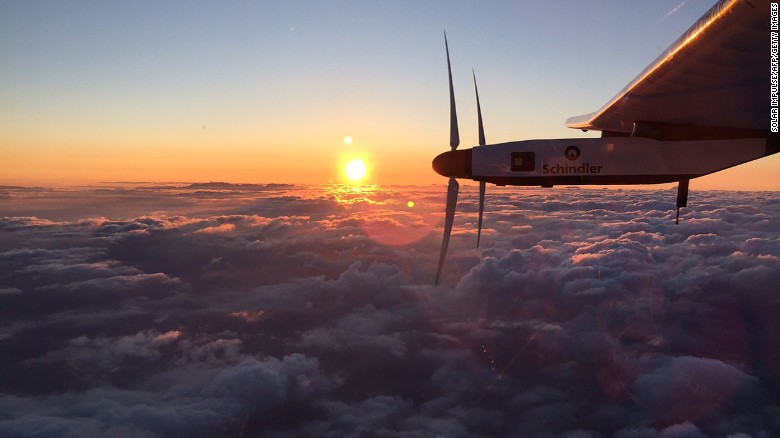
Its journey around the world may have been delayed for 10 months, but the historic flight of the Solar Impulse 2 has resumed at long last. The solar powered aircraft took off from Oahu in Hawaii yesterday, and is now flying towards California on what is arguably the most dangerous leg of the entire project.
The innovative plane features a wingspan as large as a 747, yet it has a very small and cramped cockpit. Most of those large winds are covered in solar panels, with large batteries onboard that cover the rays of the sun into energy and store it for use while inflight. The aircraft carries absolutely no fuel, which is why flying it around the world is such a major achievement.
The Solar Impulse 2 took off from Abu Dhabi in March of last year, flying on to China with few problems. Once there however, poor weather kept the plane on the ground for several weeks, and when it did take off it was forced to land in Japan, where it suffered damage on the ground. The crew repaired that damage, and Swiss adventurer/pilot Bertrand Piccard pressed on to Hawaii.
But while on that leg of the journey, the plane's batteries overheated, damaging the electrical system en route. Safely on the ground in Hawaii, the team reviewed the issue and discovered that it would take some time to repair the Solar Impulse and get it back in the air. The aircraft needed two new batteries and an improved cooling system, which took some time to get in place. It remained in Hawaii until yesterday, when a weather window opened that allowed the plane to take off and resume its journey at long last.
Over the next few days the solar-powered aircraft will make its way to San Francisco, before continuing across the U.S., making several stops along the way. From there, it'll fly across the North Atlantic, visit Europe and North Africa, before proceeding back to Abu Dhabi sometime in the summer. If successful, the Solar Impulse will be the first aircraft to circumnavigate the globe using nothing but solar power.
Hopefully this is the last of the delays, and the airplane can now continue along on its journey without any further delays. There is still a long way to go, and it is far from out of danger, but the team behind this project is happy to see its aircraft back in the air once again.
The innovative plane features a wingspan as large as a 747, yet it has a very small and cramped cockpit. Most of those large winds are covered in solar panels, with large batteries onboard that cover the rays of the sun into energy and store it for use while inflight. The aircraft carries absolutely no fuel, which is why flying it around the world is such a major achievement.
The Solar Impulse 2 took off from Abu Dhabi in March of last year, flying on to China with few problems. Once there however, poor weather kept the plane on the ground for several weeks, and when it did take off it was forced to land in Japan, where it suffered damage on the ground. The crew repaired that damage, and Swiss adventurer/pilot Bertrand Piccard pressed on to Hawaii.
But while on that leg of the journey, the plane's batteries overheated, damaging the electrical system en route. Safely on the ground in Hawaii, the team reviewed the issue and discovered that it would take some time to repair the Solar Impulse and get it back in the air. The aircraft needed two new batteries and an improved cooling system, which took some time to get in place. It remained in Hawaii until yesterday, when a weather window opened that allowed the plane to take off and resume its journey at long last.
Over the next few days the solar-powered aircraft will make its way to San Francisco, before continuing across the U.S., making several stops along the way. From there, it'll fly across the North Atlantic, visit Europe and North Africa, before proceeding back to Abu Dhabi sometime in the summer. If successful, the Solar Impulse will be the first aircraft to circumnavigate the globe using nothing but solar power.
Hopefully this is the last of the delays, and the airplane can now continue along on its journey without any further delays. There is still a long way to go, and it is far from out of danger, but the team behind this project is happy to see its aircraft back in the air once again.
Subscribe to:
Posts (Atom)