Showing posts with label Climate Change. Show all posts
Showing posts with label Climate Change. Show all posts
12/19/2017
Video: Meet The Snow Guardian
Meet billy barr (yes, that's how he spells it!), a man who has lived alone in a cabin near Gothic, Colorado for 40 years. Over that time, he has been keeping meticulous records of the weather, how much snow has fallen, what the temperature on any given day is, and so on. Those records are now proving invaluable to climate scientists, who view billy as an invaluable resource. This is his story, as told by National Geographic.

1/26/2016
The Impact of Climate Change on Everest

Outside Online has the story of two researchers who have traveled to Nepal this spring to study the effects of climate change on the mountain. In particular, they are watching how warming temperatures are impacting the Khumbu Glacier, which has been receding for years. That will have a direct impact on climbing the mountain, making it even more difficult and potentially deadly.
Everest Base Camp sits just below the Khumbu Icefall, an important section of any Everest climb on the south side of the mountain. Mountaineers must pass through this dangerous section using ropes and ladders that must be carefully placed, and meticulously maintained, for the entire season. But as the glacier melts, the Icefall could disappear altogether, making it almost impossible to climb Everest from the Nepali side. Perhaps a new route would be revealed under the ice, but that isn't likely.
Additionally, the crumbling glacier has also made the trek from BC up to Camp 1 a lot more dangerous, as evidenced in 2014 when 16 porters were killed in an avalanche. More avalanches are likely to take place in that section of the climb as temperatures rise and the glacier continues to feel the stress.
The Outside article goes into more depth on the impact of climate change not just on the mountain itself, and the Khumbu Glacier, which is a source for fresh water further down the valley. As the glacier continues to recede, that water will become more scarce, directly impacting the people who live in the area.
This is a sobering piece about how climate change is already having a major impact on a part of the world that is now seeing dramatic changes. Soon, it will become even more difficult for us to bury our heads in the sand over this issue as the effects begin to be felt in more widespread parts of the world. Hopefully we can do something about it before its too late.
1/07/2016
Crack in Antarctic Ice Shelf Grew 17 Miles in Length Since December

According to scientists who have been monitoring the crack, it has grown by as much as 17 miles in the past two months. According to the Times, the speed at which it is spreading is accelerating as well, now growing at a rate of more than five football fields each and every day. At this point, the crack is now just 20 miles away from reaching its end point, which will result in the entire chunk of ice breaking free and slipping into the ocean, something that could happen as early as April or May of this year.
This is alarming for a number of reasons. Not only will it create the biggest iceberg of all time, but as that iceberg begins to float away from the frozen continent, it will begin to melt, and possibly breaking up into smaller icebergs that could cause problems for ships. But, more importantly, the ice shelf serves as a buffer between the ocean waters and the glaciers that sit on the continent itself. Without the ice shelf to help protect it, the glaciers will begin to melt at a much higher rate too, and will tumble directly into the water. If this continues to happen across Antarctic – and evidence suggests it will – we could see the start of a major rice in ocean levels around the world.
I know that there are still a lot of people out there who want to deny the impact of climate change. But, there is something happening to our planet, and the polar regions are the canary in the coal mine. In recent years, we've seen substantial change in both the Arctic and Antarctic, and those changes only seems to be speeding up. Perhaps with the austral winter now nearly upon us, we'll see things slow down at least temporarily, but the Larsen Ice Shelf is about to collapse, and at this point it isn't a question of "if" but "when."
To find out more about his, check out the entire story at NYTimes.com.
12/20/2015
North Pole 2016: British Team Completes Expedition
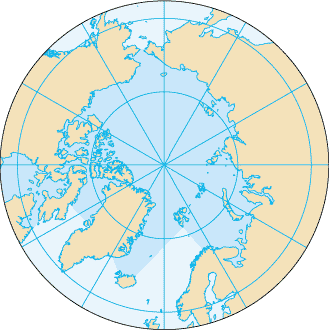
It took Mark Wood, Paul Vicary, and Mark Langridge just 4 hours to complete the final push to the Pole yesterday, facing more ice rubble and fields along the way. The squad saw plenty of that, plus plenty of other obstacles over their two weeks of skiing north, including open leads of water and blocks of ice the size of a house. They also witnessed the effects of climate change, with thinning ice, warming temperatures, and the Arctic Ocean uncovered in surpassingly large areas.
The 13-day expedition was far shorter than the trio of explorers originally envisioned. Initially the plan was to ski the full distance to the North Pole via the Russian side of the ice. Later, they decided to change directions, and travel from the Pole to Ward Hunt Island in Canada instead. But delays to the start of the expedition pushed back their start, making that much longer journey an impossibility. Instead, they elected to complete a journey that crossed two degrees of latitude instead. The shortened trip still allowed them to observe the environmental impact they had hoped to learn more about, but they had hoped to collect more data over a larger area of the Arctic.
The three men didn't spend much time at the Pole. They were picked up by helicopter last night, and flown back to the Barneo Ice Camp where they now are waiting for transportation back to Europe. It might take another day or two for that to happen, but soon they'll be on their way home.
The North Pole season will continue for another week or so as some "last degree" teams continue to ski to the Pole and some research teams wrap up their projects. Soon though, the Barneo camp will pick up for another year, and the Arctic will be abandoned once again. At this point, it is impossible not to wonder if the age of Arctic exploration is quickly coming to an end as climate change alters the landscape their forever.
5/06/2015
Temperature at the North Pole Climbs 50º Higher Than Normal
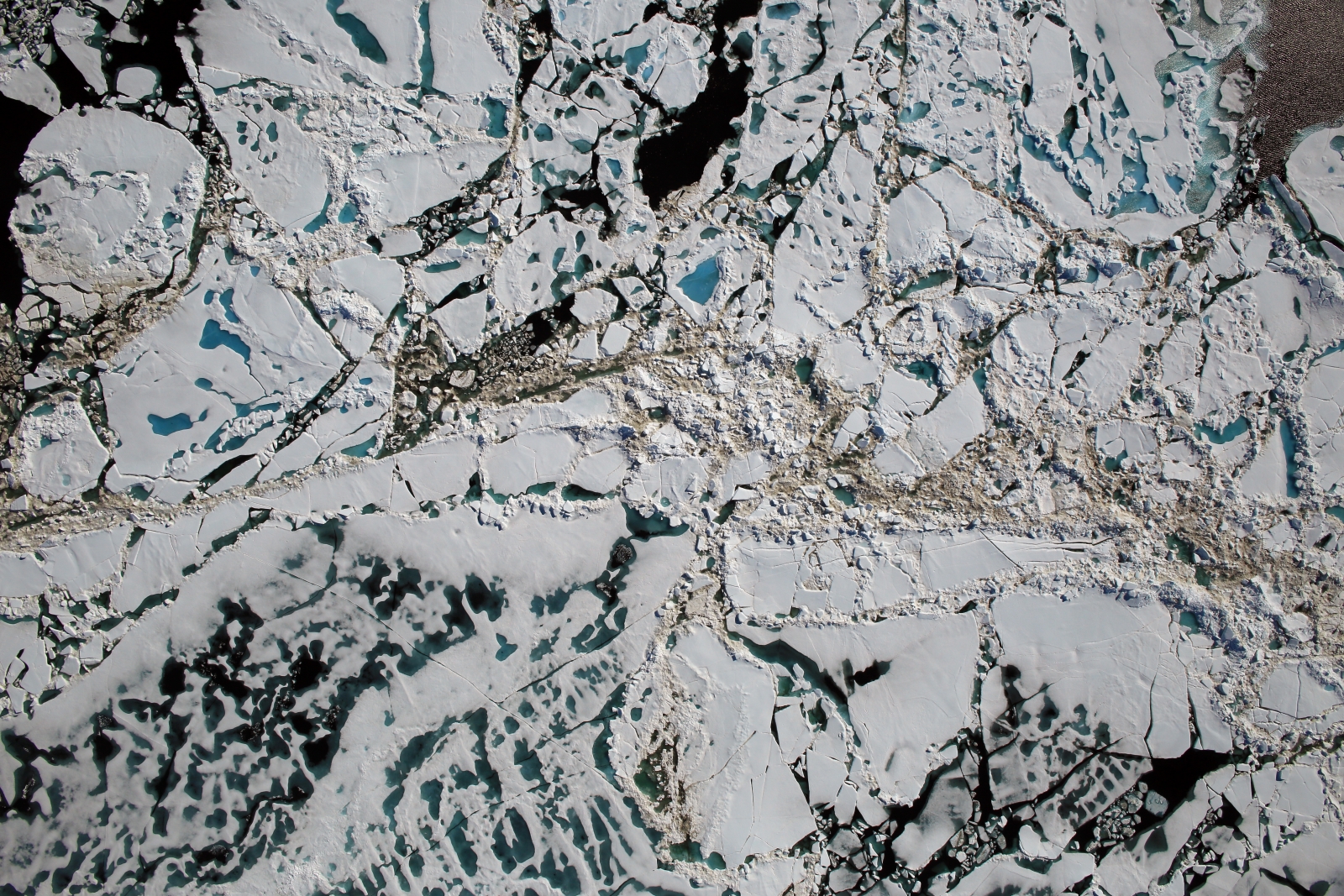
To put things into perspective, that means that temperatures were warm enough to melt snow and ice, even as winter is arriving in the Northern Hemisphere. That should set off alarm bells about the state of the polar ice caps, which seem to be already retreating at an alarming rate. We've had a lot of somber news from the Antarctic recently as well, but this is just another indicator that our planet is definitely in a state of flux right now, and we're running out of time to do anything about it.
It also doesn't bode well for any explorers hoping to make an expedition to the North Pole. If it is this warm in December, what will the conditions be like in March and April, or even into the summer. I know that there are a couple of expeditions planned for the Arctic next spring, but they could be dealing with unprecedented ice break up, and the largest leads of open water that have ever been seen at the top of the world.
Of course, we do have a long winter to go, and temperatures are sure to return to normal at some point. But so far, November and December have been unseasonably warm, and have climbed up close to the 0ºC mark once before as well. Worse yet, the long-range predictions are saying that 2017 could be another very warm year, with further melting of the ice caps.
I'm not sure how much longer climate deniers are going to keep their head buried in the sand. The signs are there, and we're mostly ignoring them at this point. Still, it isn't too late to try to make a change. Hopefully that will be the New Year's Resolution for some important people who are in a position to have an impact on policy and reform. Time will tell.
5/05/2015
All-Female Team To Make First Descents, Investigate Climate Change In Greenland

The ladies, who are working with both the I AM PRO SNOW and Adventurers and Scientists for Conservation organizations, will first travel to the southwest coast of Greenland where they'll climb several peaks and make the first ski descents of those mountains. Along the way, they'll also collect valuable data that will help us to understand how climate change is having impact on that fragile coastline and to Greenland as a whole.
Prior to departing, the team has organized a crowdfunding campaign on Indiegogo in the hopes of raising some money to help support the project. The expedition will be documented by adventurer photographer Andy Bardon, so that the entire story can be told upon their return.
This looks like a great project for a number of reasons. Obviously we enjoy adventure in all of its forms here at the Adventure Blog, and this looks like it should be a good one. The emphasis on climate change should not be under rated either however, and since this is an all-female team, perhaps it will also encourage more young ladies to get out there and chase their adventurous dreams as well.
The video below helps to explain more.
3/24/2015
The Explorers Museum Announces 2016 Summit in Ireland

In the modern age, exploration is no longer just about important firsts and filling in the blank spots on the map. As The Explorers Museum recognizes there is a great deal of effort being put into learning about sustainability, preserving the planet, and making it a better place for those of us who inhabit it. To that end, the list of guests who will be attending the summit reflects these values. Additionally, the theme of the entire weekend is "Redefining Exploration," which indicates what the keynote address and sessions will be about.
You can read more about the summit weekend, check out the full line-up, and purchase tickets here. Glancing over the schedule, some of the highlights include opening ceremonies that include an address from Lorie Karnath – former President of the Explorers Club and founder of The Explorers Museum. There will also be a screening of the film Racing Extinction, breakout sessions that focus on fieldwork, climate change, the changing nature of exploration, and much more.
Tickets are on sale now, and it looks like this will be a very interesting weekend for those of us who value exploration in the 21st century. The setting at Charleville Castle – the Global Expedition Base – will serve as a fantastic backdrop to these discussions. I know I'd love to be there.
2/11/2015
Barneo Ice Camp Closes for 2016

For the second year in a row there were now full-distance skiers to the North Pole. The logistics of such an expedition seems to be getting more challenging with each passing year, and climate change is making that journey more difficult than ever. I've said before that the toughest expedition on the planet is skiing to the North Pole, and we may actually have seen the last team to do that a few years back. Others have announced plans to attempt that journey, but no one has been able to duplicate it. That was the case this season as well with the Race Against Time squad, and I think it will probably be the same for future teams too.
2016 was a difficult year for the team that builds and operates the Barneo base as well. Not only did they have problems building and maintaining the ice runway there, they also ran into issues dealing with the Norwegian government too. The challenges with the runway were the result of the Arctic Ocean churning the increasingly thinning ice there, causing the landing strip to crack. Those problems aren't going away, and will probably continue to get worse in the years ahead.
The Barneo team has announced that they'll avoid traveling through Svalbard in Norway moving forward, and will instead use Franz Josef Land for their logistics starting in 2017. The friction with the Norwegians began when a reporter claimed that a team of Ukrainian commandos passed through Norway on their way to Barneo – something the Barneo staff denies – which calls into question whether or not the flights from Svalbard to the ice camp posed a security threat. As a result, the Norwegian government put new restrictions on the Barneo flights, which ultimately forced the change of direction for future seasons.
The 2016 Arctic season was reasonably successful with marathon runners, researchers, explorers, adventure travelers, and more passing through Barneo. Now, it'll be another year before we'll see if anyone can make the journey to the North Pole again. Good luck to the explorers aiming for that feat in 2017.
8/18/2014
Massive Reef Discovered at the Mouth of the Amazon River
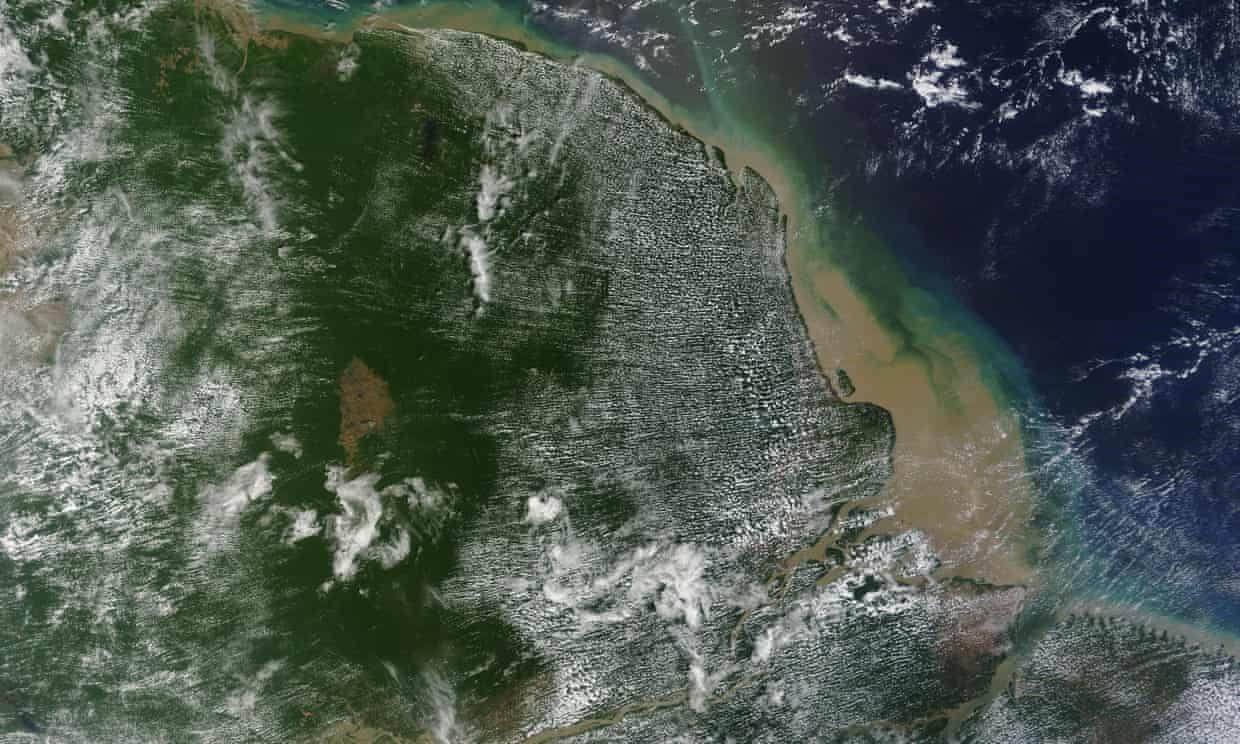
Indications that the reef might exist first appeared back in the 1970's when fishermen began catching fish that were more commonly found on and around reefs in other parts of the world. But confirmation of the existence of this particular reef didn't come until recently, when researchers were finally able to prove that against all our knowledge and understanding of the ocean that it was hidden away along the coast of Brazil.
The reef stretches for nearly 700 miles (1126 km), and is more than 3600 sq. miles (9300 sq. km) in size. It is also said to be home to at least 60 species of sponges and 73 species of fish. Even more surprising is the fact that unlike other reefs found around the world, this one appears to be very healthy, and even growing. Climate change has begun to warm the oceans, which is causing coral reefs to die at an alarming rate. But this one is not displaying those same symptoms.
What makes this new reef so amazing is that it exists in a place that it was previously believed one shouldn't be able to survive. While it is submerged in ocean waters, the surface of the Atlantic is covered in fresh water that is dumped in from the might Amazon River. The river also deposits plenty of mud and sentiment into the water, which is typically not conducive to the growth of coral either. On top of that, oceanographers typically find reefs in shallower waters that are warmer and clearer than where this one exists. This has left some scientists to wonder if other reefs are out there in our oceans, just waiting to be found.
But the good news over the discovery of this reef – and the fact that it is thriving – is tempered somewhat due to the fact that it is already being threatened by man. It seems that the Brazilian government has already sold 80 parcels of ocean to oil companies to start drilling at the mouth of the Amazon. 20 of those blocks are already in operation, some of which are believed to be right on top of the reef itself. How that will impact the life of the reef moving forward remains to be seen.
Coral reefs play an important role in the keeping the ocean healthy as they often form protective barriers for ecosystems both along the coast line and living within the waters themselves. As those reefs recede, ocean storms, hurricanes, and typhoons could have a larger impact on certain regions of the planet. The Earth's coral reefs are also seen as the canary in the coal mine in terms of indicating the impact of climate change on an area too.
Still, finding this particular reef is amazing, especially since it shouldn't exist at all. Hopefully it will be well protected moving forward.
7/17/2014
Patagonia to Close All Stores in the U.S. for Election Day

The move comes as part of Patagonia's Vote Our Planet initiative, which encourages us to support candidates that take a tough stand on environmental issues, something that should be of major concern for all outdoor enthusiasts. The idea is to rally around men and women who are running for office that are looking to preserve the planet for future generations and protect wildlife and wild spaces.
“During a time of catastrophic environmental crisis, when America needs strong leadership to confront the fundamental threat of climate change, voter turnout threatens to reach historic lows as people are turned off by the ugliness of politics,” said Patagonia CEO Rose Marcario. “As a business, we have a unique ability to take a stand and choose to prioritize the health of the planet over profit, and I think it’s important we take that opportunity when it truly matters. We want to do everything possible to empower citizens to make their voices heard and elect candidates up and down the ballot who will protect our planet.”
Obviously the presidential election to be held next week is an important one for many reasons. I don't often use this blog as a place to make a political statement or support any one candidate over another. But I will say that the future of the country, and perhaps the world, rests in the hands of who will be elected to the White House on November 8. While I have my own opinions on who should or should not be in charge, what is most important to me is that everyone get out to vote. Patagonia is making that a little easier, at least for its own employees and customers.
If you care about the environment, do a little research on the candidates in your area and get out and vote for the ones that are looking at ways to make things better moving forward. We are at a critical point when it comes to climate change and other environmental factors, and now is the time to have our voices heard. Vote on November 8 to at least play a role in that process.
6/22/2014
2016 Was The Hottest Year on Record
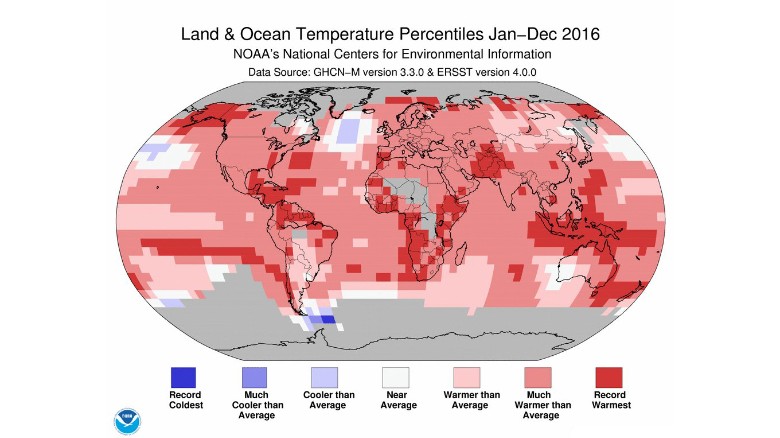
According to NASA and NOAA, 2016 was the hottest year on record, breaking the previous mark for the third consecutive year. And if that wasn't sobering enough news, the latest report on climate change also indicates that 16 of the 17 hottest years ever have taken place since 2000.
Studies indicate that the average temperature across the planet increased by 1.1ºC (1.98ºF) last year, which may not sound like much but it is enough to have a dramatic impact on large sections of the globe – especially in the polar regions. It also means that we're already well on our way towards surpassing the 1.5ºC goal set by the Paris Climate Agreement from 2015.
The cause for the increased temperature remains the same as it has for the past two decades, or longer. The burning of fossil fuels increases carbon dioxide emissions into the atmosphere, and the continued deforestation of rainforests – often referred to as the "lungs" of our planet. These harmful processes seem to be continuing to accelerate, despite efforts to reverse their effects.
Historical records of temperatures have been kept as far back as the 1880's, which means we have more than 130 years of data to compare the current trends to. It is also becoming increasingly more difficult to deny the impact of humans on the environment. As part of the report, Michael Mann, the director of the Earth Science Center at Pennsylvania State University, said "The effect of human activity on our climate is no longer subtle. It's plain as day, as are the impacts -- in the form of record floods, droughts, superstorms and wildfires -- that it is having on us and our planet."
To make matters worse, the Arctic seems to be warming at a faster rate than the rest of the planet, with temperatures now climbing to 3ºC (5.4ºF) higher than they were a decade ago. That means an increased rate of melting of the ice caps, which in turn leads to raising sea levels around the world. That will have a big impact on coastlines, eventually putting areas that are now inhabited potentially under water.
But, there is cause for some hope. Scientists believe that 2017 won't be warmer than the previous years thanks to El Nino keeping things a bit cooler. This is probably a temporary state of affairs however, even if it does buy us a brief respite.
How anyone can continue to deny climate change is beyond me. Whether or not humans are having an impact doesn't matter any longer. It's happening, and we need to do whatever we can to halt it. It's not too late, but time is running out.
2/09/2014
Video: Exit Glacier in Alaska - A Tale of Shifting Fortunes
Located in the Kenai Fjords of Alaska, Exit Glacier has been a beautiful fixture for adventurers for decades. But, the glacier is now in full retreat, and as you'll see in this video it is doing so at an alarming rate. What once took years to accomplish now takes just months, and the changing nature of the surrounding area is having a profound impact of the environment there. At this rate, Exit will shrink to a mere fraction of its former size well within our lifetime, and there doesn't seem to be much we can do about it.
This video seems appropriate for Inauguration Day, when a President who isn't exactly committed to stopping climate change is taking office.
GLACIER EXIT from Raphael Rogers on Vimeo.
This video seems appropriate for Inauguration Day, when a President who isn't exactly committed to stopping climate change is taking office.
1/08/2014
Video: Thru Hiking the Grand Canyon - Thirst and Threats in the Godscape (Part 3)
Today we have the third – and final – video in the National Geographic series that follows photographer Pete McBride and journalist Kevin Fedarko on 650 mile (1046 km) thru-hike of the Grand Canyon, as they explore the threats that that place now faces. They've discovered that amongst those threats are environmental issues, climate change, encroaching commercial interests, and more. As their journey nears and end, the two men face a challenge of their own – potentially running out of water in a remote corner of the national park. Find out how their expedition wraps up in this installment of the series.
Subscribe to:
Posts (Atom)