Showing posts with label Canada. Show all posts

8/22/2017

Off on a Brief Canadian Adventure

I wanted to share a quick updated with Adventure Blog readers for what is to come this week. Tomorrow I leave for Quebec, Canada for a few days of winter fun. My adventure up north will include some dogsledding and snowshoeing, while exploring some of the great outdoor environments that Quebec has to offer. To say I am excited about the trip would be an understatement. 

I'm told that we'll have Internet access at various times while traveling, so if possible I will share some of my experiences as they are happening. It should be an incredibly fun excursion filled with lots of interesting activities and destinations, and I hope to provide some insights into what it is like there during the winter. 

As for the weather, the forecast says it is going to be cold. Like -15ºF/-26ºC cold. The region has also had in excess of 5 meters (16 feet) of snowfall so far this winter. That means it should be well suited for the activities that we have planned. It also means that I should get plenty of chances to test some gear while I'm there, so look for a slew of reviews to follow my return. 

I hope everyone has a great week filled with some adventures of their own. I'll be back before you know it, and sharing stories, news, and info. 

7/06/2017

168 Years After Sinking in the Arctic the HMS Terror has Been Found

After years of searching in the Arctic, the missing ship of explorer Sir John Franklin has been found at long last. Earlier this week it was announced that the HMS Terror, a vessel that Franklin was using to explore the icy waters of the Northwest Passage, had been found after 168 years.

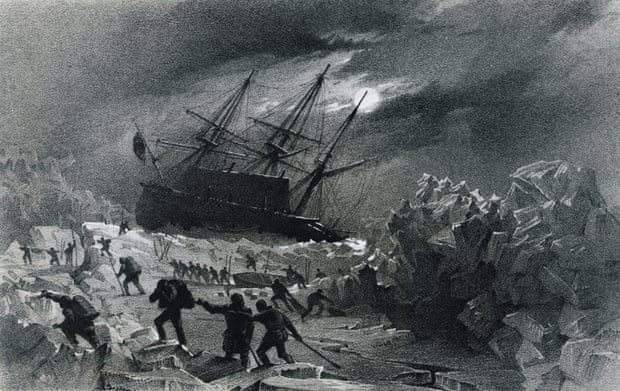
Franklin and his crew had been exploring the Arctic Ocean north of Canada back in 1848 when they ran into thick pack ice that prevented them from continuing their voyage. Both the Terror and its sister-ship, the HMS Erebus became trapped, forcing everyone onboard to abandon the two vessels. Eventually, all 129 members of the crew perished in the Arctic, and what became of the ships remained a mystery.

A few years back the Erebus was discovered by a search crew, but the location of the Terror remained a mystery. Now, thanks to a tip from a local Inuit tribesman, that mystery has been solved. The Terror  was found in – of all places – Terror Bay, where its mast was spotted sticking out of the ice by passing hunters a few years back. That tip led to an archeological team going to the site to check out the area, only to discover the very vessel they had been searching for.

According to early reports, it seems that the ship is in relatively good condition, and may contain most of the things that were left onboard when it was abandoned by Franklin and his crew. In comparison, the Erebus has suffered hull damage, and Arctic currents had spread out its contents over a wide area. It'll be some time before salvage crews can truly get a look at the Terror however, so just what might be on the ship remains a mystery.

As for Franklin and his men, it seems that after they abandoned their ships, they began a long and perilous march across the Arctic with the hopes of reaching the Hudson Bay Company – a fur trading outpost far to the south. None of the men made it to the safety of that place however, vanishing in desolate white expanse of the north. Inuit oral histories talk about the foreigners passing through their area, but their ultimate fate has never been fully told.

The disaster that beset the Franklin crew is one of the worst in British naval history. It was quite a blow to that country, which ruled the seas and was pushing the boundaries of exploration at the time. Now, after more than a century and a half, at least part of the mystery has been solved.

4/28/2017

Video: A Surreal Dive into a Frozen Lake

Free diving is always a fascinating activity to me, but it is taken to an entirely new level with this video, which follows Canadian diver Matthew Villegas as he plunges into the icy depths of Morrison Quarry in Quebec with his trusty GoPro camera in hand. The footage that he captures there is nothing short of eerie and surreal as you'll see in the clip below. Just looking at this makes me cold, but it is beautiful.

11/02/2016

North Pole 2014: More Teams Heading To The Arctic

Yesterday I posted a story about Eric Larsen and Ryan Waters prepping to make an attempt on the speed record for skiing to the North Pole. But they aren't the only explorers heading north this spring. When the season gets underway at the start of March, there will be a number of other aspiring adventurers looking to make that grueling journey as well. But according to this report from ExWeb, a number of teams will be facing a condensed season this year, thanks to a narrow window of escape via the Barneo Ice Camp. Others, such as Eric and Ryan, will charter an expensive flight from Kenn Borek Air.

ExWeb is indicating that Norwegians, Kristoffer Glestad and Lars Mangerud Flesland will share a flight out to Cape Discovery with Larsen and Waters. These two young men hope to go even faster to the North Pole, covering the distance in 40 days. If they do make it, they'll also be the youngest to complete the full route to the top of the world, at the age of 24 and 25 respectively. They'll get started on March 7.

Also on his way to the North Pole will be Japanese skier Yasu Ogita, who is going solo and unsupported to 90ºN. He has also contracted with Kenn Borek and won't need to exit from the Barneo Camp. Similarly, Michele Pontrandolfo will attempt the same feat. He'll be in Resolute Bay next Monday, then set out for Cape Discovery on March 5, with an eye on reaching the North Pole by April 21. That would mean he'll complete the expedition in just 45 days.


Also returning this season to give the North Pole another go is the Irish team of  Clare O’Leary and Mike O’Shea, who made an attempt last year as well. They were force to abandon that attempt however, so they feel like they have a bit of unfinished business in the Arctic. They'll set off in the first week of March too.

When the Barneo Ice Camp opens on April 2, it'll give adventure travelers a chance to ski to the North Pole as well. For those who aren't aware, Barneo is a temporary camp that is built in the Arctic each year that gives assess to the top of the world. The camp is usually built at about 89ºN, which is within a helicopter flight to the Pole. This year, the camp will remain open until the 22, which is plenty of time for the tourists, but may be a tight squeeze for the explorers who hope to exit that way.

It looks like it will be a very active season in the Arctic, but as in the past few years, looks can be deceiving. The past two years, strong storms have kept many of the North Pole skiers stranded in Resolute Bay, waiting for a chance to fly out to the Cape. As the weather continued to be dicey, they watched their very few days begin to disappear before they even hit the trail. Some did eventually make it out, only to find conditions too difficult to endure. I suspect we'll see some of that again this year, as the Arctic continues to become more demanding, forcing some teams to pull the plug. At this point, I'll actually be very pleasantly surprised if anyone actually completes the full route this year. It is becoming that difficult to accomplish.

10/08/2016

World's Largest Viking Ship to Sail From Norway to the U.S.

Photo credit: Peder Jacobsson
A crew of 16 sailors are about to embark on an epic adventure that will take them across the North Atlantic as they look to recreate historical voyages that first took place more than 1000 years ago. On Sunday, the Draken Harald Hårfagre – the largest viking ship ever built – will set sail from Norway with the goal of eventually reaching the U.S., proving once again how Viking explorers reached North America hundreds of years earlier than Christopher Columbus.

Dubbed Expedition America, the journey is meant to learn about the conditions faced by the Vikings as they undertook voyages of discovery from 750-1100 AD. To that end, the Draken Harald Hårfagre has been built to exacting details in the same manner as the ancient Viking ships before it were constructed. It has an open-air kitchen and a sleeping area. The 16 crew members will take turns spending 4 hours manning the vessel and 4 hours off resting throughout the length of the voyage.

The ship will depart from Vibrandsøy, Haugesund, Norway, setting out across the North Atlantic with the goal of reaching Reykjavík, Iceland by May 1. From there, they'll continue on to the port of Qaqortoq in Greenland, skipping across the ocean just as their ancestors did before them. After that, they'll make a harrowing voyage across the Davis Strait – traveling a thousand miles north of where the Titanic went down – on their way to the viking settlement of L’anse aux Meadows in Newfoundland, Canada. They hope to arrive there around the 1st of June.

The voyage won't end when they reach North America however. The Draken Harald Hårfagre will than proceed up the Gulf of St. Lawrence to Quebec City, before proceeding into the Great Lakes to visit places like Toronto, Chicago, Green Bay, and even traveling as far west as Duluth, MN before turning back east for a stop in New York City in September.

Of course, you'll be able to follow along with this voyage on the expedition's official website. It should certainly be interesting to watch unfold.

9/27/2016

Japanese Polar Explorer Yasu Ogita Completes Canada to Greenland Expedition

Way back in March I told you about Japanese polar explorer Yasunaga Ogita's plans to ski from northern Canada to Greenland across the frozen sea ice of the Arctic Ocean. At the time, he was just preparing to set out, but now, two months later, he's finished the journey at long last, covering more than 830 km (515 miles) in the process.

Yasu initially set out from Grise Fjord on Ellesmere Island back on March 30. He then spent the next 48 days skiing to Greenland, crossing the frozen expanse of the Arctic Ocean along the way. He told ExWeb that his biggest challenge while en route was the fast moving arctic ice that was pushed along by a strong current. Crossing those moving floes can be difficult unless you're traveling at high speed, which isn't possible on foot when dragging a heavy sled behind.

Along the way, the Japanese polar veteran also encountered plenty of polar bears and even an arctic wolf who took an interest in his travels. He also saw seals, musk ox, caribou, and other creatures as well, proving that this part of the world isn't quite so empty as some would think.

To prepare for the crossing Yasu spoke to other explorers who had traveled in the region before, as well as locals in both Canada and Greenland. But much of the path was completely unknown, with very few people ever crossing through this part of the world. The crossing isn't completely unknown, but it is a very rare occurrence to say the least.

Yeas wrapped up his journey on May 16 and just recently traveled home to Japan. He is no doubt already thinking about his next adventure.

7/10/2016

Video: Beautiful Mountain Vistas

Shot mostly in Canada, Oregon, and California (with a brief visit to the Himalaya) this video is three minutes of pure eye-candy. As its name implies, it features some fantastic shots of mountain landscapes that are simply breathtaking to behold. The clip is likely to inspire a sense of wanderlust, spurring you on to go in search of these places for yourself.

A word of warning though. While I find the visuals in this clip to be utterly spectacular, I'm not a huge fan of the choice of music that accompany the those images. I had to turn it down, but hopefully you'll enjoy it more than I did.

Vista from Leif Smith on Vimeo.

5/22/2016

Video: Watch Wild Bison Being Reintroduced to Banff National Park

In an effort to improve the ecosystem of Banff National Park, the Canadian government has decided to reintroduce wild buffalo to that place. On February 1, 16 of the animals – which were relocated from Elk Island – were set free in the park, marking the return of those creatures for the first time in over a century. You can see this historic release as it took place in the video below. Hopefully in the years to come, the bison population in Banff will grow to large numbers and visitors will see them roaming the region as they once did.

4/15/2016

Video: Mountain Biking Revelstoke

Primarily known as a ski destination, Revelstoke has quickly become a great place to mountain bike too. In this video, we travel to British Columbia with our friends from Teton Gravity Research to explore the possibilities of riding the many trails that can be found at the mountain resort, and beyond. If you love beautiful scenery and great mountain biking, you'll certainly appreciate this clip. And remember, it's not winter yet. There is still time to ride Revelstoke this season.

2/14/2016

Video: Banff in Timelapse

All you really need to know about this video is that it is a timelapse set in Canada's Banff National Park, one of the most beautiful settings on the planet. Enjoy!

Timelapse: Banff National Park from Roadtrippers on Vimeo.

11/13/2015

Two Explorers Launch Arctic Extreme Expedition in Canada

Two ultrarunners are about to embark on a challenge expedition through the Canadian Arctic to celebrate Canada's 150th birthday. Today, ultrarunners Ray Zahab and Stefano Gregoretti set out on an adventure that will take them through three separate regions of the country, covering approximately 1000 km (621 miles) during the coldest, harshest conditions of the year.

Dubbed the Arctic Extreme Expedition, the two men will begin their journey in the Torngat Mountains of northern Labrador and Quebec, where they will traverse this amazing landscape – Canada's newest national park – on foot. The endurance runners will be running and fast packing their way through the wilderness, hauling all of their needed supplies behind them on sleds as they go. Along the way, they'll face Canada's brutal winter weather conditions, snow, winds, cold temperatures, and perhaps the occasional polar bear.

From here, Ray and Stefano will head to Unavut to traverse Baffin Island on skis. Once again, they'll carry their gear behind them on sleds, hauling all of their needed equipment and supplies with them as they go. During the heart of the winter, they'll face extreme weather once again, as well as very long nights and incredibly short days as they traverse one of the most remote and rugged places imaginable.

For stage three of the expedition, the two men will head to the Northwest Territories where they'll ride the length of the Arctic Ice Road on custom made fat bikes. During that stage of the journey they expect to face temperatures as cold at -60ºC/-76ºF as they travel along on a route covered in ice that will require studded tires just to keep them upright.

The expedition is set to get underway today – Feb 1 – with Ray and Stefano hitting the trail this morning. You'll be able to follow their progress – which will include live updates most days – on the team's official website for this adventure. If you like to follow challenging expeditions through extremely cold places, you won't want to miss this one.

10/27/2015

Canadian Adventures: Snowshoeing in the Valley of Phantoms

It's pretty widely known that Canada is a great outdoor adventure destination. From the amazing national parks of British Columbia, to the mountain biking and kayaking opportunities that Vancouver has to offer. But as I discovered on my recent trip to Quebec, the opportunities for adventure aren't limited to the western part of this expansive country. In fact, just the Saguenay-Lac-Saint-Jean region alone has plenty to offer the intrepid traveler.

A few days back, I wrote about my experiences dogsledding and encountering wolves at a very special place in the Saguenay region. And while that was a fantastic day, it was just one of several unforgettable adventures that I was lucky enough to have while there.

Perhaps my favorite day while visiting Quebec was when I had the chance to go snowshoeing in the unbelievably beautiful Valley of the Phantoms. I've been fortunate enough to snowshoe through some great environments in the past, but none of them came close to the Valley of Phantoms. This very special place is covered in a blanket of 5+ meters (16.4 feet) of snow each year, thanks in part to a unique microclimate that creates extra moisture in the air. When temperatures drop, that moisture turns to snow, which falls almost continually throughout the winter. As a result, the snow is deep, powdery, and fresh. It also tends to cling to the trees of the dense forest found in the valley, shrouding them in white. Those trees are referred to as "ghost trees" or "mummy trees" and walking amongst them is something you won't soon forget.

Our day in Valley of the Phantoms began at the visitor center of the Parc national des Monts-Valin, in which this unique landscape is found. Shuttles depart twice in the morning, taking guests into the starting point of the trail that winds through the valley. With so much snow on the ground, it is impossible to drive to the trailhead yourself, but fortunately there are some special vans equipped with treads that are more than capable of navigating the snow-covered roads.


After collecting our gear, securing are permits, and meeting our guides, we were soon off on the 40 minute drive to the start of the trail. Along the way, it became evident what makes the Valley of the Phantoms so special, as the road you take to the start of the hike is surrounded by thick forests which already prominently displayed the ghost trees that the region is famous for.

Before long, we reached the trailhead. Hopping out of the van, we each grabbed a pair of snowshoes and poles, and went to work getting geared up for our trek. That day it was roughly -23ºC/-10ºF without the windchill, so it was important to get bundled in layers. Proper boots and gloves were necessary too, and even then it was cold enough that when you stopped moving, the chills set in pretty quickly.

The trail through the Valley of the Phantoms winds upwards, constantly climbing as you go. While it is a fairly easy ascent, being in good physical condition will certainly make it less of a challenge. Thankfully, the main trail is groomed all winter long, which makes it a comfortable walk. In fact, if you stayed on the trail it would be possible to hike to the top without the use of snowshoes. But wander off piste at all, and you'll be glad you have them. Even with the snowshoes, every member of my group still managed to fall through deep holes int eh snow, sometimes ended up buried to our chests.

Hiking up the trail, the trees provided good shelter from the wind, and brought a sense of solitude to our walk. When walking alone, the place was nearly silent, with just the sound of your snowshoes in breath breaking the silence. Despite the cold, it was a truly memorable and enjoyable day in the outdoors, with breathtaking scenery around just about every bend.

About halfway to the summit, we stopped to take a break in one of the valley's warming huts. On that day, it was crowded in the small hut, but very warm too. We allowed our toes and fingers to thaw a bit while enjoying a tasty lunch. It was a nice respite from the cold temps just outside, but once we had finished our meal, we bundled up to head back outside in the elements.

From the warming hut, it was just 1 km (.6 miles) to the summit, and with recharged batteries we soon topped out on the 984 meter (3228 ft) peak. The winds at the top were much higher than they were in the shelter of the valley itself, which caused temperatures to drop sharply. Still, the cold was far from our minds, because the incredible views that were found there trumped everything else.

We picked a great day to visit the Valley of the Phantoms. Throughout most of the winter, the skies are cloudy and snow falls almost constantly. But when I was there, it was a clear day with bright blue sky, and the sun shining overhead. That translated to breathtaking views from the summit, allowing us to see for miles in all directions. The ghost trees stretched out around us, showing us the boundaries of the microclimate that make them possible, while offering enticing views of the wilderness beyond. In a word, it was spectacular.

After spending quite a bit of time on the summit taking photos, we decided it was time to begin our descent at long last. But, our guide took us off the trail and into the more remote areas of the park. Here, the snow was deep and treacherous, and far different from the nicely groomed trail. It was during this part of our trek that we all discovered how well hidden holes in the snow can be, as everyone of us plummeted into the deep powder, which acted a bit like quicksand, even with snowshoes on our feet.

Those occasional obstacles only added to the fun though, and exploring off piste was a great adventure. If walking on the trail showed us the beauty of the valley, getting into the heart of the forest displayed its wild side. Walking amongst the trees was real joy, although if you do wander away from the hiking route, it would probably be good to do so with a guide. It is easy to get lost in the forest, and there were plenty of times I was happy that someone else was taking the lead.

By late afternoon we arrived back at the main trail and finished our descent back to where we started. It has been a tremendous day in this amazing place, and we were all reluctant to leave it behind, despite the very cold conditions. Thankfully, that evening was spent in a cabin that overlooked a frozen lake, giving us a chance to experience this pristine wilderness after dark too. We took advantage of that opportunity by heading out in the evening to catch a peek at the stars overhead. By then, the temperatures had dropped even further, but we didn't mind at all. We knew a hot fire was waiting for us back inside, and the view was well worth it.

Next up, ice fishing on Lac-Saint-Jean!

9/17/2015

The Last Great March Will Take Explorers Across Simpson Desert and to the North Pole

As the 2016 Arctic exploration season starts to wind down, we now get word of yet another attempt to ski the full distance to the North Pole. Adventurers Sebastian Copeland and Mark George are planning on making that journey in 2017 as part of what they call The Last Great March, a project that also includes a self-supported journey across Australia's Simpson Desert as well.

The two men – who has extensive exploration and adventure credits on their resume – first plan to set out from Ellesmere Island in Canada next February in an attempt to ski 775 km (481 miles) to the Geographic North Pole at 90ºN. They'll travel on skis over the ice, dragging their sleds filled with gear and equipment behind them as they go, with the hope of finishing the journey in under 49 days. Along the way, they'll face unpredictable weather, ice rubble fields, large open leads of water, and possibly even polar bears. If they can actually pull it off, they'll be the first team to complete the full journey to the North Pole since 2014, and quite possibly the last to do so.

But the expedition to the North Pole is only one phase of the Last Great March project. Sebastian and Mark are also planning of trekking for 520 km (323 miles) across the Simpson Desert, the driest place on the Australian continent. To do so, they'll need to pull specially built carts carrying 400 pounds (181 kg) of gear and equipment, much of which will consist of the water they'll need to survive in this inhospitable place. While out in the desert they'll face intense heat, dehydration, massive sand dunes, and a variety of poisonous snakes.

The goal of The Last Great March is to not only push the boundaries of human endurance in remote and difficult settings but also to record the impact of climate change on these places. It will be interesting to see how these expeditions play out, particularly in the Arctic. We had one team announce a full-distance expedition to the North Pole this year, and that didn't end so well. Will this team have more success next year? We'll have to wait to see.

7/09/2015

Greg Hill To Attempt To Climb And Ski 100,000 Meters In March

Remember Greg Hill? Back in 2010, we followed his attempt to climb and ski 2 million vertical feet (610,000 meters) in one year. It took him all 12 months, but he was able to achieve that goal. Now, he's back with another ambitious project that will push him to the limits and certainly test his endurance. In March, Hill hopes to climb and ski a total of 100,000 meters, a massive number for a single month.

This would be a big enough challenge on a well groomed trail at a nice resort, but that isn't what Greg has in mind. He'll climb and ski in the Canadian backcountry, taking on some tough mountains and even making a few first descents. Even more impressive, he won't repeat a single hill, but will instead move on to new challenges at all times.

Greg says that he isn't sure if it is even possible to pull off his big goal. He knows that injuries, weather, avalanches and other unexpected challenges could prevent him from completing this challenge. But, he will push on to see if he can pull it off none the less. To do so, he'll spend every day in March climbing and skiing mountains, with the hopes of getting to that big 100,000 meter numbers.

Good luck Greg! You're going to need it!

Greg Hill's March Madness 2014 from FD Productions on Vimeo.

6/20/2015

Video: Winter Climbing in Quebec

I've been fortunate enough to have visited the province of Quebec in Canada twice this year, both times traveling through the Saguenay Lac Saint-Jean region. This is a stunningly beautiful part of the world, as you'll see in this clip which takes us to that place to follow a group of climbers as they push new boundaries for winter climbing in the region. If it looks cold in this clip, it probably was. While I was there last February it was -45ºF/C at times. But, the spectacular landscapes made up for the it.

Directissima_ENG from Louis Rousseau on Vimeo.

6/05/2015

Video: Haywire - Making First Ascents on Baffin Island

Remote Baffin Island in Canada is the site for this short documentary, which follows climber Cheyne Lempe as he travels to that wild and rugged place to attempt several first ascents on the difficult rock faces that are found there. Along the way, he was forced to consider the inherent risks that come along with climbing, leaving him to ponder whether or not those risks are worth it. It is a something that most big wall climbers and mountaineers face at some point, but it is handled very well here, wile also giving us a peek at an amazing expedition to a breathtaking place.

Haywire from Mountain Hardwear on Vimeo.

5/19/2015

Roald Amundsen's Ship Recovered From the Arctic Ocean

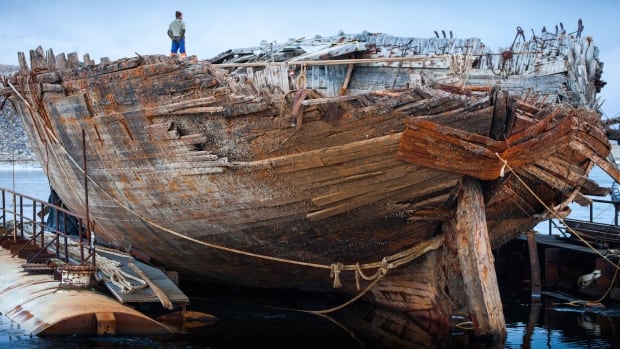
After resting at the bottom of the ocean for more then 85 years, Roald Amundsen's ship the Maud has been brought back to the surface, and is preparing to return to Norway. The ship, which was discovered off the coast of Cambridge Bay in Canada, helped to chart the Northeast Passage from 1918-1920, sunk in those waters back in 1930 after a short, but distinguished career in exploration.

A recovery team has spent the past six years working to bring the ship up from its watery grave. This past July, their efforts finally paid off, as the ship returned to the surface for the first time in more than eight decades. The crew first had to place a series of inflatable ballasts around the hull of the vessel, then slowly add air to them. Eventually this allowed them to place it on a barge and float it into harbor. Over the past two months, they have been been cleaning up the interior of the vessel in preparation for weathering the winter in the Arctic.

The recovery team says that the winter weather will actually help the ship, allowing its wooden hull to dry. This will help to reduce the ship's current weight, and will take some of the pressure off of the hull. That will help to stabilize it for the long journey back home to Norway, which is likely to take place next summer.

According to reports, the ship is in surprisingly good shape. The hull remains solid and strong, despite being at the bottom of the ocean for so long. The vessel was originally built back in 1917, and commissioned by Amundsen to accompany him on his exploration of the icy waters north of Russia. Amundsen is well know for is exploits in the cold places of our planet. He was the first person to reach the South Pole back in 1911, and was instrumental in exploring the Arctic as well, becoming the first person to full pass through the Northwest Passage.

The Maud was sold off in 1925, five years before she sank. But, she is considered an important piece of exploration history, and back home in Norway she'll be preserved for posterity. In that country, Amundsen is incredibly famous, and any relic left over from his expeditions is a valuable commodity.

This is quite a cool story. I'm glad this team was able to locate and recover the ship. Hopefully it makes it through the winter in one piece, and returns home next year as planned.

3/26/2015

Atikamekw Snowshoe Expedition Set To Begin

Last November, I told you about a unique expedition that was scheduled to take place early this year. Explorers Bert Poffé and Kiki Nárdiz, who had learned their survival skills while living amongst the Atikamekw people, a First Nations tribe from northern Quebec, will travel on foot into one of the coldest inhabited regions on the planet in a quest to visit their old friends.

Bert and Kiki will put their survival skills to the test over a three week period in February as they trek unsupported into the remote region that the Atikamekw still call their home. They'll use traditional tribal skills to make their way through the frozen wilderness, where they'll employ traditional mukluks, babiche snowshoes and handcrafted wood toboggans.

The duo will travel for approximately 20 days, visiting Atikamew villages along the way. On the expedition, they hope to explore traditional methods of winter travel, while learning more about the history and culture of the people that inhabit that harsh and demanding environment. They also hope to promote sustainable adventure tourism to the region while also inspiring others to get outside and pursue their own passions.

The expedition is set to begin in early February, which means we're now just a few weeks away from the start of this adventure. Find out more about Bert and Kiki, as well as their plans on their official website.

12/15/2014

Canadian Adventures: Whitewater Rafting on the Métabetchouan River in Quebec

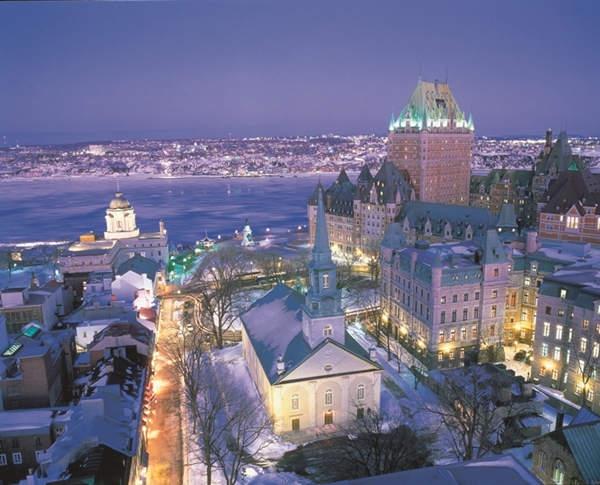
A couple of weeks ago I was lucky enough to travel back to Quebec, Canada for some summer time adventures. If you're a regular reader of The Adventure Blog, you may recall that I had visited the province in February of this year when I not only had an unbelievable encounter with wolves, I also went dogsledding and snowshoeing in the breathtaking Valley of the Phantoms. But during that visit it was extremely cold (-40ºF/C) in the Saguenay-Lac-Saint-Jean region so I was anxious to return to see the area for some warm weather exploration too. I did not come away disappointed.

The theme of our trip was "Much Love Water" as many of the activities revolved around exploring the region by some kind of watercraft. In fact, on our first morning in Quebec we decided to get things started by stand-up paddleboarding on lovely lake near La Cooperative O' Soleil – a rural destination about an hours drive from our starting location in the town of Chicoutimi.

Most of the folks I was traveling with had paddleboarded before, so after a brief get acquainted session with our SUP gear, we set off down a placid river that fed out into a large lake. The morning was quickly warming up, but a nice breeze coming off the water kept us cool as we spent about an hour or so getting a morning workout. For those who haven't been on a SUP before, it is a good way to not only test your balance, but also work your core.

Unfortunately, our stand-up paddleboarding experience was an all too brief one, and we were forced to come off the water sooner than we would like. But, there was a good reason for that, as we had to grab a quick lunch before launching into our true adventure for the day – whitewater rafting on the Métabetchouan River.

After turning in our SUP boards we headed over to Microbrasserie du Lac Saint-Jean, a local microbrewery where we had a chance to enjoy a tasty lunch and a flight of beers that are brewed right at the establishment. Both the food and the frothy beverages were delicious, surprising us with their rich and complex flavors. If you're in the area, and you're looking for a great place to grab a bite to eat, this is a spot that comes highly recommended.

Once we had our fill, it was off to H20 Expeditions for our whitewater experience. The company has been leading travelers on whitewater excursions for years, and the level of professionalism and experience showed. Not only were the guides personable and knowledgeable, they did everything they could to get us ready for our river adventure in as short of time as possible. That included safety demonstrations, training us on the best way to paddle, and what to do should you be thrown from the raft at some point.


We had signed up for their three-hour rafting trip down the Métabetchouan, which was still running surprisingly fast even late in the summer. The river passes through a hydroelectric dam which controls its flow, and while we certainly weren't visiting during a major release, the water levels were still at good levels and the rapids were plentiful. After donning our wetsuits and pfd's, gathering our rafting paddles, and completing our orientation, we were all eager to get started.

The Métabetchouan rafting tour with H20 Expeditions covers about 7 km (4.3 miles) of distance, passing through some beautiful landscapes along the way. All around you are towering hills and lush forests that help convey the sense of paddling through a remote region, even though you aren't necessarily all that far from town. This particular stretch of the river includes 12 major rapids, and a couple of smaller ones just to keep you on your toes.

Unfortunately, the put-in for the river isn't particularly easy to reach. We hopped a shuttle over to the starting point, only to discover that we had to actually carry the raft about 500 meters down a hill just to reach the river itself. The path was easy to follow, and there were wooden stairs at the steeper sections, but lugging a bulky raft through the forest while wearing a neoprene suit in the middle of summer has a way of getting you warm very quickly. Thankfully, it didn't take us too long to cover the distance, and once you hit the water you cooled off quickly.

It didn't take long to realize why wetsuits are needed, even in August. The Métabetchouan runs cold and stepping into it was quite refreshing following the warm descent while carrying the raft. Once our boat was in the water our guide ran us through a series of drills on how to paddle forward and backwards that helped get everyone on board operating like a team. Once that was out of the way, we were free to begin our descent of the river, which started with a wild rapid right out of the gate.

I was one of the lucky members of the crew who was chosen to sit up at the front of the raft, which is not always an enviable place to be. Anyone who has been in that spot will tell you that the bulk of the big splashes hit that section of the boat, dousing the paddlers who are there. That would be my experience throughout the afternoon as big rapid after big rapid deposited hundreds of gallons of water into the raft. Fortunately, its self-bailing floor whisked it out again quite quickly as we all had a rollicking good time on our aquatic adventure.

The first rapid of the day was actually one of the biggest, and it set the tone for the rest of the trip. By the time we passed through, most of us were already soaked as the cold water washed away all memories of the sweaty hike through the woods that we made on the way to the put-in. And once we had run that bubbling cauldron of whitewater, were able to turn our rafts around, paddle back into the rushing river, and actually surf the rapids for a bit. This had the effect of dumping even more water into the boat, but by then no one cared any longer.

Over the course of the three-hour trip, H20 Expeditions had a few nice surprises planned for us. The first of those was the option to leap out of the raft and body surf the second rapid on the river, a challenge that I eagerly accepted.

Upon rolling off the side of the raft, I was quickly caught up by the rushing river. Quickly I moved into the safest position to proceed down river, which involved going down feet-first while in a seated position. My pfd helped keep me afloat has I – and a number of my companions – bobbed through the water. It was a thrilling way to run the rapids, and a good reminder of just how powerful the forces of nature can be. Had that particular rapid been much stronger, it would have been difficult to fight your way out of it.

At other points of the excursion we would also stop to allow brave members of the team to leap off a high cliff and plunge into the refreshing waters below, and to body surf some other rapids that we passed along the way. Each of those were exhilarating experiences and a lot of fun. Each time I was thankful I was wearing a wetsuit though, as the water remained chilly the entire time we were paddling.

Each of the 12 rapids has its own name – such as The Dungeon, The Sphinx's Eye, the Great Wall, and so on. This helped us to remember them as we passed through, as they all had their own unique characteristics and personalities. Some were fast and wild, inducing an adrenaline rush. Others caused you to have to work harder to avoid rocks which threatened to stall progress or up-end the boat altogether. Some were a bit tamer, while others provided massive waves that would splash the entire raft from stem to stern. They ranged from Class I to Class III in terms of intensity, but they were all a lot of fun and helped make the rafting trip a true highlight of my second visit to Quebec.

After running all 12 of those rapids our raft was deposited out into a wide stretch of river that was positively serene. We spent the last 20 minutes or so leisurely paddling towards our take-out point and enjoying the lovely scenery that surrounded us. It had been a truly epic day out on the water, and one that none of us would soon forget. We were all happy to get out of the raft when we were done, but the excitement of the day remained a topic of conversation for some time to come.

As a travel writer, I occasionally get access to some amazing places and experiences that not everyone else can do. But, I'm happy to say that this is definitely one experience that you can take part in as well. H20 Expeditions operates throughout the summer and heads out on the water several times a day. If you'd like to experience a run down the Métabetchouan River yourself, I would highly recommend joining them. The entire staff was highly professional and the experience was great from beginning to end. You can find out more on the company's website.

For me and my traveling companions this was just the first of several waterborne adventures to come. But, it was a great start to a fun trip that reminded me of just how wild and beautiful Quebec can be. I'll share more from those adventures in future posts that will hopefully give you some idea of what to expect when in this part of Canada, and possibly plan a few adventures for yourself there too.
11/19/2014

Trio of Adventurers Set to Travel From the Arctic to the Atacama

A trio of adventurers is heading north to start an epic journey that will span more 1500 km (932 miles) under their own power, and take them to environments that range more than 100 degrees celsius in temperatures.

The team consists of ultrarunners Ray Zahab, Jen Segger, and Stefano Gregoretti, who are currently en route to Qikiqtarjuaq, a Canadian island located in the Arctic Ocean, where they will begin the first stage of the expedition. Once there, they'll start heading south over the frozen landscape by fat bike and foot. Their route will take them to Baffin Island, which they'll traverse on their way to the community of Pangnirtung. Along he way, they'll cross 300 km (186 miles) through harsh arctic conditions where temperatures are expected to plummet as low as -50ºC (-58ºF).

Immediately after finishing the first leg of their journey, the three endurance athletes will next travel to South America to begin the second phase of the adventure. They'll be heading to northern Chile, where they'll make a traverse of the Atacama Desert, the driest place on the planet. They'll follow the same route that Zahab used when he ran across the Atacama on foot back in 2011. This time out though, they'll cover the 1200 km (745 miles) on mountain bike. While in the desert, the thermometer will reach 50ºC (120ºF), a stark contrast to the northern stage of the expedition.

The expedition has been dubbed Arctic 2 Atacama, and it should be officially underway in just a few days. The website is still filling in with information, but once things go live, expect daily updates on the team's progress, including status updates and videos from the trail. This promises to be quite the grueling journey, but a fun one to follow.

Good luck to Ray, Jen, and Stefano.