Showing posts with label Exploration. Show all posts
Showing posts with label Exploration. Show all posts
9/02/2017
Video: What Does Frostbite Do To Your Body?
Frostbite has long been the bane of mountaineers and explorers. But what exactly is frostbite, and how does it effect your body? This video from Discovery News helps to explain it, helping us to understand exactly what extreme cold can do to you.

6/05/2017
North Pole 2016: Race Against Time Team Faces Big Challenges
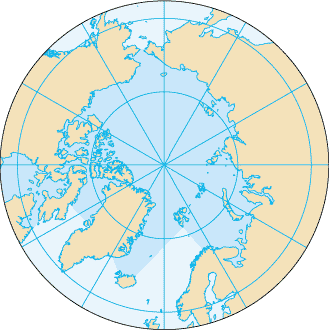
Last week, the team of Mark Wood, Paul Vicary, and Mark Langridge were finally dropped off on the ice after facing unprecedented delays to the start of their expedition due to issues with the runway at the Barneo Ice Camp that serves as the gateway to the Arctic each season from the Russian side of the ice. That caused the trio of explorers to rethink their journey for a second time, switching from the original plan of a full-distance ski journey to the North Pole to an expedition that actually began at 90ºN and would head south to Ward Hunt Island in Canada, before finally settling in on their current route, a two-degree ski expedition back to the Pole.
The squad has now been out on the ice for five days, and they've discovered that the Arctic is everything they had expected and more. In the first few days they faced rubble fields of disrupted ice, with many blocks the size of cars and even a few larger than a house. As they inched north however, other obstacles have begun to appear. For instance, yesterday the team only gained 4 nautical miles of distance thanks to a large lead of open water that they had to cross. The only way to do so is to don drysuits, enter the water and swim across while pulling their gear in inflatable rafts.
As if that wasn't enough, the men have also come across a set of footprints left behind by a polar bear. That means that one of these big carnivores is in the area, and they have been known to stalk polar explorers that pass through their domain. So far, no sight of the creature but they will remain wary and vigilant on the trail.
The hope is that the team can reach the North Pole sometime next week. When they originally set out, they thought it would take 12-15 days, and they are still on track to reach their goal. What else they'll find on the way north remains to be seen.
5/20/2017
Belgian Adventurer Completes Solo, Unsupported Trek Across Simpson Desert

Just as polar explorers pull sleds filled with gear and supplies behind them when they head to the North and South Pole, desert explorers often use specially designed carts. These contraptions are built to roll over sand and dirt, and have enough capacity to hold all of the important supplies – including water – that are needed on such an expedition. They are also incredibly difficult to pull for prolonged periods of time, but are a necessary component for anyone traveling "unsupported" in those types of environments.
Loncke, who first crossed the desert back in 2008, was determined to prove that it was possible to walk through the "Dead Heart of Australia" without using a cart to support his efforts. To that end, he elected to use a backpack instead. This forced him to get creative with how he packed and approached this trek, as he had to carry 40 liters of water with him for the journey.
His water alone weighed 40 kg (88 pounds), which didn't leave much room for other gear. In order to save weight he eschewed the use of a stove and carried only 8 kg (16 pounds) of food which consisted mostly of muesli bars, figs, and chocolate. He did carry a tent, sleeping pad, and sleeping bag however, as well as a video camera, several battery packs, and two 360º cameras that captured the Simpson Desert in a way that is hasn't been seen before. All told, his backpack tipped the scales at 60 kg (132 pounds), when he set off on the journey.
While in the desert, Loncke managed to trek 300 km (186 miles) through one of the most inhospitable regions in Australia. The walk began at Old Andado Station and ended at Poeppel Corner, passing through the geographical center of the desert in the process. He had hoped to continue another 135 km (83 miles) to Birdsville, but when Loncke reached the ranger station in Poeppel Corner he was low on food and water and didn't have enough supplies to continue pressing on.
In addition to the usual challenges that the Simpson Desert poses, Loncke experienced something completely unexpected - rain! He says that it rained hard for three days and two nights, with tremendous lightning strikes across the region. The unexpected precipitation made it harder to walk each day, slowing his pace dramatically. He also reports that it led to soaked clothing and wet feet for those three days, which made for a cold, miserable experience at times. But the unexpected rain also brought a wild flower bloom, something else that was unexpected but much appreciated.
You can read more about Lou-Phi's experiences in the Simpson Desert on his blog site dedicated to the expedition. He is currently en route back home to Belgium, but will likely update it with more information going forward.
Congratulations to Loncke for achieving this impressive feat. He has potentially shown us another approach to desert exploration, and it will be interesting to see if anyone else follows suit moving forward.
4/08/2017
Video: Talking Tents with Explorer/Mountaineer Lonnie Dupre
Want to know what to look for in a tent when embarking on an extreme expedition? Who better to ask than a guy like Lonnie Dupre, who managed to make a solo summit of Denali last January. In this video Lonnie sits down with Petra Hilleberg to talk about the tents he uses on his various adventures, and what he looks for in a shelter in extreme locations.
10/01/2016
Announcing The Explorers Museum

The museum will be housed in the famous Charleville Castle, located in Tullamore, Ireland. The castle once belonged to Charles Howard-Bury, an explorer and botanist who was instrumental in the first scouting expedition to Mt. Everest in 1921. The first exhibit of the new museum will highlight Howard-Bury's achievements, along with those of other famous explorers. That exhibit will open later this summer.
But that is just the tip of the iceberg for what the Explorers Museum has planned. The new organization hopes to hold its inaugural awards night later this year, during which it will provide recognition for groundbreaking expeditions and discoveries that are taking place around the world today. An exploration hall of fame will also be established, inducting prominent figures from exploration history. Future exhibits, lectures and events will also be held in the castle, which will also serve as a launching point for future expeditions too.
In the future, the museum, which came about due to a generous and anonymous donation, also hopes to establish a research library and an expedition base outfitted with the latest high tech equipment to support teams in the field.
To find out more about the museum, visit the official website. It look like I need to ay a visit to Tullamore, Ireland sometime in the future.
8/12/2016
Explorers Discover Legendary Boiling River in the Amazon
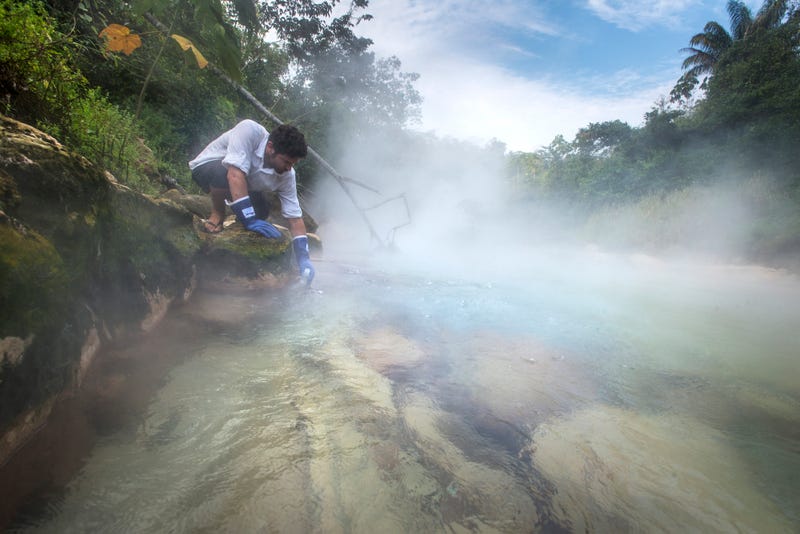
In a new book entitled The Boiling River: Adventure and Discovery in the Amazon, Peruvian scientist Andrés Ruzo shares the story of the discovery of this river, which he first heard about from his grandfather, who told him that Spanish conquistadors wandered into the jungle, and returned months later with tales of strange animals, endless rainforest, and a river that was so hot that it boiled from below.
That story stuck with Ruzo, even as an adult, and when he became a graduate student at Southern Methodists University in Texas, he decided to do his PhD project on creating the first geothermal map of Peru. He hoped to discover the boiling river, and show how it would be possible for it to actually boil from geothermal activity.
He didn't exactly find support from the faculty and other students. Most told him his pursuit was futile and went against all of the principles of science that we knew up until this point. For a river to actually be so hot that it boiled, the forces at work underneath it would have to be tremendous.
After spending months researching the possibilities and looking for answers, Ruzo discovered an unlikely ally – his aunt. She claimed to have actually visited such a river, and told her nephew where to find it. It was located near Mayantuyacu, a site held sacred by the local people.
The river itself isn't large. It runs for just 4 miles (6.4 km), and ranges up to 82 feet (25 meters) wide and 20 feet (6 meters) deep. It is described as being hot enough to make cup of tea, with certain sections actually boiling as described.
Now, Ruzo's discovery is making headlines, and his theories don't seem to absurd. He even gave an interview to Nat Geo about his research and quest to find this legendary stretch of water. Unsurprisingly, now he's working to protect the site to ensure that it remains sacred and pure.
This story makes you wonder what other "legendary" stories that have emerged from the jungles, deserts, and mountains of the world have some basis in truth. Hopefully we'll always have scientists and explores like Andrés to keep looking for them.
7/07/2016
Antarctica 2013: The End Is Nigh For Scott Expedition

Over the past week or so, Ben Saunders and Tarka L'Herpiniere have been averaging about 24 miles (38 km) per day. That means they have a relatively short leg to complete today, before reaching a research station located on the Ross Ice Shelf. With that in mind, they have elected to sleep in a little late today and take their time on these final miles. They'll savor as much of the last day as possible, considering they have found little joy in their exhausting trip to the South Pole and back.
Spirits are high for both men as the near the end, but they are definitely weary and ready to go home. The tale of the tape says that when they are finished they'll have covered 2875 km (1786 miles) over 105 days. That is an incredible amount of time to spend out on the ice and it has clearly taken its toll. Still, the team would have made their namesake proud, as they complete Robert Falcon Scott's route to the Pole and back. That alone is an accomplishment worth celebrating.
I'll post an update when Ben and Tarka are done. They were the first out on the ice, and they'll be the last to go home. A much deserved rest is waiting for them.
6/02/2016
Adventure Film Review: 126 Degrees In The Shade
Over the past few years while writing this blog, it has been my absolute pleasure to connect with some truly remarkable individuals. I have met climbers, adventurers, exceptional endurance athletes, and a host of other amazing people. Amongst those people are Mikael Strandberg, a modern day explorer who continues to work tirelessly to fill in the remaining blank spots on the map.
In 2012, Mikael, along with traveling companion Tanya Holm, traveled 350 km (217 miles) across the Sands of Al Mahra in Yemen by camel. That journey took them into the heart of the desert and through a country that has had its fair share of turmoil in recent years. The expedition was as much about exploring a little known landscape, as it was the culture of Yemen, a country that receives very little positive press from the mainstream media.
Since he returned from that adventure, Mikael has been busy working on a documentary about his Yemen project. That film is called 126 Degrees In The Shade, and I've been fortunate enough to get a sneak peek at this amazing film. The 58 minute doc drops us right into the middle of the expedition, giving us a first hand look at what the Swedish explorer and his friend Tanya encountered while out in the desert.
Some of the challenges that they faced along the way included physical exhaustion, angry sheiks, logistical hurdles, and as the name implies, some insanely hot temperatures. But along the way, they also met some amazing people. The people of Yemen, who are not always what you would expect.
The film is enlightening, entertaining and a well crafted look at Mikael's adventure. If you have an interest in modern day exploration, Middle Eastern culture, or simply want to see an alternative take on Yemen, then you won't want to miss this film. It is a refreshing take on a part of the world that is largely misunderstood, despite some of the challenges that the Yemenis face.
The full version of the film will be released soon, and Mikael intends to enter it into some of the top film festivals. But until then, you can get a look at what it is like by checking out the trailer below. It is a bit of teaser for the full documentary, but you'll at least have an idea of what to expect from the full release. If you get the chance, you'll definitely want to see the final film.
Expedition Yemen - 126 degrees in the shade - trailer 1 from Explorer Mikael Strandberg on Vimeo.
In 2012, Mikael, along with traveling companion Tanya Holm, traveled 350 km (217 miles) across the Sands of Al Mahra in Yemen by camel. That journey took them into the heart of the desert and through a country that has had its fair share of turmoil in recent years. The expedition was as much about exploring a little known landscape, as it was the culture of Yemen, a country that receives very little positive press from the mainstream media.
Since he returned from that adventure, Mikael has been busy working on a documentary about his Yemen project. That film is called 126 Degrees In The Shade, and I've been fortunate enough to get a sneak peek at this amazing film. The 58 minute doc drops us right into the middle of the expedition, giving us a first hand look at what the Swedish explorer and his friend Tanya encountered while out in the desert.
Some of the challenges that they faced along the way included physical exhaustion, angry sheiks, logistical hurdles, and as the name implies, some insanely hot temperatures. But along the way, they also met some amazing people. The people of Yemen, who are not always what you would expect.
The film is enlightening, entertaining and a well crafted look at Mikael's adventure. If you have an interest in modern day exploration, Middle Eastern culture, or simply want to see an alternative take on Yemen, then you won't want to miss this film. It is a refreshing take on a part of the world that is largely misunderstood, despite some of the challenges that the Yemenis face.
The full version of the film will be released soon, and Mikael intends to enter it into some of the top film festivals. But until then, you can get a look at what it is like by checking out the trailer below. It is a bit of teaser for the full documentary, but you'll at least have an idea of what to expect from the full release. If you get the chance, you'll definitely want to see the final film.
1/02/2016
North Pole 2014: Eric Larsen And Ryan Waters Preparing For North Pole Expedition

Veteran polar explorers Eric Larsen and Ryan Waters will be amongst those attempting to complete this very difficult and dangerous journey this year. The two men are preparing to set out from Ellesmere Island on March 1 for what they estimate will be a 500+ mile (800 km) crossing of the Arctic Ocean. As is typical for a polar journey, they'll travel unassisted, on skis, while dragging 350 pound (158 kg) sleds filled with all of their gear and supplies behind them as they go.
As if a North Pole expedition isn't challenging enough on its own, the duo hopes to break the record for skiing to that point on the globe. In order to do that, they'll have to reach 90ºN in under 49 days. Both men have plenty of experience in challenging environments however. They climbed Denali together in 2009, and both have summited Everest. Waters has bagged all of the Seven Summits and skied to the South Pole as well. Larsen has gone to the North Pole on two previous occasions and has been to the South Pole as well.
They'll need all of that experience if they hope to be successful this time out. Climate change is dramatically altering the Arctic and it is becoming increasingly more difficult to travel there. The ice is not as stable as it once was and large open areas of water are now common. Explorers need to ring a way to go around those obstacles or don a drysuit and swim across. Massive storms have also become more common in the Arctic, creating even more dangerous conditions for the skiers. Throw in the potential threat of polar bears and the constant battling against negative drift on the ice flows, and you being to understand the magnitude of the challenge ahead.
As the North Pole season gets underway, I'll be following Eric and Ryan's expedition closely. Expect to hear more about them and other expeditions that will be heading north soon. I am of the firm belief that soon, this type of journey will no longer be possible. Let's hope this year that isn't the case.
12/12/2015
Video: 5 Things to Know Before You Go on an Adventure
Before you set out on your next adventure, you'll want to watch this video. It comes our way from National Geographic, and it shares advice that a team of climbers learned while traveling to Myanmar to climb the highest peak in Southeast Asia. That expedition wasn't an easy one, with lots of challenges to overcome before they ever reached the mountain. But what they learned along the way was invaluable.
10/05/2015
Video: The North Face Athletes Question Madness - Conrad Anker and Alex Honnold
Yesterday, I shared a video that launched a new brand campaign from The North Face that invited us to "Question Madness." The campaign celebrates the 50th anniversary of the company, which has become synonymous with outdoor adventure and exploration. Today, I have two more videos from that exemplify what the company is going for by introducing viewers to some of their sponsored athletes. In this case, those two people are mountaineer Conrad Anker and rock climber Alex Honnold. Check them out below.
8/12/2015
Trio of British Polar Explorers to Attempt North Pole Expedition in 2016

In recent years climate change has made that journey even more perilous, causing the ice to become more unstable, and opening large sections of open water in the Arctic Ocean that must be swam across or skied around. Additionally, those same climate forces have created storms that are more dangerous than ever.
The last team to complete a full expedition to the North Pole was Eric Larsen and Ryan Waters, who did so back in the early months of 2014. Their struggles have been well documented, and have prompted some to say that they might be the last two men to make the trek to the North Pole. But this year a team of three British adventurers will attempt to replicate that feat, albeit from the opposite side of the ice.
In February of 2016, Mark Wood, Paul Vicary and Mark Langridge will set out from Cape Arktichesky in Russia in an attempt to cross the Arctic Ocean and ski to the North Pole without resupply. The journey is expected to take 60 days to complete, covering more than 600 nautical miles (690 miles/1111 km). They're calling this expedition the Race Against Time, and their website can be found at NorthPole16.com.
The goals that the team has set for itself are many. In addition to attempting to raise funds for the Hire a Hero program in the U.K., the three men also hope to raise awareness and educate the public on the growing threat of climate change. To that end, they'll also be working with researchers at Warwick and Exeter Universities, as they collect data on their journey north. The trio also hopes to inspire a new generation of explorers to continue to search the planet for new discoveries as well.
All three of the members of this team have already completed full distance ski expeditions to the South Pole, but they'll find that the Arctic Ocean is a far different place than the Antarctic. For reasons already mentioned above, a ski journey to 90ºN is far more difficult and dangerous than one heading to 90ºS.
The expedition has picked up a couple of prominent patrons from the polar exploration world. Sir Ranulph Fiennes has given them his stamp of approval, as has Henry Worsley, who even now is working to complete his solo and unsupported traverse of Antarctica. The team also received some much needed support from British businessman Mark Tweddle, who stepped in to provide funds when it looked like the project could fall apart before it even got started. Without his aid, the explorers would have been forced to abandon their efforts altogether.
I was certainly amongst those who thought that a full-distance North Pole expedition probably wouldn't happen again in my lifetime. It remains to be seen if Wood, Vicary, and Langridge will be able to ski all the way to the Pole, but I definitely applaud their efforts. It will be interesting to follow their progress when they get underway on February 20. It could be history in the making for sure.
7/17/2015
Men's Journal Gives Us the 50 Most Adventurous Men

The list reads like a "who's who" of adventure, with guys like Alex Honnold, Kilian Jornet, and Conrad Anker all making the cut. Others who earn some recognition from MJ include Ueli Steck, Eric Larsen, and Mike Horn, all of which I've written about and covered their expeditions extensively on this very website.
Of course, those well known names are just the tip of the iceberg so to speak, with numerous other interesting, daring, and downright visionary individuals making their way onto the list as well. The article spotlights mountaineers, rock climbers, ocean rowers, explorers, and more. Each of the profiles includes a brief introduction to the person's accomplishments, some insights into their career highlights, and a glimpse of where they may be headed next. All in all, it is a pretty great way to learn about some of the men who are shaping the way we explore the world today.
While 50 individuals is a fairly lengthy list, there are always some who are left off. I'm sure that like me, you'll be able to think of a few individuals that probably deserve to be mentioned with this group such as Simone Moro for instance. There are others as well, but this is still a pretty interesting list and well worth a look for sure.
Now, when is someone going to do a list of the 50 most adventurous women?
6/24/2015
Explorers Club to Honor Julian Monroe Fisher at Presidential Dinner

Julian's list of accomplishments is long and impressive. He is not only a Fellow with the Explorers Club, but the Royal Geographical Society as well. He has spent more than 30 years spanning the globe, exploring the seldom visited corners of the planet. As a trained anthropologists, his recent wanderings have taken him across Africa as he continues his Great African Expedition. He has also been instrumental in opening the Sir Samuel and Lady Florence Baker Historical Trail, a long-distance hiking route that stretches for 500 miles (804 km) through South Sudan and Uganda, and is currently working on a project to that is charting and preserving the Carolina Rivers. Both of those last two endeavors are sponsored by Costa Del Mar.
If you would like to join the Explorers Club in honoring Julian here is all of the important information:
Date: June 2nd, 2016
Time: 6:00 pm Reception, 7:00 pm Dinner, 8:00 pm Presentation
Location: Club Headquarters, 46 East 70th Street, New York, NY, 10021
Member Ticket price: $70
Guest Ticket Price: $80
Reservation Notes:
Reservations must be procured in advance for a catered dinner, and payment must accompany reservation. There will be no cancellations allowed after Friday, May 27th, 2016. Non-members are welcome to reserve a seat as the nominal guest of Daryl Hawk MR ’98, organizer of the Presidential Dinner.
To secure a reservation, you may also call us at 212.628.8383, or email us at reservations@explorers.org.
Congratulations to Julian on this much deserved honor.
5/11/2015
Video: Introducing the 2016 North Face Speaker Series
For 2016, The North Face has once again assembled a stellar crew for its Speaker Series. This year you'll get the chance to listen to people like Conrad Anker, Alex Honnold, Jimmy Chin, and Renan Ozturk talk about their adventures around the globe, sharing what they learned and how those expeditions shaped their lives. In this video, we get a preview of what those sessions will be like, with some amazing footage gathered from TNF sponsored expeditions. As usual, the clip looks top-notch, and will probably not only inspire you to want to listen to these men and women speak, but also get out on more adventures of your own. Never Stop Exploring.
3/24/2015
The Explorers Museum Announces 2016 Summit in Ireland
In the modern age, exploration is no longer just about important firsts and filling in the blank spots on the map. As The Explorers Museum recognizes there is a great deal of effort being put into learning about sustainability, preserving the planet, and making it a better place for those of us who inhabit it. To that end, the list of guests who will be attending the summit reflects these values. Additionally, the theme of the entire weekend is "Redefining Exploration," which indicates what the keynote address and sessions will be about.
You can read more about the summit weekend, check out the full line-up, and purchase tickets here. Glancing over the schedule, some of the highlights include opening ceremonies that include an address from Lorie Karnath – former President of the Explorers Club and founder of The Explorers Museum. There will also be a screening of the film Racing Extinction, breakout sessions that focus on fieldwork, climate change, the changing nature of exploration, and much more.
Tickets are on sale now, and it looks like this will be a very interesting weekend for those of us who value exploration in the 21st century. The setting at Charleville Castle – the Global Expedition Base – will serve as a fantastic backdrop to these discussions. I know I'd love to be there.
2/16/2015
Video: What Was the Last Place on Earth to be Discovered?
Here's an intriguing question. What do you think was the last place on Earth to actually be discovered by man? Most researchers now believe that human life on our planet can be traced back to Africa, with man spreading out across the planet from there. Over thousands of years we migrated across the planet, settling in various places along the way. But have you ever stopped to think what part of the planet was the last to actually be found by humans?
That is exactly the subject of this video, which uses an animated map to show you exactly when certain destinations were discovered, with the timeline for many of them actually being quite surprising. For instance, who would have thought that North America was reached before Portugal for instance? There are plenty of other interesting little tidbits like that to be learned along the way too, with some remote places obviously taking longer to find than others.
So just what was the last place found by humans? I won't spoil the answer, but I will say that it will be quite logical once you learn where it is. There is definitely a lot of interesting things to learn here.
That is exactly the subject of this video, which uses an animated map to show you exactly when certain destinations were discovered, with the timeline for many of them actually being quite surprising. For instance, who would have thought that North America was reached before Portugal for instance? There are plenty of other interesting little tidbits like that to be learned along the way too, with some remote places obviously taking longer to find than others.
So just what was the last place found by humans? I won't spoil the answer, but I will say that it will be quite logical once you learn where it is. There is definitely a lot of interesting things to learn here.
10/27/2014
World's Deepest Underwater Cave Discovered in Czech Republic

For Starnawski it was a return to a cave that he had first dove into back in 1999. While there he had noticed that the limestone formations in the interior of the cave had formed in a unique and unusual way. This led him to believe that it might drop to a great depth, although he had no idea that it would be a record breaker. The cave was apparently created by hot water, rich with carbon dioxide, that was bubbling up from below. This makes the interior of the cavern unlike most others that he has explored in the past.
Over the past two years, the Polish diver has spent time searching the cave for clues as to just how deep it truly went. He discovered a narrow passage that gave him a glimpse of the deepest recesses of the cavern, but it wasn't until another diver found that that passage had widened that they could actually go further down. On Tuesday, the team dropped an automated ROV into the cave and maneuvered it to the bottom, accurately determining its depth in the process.
National Geographic has posted an interview with Starnawski about the process of exploring the cave, and what he and his team discovered inside. You can read his thoughts on the this 25+ year odyssey and just how he went about recording the depth of the cave, here.
It is stories like this one that remind us about how little we truly know about our own planet. I'm sure there are plenty of other discoveries just like this that we have yet to stumble across. It is also a reminder of how important exploration remains, even in the 21st century.
8/02/2014
Nat Geo Takes Us Deep into "Dark Star" – Potentially the Deepest Cave System in the World

In a new article posted on the National Geographic website, we plumb the depths of just such a place. Dubbed "Dark Star," the cave is located in a remote region of Uzbekistan and has been dubbed the "Underground Everest." That's because eight expeditions have delved into its depths – mapping over 11 miles of passageways, caverns, and chambers – but have yet to find an end to the massive subterranean realm. So far, the deepest they have gone is 3000 feet (914 meters) below the surface, but the feeling is that Dark Star runs deeper. Much deeper.
The current record for the deepest cavern known to man is the Krubera Cave, located in the Eastern European country of Georgia. That cave drops an unbelievable 7208 feet (2196 meters), so Dark Star has a long way to go before it breaks that record. But after more than 20 years of mapping and exploration, there doesn't seem to be an end to be had just yet, and there are some indications that it goes far deeper than Krubera, its just that no one has gone down that far just yet.
The cave was first discovered back in 1984 by a team of Russians, but it wasn't explored at all until the 1990's when a group of British cavers first passed through its outer entryways. Most of Dark Star's mysteries have yet to be found, as most of the teams that have gone inside have ended up running out of rope before they've made much in the way of significant progress. Yet expeditions continue to come when they can, which isn't as often as serious cavers would like considering the remote nature of the entrance and the unstable political conditions of the surrounding region.
The Nat Geo story is a fascinating one, especially for those of us who don't know a lot about cave exploration. Author Mark Synnott takes us deep inside Dark Star, where a dedicated team of scientists, researchers, and explorers is examining the site, pushing deeper into its depths, and learning more about the underground spaces of our planet. It is an intriguing read that reminds us that not all of our adventures need to go up, nor remain on the surface of the Earth at all.
Check out the full story here or in the March issue of National Geographic magazine.
2/16/2014
The Economist Hails the New Age of Discovery
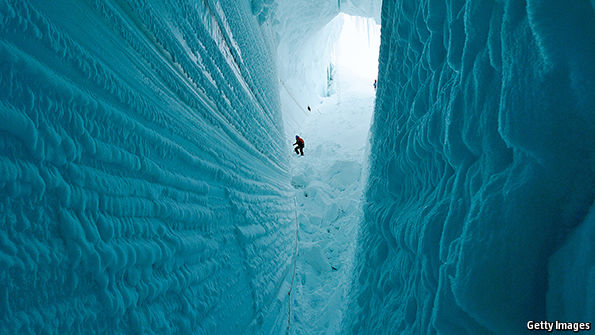
The article says that there are still plenty of places on Earth that have yet to be fully explored, and there are some opportunities for adventurous people to still claim records and gain important "firsts." But that isn't the objective for most members of this new generation of explorers, many of whom travel more in tune with nature, rather than looking for ways to control and dominate it. This is very different from explorers in the past who often looked for ways to subdue their challenges while tramping over everything in their past.
The Economist says that Greenland, the Amazon Rainforest, and Papua New Guinea still have vast regions that remain blank spots on the map. Those places could hold untold wonders that have yet to be discovered. The article also points out that only about 200 or so peaks in Nepal that are higher than 6000 meters (19,685 ft) have been climbed so far. There are over 2800 such peaks in that country alone. And despite frequent visits and numerous expeditions each year, we still don't know all that much about Antarctica either.
All in all, this article is a good read. Not only does it remind us that we still need explorers to help us chart our planet, but that there are also plenty of amazing things yet to be done. Despite the fact that we as a species feel like we have conquered the Earth, the planet still holds many secrets, some of which could be vital to our survival in the decades to come.
If you're in need of a little inspiration and understanding of why it is still important to support our explorers, read the full article here.
Subscribe to:
Posts (Atom)