The 2016 Antarctic season is all but over. Only one skier remains out on the ice, as everyone else has wrapped up their expeditions and headed home. And true to form, the frozen continent has already started to make things more difficult, with colder temperatures, blizzard-like conditions, and thankfully for this explorer, howling winds.
Mike Horn is still working on completing his traverse of the Antarctic continent. He reports that the winds returned with a vengeance yesterday, saying they are the strongest he's encountered yet. Considering the fact that he is kite skiing, having strong winds is better than no winds at all. Propelled along by these gusts, he's now 92 km (57 miles) closer to his goal, but he still has 430 km (267 miles) yet to go before he reaches the coastline, and the safety of his ship, the Pangaea.
In his most recent update, Horn says that he has been facing a constant battle with the winds, which have helped get his kites in the air, but haven't always been cooperative. Any kite-skier will tell you that you want strong winds, but not too strong, as they can be unruly and difficult to maneuver in. That's what the Swiss explorer has been dealing with over the past few days, coupled with large sastrugi on the surface that have made things interesting as well.
As you may recall, Mike is attempting to circumnavigate the globe via the poles, and this is just the first of his major ice cap crossings. Once he reaches his ship, he'll actually set sail for New Zealand and Australia, before heading north to the Arctic. But, there is still plenty of work to be done before he leaves the Antarctic.
Depending on wind conditions and how well he can work the kite, Horn could reach the coast line in as few as two days. But, if he manages to maintain the pace he has had over the past couple of days, he's more likely to finish around the end of the week. Should the winds disappear however, that time could extend further.
We'll continue to follow Mike's progress until he's off the ice. That shouldn't be too much longer, but his adventure isn't over just yet. The Antarctic summer is quickly coming to an end though, and he'll be departing just in the nick of time it seems.
Showing posts with label Traverse. Show all posts
7/19/2017
9/12/2015
Polar Exploration Community Responds to the Death of Henry Worsley
As you can imagine, the community of polar explorers that have visited the North and South Pole is an extremely small, and close knit one. Most of the men and women who have traveled extensively in the Arctic or Antarctic know each other to some degree, and they are shocked and saddened by the loss of Henry Worsley over the past weekend.
Some of them have issued statements expressing their grief over the situation. For instance, yesterday the team at Antarctic Logistics & Expeditions issued a statement that shared more information. That statement reads as follows:
It is with great sadness that we report that polar expeditioner Henry Worsley died at a hospital in Punta Arenas, Chile yesterday after complications caused by bacterial peritonitis. Henry returned from Antarctica on January 23 after nearly completing his Shackleton Solo Expedition.
Henry began his expedition in November 2015 in support of The Endeavour Fund, an
organization that supports wounded soldiers in the UK. He was attempting the first unsupported and unassisted solo crossing of the Antarctic landmass, a journey from Berkner Island to the Ross Ice Shelf via the South Pole. The route was expected to take him 75-80 days and at the time of pickup, he had been in the field for 71 days and travelled over 900 statute miles.
ALE maintained daily communication with Henry throughout the expedition on scheduled satellite phone calls. On January 22, Henry contacted ALE asking for pickup and was subsequently transported by Twin Otter aircraft to ALE’s Union Glacier camp. Upon arrival, he received treatment for extreme exhaustion and dehydration by two ALE doctors trained in remote emergency medicine.
Early on January 23, he boarded ALE’s Ilyushin-76 intercontinental aircraft and received
treatment from an ALE doctor for the duration of the flight to Punta Arenas, Chile. Upon landing, Henry was transported by ambulance to hospital, where he was diagnosed with peritonitis and admitted for surgery. He was subsequently transferred to the hospital’s intensive care unit where he passed away on January 24. ALE remained in close contact with the hospital throughout and continues to work closely with the family.
Henry was an experienced polar expeditioner and recently ended a 36-year career in the British Army. He had a strong passion for the pursuits of the early Antarctic explorers including Shackleton, Scott, and Amundsen and had completed two previous Antarctic expeditions, one in 2009 celebrating Shackleton’s Nimrod expedition and one in 2012 that recreated the Amundsen route to the South Pole.
The entire ALE team sends its deepest condolences to Henry’s wife, Joanna, children, Max and Alicia, and extended family at this very difficult time.
Meanwhile, the Race Against Time team, who are preparing to set out for the North Pole from the Russian side of the ice in a few weeks knew Henry well. In fact, he was serving as one of the patrons for their journey. They said:
The Race Against Time 2016 Polar Expedition Team comprising of Mark Wood, Mark Langridge MC and Paul Vicary MSc has learnt today that their Patron Lt Col Henry Worlsey has died whilst crossing Antarctica.
Both Mark Langridge and Paul Vicary have both served alongside Henry and were part of the six man team that successfully reached the South Pole in 2012 following Robert F. Scott’s route as part of the 100 year anniversary of this iconic explorer.
“This is terrible news and we are all devastated. We have had many friends especially in the military that die at a young age or doing their job. Henry was doing something that he loved. He was a respected, admired, inspirational leader and the world has lost a great explorer. We have lost a dear friend. Our hearts and prayers are with Joanna and Henry’s family at this time.”Devon McDiarmid and Stew Edge, who just wrapped up their Antarctic expedition earlier today, called Henry's death a "tragic end to Shackleton Solo expedition," while Britain's Prince William – who himself was a Patron of Henry's expedition – said “Harry and I are very sad to hear of the loss of Henry Worsley. He was a man who showed great courage and determination and we are incredibly proud to be associated with him. We have lost a friend, but he will remain a source of inspiration to us all, especially those who will benefit from his support to the Endeavour Fund. We will now make sure that his family receive the support they need at this terribly difficult time.”
Alexandra Shackleton – the granddaughter of Earnest Shackleton – told the BBC News “Henry will be a huge loss to the adventuring world. The fact that he very nearly made it, only 30 miles short of his goal, makes it in some ways even worse.”
This is just a camping of the outpouring of emotion that surrounds Henry's death. He was a strong spirit and a major inspiration for many, and he will certainly be missed.
7/01/2015
Video: Traversing Iceland by Mountain Bike
We'll wrap up the year in fitting style with a fantastic video of a true adventure. This ten-minute clip takes us to Iceland, where we'll follow pro mountain bikers Hans Rey and Steve Peat as they traverse the country by bike north to south. Along the way, you'll get a chance to see some of the amazing landscapes that the country is so famous for, and since this is the last video of the year, let is serve as a good inspiration to get your 2016 off to an adventurous start too. Happy New Year!
6/14/2015
Antarctica 2016: Italian to Attempt Traverse of the Frozen Continent Again, Researcher Dies in the Field
Preparation for the start of the 2016-2017 Antarctic season is now underway, with the advance team from ALE now arriving on the ice to prepare the permanent campsite at Patriot Hills for the arrival of the first skiers of the season. It will take them a few days to get the camp ready, and they'll spend a considerable amount of time preparing the runway that will allow the big Ilyushin aircraft to begin transporting supplies, crew, and explorers out to site. That typically begins around the end of October, although the weather ultimately decides when those flights out of Punta Arenas, Chile actually begin.
Elsewhere, the McMurdo Station on the Ross Iceshelf has started to return to life. The station is an important research outlet for the U.S., and during the Antarctic winter it is manned by just a skeleton crew. Now, essential personnel are arriving there to prepare for another busy season ahead as a full compliment of scientists, researchers, and military crew have started to flow in.
Similarly, the Russian base called Novolazarevskaya is also starting to come to life with its crew scheduled to begin arriving later this week. That station is manned and supplied out of Cape Town, South Africa, with the first flight planned for Friday, weather permitting of course. If all goes as planned, one of the passengers on that flight will be Italian kite-skier Michele Pontrandolfo, who will once again attempt to traverse the continent via the South Pole.
Last year, Pontrandolfo made the same attempt, hoping to use his kite to cover large chunks of ground at a rapid pace. Unfortunately, he never was able to capture the winds like he had expected, so as a result his expedition was much slower than planned. He never managed to get much momentum going, and eventually had to pull the plug. Now, he's back for another go. Hopefully this season he'll have better luck. We'll of course be following his progress in the days ahead.
There is some sad news coming our way from the Antarctic today as well. ExWeb is reporting that an Antarctic researcher has died in the field while collecting scientific data. Gordon Hamilton, who was on the frozen continent as part of a climate research team from the University of Maine, was killed when the vehicle he was driving fell into a crevasse. The accident occurred this past Saturday as Hamilton and his teammates were exploring an area known as the "Shear Zone" not far from McMurdo Station. According to the report, that region is known for being heavily crevassed, with ice that is as much as 650 feet (198 meters) thick at some points.
Hamilton's body was recovered from the crevasse and is being prepared to be taken back home to his family in Maine. My condolences go out to his friends and family after this tragic accident.
That's all for today. As we get closer to the start of the season, we'll have more updates. Most of the South Pole skiers are now preparing to depart for Punta Arenas, and head to Antarctica, which will soon be a very busy place once again.
Elsewhere, the McMurdo Station on the Ross Iceshelf has started to return to life. The station is an important research outlet for the U.S., and during the Antarctic winter it is manned by just a skeleton crew. Now, essential personnel are arriving there to prepare for another busy season ahead as a full compliment of scientists, researchers, and military crew have started to flow in.
Similarly, the Russian base called Novolazarevskaya is also starting to come to life with its crew scheduled to begin arriving later this week. That station is manned and supplied out of Cape Town, South Africa, with the first flight planned for Friday, weather permitting of course. If all goes as planned, one of the passengers on that flight will be Italian kite-skier Michele Pontrandolfo, who will once again attempt to traverse the continent via the South Pole.
Last year, Pontrandolfo made the same attempt, hoping to use his kite to cover large chunks of ground at a rapid pace. Unfortunately, he never was able to capture the winds like he had expected, so as a result his expedition was much slower than planned. He never managed to get much momentum going, and eventually had to pull the plug. Now, he's back for another go. Hopefully this season he'll have better luck. We'll of course be following his progress in the days ahead.
There is some sad news coming our way from the Antarctic today as well. ExWeb is reporting that an Antarctic researcher has died in the field while collecting scientific data. Gordon Hamilton, who was on the frozen continent as part of a climate research team from the University of Maine, was killed when the vehicle he was driving fell into a crevasse. The accident occurred this past Saturday as Hamilton and his teammates were exploring an area known as the "Shear Zone" not far from McMurdo Station. According to the report, that region is known for being heavily crevassed, with ice that is as much as 650 feet (198 meters) thick at some points.
Hamilton's body was recovered from the crevasse and is being prepared to be taken back home to his family in Maine. My condolences go out to his friends and family after this tragic accident.
That's all for today. As we get closer to the start of the season, we'll have more updates. Most of the South Pole skiers are now preparing to depart for Punta Arenas, and head to Antarctica, which will soon be a very busy place once again.
2/16/2015
Video: Trailer for Death Valley Trek - The First Unsupported Crossing of Death Valley on Foot
Back in October of 2015, Belgian adventurer Louis-Philippe Loncke set out to complete the first ever solo and unsupported expedition across Death Valley on foot. It was not an easy journey to say the least, and there were times when he wasn't sure he'd make it, but after eight says in the wilderness, he was able to complete the crossing of one of the most notoriously difficult environments on the planet.
Now, we have a trailer for the film that will share his story with us. As you'll see in the two-minute clip below, Loncke set out with a heavy pack that would contain the supplies – and water – that he'd need to survive. And he needed all of it, as the environment in Death Valley is about as unforgiving as they come. I can't wait to see the full film.
1/28/2015
Antarctica 2016: Mike Horn Waits for Pick-Up
It seems that the 2016 Antarctic season is the one that never ends. On more than one occasion when I've posted updates recently I've said that the end is in sight. But, there is still one man out on the ice, and he is struggling to reach the finish line, where he won't find his lift off the frozen continent waiting for him after all.
Swedish explorer Mike Horn is the lone skier still making his way across the Antarctic. As you probably recall, Horn is in the midst of making a traverse of the continent via the South Pole using kite skis. He has completed nearly the entire journey, but hasn't quite reached the far side of the Antarctic just yet. But when he does, his time on the ice won't quite be over as he had expected.
While all of the other South Pole skiers have received outside assistance from a logistics company like ALE, Horn was dropped off on the coastline by his own ship, the Pangaea, which then planned to sail to the far side of the continent and wait for him. In fact, the ship was in place just last week, waiting for Mike to wrap up his traverse, which was hampered by either a lack of winds or whiteout conditions. But according to Mike, the Pangaea suffered an electrical failure and was forced to sail for Tasmania for repairs. That means that when he does arrive back at the coast in another day or two, the ship won't be there waiting for him after all.
Progress over the past week or so has been slow. Some days, all Horn can do is sit in place as the weather howls around him. The winds have been so rough that they have torn one of his kites – which he has since repaired – and left him unable to proceed. He hasn't posted an update since Sunday, but the online tracker on his website shows progress and it seems that Mike is now just a short distance from the coast. How long he'll have to wait for a pick-up remains to be seen however.
The austral winter is now starting to close in, and conditions will soon take a turn for the worse. Horn should still have time to get off the continent, and he is nearly at the coast. But, temperatures will be dropping dramatically in the days ahead and the storms will only become more powerful. Hopefully he won't have to wait too long for his ride.
We'll keep an eye on things and watch how the last few days of his expedition develop. Hopefully he'll be safely retrieved from the ice soon. For now though, he is safe and pressing forward as planned.
Swedish explorer Mike Horn is the lone skier still making his way across the Antarctic. As you probably recall, Horn is in the midst of making a traverse of the continent via the South Pole using kite skis. He has completed nearly the entire journey, but hasn't quite reached the far side of the Antarctic just yet. But when he does, his time on the ice won't quite be over as he had expected.
While all of the other South Pole skiers have received outside assistance from a logistics company like ALE, Horn was dropped off on the coastline by his own ship, the Pangaea, which then planned to sail to the far side of the continent and wait for him. In fact, the ship was in place just last week, waiting for Mike to wrap up his traverse, which was hampered by either a lack of winds or whiteout conditions. But according to Mike, the Pangaea suffered an electrical failure and was forced to sail for Tasmania for repairs. That means that when he does arrive back at the coast in another day or two, the ship won't be there waiting for him after all.
Progress over the past week or so has been slow. Some days, all Horn can do is sit in place as the weather howls around him. The winds have been so rough that they have torn one of his kites – which he has since repaired – and left him unable to proceed. He hasn't posted an update since Sunday, but the online tracker on his website shows progress and it seems that Mike is now just a short distance from the coast. How long he'll have to wait for a pick-up remains to be seen however.
The austral winter is now starting to close in, and conditions will soon take a turn for the worse. Horn should still have time to get off the continent, and he is nearly at the coast. But, temperatures will be dropping dramatically in the days ahead and the storms will only become more powerful. Hopefully he won't have to wait too long for his ride.
We'll keep an eye on things and watch how the last few days of his expedition develop. Hopefully he'll be safely retrieved from the ice soon. For now though, he is safe and pressing forward as planned.
12/04/2014
Ueli Steck Gearing Up For Lhotse Traverse in Spring 2017
It is hard to believe that 2016 is quickly drawing to an end, and soon we'll turn the page to a new year. That means lots of new opportunities of course, and a time to start look ahead to some big adventures to come, including the spring climbing season on Everest, which is sure to be a busy and interesting place after a return to normalcy this year. One climber who is already anticipating his expeditions to the mountain is Ueli Steck, who as usual has some big things planned.
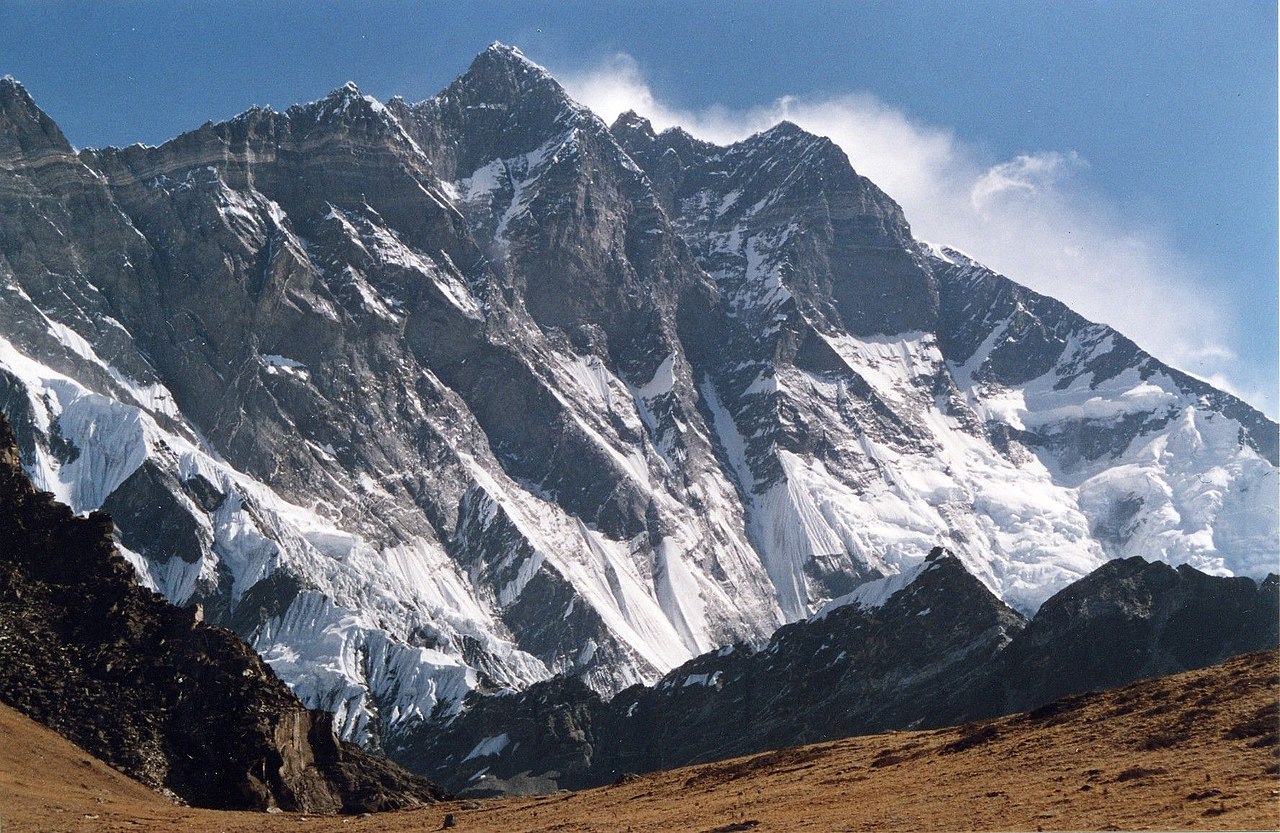
Steck, who climbed Everest without bottled oxygen back in 2012, only to return the following year and find himself embroiled in a high-profile brawl with Sherpa guides, is now gearing up for a very ambitious expedition in the spring of 2017. The Swiss climber will return to the South Side of Everest to attempt what he calls the Lhotse Traverse, which will start with a summit of Everest and continue with him – and his climbing partner Tenji Sherpa – continuing across the saddle ridge to the summit of Lhotse, Everest's closest neighbor and the fourth highest mountain in the world at 8516 meters (27,940 ft). As with his last expedition to the world's tallest mountain, Ueli plans to make the climb without supplemental O's.
Recently, Steck sat down for an interview with journalist Stefan Nestler, during which he talked about this upcoming expedition, which he has already started preparing for. In that interview, Ueli says that he hopes to climb the Everest along the tough West Shoulder, and then after summiting, continue on to Lhotse in a single long, and difficult push. But, that said, he has also acknowledged that conditions might not be right for such a route, so he may shift to the normal route of Everest first, and complete the traverse that way instead. But, he says that this project is one of his dream expeditions, so there is a likelihood that if he does have to take the normal route, he may return in the future to try the West Shoulder again.
In the interview, Ueli also touches on the 2013 brawl, saying that he has now put that ugly incident behind him. It impacted him greatly immediately after the incident, leading to him not trusting other climbers quite so much and taking a different approach to his expeditions. He says that it has shaped his perspective moving forward, but that he is at peace with what happened and is ready to just concentrate on climbing in the High Himalaya instead.
As he prepares for the altitude he'll face on Everest and Lhotse, Ueli says he has begun picking up the volume of his training to get ready for the challenge ahead. Dong lots of vertical climbing at a rapid pace – something he is well known for – allows him to stay in the Alps and still prepare for the Himalaya, and while the start of the expedition is still more than three months away, he is already getting his body ready.
If successful, Ueli will be the first person to complete the Lhotse Traverse without the use of bottled oxygen. He seems very confident that he can pull this off, and knowing what I know about the "Swiss Machine," I wouldn't bet against him.
Steck, who climbed Everest without bottled oxygen back in 2012, only to return the following year and find himself embroiled in a high-profile brawl with Sherpa guides, is now gearing up for a very ambitious expedition in the spring of 2017. The Swiss climber will return to the South Side of Everest to attempt what he calls the Lhotse Traverse, which will start with a summit of Everest and continue with him – and his climbing partner Tenji Sherpa – continuing across the saddle ridge to the summit of Lhotse, Everest's closest neighbor and the fourth highest mountain in the world at 8516 meters (27,940 ft). As with his last expedition to the world's tallest mountain, Ueli plans to make the climb without supplemental O's.
Recently, Steck sat down for an interview with journalist Stefan Nestler, during which he talked about this upcoming expedition, which he has already started preparing for. In that interview, Ueli says that he hopes to climb the Everest along the tough West Shoulder, and then after summiting, continue on to Lhotse in a single long, and difficult push. But, that said, he has also acknowledged that conditions might not be right for such a route, so he may shift to the normal route of Everest first, and complete the traverse that way instead. But, he says that this project is one of his dream expeditions, so there is a likelihood that if he does have to take the normal route, he may return in the future to try the West Shoulder again.
In the interview, Ueli also touches on the 2013 brawl, saying that he has now put that ugly incident behind him. It impacted him greatly immediately after the incident, leading to him not trusting other climbers quite so much and taking a different approach to his expeditions. He says that it has shaped his perspective moving forward, but that he is at peace with what happened and is ready to just concentrate on climbing in the High Himalaya instead.
As he prepares for the altitude he'll face on Everest and Lhotse, Ueli says he has begun picking up the volume of his training to get ready for the challenge ahead. Dong lots of vertical climbing at a rapid pace – something he is well known for – allows him to stay in the Alps and still prepare for the Himalaya, and while the start of the expedition is still more than three months away, he is already getting his body ready.
If successful, Ueli will be the first person to complete the Lhotse Traverse without the use of bottled oxygen. He seems very confident that he can pull this off, and knowing what I know about the "Swiss Machine," I wouldn't bet against him.
Labels:
Everest,
Himalaya,
Lhotse,
Mountaineering,
Nepal,
Traverse,
Ueli Steck
9/03/2014
Antarctica 2016: Wrapping Things Up on the Frozen Continent
It has been an eventful season in the Antarctic, with a number of impressive accomplishments along the way. Way back in November, when things first started to ramp up, the end of the season seemed like a long way off. But now, with just a few more days to go before the team at ALE closes the Union Glacier camp for another year, the final squads are finishing up their expeditions and reaching their goals at long last.
We'll start with an update on the British Military Team, which consists of Lou Rudd, Oliver Stoten, Chris Brooke, Alex Brazier, and James Facer-Childs. We've been following the five men all season long as they spent 67 days out on the ice, first skiing to the South Pole and then continuing on back to the coast. Last Saturday – January 21 – they reached that goal at long last, covering some 1100 miles (1770 km) along the way.
Yesterday, the team posted an update to its blog, reporting that they had arrived back at Union Glacier on Sunday, where they received a warm welcome indeed. They are scheduled to fly back to Punta Arenas on Thursday of this week, so for now they get to relax and enjoy being in the Antarctic for a few more days. Once they arrive in Chile, it'll be on to the U.K., where there friends and family await. By the time the get home, it will have been nearly three months since they've seen them.
From all reports, it seems the entire group is in good health and good spirits. It has been a long and grueling expedition, but they always worked well together and the companionship they shared helped to get them through some very tough days out on the ice. Especially near the end, when poor weather and surface conditions made the final few days more difficult than anticipated. Now, they are relaxing, regaining some strength, and preparing to go home.
Canadian solo skier Sébastien Lapierre arrived at the South Pole back on January 9, having spent 42 days skiing to the South Pole. He shares his story in an interview with ExWeb that you can read here. In the interview, Sébastien talks about the pace of his journey, what it was like arriving at the Pole, the weather conditions he faced along the way, his favorite pieces of gear, and much more. Definitely worth a read if you want to gain some insights on an expedition across Antarctica.
Finally, Swiss explorer Mike Horn continues his traverse of the Antarctic continent via kite ski. Well, he continues when he has some wind to help propel him along. It has been feast or famine in that department lately, with some days passing without much in the way of movement at all, while on others he's knocking off as many as 211 km (131 miles) at a time.
Horn's ship, the Pangaea, has now circled the continent and is waiting to pick him up on the far side, where he'll sail into the South Pacific to pursue some adventures in New Zealand and Australia before proceeding north for an eventual attempt at crossing the Arctic ice cap via the North Pole as well. This is all part of his Pole 2 Pole expedition, during which he is attempting to circumnavigate the globe in a north-south direction, rather than east-west.
Unlike the rest of the teams that have been exploring the Antarctic this season, Horn doesn't have to come and go on ALE's schedule. With his own mode of transportation, he isn't racing the same clock as teams arriving back at Union Glacier. Still, the weather will start to take a turn for the worse in the weeks ahead, and he will want to be gone before winter returns. That shouldn't be problem however and it won't be too many more days before he wraps things up either.
We'll still be keeping an eye on the Antarctic for awhile yet, watching to see how things unfold. But, for the most part the season is now at an end.
We'll start with an update on the British Military Team, which consists of Lou Rudd, Oliver Stoten, Chris Brooke, Alex Brazier, and James Facer-Childs. We've been following the five men all season long as they spent 67 days out on the ice, first skiing to the South Pole and then continuing on back to the coast. Last Saturday – January 21 – they reached that goal at long last, covering some 1100 miles (1770 km) along the way.
Yesterday, the team posted an update to its blog, reporting that they had arrived back at Union Glacier on Sunday, where they received a warm welcome indeed. They are scheduled to fly back to Punta Arenas on Thursday of this week, so for now they get to relax and enjoy being in the Antarctic for a few more days. Once they arrive in Chile, it'll be on to the U.K., where there friends and family await. By the time the get home, it will have been nearly three months since they've seen them.
From all reports, it seems the entire group is in good health and good spirits. It has been a long and grueling expedition, but they always worked well together and the companionship they shared helped to get them through some very tough days out on the ice. Especially near the end, when poor weather and surface conditions made the final few days more difficult than anticipated. Now, they are relaxing, regaining some strength, and preparing to go home.
Canadian solo skier Sébastien Lapierre arrived at the South Pole back on January 9, having spent 42 days skiing to the South Pole. He shares his story in an interview with ExWeb that you can read here. In the interview, Sébastien talks about the pace of his journey, what it was like arriving at the Pole, the weather conditions he faced along the way, his favorite pieces of gear, and much more. Definitely worth a read if you want to gain some insights on an expedition across Antarctica.
Finally, Swiss explorer Mike Horn continues his traverse of the Antarctic continent via kite ski. Well, he continues when he has some wind to help propel him along. It has been feast or famine in that department lately, with some days passing without much in the way of movement at all, while on others he's knocking off as many as 211 km (131 miles) at a time.
Horn's ship, the Pangaea, has now circled the continent and is waiting to pick him up on the far side, where he'll sail into the South Pacific to pursue some adventures in New Zealand and Australia before proceeding north for an eventual attempt at crossing the Arctic ice cap via the North Pole as well. This is all part of his Pole 2 Pole expedition, during which he is attempting to circumnavigate the globe in a north-south direction, rather than east-west.
Unlike the rest of the teams that have been exploring the Antarctic this season, Horn doesn't have to come and go on ALE's schedule. With his own mode of transportation, he isn't racing the same clock as teams arriving back at Union Glacier. Still, the weather will start to take a turn for the worse in the weeks ahead, and he will want to be gone before winter returns. That shouldn't be problem however and it won't be too many more days before he wraps things up either.
We'll still be keeping an eye on the Antarctic for awhile yet, watching to see how things unfold. But, for the most part the season is now at an end.
3/06/2014
Antarctica 2016: More Updates From the Ice
Yesterday I mentioned that the 2016-2017 Antarctic season is quickly coming to an end, and that updates would probably be few and far between moving forward. But, it turns out there is still more to tell, and although the end is indeed in sight, things aren't quite done yet. I have a couple of stories to share from the frozen continent, as well as a few corrections form my previous post too.
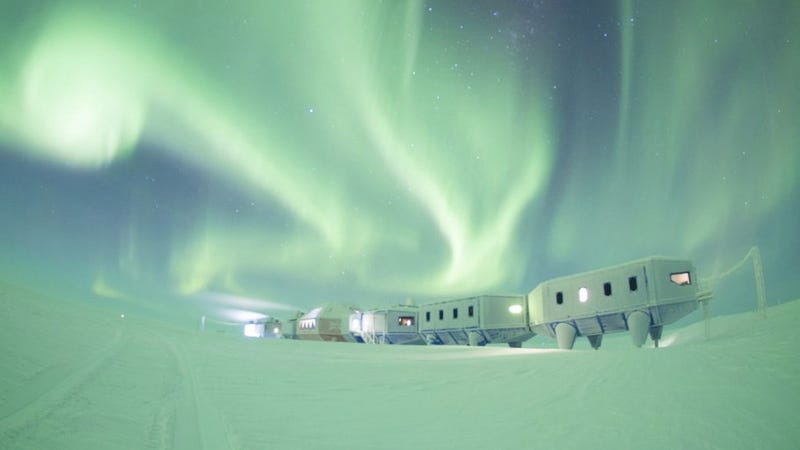
We'll start with an update on the Halley VI research station, which you might recall I wrote about back in early December. At the time, it was revealed that the station would have to be relocated due to a massive ice crack opening across the surface. That crack was forcing a large section of ice along the surface of the continent to shift towards the sea, and Halley VI found itself on the wrong side of the equation.
The original plan was to wait until this season was over, then close the base in preparation for moving it to a new – safer – location. Now, it has been announced that the research station has been shut down early as a precautionary measure, as another crack has been discovered near by that could expedite the shifting of the ice even further. Halley VI is in the process of being relocated however, so hopefully it will be repositioned in a safer location soon. The entire station was designed to be mobile, and is now being transferred to a spot some 23 km (14 miles) away from its current location.
Mike Horn has checked in today to say that he has had his best day yet out on the ice. After several days of light winds, the gusts returned in force, and as a result he covered an impressive 247 km (153 miles) as he makes his way to the far coast to rendezvous with his ship, the Pangea. From there, he'll make his way to the South Pacific, for a visit to New Zealand and Australia, before sailing north to attempt a traverse of the Arctic ice cap as well. The Swiss explorer reports that the landscape he was skiing through today has changed dramatically as well, with massive sastrugi and even crevasses reappearing. That could slow him down as he moves forward, but for now it is more of a nuisance than anything else.
Finally, I wanted to post a couple of corrections to yesterday's story. First, I reported that Emma Kelty had spent some time in the hospital due to dehydration and a lung infection. In fact, she did visit a hospital to get a dose of antibiotics, but didn't have to stay there for very long. It was a standard check in, and not at all the medical situation that I saw posted elsewhere. I also mentioned that she was out on the ice for 52 days, but I stand corrected in this area as well. It actually took her less than 51 days to complete her crossing of the frozen continent. Thanks for the corrections Emma!
And I also mentioned the Reedy Glacier Team yesterday and the remarkable job they did opening a new route to the South Pole. That squad consists of Keith Tuffley, Rob Smith, and Eric Phillips, which I indicated had traversed that route on skies. It turns out, Rob and Eric skied the entire distance, while Keith rode his bike at least half the way. Not a minor accomplishment to say the least.
Just wanted to get those house keeping duties out of the way. More updates to come as the news warrants it.
We'll start with an update on the Halley VI research station, which you might recall I wrote about back in early December. At the time, it was revealed that the station would have to be relocated due to a massive ice crack opening across the surface. That crack was forcing a large section of ice along the surface of the continent to shift towards the sea, and Halley VI found itself on the wrong side of the equation.
The original plan was to wait until this season was over, then close the base in preparation for moving it to a new – safer – location. Now, it has been announced that the research station has been shut down early as a precautionary measure, as another crack has been discovered near by that could expedite the shifting of the ice even further. Halley VI is in the process of being relocated however, so hopefully it will be repositioned in a safer location soon. The entire station was designed to be mobile, and is now being transferred to a spot some 23 km (14 miles) away from its current location.
Mike Horn has checked in today to say that he has had his best day yet out on the ice. After several days of light winds, the gusts returned in force, and as a result he covered an impressive 247 km (153 miles) as he makes his way to the far coast to rendezvous with his ship, the Pangea. From there, he'll make his way to the South Pacific, for a visit to New Zealand and Australia, before sailing north to attempt a traverse of the Arctic ice cap as well. The Swiss explorer reports that the landscape he was skiing through today has changed dramatically as well, with massive sastrugi and even crevasses reappearing. That could slow him down as he moves forward, but for now it is more of a nuisance than anything else.
Finally, I wanted to post a couple of corrections to yesterday's story. First, I reported that Emma Kelty had spent some time in the hospital due to dehydration and a lung infection. In fact, she did visit a hospital to get a dose of antibiotics, but didn't have to stay there for very long. It was a standard check in, and not at all the medical situation that I saw posted elsewhere. I also mentioned that she was out on the ice for 52 days, but I stand corrected in this area as well. It actually took her less than 51 days to complete her crossing of the frozen continent. Thanks for the corrections Emma!
And I also mentioned the Reedy Glacier Team yesterday and the remarkable job they did opening a new route to the South Pole. That squad consists of Keith Tuffley, Rob Smith, and Eric Phillips, which I indicated had traversed that route on skies. It turns out, Rob and Eric skied the entire distance, while Keith rode his bike at least half the way. Not a minor accomplishment to say the least.
Just wanted to get those house keeping duties out of the way. More updates to come as the news warrants it.
1/03/2014
Antarctica 2016: The End in Sight
Update: It seems the information I received on Emma Kelty's condition was incorrect. While she did go to the hospital as reported, it was to receive a round of antibiotics and not for other reasons stated below. She was also out on the ice for 50.5 days as well.
It has been more than a week and a half since we last posted an update on the progress of the various Antarctic skiers. Over that time, a lot has happened, with several comings and goings from the South Pole, arrivals back at the coast, and other happenings – both good and bad. Now, as the end of the season is in sight, there is much to tell.
We'll start with Johanna Davidsson, the solo female skier who reached the Pole in record time a few weeks back. After setting that impressive mark, Johanna wasn't content to just get on a plane and fly back to Union Glacier, but instead kite-skied back to the coast. She completed that trip quickly as well, wrapping up her return trip on January 10. It has been a very productive season for her to say the least.
The other female skier that we watched closely this season was Brit Emma Kelty, who spent 52 days out on the ice skiing from Hercules Inlet to the South Pole. She reached that point back on January 5, and was then flown back to Union Glacier having abandoned her attempt at a return trip after running out of time. A few days later she flew to Punta Arenas, Chile as well where she was immediately hospitalized for dehydration, a lung infection, and a bad case of polar thigh. That last ailment strikes the upper legs in very cold conditions, and is caused by the friction of fabric and skin when rubbed together over a long period of time. It can cause extreme irritation and even a nasty infection, which can be very painful if left untreated. Unfortunately, Emma wasn't able to do much about it until after she was off the ice, which had made for a painful wound. Thankfully, she was released from the hospital last week, and flew home to the U.K. on Friday the 13th.
The six-man British Military team has been skiing back to the coast from the South Pole and making good time. They now report that they are less than 60 nautical miles (69 miles/111 km) from the coast, and completely wrapping up their round-trip journey across the Antarctic. The return journey hasn't been an easy one however, as they have traveled across the Shackleton Glacier. The weather has been difficult as usual, and just today the squad made a navigational error that caused them to have to descend down the side of a mountain, rather than backtrack to correct their course. Still, they are on track to reach the finish line in the next few days, and should be ready to fly out of Antarctica ahead of the final deadline of January 27.
Swiss explorer Mike Horn is still in the midst of his traverse of the frozen continent. After reaching the South Pole via kite-ski on January 9, he has since resumed his journey to the far side of the continent. But, the winds have been very light, which has meant slow travel so far. After two days of not covering any distances at all, Mike reports a gentle breeze today that is helping him move, albeit at a very slow pace. But unlike the other skiers out on the ice, Mike isn't reliant on ALE to get him off the continent. He'll ski to the western coast, where his own ship the Pangea will pick him up as he resumes his Pole 2 Pole expedition.
Finnish skier Risto Hallikainen – who reached the South Pole back on December 28 – is on his return trip to the coast as well. His latest update came last Friday, when he reported that he was halfway to his goal. Risto will be racing the clock to return to Hercules before the final flight out, but right now things look like they are going according to plan.
Finally, Keith Tuffley, Rob Smith, and Eric Phillips reached the South Pole back on January 9 as well, following a very tough slog across the frozen continent. The trio opened a new route across the Reedy Glacier, reaching 90ºS after crossing 605 km (375 miles) in 34 days. It is believed that they are the first team to explore this part of the Antarctic since it was first surveyed more than 60 years ago. The team spent little time at the South Pole and returned to Union Glacier a few days later, before departing back to Chile, and home.
That's it for now. As you can see, the season is wrapping up very quickly at this point. Our next updates will only have a few teams to report on. Soon, another season will come to an end.
It has been more than a week and a half since we last posted an update on the progress of the various Antarctic skiers. Over that time, a lot has happened, with several comings and goings from the South Pole, arrivals back at the coast, and other happenings – both good and bad. Now, as the end of the season is in sight, there is much to tell.
We'll start with Johanna Davidsson, the solo female skier who reached the Pole in record time a few weeks back. After setting that impressive mark, Johanna wasn't content to just get on a plane and fly back to Union Glacier, but instead kite-skied back to the coast. She completed that trip quickly as well, wrapping up her return trip on January 10. It has been a very productive season for her to say the least.
The other female skier that we watched closely this season was Brit Emma Kelty, who spent 52 days out on the ice skiing from Hercules Inlet to the South Pole. She reached that point back on January 5, and was then flown back to Union Glacier having abandoned her attempt at a return trip after running out of time. A few days later she flew to Punta Arenas, Chile as well where she was immediately hospitalized for dehydration, a lung infection, and a bad case of polar thigh. That last ailment strikes the upper legs in very cold conditions, and is caused by the friction of fabric and skin when rubbed together over a long period of time. It can cause extreme irritation and even a nasty infection, which can be very painful if left untreated. Unfortunately, Emma wasn't able to do much about it until after she was off the ice, which had made for a painful wound. Thankfully, she was released from the hospital last week, and flew home to the U.K. on Friday the 13th.
The six-man British Military team has been skiing back to the coast from the South Pole and making good time. They now report that they are less than 60 nautical miles (69 miles/111 km) from the coast, and completely wrapping up their round-trip journey across the Antarctic. The return journey hasn't been an easy one however, as they have traveled across the Shackleton Glacier. The weather has been difficult as usual, and just today the squad made a navigational error that caused them to have to descend down the side of a mountain, rather than backtrack to correct their course. Still, they are on track to reach the finish line in the next few days, and should be ready to fly out of Antarctica ahead of the final deadline of January 27.
Swiss explorer Mike Horn is still in the midst of his traverse of the frozen continent. After reaching the South Pole via kite-ski on January 9, he has since resumed his journey to the far side of the continent. But, the winds have been very light, which has meant slow travel so far. After two days of not covering any distances at all, Mike reports a gentle breeze today that is helping him move, albeit at a very slow pace. But unlike the other skiers out on the ice, Mike isn't reliant on ALE to get him off the continent. He'll ski to the western coast, where his own ship the Pangea will pick him up as he resumes his Pole 2 Pole expedition.
Finnish skier Risto Hallikainen – who reached the South Pole back on December 28 – is on his return trip to the coast as well. His latest update came last Friday, when he reported that he was halfway to his goal. Risto will be racing the clock to return to Hercules before the final flight out, but right now things look like they are going according to plan.
Finally, Keith Tuffley, Rob Smith, and Eric Phillips reached the South Pole back on January 9 as well, following a very tough slog across the frozen continent. The trio opened a new route across the Reedy Glacier, reaching 90ºS after crossing 605 km (375 miles) in 34 days. It is believed that they are the first team to explore this part of the Antarctic since it was first surveyed more than 60 years ago. The team spent little time at the South Pole and returned to Union Glacier a few days later, before departing back to Chile, and home.
That's it for now. As you can see, the season is wrapping up very quickly at this point. Our next updates will only have a few teams to report on. Soon, another season will come to an end.
Subscribe to:
Posts (Atom)