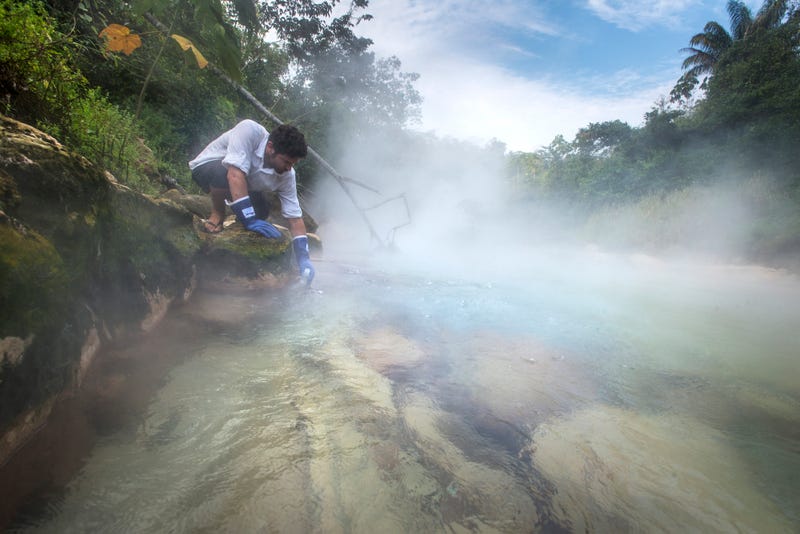
Need proof that we still don't know as much about our own planet as we think we do? Than look no further than this story about a team of researchers that discovered a legendary boiling river located deep in the Amazon.
In a new book entitled The Boiling River: Adventure and Discovery in the Amazon, Peruvian scientist Andrés Ruzo shares the story of the discovery of this river, which he first heard about from his grandfather, who told him that Spanish conquistadors wandered into the jungle, and returned months later with tales of strange animals, endless rainforest, and a river that was so hot that it boiled from below.
That story stuck with Ruzo, even as an adult, and when he became a graduate student at Southern Methodists University in Texas, he decided to do his PhD project on creating the first geothermal map of Peru. He hoped to discover the boiling river, and show how it would be possible for it to actually boil from geothermal activity.
He didn't exactly find support from the faculty and other students. Most told him his pursuit was futile and went against all of the principles of science that we knew up until this point. For a river to actually be so hot that it boiled, the forces at work underneath it would have to be tremendous.
After spending months researching the possibilities and looking for answers, Ruzo discovered an unlikely ally – his aunt. She claimed to have actually visited such a river, and told her nephew where to find it. It was located near Mayantuyacu, a site held sacred by the local people.
The river itself isn't large. It runs for just 4 miles (6.4 km), and ranges up to 82 feet (25 meters) wide and 20 feet (6 meters) deep. It is described as being hot enough to make cup of tea, with certain sections actually boiling as described.
Now, Ruzo's discovery is making headlines, and his theories don't seem to absurd. He even gave an interview to Nat Geo about his research and quest to find this legendary stretch of water. Unsurprisingly, now he's working to protect the site to ensure that it remains sacred and pure.
This story makes you wonder what other "legendary" stories that have emerged from the jungles, deserts, and mountains of the world have some basis in truth. Hopefully we'll always have scientists and explores like Andrés to keep looking for them.
Showing posts with label Research. Show all posts
8/12/2016
6/14/2015
Antarctica 2016: Italian to Attempt Traverse of the Frozen Continent Again, Researcher Dies in the Field
Preparation for the start of the 2016-2017 Antarctic season is now underway, with the advance team from ALE now arriving on the ice to prepare the permanent campsite at Patriot Hills for the arrival of the first skiers of the season. It will take them a few days to get the camp ready, and they'll spend a considerable amount of time preparing the runway that will allow the big Ilyushin aircraft to begin transporting supplies, crew, and explorers out to site. That typically begins around the end of October, although the weather ultimately decides when those flights out of Punta Arenas, Chile actually begin.
Elsewhere, the McMurdo Station on the Ross Iceshelf has started to return to life. The station is an important research outlet for the U.S., and during the Antarctic winter it is manned by just a skeleton crew. Now, essential personnel are arriving there to prepare for another busy season ahead as a full compliment of scientists, researchers, and military crew have started to flow in.
Similarly, the Russian base called Novolazarevskaya is also starting to come to life with its crew scheduled to begin arriving later this week. That station is manned and supplied out of Cape Town, South Africa, with the first flight planned for Friday, weather permitting of course. If all goes as planned, one of the passengers on that flight will be Italian kite-skier Michele Pontrandolfo, who will once again attempt to traverse the continent via the South Pole.
Last year, Pontrandolfo made the same attempt, hoping to use his kite to cover large chunks of ground at a rapid pace. Unfortunately, he never was able to capture the winds like he had expected, so as a result his expedition was much slower than planned. He never managed to get much momentum going, and eventually had to pull the plug. Now, he's back for another go. Hopefully this season he'll have better luck. We'll of course be following his progress in the days ahead.
There is some sad news coming our way from the Antarctic today as well. ExWeb is reporting that an Antarctic researcher has died in the field while collecting scientific data. Gordon Hamilton, who was on the frozen continent as part of a climate research team from the University of Maine, was killed when the vehicle he was driving fell into a crevasse. The accident occurred this past Saturday as Hamilton and his teammates were exploring an area known as the "Shear Zone" not far from McMurdo Station. According to the report, that region is known for being heavily crevassed, with ice that is as much as 650 feet (198 meters) thick at some points.
Hamilton's body was recovered from the crevasse and is being prepared to be taken back home to his family in Maine. My condolences go out to his friends and family after this tragic accident.
That's all for today. As we get closer to the start of the season, we'll have more updates. Most of the South Pole skiers are now preparing to depart for Punta Arenas, and head to Antarctica, which will soon be a very busy place once again.
Elsewhere, the McMurdo Station on the Ross Iceshelf has started to return to life. The station is an important research outlet for the U.S., and during the Antarctic winter it is manned by just a skeleton crew. Now, essential personnel are arriving there to prepare for another busy season ahead as a full compliment of scientists, researchers, and military crew have started to flow in.
Similarly, the Russian base called Novolazarevskaya is also starting to come to life with its crew scheduled to begin arriving later this week. That station is manned and supplied out of Cape Town, South Africa, with the first flight planned for Friday, weather permitting of course. If all goes as planned, one of the passengers on that flight will be Italian kite-skier Michele Pontrandolfo, who will once again attempt to traverse the continent via the South Pole.
Last year, Pontrandolfo made the same attempt, hoping to use his kite to cover large chunks of ground at a rapid pace. Unfortunately, he never was able to capture the winds like he had expected, so as a result his expedition was much slower than planned. He never managed to get much momentum going, and eventually had to pull the plug. Now, he's back for another go. Hopefully this season he'll have better luck. We'll of course be following his progress in the days ahead.
There is some sad news coming our way from the Antarctic today as well. ExWeb is reporting that an Antarctic researcher has died in the field while collecting scientific data. Gordon Hamilton, who was on the frozen continent as part of a climate research team from the University of Maine, was killed when the vehicle he was driving fell into a crevasse. The accident occurred this past Saturday as Hamilton and his teammates were exploring an area known as the "Shear Zone" not far from McMurdo Station. According to the report, that region is known for being heavily crevassed, with ice that is as much as 650 feet (198 meters) thick at some points.
Hamilton's body was recovered from the crevasse and is being prepared to be taken back home to his family in Maine. My condolences go out to his friends and family after this tragic accident.
That's all for today. As we get closer to the start of the season, we'll have more updates. Most of the South Pole skiers are now preparing to depart for Punta Arenas, and head to Antarctica, which will soon be a very busy place once again.
3/09/2015
New Farthest Source Of The Amazon Discovered
Researchers say they have located a new source for the Amazon River and possibly adding an additional 47-57 miles to its overall length, which already extends beyond 4000 miles. But, with all things exploration related in the 21st century, there is some controversy as to whether or not this new location should actually be considered as a tributary for the longest river on the planet.
Since 1971, the Apurimac River has been considered the furthest source of the Amazon, and many explorers and adventurers have operated in the region under that assumption. According to this new report however, the Mantaro River, located in southwest Peru, now holds that distinction.
The researchers who have asserted that the Mantaro is the new source used satellite imagery and topographic maps to study the Amazon and it's numerous tributaries. With GPS tracking points, the team determined that the Mantaro is actually about 10% longer than the Apurimac, which would make the furthest source.
But as I mentioned, there is some controversy afoot. The Mantaro doesn't flow for parts of the year, thanks to a dam that was built in 1974. When defining a "source," most geographers feel that a river must flow uninterrupted. The researchers behind this new finding say that the Mantaro would flow all year if it wasn't for the dam.
Does it really matter where the true source is located? Most would probably say no. But if you're one of the many adventurers who has attempted to travel the length of the river, or explored the Amazon Basin, it means quite a lot. This revelation could invalidate certain past expeditions that paddled the entire river for instance.
Personally, I happen to enjoy that we're still discovering things about our own planet. It is stories like this one that remind us that exploration is important, even in the 21st century. Now, who wants to be the first to go upstream and actually visit the source? I'm in!
Since 1971, the Apurimac River has been considered the furthest source of the Amazon, and many explorers and adventurers have operated in the region under that assumption. According to this new report however, the Mantaro River, located in southwest Peru, now holds that distinction.
The researchers who have asserted that the Mantaro is the new source used satellite imagery and topographic maps to study the Amazon and it's numerous tributaries. With GPS tracking points, the team determined that the Mantaro is actually about 10% longer than the Apurimac, which would make the furthest source.
But as I mentioned, there is some controversy afoot. The Mantaro doesn't flow for parts of the year, thanks to a dam that was built in 1974. When defining a "source," most geographers feel that a river must flow uninterrupted. The researchers behind this new finding say that the Mantaro would flow all year if it wasn't for the dam.
Does it really matter where the true source is located? Most would probably say no. But if you're one of the many adventurers who has attempted to travel the length of the river, or explored the Amazon Basin, it means quite a lot. This revelation could invalidate certain past expeditions that paddled the entire river for instance.
Personally, I happen to enjoy that we're still discovering things about our own planet. It is stories like this one that remind us that exploration is important, even in the 21st century. Now, who wants to be the first to go upstream and actually visit the source? I'm in!
2/25/2015
Researchers Discover Two Hidden Chambers Inside Egypt's Great Pyramid
It seems the discoveries just keep coming in Egypt, a civilization thousands of years old with plenty of monuments to prove it. Researchers in Cairo now say that they have discovered "cavities" inside one of the most well known and iconic structures on Earth – the Great Pyramid itself.
The discovery was made using imaging technology called muography. This technique uses special equipment to analyze radioactive particles known as muons. Analysts can detect where the particles are most dense or least dense to help create an image of the interior of spaces. In this way, it works much like ground penetrating radar, providing a map of the interior of the pyramid itself.
According to reports, the team conducting the study says that they are "now able to confirm the existence of a ‘void’ hidden behind the North Face, that could have the form of at least one corridor going inside the Great Pyramid.” The team added that “The precise shape, size, and exact position of this void is now under further investigation. It should be done with the help of 12 new Muon Emulsion plates that are installed in the descending corridor, and will be collected by the end of October 2016.”
The same researchers say that they have also located a second "void" in the structure that is located behind the descending corridor inside the pyramid as well. This corridor is the one that leads directly down into the structure to the tomb of the pharaoh Khufu, who had the pyramid constructed as his burial chamber some 4500 years ago.
What does all of this mean? We'll just have to wait for further information to know for sure, but it could confirm the existence of hidden chambers inside the Great Pyramid. What those chambers could contain would be open to speculation of course, but anyone who has ever been inside these structures can tell you that they are unimpressive other than from an architectural/construction sense. Unlike the tombs in the Valley of the Kings and Queens, the walls are not covered in hieroglyphs or painted in ornamental styles. Instead, they are bare, smooth, and colorless. The corridor and chambers are relatively small, and even a bit claustrophobic. But, it is possible that important items for Khufu were stashed in these spaces to prevent them from being looted by thieves.
Of course, it is also hard to get too excited about these "discoveries" considering the hype that was made last year about possibly finding the tomb of Nefertiti hidden inside that of the boy-king Tut. Those claims later seemed to have been proved false, although archaeologists continue to research the findings. Will this be a similar story? If these chambers inside the Pyramid are real, will they hold anything of value? Or are they just part of how the structure was made? It will likely be months before we know for sure, but it is definitely intriguing to think about.
2/04/2015
Polar Bears Trap Russian Research Team Inside Arctic Base
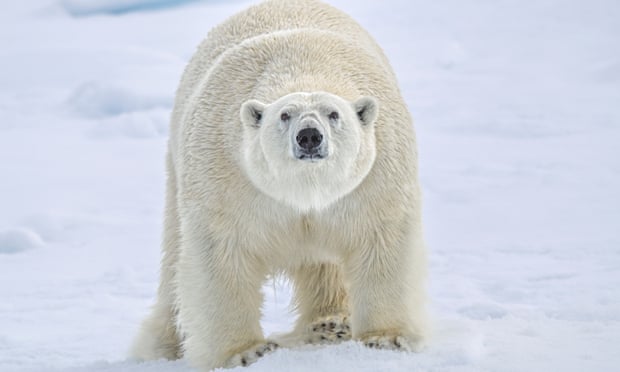
Think your job is rough? Consider the challenges that a team of five Russian scientists have been facing as they conduct weather research on the remote island of Troynoy in the Arctic Ocean. According to a report from TASS the group had become trapped inside its meteorological observation center by a group of ten polar bears who have taken up residence just outside the base.
Normally, in order to keep the bears at bay, the scientists use flares and have dogs at the base to scare off the animals. But, the team had run out of flares, and according to Mashable the bears even killed one of the dogs. Because of this aggressive nature, the researchers have had to abandon some of their projects, and had been instructed to only leave the base when absolutely necessary.
It was originally reported that it would take weeks to deliver new flares and dogs to the station, but apparently relief came earlier today when a passing research vessel made a detour to lend a hand. The ship resupplied the team with flares, which were used immediately to scare off the bears. The next resupply ship wasn't scheduled to arrive for another month, but this should help buy the team some time.
Apparently, the bears gather near the base to wait for the Arctic Ocean to freeze. That typically occurs in late October or early November, at which time they'll depart the area and head north. Considering the current state of the arctic sea ice, it may take longer than usual before the bears begin their migration, and it is possible that they'll return to that location again in the days ahead.
In the past only about 4-6 bears have spent their summers on Troynoy, but apparently this year there are at least 10, including some large female with small cubs as well. One of the females has even been spending her nights just below one of the windows of the weather station, making it even more difficult for the team to sneak outside to record readings for their research.
Hopefully there will be some relief for these scientists soon. While watching polar bears up close sounds like an amazing experience, being locked inside and unable to go out doesn't seem like a lot of fun.
Normally, in order to keep the bears at bay, the scientists use flares and have dogs at the base to scare off the animals. But, the team had run out of flares, and according to Mashable the bears even killed one of the dogs. Because of this aggressive nature, the researchers have had to abandon some of their projects, and had been instructed to only leave the base when absolutely necessary.
It was originally reported that it would take weeks to deliver new flares and dogs to the station, but apparently relief came earlier today when a passing research vessel made a detour to lend a hand. The ship resupplied the team with flares, which were used immediately to scare off the bears. The next resupply ship wasn't scheduled to arrive for another month, but this should help buy the team some time.
Apparently, the bears gather near the base to wait for the Arctic Ocean to freeze. That typically occurs in late October or early November, at which time they'll depart the area and head north. Considering the current state of the arctic sea ice, it may take longer than usual before the bears begin their migration, and it is possible that they'll return to that location again in the days ahead.
In the past only about 4-6 bears have spent their summers on Troynoy, but apparently this year there are at least 10, including some large female with small cubs as well. One of the females has even been spending her nights just below one of the windows of the weather station, making it even more difficult for the team to sneak outside to record readings for their research.
Hopefully there will be some relief for these scientists soon. While watching polar bears up close sounds like an amazing experience, being locked inside and unable to go out doesn't seem like a lot of fun.
10/13/2014
Scientists Discover Massive Canyon in Antarctica
It is fascinating to me how much we are still learning about our own planet. It seems that despite the fact that we are sending space probes and rovers to other Mars, Pluto, Jupiter, comets, and other celestial bodies, we continue to discover new things right here at home. Case in point. Last week it was revealed that a team of researchers have discovered a massive canyon under the ice in Antarctica. It's so big in fact that it could dwarf even the Grand Canyon itself.
The canyon was discovered using satellite imagery and ground penetrating radar that was pulled along behind snowmobiles and small aircraft. This giant gorge is located in the western region of the Antarctic near the Ellsworth Subglacial Highlands. It is said to be buried under several miles of ice, but its dimensions are staggering to say the least.
According to preliminary estimates, the canyon is believed to be 3 km (1.9 miles) deep, and more than 25 km (15.5 miles) across. It is also believed to run more than 1000 km (621 miles) in length, and even more amazingly it reaches 2000 meters (6500 feet) below sea level at certain points. In comparison, the Grand Canyon 1.8 km (1.13 miles) deep and stretches for 433 km (277 miles) in length.
The scientists studying the Ellsworth region aren't sure how old the canyon is exactly, although they do know that Antarctica has been covered in ice for at least 34 million years. Over that time, the glaciers that cover the area have shifted dramatically, ranging in thickness while shaping the surface found underneath them. Because of its immense size, it is believed that it was ice – not an ancient river – that carved this massive gorge.
Unlike the Grand Canyon, it is unlikely that humans will ever see this natural monument. Because it is covered in snow and ice, it would take millions of more years – not to mention dramatic shifts in climate – for it to ever reveal itself. Still, it is fascinating to know that this place exists, and it makes you wonder what else is still out there, hidden under the ice.
The canyon was discovered using satellite imagery and ground penetrating radar that was pulled along behind snowmobiles and small aircraft. This giant gorge is located in the western region of the Antarctic near the Ellsworth Subglacial Highlands. It is said to be buried under several miles of ice, but its dimensions are staggering to say the least.
According to preliminary estimates, the canyon is believed to be 3 km (1.9 miles) deep, and more than 25 km (15.5 miles) across. It is also believed to run more than 1000 km (621 miles) in length, and even more amazingly it reaches 2000 meters (6500 feet) below sea level at certain points. In comparison, the Grand Canyon 1.8 km (1.13 miles) deep and stretches for 433 km (277 miles) in length.
The scientists studying the Ellsworth region aren't sure how old the canyon is exactly, although they do know that Antarctica has been covered in ice for at least 34 million years. Over that time, the glaciers that cover the area have shifted dramatically, ranging in thickness while shaping the surface found underneath them. Because of its immense size, it is believed that it was ice – not an ancient river – that carved this massive gorge.
Unlike the Grand Canyon, it is unlikely that humans will ever see this natural monument. Because it is covered in snow and ice, it would take millions of more years – not to mention dramatic shifts in climate – for it to ever reveal itself. Still, it is fascinating to know that this place exists, and it makes you wonder what else is still out there, hidden under the ice.
7/13/2014
Video: Expedition to the Valley of the Dinosaurs
The Badlands of North Dakota are the site for this video, which takes us on a dinosaur hunting expedition with Tyler Lyson, a man who seems to have a knack for finding fossils hidden in the Earth. In this short documentary, Tyler is attempting to recover a rare, intact skull from a triceratops with the help of a group of amateur fossil hunters that he has invited along for the ride. While working on that discovery, he comes across another one that is equally astounding. Enjoy.
Valley of the Last Dinosaurs from MEL Films on Vimeo.
Subscribe to:
Posts (Atom)