2/25/2014
Video: TravelSmith Travel Tips #4 - How To Travel Wallet Safe
Adventure travel guru Richard Bangs returns again this week with yet another video sharing tips on how to travel safer and smarter. This time out, Richard tells us how to travel "wallet safe," which is to say he gives some pointers on preventing us from getting permanently separated from the contents of said wallet while exploring a foreign country. He even shares a tale of his own, in which he learned a valuable lesson about keeping credit cards, cash and other valuables close at hand.

2/23/2014
Video: Into the West - North America
Take a two-and-a-half minute journey through western Canada, into the Pacific Northwest in America, and south to Mexico's desert in this short video that is simply filled to the brim with stunning scenery. You'll travel past snowcapped peaks, pristine mountain lakes, and lush forests as you explore some of the most stunning landscapes on Earth. This is the kind of video that will inspire you to want to travel to these places for yourself. Enjoy!
Into The West - North America from Mike Bishop on Vimeo.
2/22/2014
Video: Unclimbed - Reaching the Summit in the Himalaya (Episode 1)
Earlier today I posted a story about three climbers – Gabriel Filippi, Elia Saikaly and Pasang Kaji Sherpa – who have traveled to Nepal this fall to attempt to summit two unclimbed peaks named for Tenzing Norgay and Edmund Hillary. But the story of this climb doesn't begin with their arrival in Kathmandu, but instead it starts last year when all three were on Everest when the April 25 earthquake created an avalanche that killed 22 people there. That put an end to their efforts on the mountain, but not their ambitions to climb in the Himalaya again.
This video is the first of a series that will follow the team as they head back to Nepal to take on these two unclimbed peaks. Over the coming weeks, we'll be able to follow their progress, and hopefully continue to see more videos like this one. It is a great introduction for what Gabriel, Elia, and Pasang Kaji are trying to accomplish there, and I'm already looking forward to further installments.
This video is the first of a series that will follow the team as they head back to Nepal to take on these two unclimbed peaks. Over the coming weeks, we'll be able to follow their progress, and hopefully continue to see more videos like this one. It is a great introduction for what Gabriel, Elia, and Pasang Kaji are trying to accomplish there, and I'm already looking forward to further installments.
2/16/2014
Video: Lost in Kyrgyzstan
While only two minutes in length, this video is quite simply mesmerizing. It takes us to Kyrgyzstan to explore some of the beautiful landscapes that are found there. Like other areas of Central Asia, this region is home to nomadic people who wander the vast steppe lands much the way their forefathers did. It is also a place of incredible beauty that is captured elegantly in this all-too brief clip. I hope you enjoy it as much as do.
Want to get lost in Kyrgyzstan yourself? Mountain Travel Sobek can help!
LOST IN KYRGYZSTAN - 4K from The Lost Avocado on Vimeo.
Want to get lost in Kyrgyzstan yourself? Mountain Travel Sobek can help!
The Economist Hails the New Age of Discovery
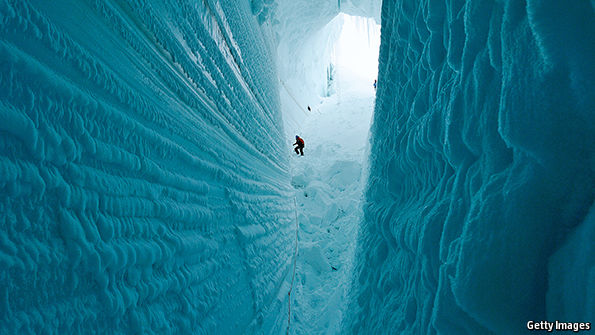
The article says that there are still plenty of places on Earth that have yet to be fully explored, and there are some opportunities for adventurous people to still claim records and gain important "firsts." But that isn't the objective for most members of this new generation of explorers, many of whom travel more in tune with nature, rather than looking for ways to control and dominate it. This is very different from explorers in the past who often looked for ways to subdue their challenges while tramping over everything in their past.
The Economist says that Greenland, the Amazon Rainforest, and Papua New Guinea still have vast regions that remain blank spots on the map. Those places could hold untold wonders that have yet to be discovered. The article also points out that only about 200 or so peaks in Nepal that are higher than 6000 meters (19,685 ft) have been climbed so far. There are over 2800 such peaks in that country alone. And despite frequent visits and numerous expeditions each year, we still don't know all that much about Antarctica either.
All in all, this article is a good read. Not only does it remind us that we still need explorers to help us chart our planet, but that there are also plenty of amazing things yet to be done. Despite the fact that we as a species feel like we have conquered the Earth, the planet still holds many secrets, some of which could be vital to our survival in the decades to come.
If you're in need of a little inspiration and understanding of why it is still important to support our explorers, read the full article here.
2/12/2014
Himalaya Spring 2016: Solemn Day on Everest and Beyond
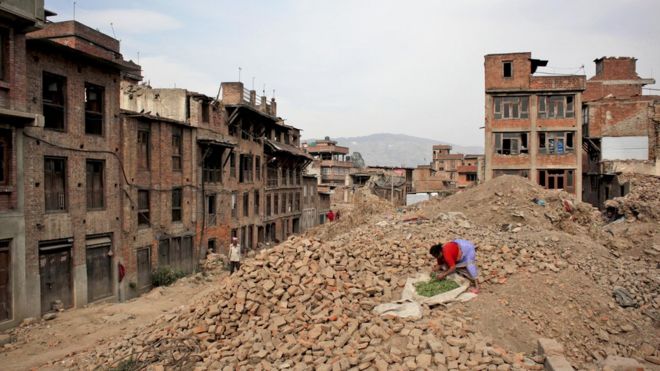
Last year this time, the world was stunned to see just how widespread the destruction was, with everything from mountain villages to World Heritage sites being completely destroyed by the quake. We were horrified to read about the massive loss of life, and the mountaineering community was saddened by yet another tragedy on Everest that brought an end to the climbing season there for a second year in a row.
Now, a year later, Nepal still struggles with the rebuilding process. According to reports, while the roads are cleared and power has been restored, there has been little progress towards actually reconstructing the buildings that have collapsed. Many people still live in tent cities or temporary shelters, while the Nepali government struggles to manage the massive rebuilding effort. In the meantime, the people that live there continue to suffer.
There have been a number of ceremonies held throughout the country today to commemorate the occasion. With the wounds of the disaster still fresh, it is certainly a sad day across the region, made all the worse by the fact that reminders of the natural disaster can still be seen all around Kathmandu and the surrounding valley.
A year may have passed, but it will take many more before the Nepali people can begin to put the earthquake behind them. A not-very-efficient government is not helping with the healing process, but the return of tourism and climbing operations is bringing a much needed boost to the economy, as visitors slowly start to return.
The Nepali people are strong and resilient. They will survive and thrive once again. But today is a day to remember those who were lost, and look to a brighter future. It is time to renew the commitment to rebuild the country, and get on with getting that job done.
One quick note on currently climbing operations. The weather window on Annapurna failed to open over the weekend, so teams are still standing by, waiting patiently. They hope for an opportunity to come later in the week, but until the forecasts start to firm up, it is still a "wait and see" situation there. We'll keep an eye on it.
More soon!
2/11/2014
Antarctica 2013: 100 Days On The Ice

Over the weekend, the duo reached yet another milestone on their epic journey through the Antarctic in the footsteps of Robert Falcon Scott. They have now been on the ice for more than 100 days, first setting out from the Scott Hut on the Ross Ice Shelf back in November and skiing for hundreds of miles to and from the South Pole. With just a few days left before they reach the finish line, they have now dropped the distance remaining to just 87.5 miles (140.8 km). At their current pace, that should put them back at the coast on Thursday of this week.
In their most recent update, they indicate that they have noticed the shift in weather, with the average daily temperatures clearly getting colder. On top of that, they've been dealing with a constant freezing mist at ground level, which has made it feel like they are traveling through a cloud. That has prevented them from seeing some of the milestone that they've been working towards, which would give them an indication of how close they are to the end. Those milestones include Mount Erebus and Mount Terror. It has been disheartening for Ben and Tarka to not be able to gauge the progress against those landmarks.
Last week, the boys picked up their final supply depot on the return trip, and while it has added weight to their sleds, it has also allowed them to eat more rations each day as well. Those extra calories are helping them to feel much better and have improved their mood dramatically. Being so close to the end can't hurt their demeanor either.
I'll be keeping a close eye on the expedition over the next few days as the inch closer to the end. It has been a fantastic adventure to follow and I'm in awe of what Ben and Tarka have already accomplished are about to complete. It has been a demanding journey for sure and they deserve much respect and accolades. Back home in the U.K., where they still respect their nation's legacy of exploration, I'm sure they'll be welcomed like heroes.
Subscribe to:
Posts (Atom)