6/11/2017

Two Adventurers Attempting Winter Traverse Of The Brooks Range

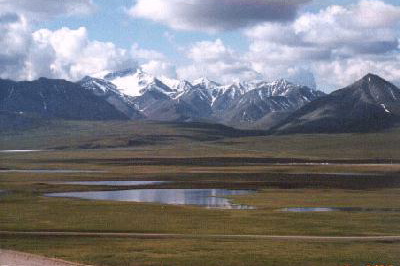
Located in the extreme northerly regions of North America, the Brooks Range is an 1100 km (683 mile) mountain range that stretches across parts of Alaska and Canada. Largely uninhabited, save for a few inuit villages, these mountains are remote, rugged and demanding in the best of times. During the winter, the extreme cold and large amounts of snow, makes them an incredibly inhospitable place that few people ever experience. Earlier this week, a pair of intrepid explorers set out on an epic journey to attempt to traverse the region during the coldest, most demanding time of year.

On Tuesday, January 7, John Cantor and Evan Howard began what will eventually be a two-month long expedition that will cover approximately 1700 km (1056 miles) of total distance. Traveling on dogsleds and skis, while pulling sleds filled with supplies and gear behind them, they will attempt to make the first winter traverse of the Brooks Range. They set off from the village of Kotzebue and hope to eventually wrap things up in Kaktovik, provided the weather cooperates with them over the next eight weeks.

John and Evan are posting updates to their Facebook page and two days in, they are already finding the expedition to be tough going. So far, strong headwinds have made it difficult to make much progress, and John has indicated that it has been even tougher than they had anticipated. Considering where they are at, I would expect they'll face similar conditions in the days ahead, but hopefully they'll get their legs under them after a week or so on the trail. Much like traveling in the polar regions, I'm sure it'll take some time to acclimate to the conditions.

Last year, the two men went on a training expedition to the Brooks Range to get an understanding of what they'd be dealing with. The video below is footage from that exploratory excursion. It looks like a beautiful place but also one that will be testing them at every step of the way.

Thanks to reader Jack McClure for sharing this great adventure.


6/08/2017

Video: The Battle for Birthday Mountain - Giving Finland it's Highest Peak

Finland is approaching the 100th anniversary of its independence, and neighboring Norway has come up with an idea for a unique birthday present – a mountain. Yep, that's right. Norway wants to give Finland Halti Peak – a 1365 meter (4478 ft) mountain that would become the Fins' highest point. But how exactly does one country give another a mountain? In this amazing short film, we'll explore that very idea. This is an amazing story to say the least.

Battle for Birthday Mountain from MEL Films on Vimeo.

6/07/2017

Video: Ottsjö, Sweden by Air and in Timelapse

We'll round out a busy week here at The Adventure Blog with a beautiful and tranquil video that was shot by drone over the Ottsjö region in Sweden. The landscapes captured there are nothing short of spectacular, and of course the Northern Lights are on full display at this time of year. This is three minutes of pure bliss, with some amazing footage of a stunning place. Sit back and enjoy as you head into the weekend.

OTTSJÖ - BY AIR AND TIMELAPSE (4K) from Marcus Möller on Vimeo.

6/06/2017

Video: Meet the World's First All-Female Anti-Poaching Team

The Balule Nature Reserve in South Africa a team of women called the Black Mambas has been training for the past three years to combat illegal poaching in the region. They are the first all-female squad to take on such a mission, with their main goal being to protect the wild elephants that roam the area. In this video, brought to us by National Geographic, we join the Mambas as they go out on patrol, searching for the hunters who are looking to kill the animals in the preserve where they work. The short film is an inspiring look at this team of dedicated and tough women who are looking to make a difference with Africa's wildlife. It is really an interesting story.

6/05/2017

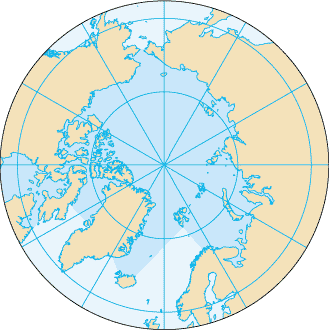
North Pole 2016: Race Against Time Team Faces Big Challenges

After overcoming a series of challenges just to get to the starting line, the Race Against Time team is now out on the Arctic ice and making their way towards the North Pole. But as expected, this journey to the top of the world hasn't been an easy one so far as a number of natural obstacles force the team to earn every mile.

Last week, the team of Mark Wood, Paul Vicary, and Mark Langridge were finally dropped off on the ice after facing unprecedented delays to the start of their expedition due to issues with the runway at the Barneo Ice Camp that serves as the gateway to the Arctic each season from the Russian side of the ice. That caused the trio of explorers to rethink their journey for a second time, switching from the original plan of a full-distance ski journey to the North Pole to an expedition that actually began at 90ºN and would head south to Ward Hunt Island in Canada, before finally settling in on their current route, a two-degree ski expedition back to the Pole.

The squad has now been out on the ice for five days, and they've discovered that the Arctic is everything they had expected and more. In the first few days they faced rubble fields of disrupted ice, with many blocks the size of cars and even a few larger than a house. As they inched north however, other obstacles have begun to appear. For instance, yesterday the team only gained 4 nautical miles of distance thanks to a large lead of open water that they had to cross. The only way to do so is to don drysuits, enter the water and swim across while pulling their gear in inflatable rafts.

As if that wasn't enough, the men have also come across a set of footprints left behind by a polar bear. That means that one of these big carnivores is in the area, and they have been known to stalk polar explorers that pass through their domain. So far, no sight of the creature but they will remain wary and vigilant on the trail.

The hope is that the team can reach the North Pole sometime next week. When they originally set out, they thought it would take 12-15 days, and they are still on track to reach their goal. What else they'll find on the way north remains to be seen.

Indian Expedition to Re-Measure Everest this Spring

The Indian government has announced plans to send an expedition to Mt. Everest in Nepal this spring to re-measure the height of the mountain. A team of surveyors will head to the Himalaya in two months time, where they will use high tech equipment – including satellite data, GPS devices, and other observational gear – to detect if the 2015 earthquake had a measurable impact on the peak.

The last time an Indian survey team visited Everest with the intention of measuring the height of the mountain was back in 1955. That's when the current most accepted height of 8848 meters (29,029 ft) was recorded. A more recent survey by the National Geographic Society took place in 2003, which recorded the height at 8849 meters (29,035 ft), although the Nepali government never formally adopted that data to reflect the height of the mountain. This new survey should help to determine which number is more accurate.

But beyond that, the plan is to see what the impact of the April 25, 2015 earthquake had on the height of Everest. It is believed that the mountain lost an inch or more of altitude due to the massive quake, which caused widespread devastation throughout the country, killing more than 9000 people and injuring thousands more.

In terms of its impact on the climb, an inch difference in height is imperceptible to anyone heading to the summit, but in geological terms it is a large increment. If the mountain did indeed move by that much in such a short time, it is an indication of just how powerful the earthquake truly was.

Meanwhile, the Nepalese government says that they have not approved an Indian survey team to operate in and around Everest this year, and that they are planning to conduct their own research on the current height of the mountain. Unsurprisingly, researchers from within the country say that while Everest may have shrunk during the quake, there are some that believe it may have gotten taller too.

No matter which team conducts the survey is expected to take about a month to collect all of the data and another two weeks to examine it. They'll observe the mountain both from the ground and the air, and will likely want to send someone to the summit carrying a GPS device as well. Either way, by summer the new measurement should be complete, and we should have an idea of how tall Everest truly is.

6/02/2017

All-Female Rowing Team Completes Pacific Crossing

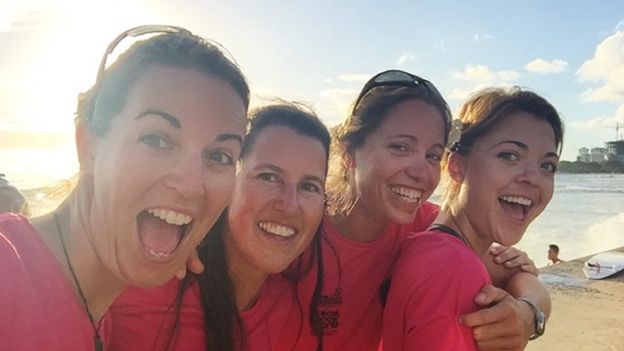
On Monday of this week, a team of women rowers completed an epic crossing of the Pacific Ocean, arriving in Cairns, Australia after spending more than nine months at sea. The Coxless Crew, as they are known, set out from San Francisco back in April of 2015, and although they took longer than expected to complete their journey, they did manage to set a couple of records along the way.

The team's boat – named Doris – was designed for a four-person crew, and three of the members of the team stayed aboard for the entire crossing, while three others rotated in and out three different legs. The permanent members of the crew included Laura Penhaul, Natalia Cohen and Emma Mitchell, with Isabel Burnham, Kizanne van Vuuren, and Meg Dyos, each taking a turn at the oars. Burnham rowed from San Francisco to Hawaii before giving way to van Vuuren, who was part of the team from Hawaii to Samoa. Dyos took over from there, and was with the Coxless Crew when they arrived in Australia this week.

As is typical with a four-person crew, two members were at the oars at all times. In this case, they would row in two-hour shifts, and sleep 90 minutes at a time. In this way, they were able to cover the 14,800 km (9200 mile) journey, although it did take about three months longer than they had anticipated.

I first wrote about the Coxless Crew back in 2012 when they were planning to depart the following year. Obviously they hit a few road bumps along the way, delaying their start and changing their plans a bit. But they stuck with their goals and pushed forward with the challenge they had set for themselves despite adversity. Pernahul in particular was keen to take on the Pacific, and she seems to be the only member of the original crew who made the crossing.

By arriving in Australia on Monday – 257 days after the set out – the ladies became the first all female crew to cross the Pacific, and the first four-person team to do so. Along the way they faced massive storms, crushing waves, encounters with whales, and extreme heat in the South Pacific. Their adventure wasn't just for the challenge however, as they also raised funds for the Walking with the Wounded and Breast Cancer Care charities.

Congratulations to the six ladies who worked together on this fantastic achievement.