Showing posts with label National Geographic. Show all posts
Showing posts with label National Geographic. Show all posts
12/23/2017
Video: Meet the Hippos of Colombia
In 1980, drug lord Pablo Escobar brought several hippos from Africa to his compound in Colombia. It turns out that the environment there was very similar to their natural habitat, and the creatures adapted quite well to their new home. But later, when Escobar was finally brought down and taken in for justice, the animals were left to their own devices. Now, they are cared for by a local conservation organization, and they continue to thrive in the South American jungle. This video tells their story.

11/04/2017
Nat Geo Shares 15 Unexpected Places to Go Skiing

Some of the suggestions include Malam Jabba in Pakistan, which is the only ski resort in a country that is filled with impressive mountains, and Masikryong, North Korea, which falls behind the veil of secrecy and propaganda that permeates that nation. And if neither of those are unusual enough destinations for you, give Riksgränsen, Sweden a shot. It is home to the northern-most ski area in the world, a full 200 km (125 miles) above the Arctic Circle.
Whether you enjoy skiing remote backcountry or unique resorts, this list has something for everyone. Ranging from Lebanon to Afghanistan, to Alabama, you'll find a ski area to fit your needs, including some in the most unexpected places.
Check out the full list here.
10/27/2017
Video: How Would You Describe America's National Parks?
In this video, photographer and filmmaker Corey Arnold traveled to America's national parks where he challenged the next generation of travelers and explorers to describe the landscape there. Some of their responses were surprising, others were revealing, and some were downright insightful. The result, is this short clip which not only includes lovely shots of the landscapes they saw, but these individuals sharing their thoughts on the natural spaces around them.
10/25/2017
Video: A Two-Minute Journey Through Beautiful South Australia
If you're looking for an escape to some place exotic, but just don't have the time to get away at the moment, perhaps this video from National Geographic can help. It takes us to South Australia where we get a glimpse of some of the stunning landscapes, amazing wildlife, and wonderful people that can be found there. It is a two-minute journey through one of my favorite places.
And when you're ready to go see what Australia has to offer for yourself, check out the tours of that country that Mountain Travel Sobek has to offer.
And when you're ready to go see what Australia has to offer for yourself, check out the tours of that country that Mountain Travel Sobek has to offer.
10/02/2017
Sherpani Named Nat Geo 2016 People's Choice Adventurer of the Year

This year's top vote getter in this category was Pasang Lhamu Sherpa Akita, a female Sherpa – aka Sherpani – who is redefining what we know about the women of Nepal. Her list of mountaineering accomplishments is impressive to say the least, with successful summits on Everest, K2, Lobuche Peak, and a host of others. She is also one of the first students to attend the Khumbu Climbing Center, and became Nepal's first female climbing instructor as well. But what really stands out is her tireless efforts to help rebuild her home country in the wake of last year's devastating earthquake that left more than 9000 people dead, and destroyed whole villages.
Through her efforts, both climbing and humanitarian, Pasang Lhamu has become an important role model to the women of Nepal. She shows them what is possible, even in a country where women are still struggling to find their own voice and identity. Because of this, she has become a major personality in her country, where there were organized campaigns to vote early and often to get the People's Choice award for her. And it is much deserved!
Congratulations to Pasang Lhamu on receiving this honor, and to all of the 2016 National Geographic Adventurers of the Year.
9/17/2017
Video: Jimmy Chin Talks Risk and Responsibility in Climbing
Last week I posted a video from the Nat Geo Live series that feature photographer/climber Jimmy Chin and filmmaker Elizabeth "Chai" Vasarhelyi talking about the making of the film Meru. In that clip they talked about the particular challenges that Jimmy, along with teammates Conrad Anker and Renan Ozturk, faced in capturing footage for the documentary. Today, we have another video from that same session, this time with Jimmy discussing the risks and responsibilities that mountaineers and climbers face when embarking on an expedition. As he says, it is a balance between pushing your own personal ambitions, while maintaining the safety of the entire team. It is an interesting look at where that line falls, from a man who has walked it on more than a few occasions.
8/01/2017
Nat. Geo Offers 10 New Trails to Explore in 2016

Amongst the new trails that make the list is the Alpe Adria Trail, which opened in 2011 and stretches for 260 km (162 miles) across Austria, Slovenia, and Italy. Broken into 43 individual stages of roughly 19 km (12 miles), the trail has been designed to make logistics a non-factor. Most of the stages take just one day to hike, although they link into one another in such a way that through hikers will have no problem pushing forward. Each stage also ends in a local village where hikers will find places to stay and resupply as well.
Other new hikes on the list include The Bigfoot Trail in California, which stretches for 579 km (360 miles) through six wilderness areas and the Redwood National Park. It's joined by Scotland's John Muir Way, which opened in 2014, and the Sir Samuel and Lady Florence Baker Historical Trail in Africa, which runs for 805 km (500 miles) along a route that crosses through Sudan, South Sudan, and Uganda in Africa.
I'll leave the remainder of the trails on the list up to you to discover, but it is safe to say there are some great hikes on the list that I haven't even mentioned yet that will be of interest to many of you. Because most of these trails have only opened in the past few years, they remain relatively unknown, which means they'll also be most empty too. Go before the crowds and enjoy these wilderness areas as they are meant to be – pristine, tranquil, and mostly unexplored.
View the whole list here.
7/18/2017
10 Compact Cameras Specifically Built for Travelers

National Geographic has compiled a list of the top ten compact cameras built for travelers, and if you're in the market for a new model – or simply want to see what's new – the article is definitely worth a look. You'll find everything from durable point and shoot models to full-fledged DSLRs, with pretty much everything in between, including the mirrorless options that are so popular today. What's more, most of the major brands are represented on the list, so no matter if you're a fan of Nikon, Olympus, Panasonic, Sony, or something else, chances are you'll find something to your liking while still being able to maintain your brand loyalty.
So which cameras earned a spot on the Nat Geo list? The Fujifilm X-T2 was a particular favorite, as was the Panasonic Lumix DMC-GX8. The Olympus TG-4 took top honors for ruggedized point and shoots, while Sony's A6500 earned praise for being for its all around performance as well. Each of the cameras on the list is accompanied with an explanation of what makes it especially good for travel, as well as technical information on its sensor size and other features. There are also handy "Pro Tips" to help users get the most out of that particular model as well.
Over the years, I've been able to pair down my travel gear in some impressive ways, cutting a lot of weight and learning to leave nonessential items at home. But, a good camera remains a must and by the time you add a body and a lens or two, the weight adds up fast. I'd love to find a camera that helps me shed some weight, without compromising performance and image quality along the way. These new options are a step in the right direction, with 4K video, full-frame sensors, and fast performance. One of these days it's going to be time to get serious and invest in a new unit, and this article will certainly be helpful when that time comes.
Nat Geo Gives Us 20 National Park Leaders Under the Age of 30

The celebration will continue throughout the rest of the year, but it is also a time to begin looking forward to the next century. There is still a lot of work to be done to ensure that the national parks will be around for future generations to enjoy as well. To that end, National Geographic has selected 20 scientists, filmmakers, activists, and educators who have dedicated their lives to protecting the parks, both in the U.S. and abroad. Oh yeah, and each of these men and women happen to be under the age of 30 as well.
Amongst those making the list are Ben Masters, a filmmaker and horseman who is working to protect wild mustangs. He's joined by Cassi Knight, an NPS scientist who is searching for dinosaur remains in Denali National Park, and Elizabeth and Cole Donelson who spent the past 12 months visiting all 59 U.S. national parks. Others include Jen Guyton, a scientists helping to protect animals from poachers in Mozambique, and cartographers Ross Donahue and Marty Schnure, who are mapping remote areas of Patagonia.
As you can see, this is a diverse and interesting group of individuals, each of which is playing a vital role to help promote national parks both at home in the U.S. and in other countries around the world. The concept of creating public lands that are set aside for future generations to enjoy too has been called "America's Best Idea," and these young men and women are helping to spread that idea further. Hopefully in another hundred years we'll be continuing to celebrate the National Park Service, and the effort that these individuals have made along the way.
6/23/2017
More Photos Emerge of Uncontacted Tribe in Brazil

National Geographic has posted an exclusive gallery of photos that were shot just last week that give us a rare and interesting look into the way of life that these tribesmen have followed for hundreds of years. The images were taken by a low-flying helicopter, which allowed photographer Ricardo Stuckert to get some unique shots from a safe distance. The photos were taken near Brazil's border with Peru, and offer insights into how they paint their bodies, cut their hair, and more. It is the first time that we've had such a close look at these people.
The image gallery is indeed a fascinating one for anyone who shares my interest in the lives of these uncontacted tribes. I've said it before, and I'll say it again, I think that it is amazing that these people can still exist and continue their way of life in the 21st century. Hopefully they'll be able to continue to do so for as long as they like, and efforts are being made to allow them to do just that. But, as commercial interests from petroleum, mining, and logging companies encroach on their lands, that is becoming more and more of a challenge.
Check out all of these amazing photos by clicking here.
6/13/2017
Video: The First Men to Climb Everest
Yesterday marked the 63rd anniversary of the first summit of Everest by Edmund Hillary and Tenzing Norgay. To celebrate, National Geographic has put together this fantastic short video that introduces us to these two men, and their very humble beginnings. It seems fitting to salute the two climbers in whose footsteps everyone else follows, and this short clip is a good tribute to their legacy.
6/06/2017
Video: Meet the World's First All-Female Anti-Poaching Team
The Balule Nature Reserve in South Africa a team of women called the Black Mambas has been training for the past three years to combat illegal poaching in the region. They are the first all-female squad to take on such a mission, with their main goal being to protect the wild elephants that roam the area. In this video, brought to us by National Geographic, we join the Mambas as they go out on patrol, searching for the hunters who are looking to kill the animals in the preserve where they work. The short film is an inspiring look at this team of dedicated and tough women who are looking to make a difference with Africa's wildlife. It is really an interesting story.
4/09/2017
Video: A Man Amongst Wolves in Yellowstone
We have another beautiful video today courtesy of National Geographic. This time we travel to Yellowstone National Park with photographer Ronan Donovan, who has gone to that place to capture images of the wolf population that lives there. If you know anything about the recent history of Yellowstone, you know that the reintroduction of the wolves back in the mid-90's was highly controversial, but has also brought a balance to the ecosystem there, making it much more healthy all around. Of course, this being Yellowstone, Ronan doesn't just capture images of the wolves, as some of the park's other amazing inhabitants put in an appearance as well. A beautiful video of one of my favorite places on the planet.
3/12/2017
Nat Geo Tells Us Where to Backpack in 2016
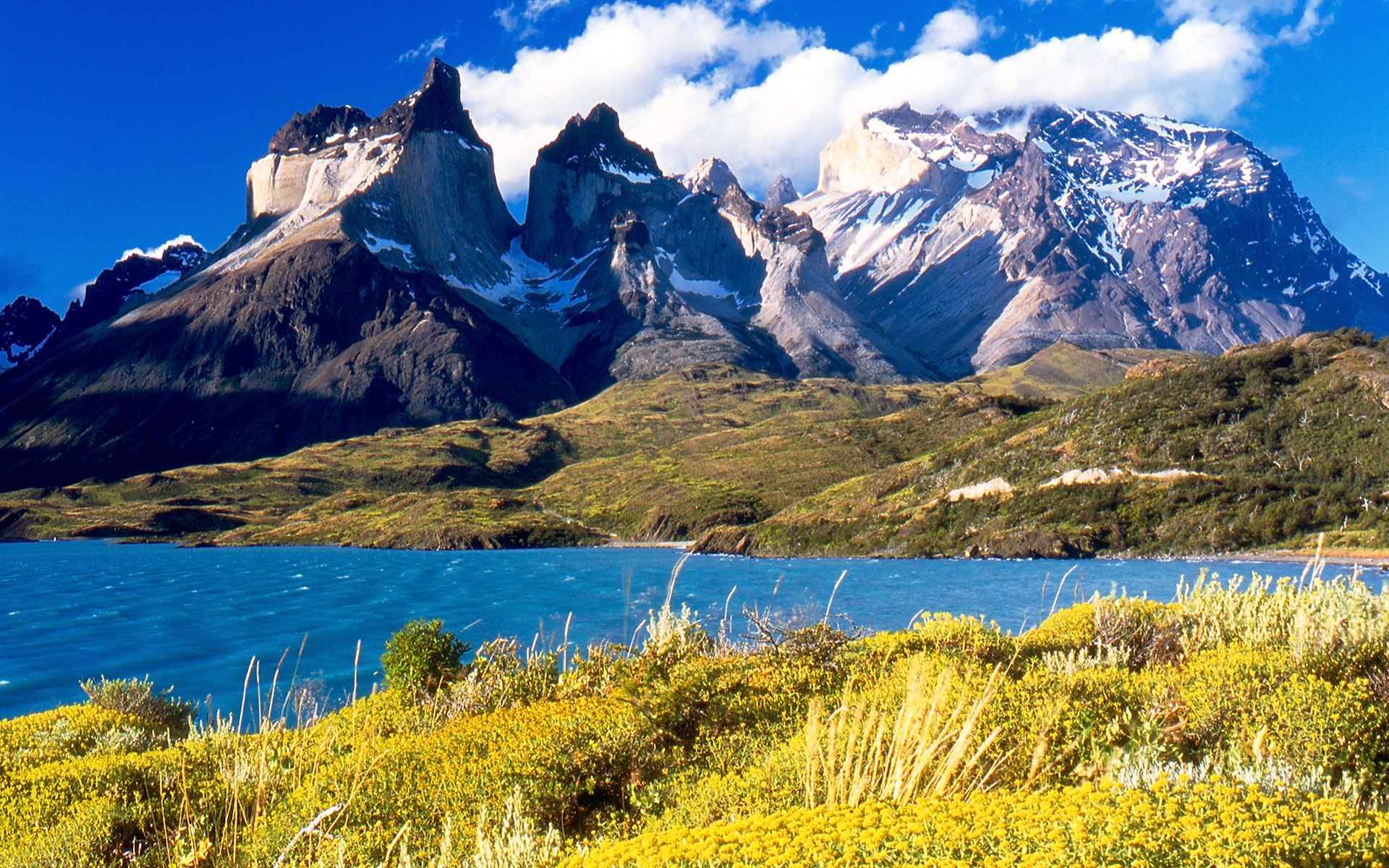
The complete list contains ten total designations, ranging from Argentina and Patagonia in South America, to Zimbabwe in Africa, to Vietnam in Asia, with plenty of other options inbetween. In fact, every continent is represented on the list with the exception of Antarctica, which means just about no matter where you go, there will be some exceptional hiking spots nearby.
Beyond just creating a list of excellent backpacking places, Nat Geo also offers some great travel advice for those visiting these places. For instance, they'll tell you how to get there, how to travel around once you arrive, and just where to stay too. The various write-ups for each destination also include tips on what to eat, when to go, and what activities you absolutely should not miss out on.
All in all, this is a fairly comprehensive travel piece with some good suggestions on where to go backpacking this year. While the individual articles do a good job of setting you on the path to going to that particular place, they also leave plenty of room for you to explore and plan your own excursions and activities too. Think of it as helpful advice from those who have been there before, with just enough information to get you intrigued and started with your planning.
Find out what other destinations made the list by reading the entire article here.
2/24/2017
Video: Thru-Hiking the Grand Canyon - A 650-Mile Challenge (Part 1)
Throughout 2015 and 2016, photographer Pete McBride and journalist Kevin Fedarko set off to make a sectional thru-hike of the Grand Canyon in an effort to document the threats that that National Park now faces. Along the way, they faced more challenges than they had anticipated, as the journey was more difficult and dangerous than they had ever impinged. This video takes us along with them into the canyon, to experience much of what they saw while they were there. It is Part 1 of a 3 part series, which promises to be an amazing adventure with some important revelations to be had along the way.
1/21/2017
Just in Time for Valentine's Day Nat Geo Lists the 17 Most Romantic Destinations in the World

As you can imagine, the places that made the cut for this list are all pretty spectacular for a number of reasons. Most offer amazing views, some have a fantastic mix of history and culture, and pretty much all of them have an ambience about the setting that makes them special in very unique ways. You'll recognize some of the usual suspects, but others are a bit more off the beaten path and lesser known, which gives them an allure all their own.
So which destinations earned a spot on this list? As usual, I won't spoil the fun of finding out for yourself, but some of the highlights include the French Riviera, Bruges, Belgium, and Hamilton Island in Australia. Of course, the images that accompany the description of the places are all outstanding and will only increase your desire to visit these places even more. And as usual with any far-flung destination, there should be plenty of adventure to be had along the way too.
The 17 romantic destinations were paired down from a much longer list that is part of National Geographic book The World's Most Romantic Destinations, which is filled with even more suggestions of where to go and what to see with your Valentine. Speaking for myself, quite frankly I can't think of anyone I'd rather explore the world with.
View the entire list here.
1/09/2017
Video: For the Love of the Climb
In this video, mountaineers Cory Richards and Mark Jenkins share their passion for climbing in the big mountains and what drives them to take sometimes extreme risks in the high places of our planet. It is an insightful look at why alpinists do the things they do, offering some explanation of what the mountains mean to them. For those who don't understand the mountaineering culture, this might provide a bit of an explanation.
1/05/2017
Nat Geo Invites You To Hangout With The Adventurers Of The Year

The virtual meeting will take place from 1-2 PM Eastern Standard Time next Wednesday and will include the following adventurers: ultra-runner Kilian Jornet, surfer Greg Long, explorer Sarah Marquis, endurance swimmer Diana Nyad and snowboarder Kevin Pearce. The event will also be hosted by Fitz Cahall, who is the mountaineer and filmmaker who has been instrumental in telling the stories of this year's crop of winners.
Questions for the group can be submitted via Twitter, Google+, Facebook, and YouTube using the hashtag #AdvOfYearChat. Due to time constraints, those questions will be reviewed ahead of time and submitted to the adventurers during the Hangout.
And don't forget you can still cast your votes for the People's Choice Adventurer of the Year. Voting remains open until January 31, with the winner being announced in February.
This should be a fun way to use modern technology to learn more about these amazing athletes and explorers. I know that if I have that hour free, I am going to try to be there for the event.
12/25/2016
Excavation of Lost City Begins in Honduras

But exhausted, low on supplies, and in failing health, they were forced to retreat. The plan was to return with more supplies and better equipment to begin excavation of the site. They team of researchers kept the location of the ruins hidden, and the Honduran government dispatched a military detail to guard it day and night to ensure that it remained undisturbed until a proper archaeological dig could begin.
Last week the team of explorers who discovered the hidden city returned at long last, and the excavation is now underway. According to National Geographic, Honduran President Juan Orlando Hernández was on hand this past Tuesday to remove the first stone sculpture from its ancient resting place, even as other archaeologists uncovered other artifacts all around him.
According to Nat Geo, the ancient relic that Hernández uncovered is an impressive piece. It is described as a jar that has been carved out of basalt, and painted ornamentally. The sides of the container show two animals, one of which is believed to be a vulture that is commonly seen in the area. The artifact is one of 52 that were originally found at the foot of an earthen pyramid that is just one small part of a larger city that mostly remains covered by the dense jungle.
The lost city, which is in the Valley of the Jaguars in Honduras, is believed to be between 500 and 800 years old, but who built it remains a mystery. The fact that it is in such a remote area, far from almost any other signs of human habitation, is also interesting. The archeologists hope to learn more about the civilization that lived there as they uncover the artifacts that they left behind.
Using the same satellite imagery that was used to locate this site, the research team believes it has found a second, even larger city nearby. No one has visited that location yet however, although a preliminary scouting mission is expected to take place next week. That place could hold even more clues about this mysterious civilization that was living in this remote region of Honduras.
These stories continue to fascinate me. I personally can't wait to hear more about what these archeologists find in the jungle. I also can't help but wonder what else is out there, just waiting for us to find it. Are there sites as impressive as Machu Picchu or Chichen Itza that have yet to be identified? I'd like to think there are, and that they hold important clues about the people that inhabited the Americas hundreds of years ago.
This story is also a good reminder of why exploration is still important, even in the 21st century.
9/23/2016
Video: The Wildlife of Chernobyl
It has been 30 years since the nuclear disaster at Chernobyl in the Ukraine. Since than, the city, and the surrounding area, has been mostly deserted of people, but wildlife has returned to the area and is thriving. In this video from National Geographic, we get a glimpse of those creatures that include wolves, foxes, dogs, and other animals. It is fascinating to see them wandering through a place where humans continue to shun. As is usual, nature finds a way.
Subscribe to:
Posts (Atom)