12/23/2017

What's it Like to Climb Everest Without Oxygen?

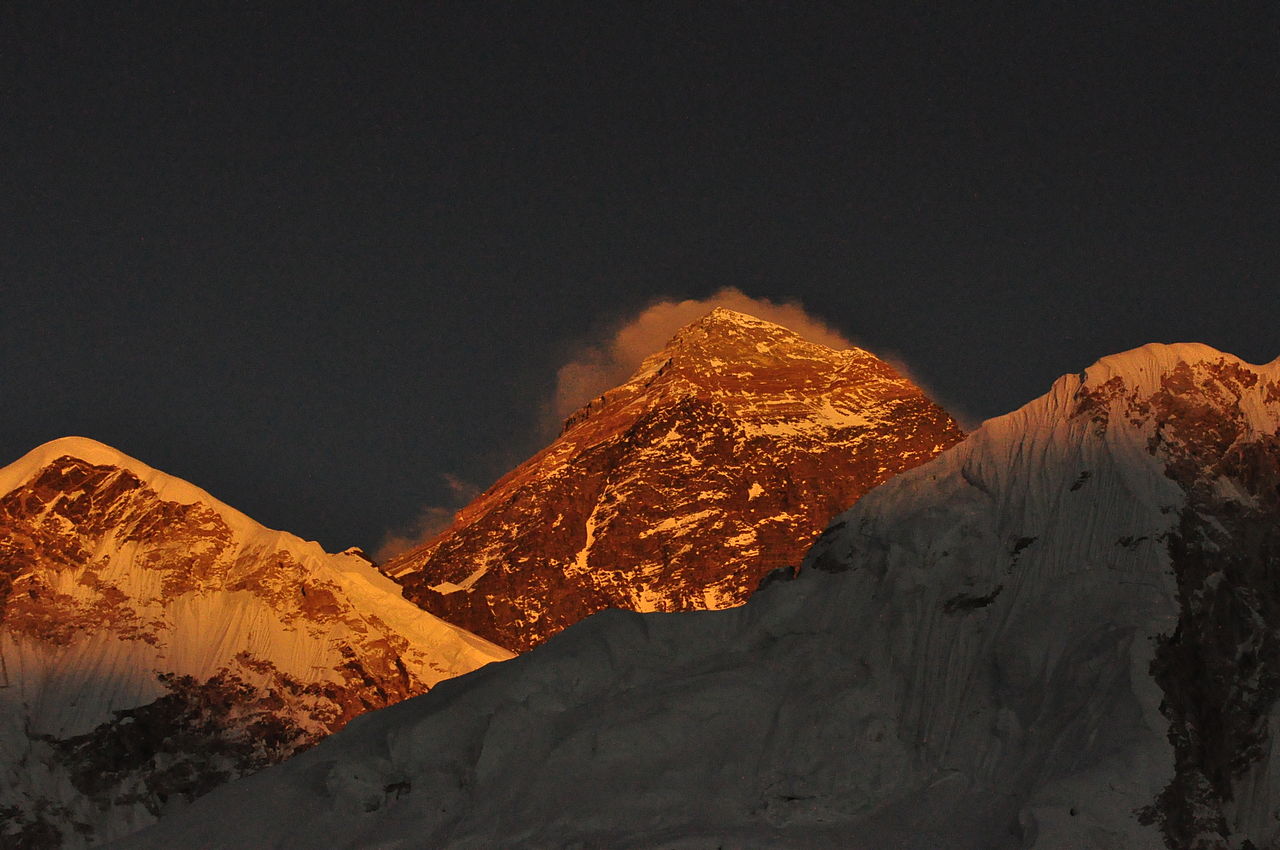
For most climber hoping to summit the world's highest peak, donning a tank of oxygen is simply the only way to get to the top. Without supplemental oxygen, most of the more than 4000 people who have topped out on Everest wouldn't have made it, including Edmund Hillary and Tenzing Norgay, who first climbed the mountain back in 1953. But it would be two other legendary climbers who would follow in their footsteps 25 years later who would show the mountaineering community that there was another way to scale the Big Hill, and n the process they shocked the world. 

Back in 1978 most people thought that the idea of climbing Everest without oxygen was ludicrous. In fact, there may have just been two men on the entire planet that thought it was possible. They were Reinhold Messner and Peter Habeler, who traveled to the North Side of the mountain that year to attempt the impossible. They faced a myriad of challenges along the way, including food poisoning, and winds that reached 125 mph (201 km/h), on top of the usual difficulties. And all of that came before their historic summit push without using bottled O's. 

National Geographic Adventure has shared a great story about that historic ascent, including a video of Messner recalling what it was like for them on that climb. Today, a summit without supplemental oxygen remains somewhat rare, but back in 1978 Messner and Habeler might as well have been going to the moon. But their success changed the face of modern mountaineering, to the point that there are some who now believe using oxygen on Everest takes away from the purity of the climb, and is almost a form of cheating. 

Read the story in its entirety here, and not only learn about Messner and Habeler's climb, but two other alpinists who are hoping to repeat the feat this year. 

12/20/2017

Himalaya Spring 2016: Slovak Climbers Stranded on Everest, Summit Push Begins

The time is now on Everest, where a number of teams are now on the move with the hopes of making a final push to the summit later this week. Meanwhile, we get word today that a pair of climbers are stranded on the mountain following an avalanche, with rescue operations underway.

According to The Himalayan Times, Slovak climbers Vladimír Štrba and Zoltán Pál were attempting to go up the South-West Face of Everest above Camp 2 when an avalanche hit, injuring one of the men. Which of the two is hurt, and the accident of those injuries is unknown, but it s believed that the other climber is healthy and fine.

Unfortunately, they are unable to descend under their own power, so a group of four Sherpas were sent up to try to help. They reached C2, but have been unable to go up the South-West route due to unstable conditions on the mountain. Rescue helicopters have since been brought in to try to lend a hand, but they have been unable to locate them so far. Poor weather hampered further attempts and for now the rescue effort has stalled until morning.

In other Everest news, the rope fixing teams have now installed the lines up to the South Col and expect to reach the summit tomorrow. Once they do, the first of the guided teams will begin their final push to the top, which means we could see the first summits of the season as early as Thursday or Friday of this week. That is a bit ahead of schedule, and considering the weather forecasts indicate good weather well into next week, we could see summits coming at a slow, steady pace. That will be good for the safety of the climbers, and will hopefully prevent traffic jams on the Hillary Step or higher.


On the North Side of the mountain in Tibet, the story is a similar one. Ropes have been fixed nearly all the way to the summit, with work expected to wrap up there in the next day or two. After that, the teams on that side of the mountain will launch their summit bids as well, and since there are fewer teams climbing from Tibet, the fear of large crowds is greatly reduced. Those squads are acclimated and ready to go, and have already started getting themselves into position.

Finally, ExWeb is reporting that a summit bid is well underway on Manaslu as well, with the team of Peter Hámor and Horia Colibasanu head up to the summit tonight. The weather is reportedly favorable, and the duo are climbing without oxygen or Sherpa support as they make their final bid. If successful, it will be Hámor's 13th 8000-meter peak.

Good luck to everyone as they set off to their respective summits.

Update: Success on Manaslu confirmed on Manaslu. ExWeb is also now reporting that Peter and Horia have now topped out along the standard route, and are now descending along the Japanese route. Hopefully they'll both get back down safely after what was reportedly a very tough ascent.

12/19/2017

Video: Meet The Snow Guardian

Meet billy barr (yes, that's how he spells it!), a man who has lived alone in a cabin near Gothic, Colorado for 40 years. Over that time, he has been keeping meticulous records of the weather, how much snow has fallen, what the temperature on any given day is, and so on. Those records are now proving invaluable to climate scientists, who view billy as an invaluable resource. This is his story, as told by National Geographic.

12/14/2017

Himalaya Spring 2016: Alan Arnette Posts Pre-Season Preview

Even though the calendar says that it is only February, the 2016 spring climbing season in the Himalaya really isn't all that far off. In less than two months, climbers from all over the world will be finalizing their travel plans, packing their gear, and saying goodbye to loved ones as they head off to Nepal and Tibet to begin what is sure to be another very interesting year in the tallest mountains on the planet.

By most accounts, it is shaping up to be a quieter year on Everest, where tragedies the past two seasons have put an abrupt end to climbing operations. Several of the leading outfitters that operate on the mountain say that the number of clients they'll be guiding this year are down, as many are taking a wait and see attitude. That said however, I'm sure Everest will still be a very lively place to be this spring, with lots of great stories to follow.

In preparation for the start of the season, Alan Arnette has already kicked off his now legendary coverage of the proceedings on the mountain. Yesterday, Alan posted his preview of the 2016 spring season ahead, which fittingly enough begins with a recap of some of the major stories from the past few years – including a much publicized brawl between Sherpas and prominent climbers, the deaths of 19 Sherpas as a result of the collapse of a serac in 2014, and the devastating aftermath of the deadly earthquake that struck last year.

Each of those events has left its mark on the climbing community on Everest in the past few years, causing some to sour on attempting to summit the tallest mountain on the planet. But many of us believe that these are just temporary setbacks that will be overcome as we move forward.

In his article, Alan takes a look ahead at the 2016 season, which he too expects to have low numbers for several reasons. The lingering impact of the earthquake – at least in terms of public perceptions – is a major one of course, but also because Nepal is in the middle of a significant fuel crisis, with a shortage of gas making its way into the country thanks to a blockade from India. On top of that, expedition companies are being forced to raise their prices too, which of course has an impact on how many people sign up for an expedition as well.

If you're someone who keeps up with the Everest scene each year, you'll definitely want to give this a look. It provides some great insights into what is happening in Nepal presently, and how the currently political culture there is shaping the climbing season ahead. As always, it shouldn't have any shortage of intrigue and surprises.

12/12/2017

Antarctica 2016: Interactive Map Explains Ski Routes to the South Pole

This week intrepid men and women from all over the world are putting the finishing touches on their preparation and planning for a slew of upcoming ski expeditions to the South Pole. In a matter of days they'll be jetting off to Punta Arenas, Chile or Cape Town, South Africa where they'll then catch a flight to Antarctica to begin a journey that will take them weeks to complete. Most will begin at Hercules Inlet and will cover approximately 1130 km (702 miles) on their way to 90ºS. But others will take alternate routes that offer different levels of difficult and unique paths to that same goal. Now, on the eve of the start of the new Antarctic season, we have an interactive map that shows all of the various routes that are used to ski across the frozen continent.

The map is hosted at ExplorersHouse.com and includes 9 different paths that explorers use when traveling to the the South Pole as well as 1 path to reach the Pole of Inaccessibility. Clicking on any of the routes will provide information about its length, who first pioneered it, and the year in which it was traveled. For instance, both Amundsen and Scott Routes are marked on the map, which were first opened back in 1911-1912, when the two legendary explorers were battling one another to be the first to reach the South Pole.

Explorer House included some text with the map that provides context on what exactly a "valid" expedition truly means. In this case, that is defined as starting anywhere along the Antarctic coast and skiing all the way to the South Pole. This rules out a "last degree" journey of course, which  is exactly what it sounds like – a short ski expedition from 89ºS to 90ºS. Those "tourist trips" are typically only about 100 km (62 miles) in length, while a full expedition covers more than 1000 km (620 miles).

As we head into the start of a new Antarctic season, you'll find that the vast majority of the skiers are using the Hercules Inlet Route, which has become the standard for these types of expeditions. They'll fly out of Punta Arenas and land at the ice camp that is built and maintained by ALE at Union Glacier. From there, they'll catch another short flight to ferry them out to their starting point. If they are going solo and unsupported, they'll all be dropped off at unique locations to begin the journey, as the rules for adventure state that they can't have any contact with another individual along the way in order to maintain that status.

Later this week – weather permitting – the first teams will begin their march to the Pole. Once they're underway, we'll provide regular updates on their progress. There are a number of goods stories to follow, so it should be an interesting year in the Antarctic.

12/08/2017

Winter Climbs 2017: Carlos Rubio Leaves Everest, Elisabeth Revol Departs Manaslu

The list of winter mountaineering expeditions continues to get smaller and smaller this year, as one team has completely abandoned its attempt to summit a Himalayan giant, while another loses one of its climbers due to illness.

We'll begin with an update from Elisabeth Revol, who had been hoping to summit Manaslu this winter. The last we heard from Revol and her teammate Ludovic Giambiasi they had arrived in Base Camp on that mountain, where heavy snow had been falling for the better part of the month of January. It turns out, that snow didn't let up much, and high winds only made the experience worse. According to The Himalayan Times, the duo were able to climb as high as 7300 meters (23,950 ft) as part of their acclimatization efforts, but the weather simply didn't cooperate enough to allow them to continue past that point. Worse yet, the long term forecasts indicate the rest of the winter could very well maintain the current weather pattern, making their attempts fruitless. Revol and Giambiasi have already depart the mountain and are on their way home.

Meanwhile, over on Everest, the team of Alex Txikon and Carlos Rubio have had their own brand of drama. Yesterday, Rubio had to be evacuated from Everest Base Camp due to a severe lung infection. The young ski-mountaineer shared a video update from a hospital in Kathmandu where he assures everyone following the expedition that all is well and that the issue isn't serious. Still, it was bad enough that he did have to seek treatment and abandon his attempt to climb and ski Everest this winter.

While the news of Rubio's departure is a sad one for the team, Txikon has continued climbing at a regular and steady pace. On Sunday, he reached Camp 3 at 7400 meters (24,278 ft) on the mountain, and is acclimatizing nicely so far. Unlike on Manaslu, Everest has been relatively calm thus far, with manageable winds and snowfalls. Txikon is hoping to summit the mountain without the use of supplemental oxygen and so far things are progressing about as well as could be expected. 

With Revol's withdraw from Manaslu and Lonnie Dupre's departure from Mt. Hunter in Alaska, Txikon's Everest expedition is the last major winter climb that we're following this season. Hopefully it will continue to unfold in a safe manner, otherwise we'll be waiting for the spring season for any significant news from the Himalaya. 

Good luck to Alex and the remainder of his support team as the continue to press forward on the Big Hill. 

12/05/2017

Some Final Thoughts on the 2017 Winter XGames

If you've ready my blog over the weekend, you saw that I posted a couple of stories from the 2017 Winter XGames (part 1 and part 2). After an eventful day again on Sunday, I'm now back home and ready to dive into our usual updates here at The Adventure Blog, but before I did that I wanted to share some final thoughts on this amazing event held in Aspen, Colorado.

Yesterday was the final day of the competition, with only three events on the schedule. But because all three received air time on ESPN, there was plenty of energy around those competitions. The first of which was women's ski slopestyle, which was won by 14-year old Kelly Sildaru, who simply looked amazing on the slopes. At 14 years of age I was barely able to keep myself out of trouble, but this young lady is already dominating the freestyle skiing world circuit. Don't believe me? Consider this: it was Kelly's second XGames gold medal in this event in a row, which means she started winning last year at the age of 13.

From there it was on to the men's snowboard slopestyle final where an another amazing young athlete took center stage. Norway's Marcus Kleveland, who is just 17 years old, showed off moves that are going to make him a force to reckoned with for years to come as well, winning the event in impressive fashion. With just over a year to go until the next Winter Olympic Games, I think it is safe to say that we're going to see both Marcus and Kelly on that very big stage next year.

The final event of the XGames with the snowmobile best trick competition, which was won by Daniel Boden. Unfortunately, I wasn't around to see this event go down, as when it was getting underway I was heading to the airport to start my trip back home. The big story around this event was the attempt by two of the riders – Colten Moore and Heath Frisby – to do the first ever double backflip in a competition. Neither man was able to accomplish that feat however, leaving the door open for others to show off their moves instead.

So, after a very busy weekend filled with some great athletic performances – not to mention a few dramatic moments – my main takeaway from my first ever XGames competition was just how approachable and relaxed the athletes all were. Everyone was having a great time, with these world class skiers and snowboarders mingling casually with fans, speaking freely with the media, and generally having a great time. I've been to similar events in the past, and it isn't always so relaxed or easy to enjoy the proceedings, but the entire vibe of the XGames is so positive, its hard not to get caught up in what's happening there. It doesn't hurt that Aspen is a great place to hold the competitions, with plenty to offer spectators and athletes alike.

I want to thank my friends at LifeProof for inviting me to take part in the event. It was a great experience, and I was happy to be a part of the crowd that saw everything go down over the past few days. Hopefully I'll get a chance to go back again in the future.