12/15/2014

Canadian Adventures: Whitewater Rafting on the Métabetchouan River in Quebec

A couple of weeks ago I was lucky enough to travel back to Quebec, Canada for some summer time adventures. If you're a regular reader of The Adventure Blog, you may recall that I had visited the province in February of this year when I not only had an unbelievable encounter with wolves, I also went dogsledding and snowshoeing in the breathtaking Valley of the Phantoms. But during that visit it was extremely cold (-40ºF/C) in the Saguenay-Lac-Saint-Jean region so I was anxious to return to see the area for some warm weather exploration too. I did not come away disappointed.

The theme of our trip was "Much Love Water" as many of the activities revolved around exploring the region by some kind of watercraft. In fact, on our first morning in Quebec we decided to get things started by stand-up paddleboarding on lovely lake near La Cooperative O' Soleil – a rural destination about an hours drive from our starting location in the town of Chicoutimi.

Most of the folks I was traveling with had paddleboarded before, so after a brief get acquainted session with our SUP gear, we set off down a placid river that fed out into a large lake. The morning was quickly warming up, but a nice breeze coming off the water kept us cool as we spent about an hour or so getting a morning workout. For those who haven't been on a SUP before, it is a good way to not only test your balance, but also work your core.

Unfortunately, our stand-up paddleboarding experience was an all too brief one, and we were forced to come off the water sooner than we would like. But, there was a good reason for that, as we had to grab a quick lunch before launching into our true adventure for the day – whitewater rafting on the Métabetchouan River.

After turning in our SUP boards we headed over to Microbrasserie du Lac Saint-Jean, a local microbrewery where we had a chance to enjoy a tasty lunch and a flight of beers that are brewed right at the establishment. Both the food and the frothy beverages were delicious, surprising us with their rich and complex flavors. If you're in the area, and you're looking for a great place to grab a bite to eat, this is a spot that comes highly recommended.

Once we had our fill, it was off to H20 Expeditions for our whitewater experience. The company has been leading travelers on whitewater excursions for years, and the level of professionalism and experience showed. Not only were the guides personable and knowledgeable, they did everything they could to get us ready for our river adventure in as short of time as possible. That included safety demonstrations, training us on the best way to paddle, and what to do should you be thrown from the raft at some point.


We had signed up for their three-hour rafting trip down the Métabetchouan, which was still running surprisingly fast even late in the summer. The river passes through a hydroelectric dam which controls its flow, and while we certainly weren't visiting during a major release, the water levels were still at good levels and the rapids were plentiful. After donning our wetsuits and pfd's, gathering our rafting paddles, and completing our orientation, we were all eager to get started.

The Métabetchouan rafting tour with H20 Expeditions covers about 7 km (4.3 miles) of distance, passing through some beautiful landscapes along the way. All around you are towering hills and lush forests that help convey the sense of paddling through a remote region, even though you aren't necessarily all that far from town. This particular stretch of the river includes 12 major rapids, and a couple of smaller ones just to keep you on your toes.

Unfortunately, the put-in for the river isn't particularly easy to reach. We hopped a shuttle over to the starting point, only to discover that we had to actually carry the raft about 500 meters down a hill just to reach the river itself. The path was easy to follow, and there were wooden stairs at the steeper sections, but lugging a bulky raft through the forest while wearing a neoprene suit in the middle of summer has a way of getting you warm very quickly. Thankfully, it didn't take us too long to cover the distance, and once you hit the water you cooled off quickly.

It didn't take long to realize why wetsuits are needed, even in August. The Métabetchouan runs cold and stepping into it was quite refreshing following the warm descent while carrying the raft. Once our boat was in the water our guide ran us through a series of drills on how to paddle forward and backwards that helped get everyone on board operating like a team. Once that was out of the way, we were free to begin our descent of the river, which started with a wild rapid right out of the gate.

I was one of the lucky members of the crew who was chosen to sit up at the front of the raft, which is not always an enviable place to be. Anyone who has been in that spot will tell you that the bulk of the big splashes hit that section of the boat, dousing the paddlers who are there. That would be my experience throughout the afternoon as big rapid after big rapid deposited hundreds of gallons of water into the raft. Fortunately, its self-bailing floor whisked it out again quite quickly as we all had a rollicking good time on our aquatic adventure.

The first rapid of the day was actually one of the biggest, and it set the tone for the rest of the trip. By the time we passed through, most of us were already soaked as the cold water washed away all memories of the sweaty hike through the woods that we made on the way to the put-in. And once we had run that bubbling cauldron of whitewater, were able to turn our rafts around, paddle back into the rushing river, and actually surf the rapids for a bit. This had the effect of dumping even more water into the boat, but by then no one cared any longer.

Over the course of the three-hour trip, H20 Expeditions had a few nice surprises planned for us. The first of those was the option to leap out of the raft and body surf the second rapid on the river, a challenge that I eagerly accepted.

Upon rolling off the side of the raft, I was quickly caught up by the rushing river. Quickly I moved into the safest position to proceed down river, which involved going down feet-first while in a seated position. My pfd helped keep me afloat has I – and a number of my companions – bobbed through the water. It was a thrilling way to run the rapids, and a good reminder of just how powerful the forces of nature can be. Had that particular rapid been much stronger, it would have been difficult to fight your way out of it.

At other points of the excursion we would also stop to allow brave members of the team to leap off a high cliff and plunge into the refreshing waters below, and to body surf some other rapids that we passed along the way. Each of those were exhilarating experiences and a lot of fun. Each time I was thankful I was wearing a wetsuit though, as the water remained chilly the entire time we were paddling.

Each of the 12 rapids has its own name – such as The Dungeon, The Sphinx's Eye, the Great Wall, and so on. This helped us to remember them as we passed through, as they all had their own unique characteristics and personalities. Some were fast and wild, inducing an adrenaline rush. Others caused you to have to work harder to avoid rocks which threatened to stall progress or up-end the boat altogether. Some were a bit tamer, while others provided massive waves that would splash the entire raft from stem to stern. They ranged from Class I to Class III in terms of intensity, but they were all a lot of fun and helped make the rafting trip a true highlight of my second visit to Quebec.

After running all 12 of those rapids our raft was deposited out into a wide stretch of river that was positively serene. We spent the last 20 minutes or so leisurely paddling towards our take-out point and enjoying the lovely scenery that surrounded us. It had been a truly epic day out on the water, and one that none of us would soon forget. We were all happy to get out of the raft when we were done, but the excitement of the day remained a topic of conversation for some time to come.

As a travel writer, I occasionally get access to some amazing places and experiences that not everyone else can do. But, I'm happy to say that this is definitely one experience that you can take part in as well. H20 Expeditions operates throughout the summer and heads out on the water several times a day. If you'd like to experience a run down the Métabetchouan River yourself, I would highly recommend joining them. The entire staff was highly professional and the experience was great from beginning to end. You can find out more on the company's website.

For me and my traveling companions this was just the first of several waterborne adventures to come. But, it was a great start to a fun trip that reminded me of just how wild and beautiful Quebec can be. I'll share more from those adventures in future posts that will hopefully give you some idea of what to expect when in this part of Canada, and possibly plan a few adventures for yourself there too.

12/14/2014

Ultarunner Attempting to Set Speed Record for U.S. Crossing on Foot

One of the toughest running challenges imaginable is currently underway, as British ultrarunner Robert Young (aka "The Marathon Man U.K.") is attempting to set a speed record for crossing the U.S. on foot. To do so, he'll have to run more than 60 miles per day – every day – for a month and a half.

Young set out from Huntington Beach, California last Saturday, and he hopes to wrap up the run in Times Square in New York City, sometime in June. Along the way, his route will take him through California, Nevada, Arizona, New Mexico, Colorado, Kansas, Missouri, Illinois, Indiana, Ohio, West Virginia, Pennsylvania, New Jersey and New York, covering approximately 3000 miles (4828 km) along the way. To reach his eventual destination he'll have run across deserts, over two mountain ranges (Rockies and Appalachian), the Great Plains, and various other environments.

As mentioned, Robert will need to cover about 60 miles per day if he hopes to establish a new record. The previous mark was set 36 years ago and stands at 46 days, 8 hours, and 36 minutes. That won't be easy of course, but the British runner has a reputation of being a phenom. Since he started running marathons in 2014, he has run more than 500 races of marathon length or longer, while setting two world records – one for most marathons run in a year and another for the longest distance run without sleeping.


You can track Robert's progress on his website, and as of now he is still in California but nearing the border with Arizona. Obviously he has a long way to go before he's done, but he's already making good progress and since it is early in the run, we can follow Young all the way across the U.S.

Of course, Robert is hoping to get the record, but he's also running to raise funds for three charities. Those include Dreams Come True, the Tyler Robinson Foundation, and the 100 Mile Club.The run is also being supported by SKINS, a company that makes compression apparel for athletes.

Good luck to Robert on this endeavor. It will be interesting to see if he can catch break the record that has stood for more than three and a half decades.

12/08/2014

Donations to the Himalayan Stove Project Doubled Through Giving Tuesday

I know it may be hard to believe, but the holiday season isn't as far off as we'd like to think it is. With Halloween just a few days off, and Thanksgiving closely rapidly behind it, the busy shopping period will be on us before we know it. But as you gear up for Black Friday and Cyber-Monday, there is another day that follows along closely that you should also keep in mind. That's "Giving Tuesday" which is when we take a step away from all of the consumerism and decide to give a little back to those around us instead. And this year, Giving Tuesday is special for another reason too.

One of my favorite nonprofits is the Himalayan Stove Project, an organization that is replacing old, inefficient, and dangerous cookstoves in Nepal with clean burning, healthier models. Over the past few years, the HSP has distributed and installed more than 3000 stoves, impacting the lives of thousands of people as a result. Many of the families that have received these stoves have seen their lives transformed. The air in their homes is cleaner than ever, and they can now enjoy a meal indoors together, often for the very first time. In short, the Himalayan Stove Project is having a direct, and measurable, impact on the quality of life for the people that it helps, which is something I appreciate and admire greatly.

Heading into the holidays we can all do something to help the HSP and see our contributions to the program stretch even further. Between now and Giving Tuesday – November 29, 2016 – all donations to the project will automatically be doubled thanks to a generous anonymous supporter. That means that if you give $50, the HSP will receive $100. No donation, no matter how big or small, is exempt, which makes this the perfect time to contribute to the cause.

I personally love what the Himalayan Stove Project does for a number of personal reasons. The fact that the not-for-profit is having such a dramatic effect on the lives of the people it helps is inspiring to say the least. There are a lot of other foundations like this one that aspire to help people in the developing parts of the world, but they often struggle to actually deliver on their promise. That isn't so with the HSP, which has done a wonderful job of staying focused on its mission.

The other reason I'm a fan of the Himalayan Stove Project is that it is helping people who live in Nepal, a country that I dearly love. It is easily one of the most beautiful places I've ever been, and the people there are incredibly warm and generous, despite the fact that they often have little of their own. It is a place that has left its mark on everyone that has visited it, and it is understandable why those of us who have been there would like to have a positive impact on their lives.

If you're looking for a great charity to contribute to this year, the Himalayan Stove Project is a fantastic option. Take a look at the HSP website to learn more, and click here to donate to the cause. Remember, anything you give between now and November 29 will be doubled.

12/06/2014

What the Hell is Wingboarding and Will it Be the Next Big Thing in Extreme Sports?

Outside Online has published a story about an emerging new activity called wing boarding that is in the early stages of development. Inspired by the old Disney television show Tailspin from back in the early 90's, wing boarding is the brainchild of aerospace engineer Aaron Wypyszynski, who has designed a flying wing that is pulled behind an airplane with a person standing on it. In simpler terms, it is wake boarding in the air.

Over the past couple of years, Wypysznski has been developing prototypes of what he calls the WingBoard. In its current state, this flying platform spans 12-feet and weighs approximately 70 pounds. It has bindings attached to it much like a snowboard, and allows a full grown man to be towed through the air behind an airplane, doing all kinds of stunts in the process.

Outside says to date, the engineer has spent more than $25,000 on this project, which he hopes one day will be used at airshows with extreme athletes carving up the sky behind stunt planes. In a sense, it would be surfing through the sky, with safety features such as breakaway bindings and parachutes on both the pilot and the board, to ensure that no one gets injured in the process.

So far, only scale models of the WingBoard have been flown, with the most recent test involving a prototype that is 40% of the actual size of the end product. A similarly scaled model of a human was attached to that prototype, with the test running coming off without a hitch – including a full barrel roll. If further testing goes as planned, Wypysznski could begin producing and selling WingBoards as early as next year.

So? What do you think? Would you ride this thing? Check out the video below for a look at one of the models in action.


12/04/2014

Ueli Steck Gearing Up For Lhotse Traverse in Spring 2017

It is hard to believe that 2016 is quickly drawing to an end, and soon we'll turn the page to a new year. That means lots of new opportunities of course, and a time to start look ahead to some big adventures to come, including the spring climbing season on Everest, which is sure to be a busy and interesting place after a return to normalcy this year. One climber who is already anticipating his expeditions to the mountain is Ueli Steck, who as usual has some big things planned.

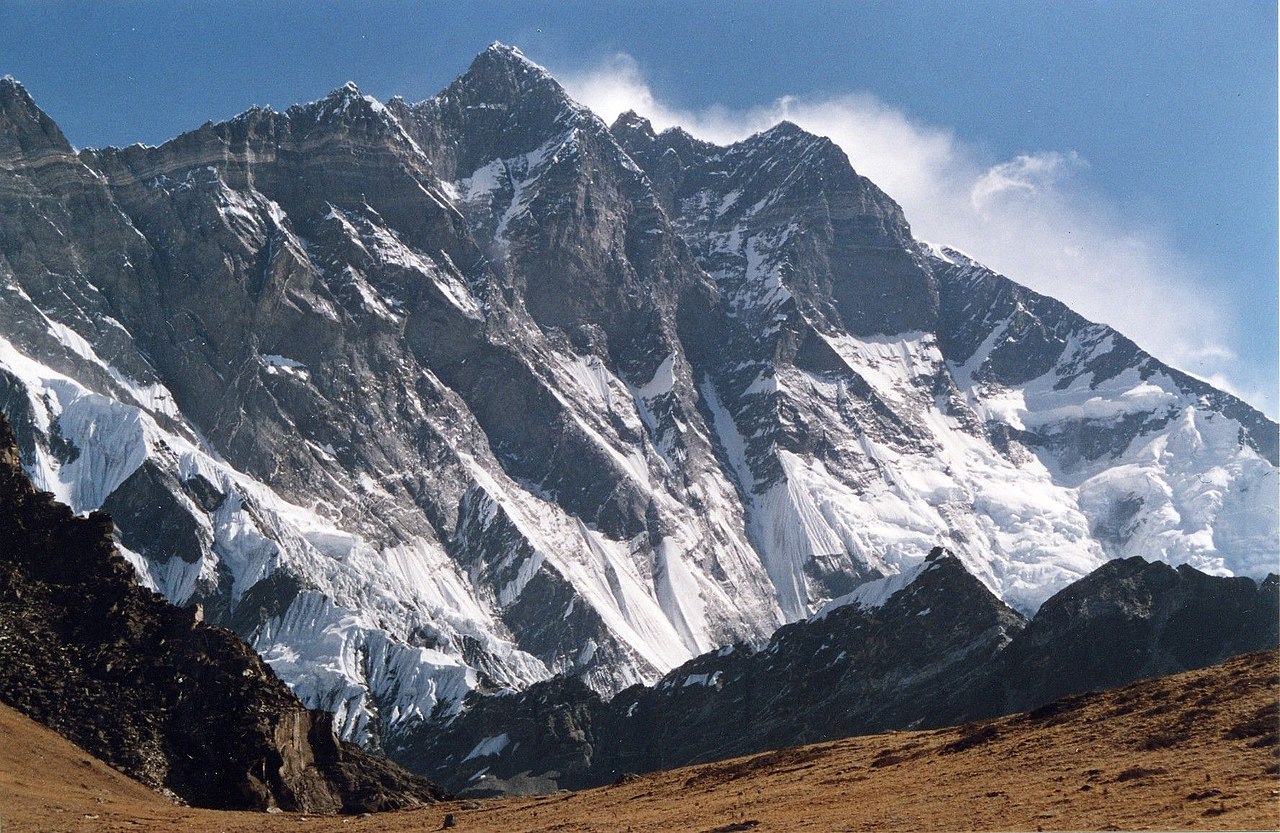
Steck, who climbed Everest without bottled oxygen back in 2012, only to return the following year and find himself embroiled in a high-profile brawl with Sherpa guides, is now gearing up for a very ambitious expedition in the spring of 2017. The Swiss climber will return to the South Side of Everest to attempt what he calls the Lhotse Traverse, which will start with a summit of Everest and continue with him – and his climbing partner Tenji Sherpa – continuing across the saddle ridge to the summit of Lhotse, Everest's closest neighbor and the fourth highest mountain in the world at 8516 meters (27,940 ft). As with his last expedition to the world's tallest mountain, Ueli plans to make the climb without supplemental O's.

Recently, Steck sat down for an interview with journalist Stefan Nestler, during which he talked about this upcoming expedition, which he has already started preparing for. In that interview, Ueli says that he hopes to climb the Everest along the tough West Shoulder, and then after summiting, continue on to Lhotse in a single long, and difficult push. But, that said, he has also acknowledged that conditions might not be right for such a route, so he may shift to the normal route of Everest first, and complete the traverse that way instead. But, he says that this project is one of his dream expeditions, so there is a likelihood that if he does have to take the normal route, he may return in the future to try the West Shoulder again.


In the interview, Ueli also touches on the 2013 brawl, saying that he has now put that ugly incident behind him. It impacted him greatly immediately after the incident, leading to him not trusting other climbers quite so much and taking a different approach to his expeditions. He says that it has shaped his perspective moving forward, but that he is at peace with what happened and is ready to just concentrate on climbing in the High Himalaya instead.

As he prepares for the altitude he'll face on Everest and Lhotse, Ueli says he has begun picking up the volume of his training to get ready for the challenge ahead. Dong lots of vertical climbing at a rapid pace – something he is well known for – allows him to stay in the Alps and still prepare for the Himalaya, and while the start of the expedition is still more than three months away, he is already getting his body ready.

If successful, Ueli will be the first person to complete the Lhotse Traverse without the use of bottled oxygen. He seems very confident that he can pull this off, and knowing what I know about the "Swiss Machine," I wouldn't bet against him.

The Best Travel Photography of 2016

Few things can inspire us to want to travel to a new destination like a great photo. Those of us who are lucky enough to hit the road on a regular basis for our adventures often have a desire to capture the places we visit in stunning images that we can share with friends and family. In my case, I'm happy if I just don't screw up the shot or inadvertently get my finger in front of the lens. Thankfully, there are others who are far more talented than I am to make up for my lack of skill. 

Some of the most talented of those photographers have submitted their images for the 2017 National Geographic Photo Contest, of which the finalists have recently been revealed. As you can imagine, the images are beautiful – sometimes haunting – with great shots captured at some of the best destinations around the globe, ranging from Botswana and South Africa, to Rio de Janeiro and Northern Ireland. Some of the images are landscapes, some are of the wildlife, and others are candid shots of the people that inhabit these places. All are colorful and mesmerizing. 

For those of us who aspire to be better photographers ourselves, the photos are a good reminder that taking a great shot isn't just about the technical details. It's also about capturing the moment, framing the image properly, and recognizing what is truly interesting about that snapshot of a moment in time. Too often we get caught up in just pointing and shooting with our cameras that we forget to truly take in the moment. But I've found that my best photos over the years have been taken when I slow down, observe the world around me, and look for the right combination of elements. My patience is usually rewarded at some point, and the image is one that means more to me long after I've returned home. 

The winners of the travel photo contest will be officially announced on February 28. To check them all out before that, click here

12/02/2014

Flight Network Travel Stories

As many of you know, I contribute regular travel stories over at the Flight Network Blog. We cover just about everything there from how to pack smarter to using technology to travel more efficiently. And while the blog often has very interesting stories of course, FlightNetwork.com is also a great place to get cheap airfare too. Here's a round-up of some of the stories that have appeared on the blog lately.


Hopefully some of those stories will give you some ideas for your next adventure, whether its to relax on a beach somewhere, or going trekking in the mountains.