One of the current Himalayan expeditions that we've been watching closely has come to an end before it ever even had a chance to really get started. It was announced earlier today that Spanish ultrarunner Kilian Jornet has pulled the plug on his attempt at a speed record on Everest due to poor weather on the North Side of the mountain.
In a quote that was sent out via a press release a few hours ago, Jornet says “During the first few weeks we were acclimatising well and the conditions were good. However, when we were getting ready to prepare the attempt the weather began to change. There were some heavy snow storms and a large accumulation of snow. As a result, although we were in good physical shape, there was a high risk of avalanches and in the absence of good safety conditions it was impossible to climb.”
Apparently, the expedition was actually nearing its conclusion when the decision was made to go home instead. There hasn't been a lot of news from Kilian or his team, but it seems acclimatization was going very well, and he was extremely happy with his progress. Unfortunately, heavy snow has been falling on the mountain over the past couple of weeks, and that was making the route much more dangerous. So much so that they made the wise choice of cancelling the summit attempt and going home instead.
Kilian says that he has learned a lot from the experience and will now return to Spain where he'll evaluate how this expedition went, and decide from there how to proceed. He has already indicated that next time around he'll do a few things differently both in preparation and acclimatization once on the mountain. He had spent three weeks training at 6500 meters (21,325 ft) which will give him a better understanding of the Everest environment the next time around.
Honestly, an attempt in the spring would probably provide more stable weather conditions, but Kilian would then have to contend with a lot more people on the mountain. For most of the time that he was there, he had Base Camp all to himself. We do know that Japanese climber Nobukazu Kuriki is also there for a solo bid on the mountain, but he didn't arrive until last week. It is unclear whether or not the heavy snow will impact his attempt to summit Everest, which will be his sixth time trying to accomplish that feat.
For now, we'll have to wait to see how Kilian does on Everest. Remember, he's never climbed an 8000 meter peak before. Hopefully he'll get another crack at it in the future. It will be interesting to see what an athlete of his caliber can accomplish there.
Showing posts with label Speed Record. Show all posts
11/24/2017
7/20/2017
Antarctica 2016: Johanna Davidsson at the Pole and in Record Time!
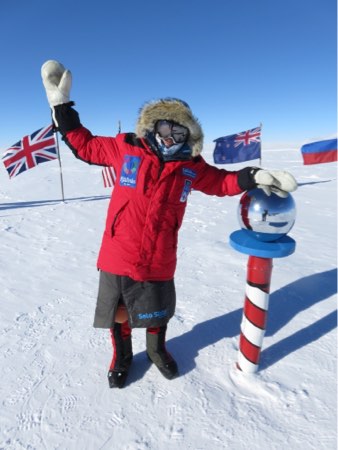
Before taking a hiatus for the holidays last Friday, I posted a story about Swedish adventurer Johanna Davidsson, who was on the verge of reaching the South Pole, and breaking the speed record for a female skier to reach that point on the planet. Now, we can confirm that she has indeed completed that stage of her journey, and has established a new mark for the fastest time from Hercules Inlet to 90ºS by a woman.
In the original story that I posted, I wrote that Johanna was aiming to reach the South Pole by December 25 – Christmas Day. Instead, she crossed the finish line on December 24, which mean that her journey took 38 days, 23 hours, and 5 minutes. That's 10 full hours faster than Hannah McKeand did it back in 2006.
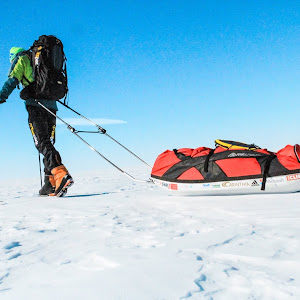
ExWeb reports that for Johanna, this was a completely unexpected record. It was never part of her plan to set a ski to the Pole in such a quick time, and had originally told the website that she planned on a 50 day journey. Instead, she found that her training and gear were more than up to the task, and while conditions were challenging at times, she was able to cover further distances than she had originally intended on daily basis.
The final stretch wasn't an easy one however. Whiteout conditions made skiing a challenge, and the snow was soft enough that it slowed Johanna's progress. But, she pushed on with her goal in sight, and was able to finish one very long day of skiing to make it the research station located at the bottom of the world, where she was welcomed by the staff there with a hot meal and champaign.
The journey isn't quite done just yet however. She'll rest briefly at the Pole before turning around and heading back to her starting point at Hercules Inlet. If she's successful, she'll become the first Swede to complete the round-trip journey.
Congrats to Johanna on an amazing job setting a new speed record. We'll be following along as you head back to the coast.
In the original story that I posted, I wrote that Johanna was aiming to reach the South Pole by December 25 – Christmas Day. Instead, she crossed the finish line on December 24, which mean that her journey took 38 days, 23 hours, and 5 minutes. That's 10 full hours faster than Hannah McKeand did it back in 2006.
ExWeb reports that for Johanna, this was a completely unexpected record. It was never part of her plan to set a ski to the Pole in such a quick time, and had originally told the website that she planned on a 50 day journey. Instead, she found that her training and gear were more than up to the task, and while conditions were challenging at times, she was able to cover further distances than she had originally intended on daily basis.
The final stretch wasn't an easy one however. Whiteout conditions made skiing a challenge, and the snow was soft enough that it slowed Johanna's progress. But, she pushed on with her goal in sight, and was able to finish one very long day of skiing to make it the research station located at the bottom of the world, where she was welcomed by the staff there with a hot meal and champaign.
The journey isn't quite done just yet however. She'll rest briefly at the Pole before turning around and heading back to her starting point at Hercules Inlet. If she's successful, she'll become the first Swede to complete the round-trip journey.
Congrats to Johanna on an amazing job setting a new speed record. We'll be following along as you head back to the coast.
2/14/2017
Mountain Runner Sets Female Aconcagua Speed Record
Standing 6961 meters (22,838 ft) in height, Argentina's Aconcagua is the tallest mountain in South America, and the highest peak outside the Himalaya in the world. That makes it one of the Seven Summits of course, luring in hundreds of climbers each year who are looking to add one of those iconic mountains to their resume. While not nearly as challenging as Everest, it remains a formidable peak, as Ranulph Fiennes discovered recently.
But about the same time that Sir Ran was preparing to head home a few weeks back, another climber by the name of Sunny Stroeer was preparing to make a run – quite literally – at the speed record by a woman on the mountain. On January 23, she did just that, setting a new mark for climbing from Base Camp to the summit, despite the fact that she had a respiratory infection.
Outside magazine has posted a profile of the 32-year old Stroeer following her epic ascent, which took 8 hours and 47 minutes to complete, shaving 29 minutes off the previous record. Stroeer is no stranger to long endurance events, as she is an ultrarunner who has competed in such events as the legendary Western States, amongst numerous other 50 and 100k runs. Perhaps her biggest adventure so far however is quitting her job back in 2015 to focus on running and traveling full-time. Since then, she has roamed around the southwest states of the U.S., and gone trekking in Thailand, Nepal, Tanzania, Germany, and other places.
Back in 2014, Stroeer climbed Aconcagua for the first time, going solo and unsupported, which is an impressive accomplishment in its own right. She told Outside that she was shocked at how few women were on the mountain, which gave her the idea of forming an all ladies team to make another attempt on the summit. She did that this year, and her record-setting run was a part of that expedition.
Sunny's story is an impressive one on a number of different levels. There is certainly a lot of inspiration to be had from her adventures. Congrats on the new speed record!
But about the same time that Sir Ran was preparing to head home a few weeks back, another climber by the name of Sunny Stroeer was preparing to make a run – quite literally – at the speed record by a woman on the mountain. On January 23, she did just that, setting a new mark for climbing from Base Camp to the summit, despite the fact that she had a respiratory infection.
Outside magazine has posted a profile of the 32-year old Stroeer following her epic ascent, which took 8 hours and 47 minutes to complete, shaving 29 minutes off the previous record. Stroeer is no stranger to long endurance events, as she is an ultrarunner who has competed in such events as the legendary Western States, amongst numerous other 50 and 100k runs. Perhaps her biggest adventure so far however is quitting her job back in 2015 to focus on running and traveling full-time. Since then, she has roamed around the southwest states of the U.S., and gone trekking in Thailand, Nepal, Tanzania, Germany, and other places.
Back in 2014, Stroeer climbed Aconcagua for the first time, going solo and unsupported, which is an impressive accomplishment in its own right. She told Outside that she was shocked at how few women were on the mountain, which gave her the idea of forming an all ladies team to make another attempt on the summit. She did that this year, and her record-setting run was a part of that expedition.
Sunny's story is an impressive one on a number of different levels. There is certainly a lot of inspiration to be had from her adventures. Congrats on the new speed record!
1/12/2017
105-Year Old Cyclist Sets New World Record
If you're looking for a dose of inspiration to get your new year off to a good start, look no further than Robert Marchand. Yesterday, the Frenchman rode a total of 14 miles in one hour, setting a new world's record in the process. Now, I know what you're thinking. 14 miles in an hour isn't particularly very far and that you could probably cover that same distance in less time. But, here's the real meat to this story: Robert is 105 years old.
Yep, that's right. At the age of 105, Marchand set a new mark for the longest distance ridden in an hour by someone in his age group. And, he says he could have gone faster had he not missed a sign telling him that he had 10 minutes left in his ride. While conserving his energy for the final push, he failed to see the notification, which meant the didn't give it his all when he was in the final stage of the event.
Robert says that he picked up cycling at the ripe-young age of 68, when he rode from Paris to Moscow back in 1992. He also leads a healthy lifestyle and doesn't smoke, rarely drinks, and recently gave up eating meat after learning about how unethically some animals are treated. He lives in a small apartment in Paris, where he rides a stationary bike every day.
If a man who is more than a century old can lead this kind of active and energetic life, why can't the rest of us? Think about that the next time you're climbing on your own bike or lacing up your running shoes.
Congratulations to Robert for setting this record. You're an inspiration to us all.
Yep, that's right. At the age of 105, Marchand set a new mark for the longest distance ridden in an hour by someone in his age group. And, he says he could have gone faster had he not missed a sign telling him that he had 10 minutes left in his ride. While conserving his energy for the final push, he failed to see the notification, which meant the didn't give it his all when he was in the final stage of the event.
Robert says that he picked up cycling at the ripe-young age of 68, when he rode from Paris to Moscow back in 1992. He also leads a healthy lifestyle and doesn't smoke, rarely drinks, and recently gave up eating meat after learning about how unethically some animals are treated. He lives in a small apartment in Paris, where he rides a stationary bike every day.
If a man who is more than a century old can lead this kind of active and energetic life, why can't the rest of us? Think about that the next time you're climbing on your own bike or lacing up your running shoes.
Congratulations to Robert for setting this record. You're an inspiration to us all.
12/16/2016
Outside Probes False South Pole Ski Record Claims
Last January the world of outdoor adventure and exploration was shocked to learn that a little-known German Antarctic skier had set a new record for covering the distance from Hercules Inlet to the South Pole. The old record had been set back in 2011 by a Norwegian explorer by the name of Christian Eide. He managed to cover the 1175 km (730 mile) route in a blazingly fast 24 days, 1 hour, and 13 minutes. But a man by the name of Martin Szwed seemingly came out of nowhere to claim that he had shattered that record by nearly 10 days, skiing to the South Pole in just 14 days, 18 hours, and 43 minutes. It was heralded as a triumph at the time, with Szwed's sponsors and social media trumpeting his accomplishment.
But then, something funny happened on the way to the South Pole. It all started to fall apart as holes appeared in Szwed's stories of where he was at certain times, and how he managed to get there. His photographic evidence of reaching 90ºS appeared to be photoshopped, and his claims of previously summiting Mt. Vinson were also proven false. Just as quickly as he had shot to the top, Szwed came tumbling back down.
Now, Outside magazine is taking a look at the controversial story, with none other than Eric Larsen writing a piece about the whole affair. Larsen probes into Szwed's claims using flight manifestos from Antarctic Logistics and Expeditions, the company that supports most expeditions to the frozen continent, to further discredit his story. Eric, who is an accomplished polar explorer himself, even talks to other members of the close-knit community to get their take on the situation, with most saying they knew it was a false story from the beginning.
The article is an extensive one, with lots of details on how the situation unfolded, the reaction from the media, and Szwed's own denials. Within a few days the disgraced explorer's sponsors started to backtrack, and in-depth examinations of his claims started to punch holes in the story. There was even a public exchange between Szwed and Eide.
When writing the piece for Outside, Larsen when directly to the source, contacting Szwed himself. The German says that he has GPS tracking information that will serve as proof of his claims, but if he releases it he could face jail time and a substantial fine in his home country. The one-time mountain guide is under investigation for claims of fraud and possibly visiting Antarctica without proper authorization.
The whole story is a sordid one, but well worth a read. For my part, I wrote about the controversy last year and at the time thought that the story was suspicious from the start. For one thing, as someone who follows the Antarctic ski season closely, Szwed hadn't even shown up on my radar in the reports I was writing. That isn't necessarily proof that his claims are false of course, but it is a bit unusual to not know about a speed-record attempt of this kind.
The sad thing is, that Szwed's story isn't the only one like this. There have been others who have also falsified reports and records. This probably won't be the last time it happens either.
But then, something funny happened on the way to the South Pole. It all started to fall apart as holes appeared in Szwed's stories of where he was at certain times, and how he managed to get there. His photographic evidence of reaching 90ºS appeared to be photoshopped, and his claims of previously summiting Mt. Vinson were also proven false. Just as quickly as he had shot to the top, Szwed came tumbling back down.
Now, Outside magazine is taking a look at the controversial story, with none other than Eric Larsen writing a piece about the whole affair. Larsen probes into Szwed's claims using flight manifestos from Antarctic Logistics and Expeditions, the company that supports most expeditions to the frozen continent, to further discredit his story. Eric, who is an accomplished polar explorer himself, even talks to other members of the close-knit community to get their take on the situation, with most saying they knew it was a false story from the beginning.
The article is an extensive one, with lots of details on how the situation unfolded, the reaction from the media, and Szwed's own denials. Within a few days the disgraced explorer's sponsors started to backtrack, and in-depth examinations of his claims started to punch holes in the story. There was even a public exchange between Szwed and Eide.
When writing the piece for Outside, Larsen when directly to the source, contacting Szwed himself. The German says that he has GPS tracking information that will serve as proof of his claims, but if he releases it he could face jail time and a substantial fine in his home country. The one-time mountain guide is under investigation for claims of fraud and possibly visiting Antarctica without proper authorization.
The whole story is a sordid one, but well worth a read. For my part, I wrote about the controversy last year and at the time thought that the story was suspicious from the start. For one thing, as someone who follows the Antarctic ski season closely, Szwed hadn't even shown up on my radar in the reports I was writing. That isn't necessarily proof that his claims are false of course, but it is a bit unusual to not know about a speed-record attempt of this kind.
The sad thing is, that Szwed's story isn't the only one like this. There have been others who have also falsified reports and records. This probably won't be the last time it happens either.
9/09/2016
Woman Sets Record for Fastest Person to Visit Every Country on Earth
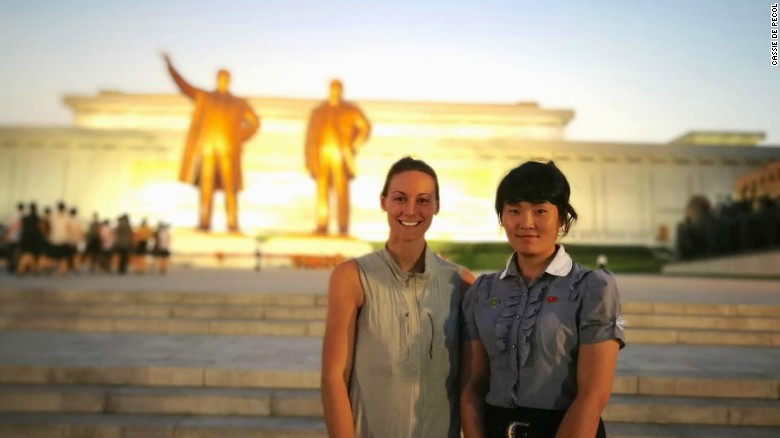
An American woman named Cassie De Pecol has set a new world record for visiting every country on Earth in the fastest time ever, completing her whirlwind adventure in just 18 months and 26 days. Over the course of that time, she managed to see 196 different nations, averaging about one new destination every three days or so.
Cassie's round-the-world journey began back in July of 2015, and while she of course wanted to sample every culture on Earth, she had other plans in mind as well. De Pecol began traveling as an ambassador for the International Institute of Peace Through Tourism, and often met with dignitaries to discuss sustainable tourism as well. She remains committed to that goal even after her recent return home, and says that she'll plant trees to help offset some of the carbon footprint from her journey. "If you say, fly from Bangalore, India, to Colombo, Sri Lanka, you end up killing one tree during that flight, the goal is to plant two trees, for regenerative tourism, not just sustainable tourism," De Pecol told CNN.
While undertaking this goal of seeing the world, Cassie flew more than 255 times, which causes some to call her a hypocrite. She recognizes that criticism however and says that she has plans to plant trees in over 50 countries as part of her sustainable tourism efforts.
De Pecol faced more than a few challenges in visiting every country on Earth. Not the least off which was her American passport. U.S. citizens are not welcome in every country – including North Korea, Syria, and Turkmenistan. But, she found creative was to gain legal entry into all of those places, adding their stamps to her passport as she went.
Her other big challenge was funding the project. When she first started planning, she estimated that it would take $198,000. She managed to save $10,000 of her own, and raised the rest of the cash she needed by gathering sponsors. In the end, she was able to complete the trip, and in record time.
While reading this story, a couple of things came to mind. First, I'm pretty sure I could travel around the world for a lot less than $198,000, so I'd like to see how she came up with that budget. The other things is that my style of travel isn't one where I'd want to knock off a country every three days. I know she had other goals in mind, and that it wasn't about going on a leisurely trip, but I certainly would have liked to have spent more time in each of those places, speed record be damned.
That said, it is pretty amazing that she managed to get into all of these places, and I'm impressed with her persistence and dedication.
Cassie's round-the-world journey began back in July of 2015, and while she of course wanted to sample every culture on Earth, she had other plans in mind as well. De Pecol began traveling as an ambassador for the International Institute of Peace Through Tourism, and often met with dignitaries to discuss sustainable tourism as well. She remains committed to that goal even after her recent return home, and says that she'll plant trees to help offset some of the carbon footprint from her journey. "If you say, fly from Bangalore, India, to Colombo, Sri Lanka, you end up killing one tree during that flight, the goal is to plant two trees, for regenerative tourism, not just sustainable tourism," De Pecol told CNN.
While undertaking this goal of seeing the world, Cassie flew more than 255 times, which causes some to call her a hypocrite. She recognizes that criticism however and says that she has plans to plant trees in over 50 countries as part of her sustainable tourism efforts.
De Pecol faced more than a few challenges in visiting every country on Earth. Not the least off which was her American passport. U.S. citizens are not welcome in every country – including North Korea, Syria, and Turkmenistan. But, she found creative was to gain legal entry into all of those places, adding their stamps to her passport as she went.
Her other big challenge was funding the project. When she first started planning, she estimated that it would take $198,000. She managed to save $10,000 of her own, and raised the rest of the cash she needed by gathering sponsors. In the end, she was able to complete the trip, and in record time.
While reading this story, a couple of things came to mind. First, I'm pretty sure I could travel around the world for a lot less than $198,000, so I'd like to see how she came up with that budget. The other things is that my style of travel isn't one where I'd want to knock off a country every three days. I know she had other goals in mind, and that it wasn't about going on a leisurely trip, but I certainly would have liked to have spent more time in each of those places, speed record be damned.
That said, it is pretty amazing that she managed to get into all of these places, and I'm impressed with her persistence and dedication.
7/17/2016
Video: Mountain Biker Sets New Downhill Speed Record
Mountain biker Max Stöckl has just set a new speed record for the fastest speed downhill, breaking his own mark set back in 2011. At that time, he managed to hit 164.95 km/h (102.4 mph), but with some new science and technology, he was able to eek out just a bit more, hitting 167.6 km/h (104.14 mph) this time out. To achieve these speeds, Max flies down the side of Cerro Negro, a volcano in Nicaragua on a specially designed bike and wearing some specially designed clothing. As you'll see in the clip below, it's all rather crazy. I can't imagine going that fast on a bike. What a ride!
1/04/2016
Antarctica 2016: Solo Skier Johanna Davidsson Closes in on the Pole and a New Record
Yesterday I posted an update from the Antarctic during which I shared info on a couple of expeditions I hadn't written about before, and made some quick updates on several of the skiers making their way to the South Pole. But one of the skiers I failed to post an update on was Swedish adventurer Johanna Davidsson, who is now closing in on polar history at the bottom of the world.
As of now, Johanna is just 57km (35 miles) from reaching Pole, which is still a daunting distance of course. But, in recent days she has been skiing as much as 35 km (21 miles) per day, which means that if she manages to put in a solid effort, she should reach 90ºS on Christmas Day. As quickly and as efficiently as she has been moving, that seems like a real possibility at this point.
As ExWeb points out, if she does manage to complete the journey by December 25 Johanna will set a new speed record for a woman skiing solo along the traditional Hercules Inlet to the South Pole route, which covers a distance of 1130 km (702 miles). The current record is held by British skier Hannah McKeand, and stands at 39 days, 9 hours, and 33 minutes. Since Johanna started on November 15, she even has a few days to spare and could beat that record rather soundly.
Obviously she still has quite a bit of distance to cover, and this record isn't int he bag yet. In fact, it wasn't even part of her original plan. She had just hoped to ski to the South Pole and hopefully kite-ski back to Hercules if time permitted. It seems like she should be able to do that if she still wants to. Reaching the Pole by Christmas gives her plenty of time for the return trip.
The days in the Antarctic can be long and tedious, with little to break up the monotony of skiing. Most of the skiers look forward to Christmas as they typically have saved a few special treats to enjoy on that day, and perhaps even a present or two. But for Johanna, it could mean something even more special. The completion of the first leg of her journey and a celebration at one of the most remote places on Earth.
Stay tuned!
As of now, Johanna is just 57km (35 miles) from reaching Pole, which is still a daunting distance of course. But, in recent days she has been skiing as much as 35 km (21 miles) per day, which means that if she manages to put in a solid effort, she should reach 90ºS on Christmas Day. As quickly and as efficiently as she has been moving, that seems like a real possibility at this point.
As ExWeb points out, if she does manage to complete the journey by December 25 Johanna will set a new speed record for a woman skiing solo along the traditional Hercules Inlet to the South Pole route, which covers a distance of 1130 km (702 miles). The current record is held by British skier Hannah McKeand, and stands at 39 days, 9 hours, and 33 minutes. Since Johanna started on November 15, she even has a few days to spare and could beat that record rather soundly.
Obviously she still has quite a bit of distance to cover, and this record isn't int he bag yet. In fact, it wasn't even part of her original plan. She had just hoped to ski to the South Pole and hopefully kite-ski back to Hercules if time permitted. It seems like she should be able to do that if she still wants to. Reaching the Pole by Christmas gives her plenty of time for the return trip.
The days in the Antarctic can be long and tedious, with little to break up the monotony of skiing. Most of the skiers look forward to Christmas as they typically have saved a few special treats to enjoy on that day, and perhaps even a present or two. But for Johanna, it could mean something even more special. The completion of the first leg of her journey and a celebration at one of the most remote places on Earth.
Stay tuned!
9/21/2015
Whitewater Rafting Team Narrowly Misses Grand Canyon Record
A team of eight whitewater rafters missed setting a new speed record for rowing down the Colorado River in the Grand Canyon this week when their raft was punctured in the attempt. The group spent nearly 40 hours out on the water, but came up short in their epic attempt to cover the 277 mile distance as quickly as possible.
The 8-person squad, which includes the 6-man U.S. Whitewater Rafting team had been planning the Grand Canyon run for years, but received new incentive in 2016 when a new speed record was set. For years, the time to beat had been 36 hours, 38 minutes held by Kenton Grua, Rudi Putsches and Steve Reynolds since 1983. But last year, solo kayaker Ben Orkin set a new record by running the entire stretch in just 34 hours and two minutes.
Unfortunately for this team, the final time was 39 hours, 24 minutes, but they were slowed down greatly in their efforts thanks to the punctured raft, which couldn't be fixed properly while on the water. That left one of the raft's tubes almost completely deflated, causing way too much drag to overcome. A strong headwind didn't help their efforts either.
Still, the team wasn't feeling sorry for themselves. They seemed to enjoy the adventure, even though they didn't set a new record along the way. After all, traveling through the Grand Canyon is always an amazing experience, and for some it was the first go at the Colorado River. There is no word yet on if they'll return to try for the record a second time, but something tells me we haven't heard the last of this crew.
Read the entire story about their rafting expedition here. It has a lot of great moments and some big challenges that they faced along the way.
The 8-person squad, which includes the 6-man U.S. Whitewater Rafting team had been planning the Grand Canyon run for years, but received new incentive in 2016 when a new speed record was set. For years, the time to beat had been 36 hours, 38 minutes held by Kenton Grua, Rudi Putsches and Steve Reynolds since 1983. But last year, solo kayaker Ben Orkin set a new record by running the entire stretch in just 34 hours and two minutes.
Unfortunately for this team, the final time was 39 hours, 24 minutes, but they were slowed down greatly in their efforts thanks to the punctured raft, which couldn't be fixed properly while on the water. That left one of the raft's tubes almost completely deflated, causing way too much drag to overcome. A strong headwind didn't help their efforts either.
Still, the team wasn't feeling sorry for themselves. They seemed to enjoy the adventure, even though they didn't set a new record along the way. After all, traveling through the Grand Canyon is always an amazing experience, and for some it was the first go at the Colorado River. There is no word yet on if they'll return to try for the record a second time, but something tells me we haven't heard the last of this crew.
Read the entire story about their rafting expedition here. It has a lot of great moments and some big challenges that they faced along the way.
7/27/2015
How Kilian Jornet Plans to Set a Speed Record on Everest
One of the expeditions to Everest that we'll be watching very closely this year is Kilian Jornet's attempt to set a new speed record on Everest. As an amazing mountain runner, Kilian has already set records for fast ascents of Mont Blanc, the Matterhorn, Denali, and Aconcagua, but now he's taking his considerable skills to the Himalaya where he hopes to go to the summit of the tallest mountain on the planet in record time.
Recently the Spaniard sat down with Men's Journal to talk about his upcoming adventure. In that interview, Kilian talked about what he learned last year on Everest when the April 25 earthquake hit Nepal, bringing an abrupt end to the climbing seasons. He also talks about his biggest concerns for his upcoming return to the mountain, the gear he'll take with him on the summit attempt, and more.
Probably of the most interest to readers is Kilian's game plan for the upcoming expedition. He'll be climbing from the North Side of the mountain in Tibet, and hopes to ascend via either the Horbein or Norton couloir depending on conditions. He'll scout out the route ahead of time, and spend some time acclimatizing before making the attempt, with altitude and safety being amongst his biggest concerns. As you would expect, he'll be going as fast and light as possible, and make the ascent without bottled oxygen.
As of this writing, Kilian has not left for the Himalaya yet, so it is unclear when he'll set out for Everest. Speculation has him traveling to Tibet this spring to attempt his climb, but in the Men's Journal interview Jornet says that he will be going at the end of the summer, which would indicate he's planning a fall attempt on the speed record. According to his social media, the ultrarunner is still in Europe, but he still has plenty of time to set out for the mountain and get ready for a late season summit attempt. We'll just have to keep an eye on his plans to see what happens. A lot of people have been waiting for Kilian to take a shot at the Big Hill, and hopefully we'll see him go for it soon.
Recently the Spaniard sat down with Men's Journal to talk about his upcoming adventure. In that interview, Kilian talked about what he learned last year on Everest when the April 25 earthquake hit Nepal, bringing an abrupt end to the climbing seasons. He also talks about his biggest concerns for his upcoming return to the mountain, the gear he'll take with him on the summit attempt, and more.
Probably of the most interest to readers is Kilian's game plan for the upcoming expedition. He'll be climbing from the North Side of the mountain in Tibet, and hopes to ascend via either the Horbein or Norton couloir depending on conditions. He'll scout out the route ahead of time, and spend some time acclimatizing before making the attempt, with altitude and safety being amongst his biggest concerns. As you would expect, he'll be going as fast and light as possible, and make the ascent without bottled oxygen.
As of this writing, Kilian has not left for the Himalaya yet, so it is unclear when he'll set out for Everest. Speculation has him traveling to Tibet this spring to attempt his climb, but in the Men's Journal interview Jornet says that he will be going at the end of the summer, which would indicate he's planning a fall attempt on the speed record. According to his social media, the ultrarunner is still in Europe, but he still has plenty of time to set out for the mountain and get ready for a late season summit attempt. We'll just have to keep an eye on his plans to see what happens. A lot of people have been waiting for Kilian to take a shot at the Big Hill, and hopefully we'll see him go for it soon.
5/16/2015
Endurance Athlete Sets New Record for Running Across the U.S.
Ultrarunner Pete Kostelnick has set a new speed record for running across the U.S., smashing the previous mark that had been in place for more than 36 years. The endurance athlete arrived in New York City on Monday of this week, bringing an end to his six-week odyssey that began in San Francisco back on September 12.
Officially, Kostelnick covered the 3067 mile (4935 km) distance between San Francisco and New York in 42 days, 6 hours, and 30 minutes. That beats the old record – set by Frank Giannino Jr. back in 1980 – by 4 days, 2 hours, and six minutes. That means that he had to average more than 72 miles per day – every day – to set the new mark.
While in the midst of this record setting run, Kostelnick set a brutal schedule for himself. He would sleep in a support vehicle until 3 AM, then run 40 miles (64 km) over the course of 7 or 8 hours. He would then take a break to refuel and rehydrate at lunch, before hitting the road once again. The second leg of his daily mileage would usually be another 30+ miles (48 km).
Only twice throughout the course of the journey did he fail to hit the 70 mile mark on any given day. He also took one full rest day along the way too. And on his final push into New Your City, he ran 87 miles (140 km) nonstop.
Kostelnick is no stranger to difficult runs, although he's never done anything like this one before. He is a two-time winner of the Badwater Ultra however, and holds the course record for that event at 21 hours, 56 minutes, and 32 seconds. That is a brutal race of course, but not much can compare to the daily grind of a transcontinental run like the one he just finished.
Congrats to Pete on amazing job. Breaking a 35+ year old record is never easy, and he just lowered the mark to a point that it could take another 35 years before someone else gets close.
Officially, Kostelnick covered the 3067 mile (4935 km) distance between San Francisco and New York in 42 days, 6 hours, and 30 minutes. That beats the old record – set by Frank Giannino Jr. back in 1980 – by 4 days, 2 hours, and six minutes. That means that he had to average more than 72 miles per day – every day – to set the new mark.
While in the midst of this record setting run, Kostelnick set a brutal schedule for himself. He would sleep in a support vehicle until 3 AM, then run 40 miles (64 km) over the course of 7 or 8 hours. He would then take a break to refuel and rehydrate at lunch, before hitting the road once again. The second leg of his daily mileage would usually be another 30+ miles (48 km).
Only twice throughout the course of the journey did he fail to hit the 70 mile mark on any given day. He also took one full rest day along the way too. And on his final push into New Your City, he ran 87 miles (140 km) nonstop.
Kostelnick is no stranger to difficult runs, although he's never done anything like this one before. He is a two-time winner of the Badwater Ultra however, and holds the course record for that event at 21 hours, 56 minutes, and 32 seconds. That is a brutal race of course, but not much can compare to the daily grind of a transcontinental run like the one he just finished.
Congrats to Pete on amazing job. Breaking a 35+ year old record is never easy, and he just lowered the mark to a point that it could take another 35 years before someone else gets close.
12/14/2014
Ultarunner Attempting to Set Speed Record for U.S. Crossing on Foot
One of the toughest running challenges imaginable is currently underway, as British ultrarunner Robert Young (aka "The Marathon Man U.K.") is attempting to set a speed record for crossing the U.S. on foot. To do so, he'll have to run more than 60 miles per day – every day – for a month and a half.
Young set out from Huntington Beach, California last Saturday, and he hopes to wrap up the run in Times Square in New York City, sometime in June. Along the way, his route will take him through California, Nevada, Arizona, New Mexico, Colorado, Kansas, Missouri, Illinois, Indiana, Ohio, West Virginia, Pennsylvania, New Jersey and New York, covering approximately 3000 miles (4828 km) along the way. To reach his eventual destination he'll have run across deserts, over two mountain ranges (Rockies and Appalachian), the Great Plains, and various other environments.
As mentioned, Robert will need to cover about 60 miles per day if he hopes to establish a new record. The previous mark was set 36 years ago and stands at 46 days, 8 hours, and 36 minutes. That won't be easy of course, but the British runner has a reputation of being a phenom. Since he started running marathons in 2014, he has run more than 500 races of marathon length or longer, while setting two world records – one for most marathons run in a year and another for the longest distance run without sleeping.
You can track Robert's progress on his website, and as of now he is still in California but nearing the border with Arizona. Obviously he has a long way to go before he's done, but he's already making good progress and since it is early in the run, we can follow Young all the way across the U.S.
Of course, Robert is hoping to get the record, but he's also running to raise funds for three charities. Those include Dreams Come True, the Tyler Robinson Foundation, and the 100 Mile Club.The run is also being supported by SKINS, a company that makes compression apparel for athletes.
Good luck to Robert on this endeavor. It will be interesting to see if he can catch break the record that has stood for more than three and a half decades.
Young set out from Huntington Beach, California last Saturday, and he hopes to wrap up the run in Times Square in New York City, sometime in June. Along the way, his route will take him through California, Nevada, Arizona, New Mexico, Colorado, Kansas, Missouri, Illinois, Indiana, Ohio, West Virginia, Pennsylvania, New Jersey and New York, covering approximately 3000 miles (4828 km) along the way. To reach his eventual destination he'll have run across deserts, over two mountain ranges (Rockies and Appalachian), the Great Plains, and various other environments.
As mentioned, Robert will need to cover about 60 miles per day if he hopes to establish a new record. The previous mark was set 36 years ago and stands at 46 days, 8 hours, and 36 minutes. That won't be easy of course, but the British runner has a reputation of being a phenom. Since he started running marathons in 2014, he has run more than 500 races of marathon length or longer, while setting two world records – one for most marathons run in a year and another for the longest distance run without sleeping.
You can track Robert's progress on his website, and as of now he is still in California but nearing the border with Arizona. Obviously he has a long way to go before he's done, but he's already making good progress and since it is early in the run, we can follow Young all the way across the U.S.
Of course, Robert is hoping to get the record, but he's also running to raise funds for three charities. Those include Dreams Come True, the Tyler Robinson Foundation, and the 100 Mile Club.The run is also being supported by SKINS, a company that makes compression apparel for athletes.
Good luck to Robert on this endeavor. It will be interesting to see if he can catch break the record that has stood for more than three and a half decades.
11/23/2014
Karl Meltzer Sets New Speed Record on Appalachian Trail
Last week while I was away, the news broke that ultra-runner Karl Meltzer had broken the record for the fastest time on the Appalachian Trail, besting the time set by Scott Jurek just last year. The two top endurance athletes are both friends and rivals, so naturally they would compete against each other on the AT too. This was Meltzer's third attempt at a record, and this time he finished at 45 days, 22 hours, 38 minutes, which put him roughly at 13 hours ahead of Jurek.
According to Outside, Meltzer began his assault on the record book back on August 3, starting on top of Mt. Katahdin in Maine. That's the northernmost terminus of the Appalachian Trail, which stretches for 2190 miles across 14 states before ending on Springer Mountain in Georgia on September 20. That means that Karl had to average roughly 47.6 miles each and every day just to get into the conversation with Jurek, something he was able to do on his way to setting the new mark.
Amongst ultra-runners, Meltzer is considered one of the most successful endurance athletes of all time. Over the course of his career he has racked up more than 38 wins in races of 100 mile (160 km) distances or longer – including 5 in the legendary Hardrock 100 ultra-marathon. That's more than anyone else in history. Still, he did want to take on the AT and nab that record too, something he was finally able to do last week.
Considering that it takes most of us a good six months of hiking to complete the AT, doing it in just 45 days is quite an impressive feat. Congratulations to Karl on pulling off this accomplishment. I am in awe of the strength, stamina, and speed necessary to set this kind of record.
According to Outside, Meltzer began his assault on the record book back on August 3, starting on top of Mt. Katahdin in Maine. That's the northernmost terminus of the Appalachian Trail, which stretches for 2190 miles across 14 states before ending on Springer Mountain in Georgia on September 20. That means that Karl had to average roughly 47.6 miles each and every day just to get into the conversation with Jurek, something he was able to do on his way to setting the new mark.
Amongst ultra-runners, Meltzer is considered one of the most successful endurance athletes of all time. Over the course of his career he has racked up more than 38 wins in races of 100 mile (160 km) distances or longer – including 5 in the legendary Hardrock 100 ultra-marathon. That's more than anyone else in history. Still, he did want to take on the AT and nab that record too, something he was finally able to do last week.
Considering that it takes most of us a good six months of hiking to complete the AT, doing it in just 45 days is quite an impressive feat. Congratulations to Karl on pulling off this accomplishment. I am in awe of the strength, stamina, and speed necessary to set this kind of record.
8/03/2014
Grand Canyon Paddling Speed Record Broken Twice in Three Days
The speed record for paddling the length of the Grand Canyon was first set back in 1983, when three river guides rowed a wooden dory down the 277.1 mile (446 km) stretch of the Colorado River in 36 hours and 38 minutes. For more than three decades that mark stood as the time to beat, although very few people actually attempted to break it. But this past weekend, that record was broken not once, but twice, by two independent teams who didn't even realize that they were both hoping to achieve the same goal.
Outside magazine has a great piece on their website explaining the entire story, and it is an interesting one. Essentially, no one really cared about this speed record until author Kevin Fedarko wrote a book called The Emerald Mile back in 2013 detailing the 1983 record row. That sparked a renewed interest in trying to beat the old record within the paddling community, with kayakers Ben Orkin and Harrison Rea trying to set a new record last January. They failed in that attempt, coming up an hour and ten minutes short.
But last week a new team of paddlers hit the water with the hope of chasing the record. Ben Luck, Ryan Casey, and Matt and Nate Klema set off on January 20, with Matt actually reaching the finish line in 35 hours and 5 minutes, shaving an hour and a half off the previous record. Of course the foursome were ecstatic over their success, but they soon began to hear rumblings of another kayaker who was about to attempt the record himself.
Ben Orkin, who had missed setting the record last year, was back out on the river on a solo mission this time. He had no idea that the other team was even trying to set the record, let alone that they had already accomplished that goal. He was preparing to put-in the Colorado on Saturday morning when he received an email from Ben Luck informing him of the new time to beat. Knowing that he'd now have to go even faster than he had previously thought, Orkin moved forward with his plans.
The paddle wasn't an easy one. Orkin grew exhausted after paddling for hours on end completely on his own. He also flipped his kayak in some of the rough rapids, costing himself precious time. But in the end, he was able to best Matt's new record, covering the distance between Lee’s Ferry to the Grand Wash Cliffs in 34 hours and 2 minutes, 57 minutes faster than the two-day old record.
You can read a lot more about this story on Outside Online, where more details of these record-setting paddles are shared. The interesting thing to watch now will be how many more people will attempt to kayak the Grand Canyon, and just how low this time can truly go.
Outside magazine has a great piece on their website explaining the entire story, and it is an interesting one. Essentially, no one really cared about this speed record until author Kevin Fedarko wrote a book called The Emerald Mile back in 2013 detailing the 1983 record row. That sparked a renewed interest in trying to beat the old record within the paddling community, with kayakers Ben Orkin and Harrison Rea trying to set a new record last January. They failed in that attempt, coming up an hour and ten minutes short.
But last week a new team of paddlers hit the water with the hope of chasing the record. Ben Luck, Ryan Casey, and Matt and Nate Klema set off on January 20, with Matt actually reaching the finish line in 35 hours and 5 minutes, shaving an hour and a half off the previous record. Of course the foursome were ecstatic over their success, but they soon began to hear rumblings of another kayaker who was about to attempt the record himself.
Ben Orkin, who had missed setting the record last year, was back out on the river on a solo mission this time. He had no idea that the other team was even trying to set the record, let alone that they had already accomplished that goal. He was preparing to put-in the Colorado on Saturday morning when he received an email from Ben Luck informing him of the new time to beat. Knowing that he'd now have to go even faster than he had previously thought, Orkin moved forward with his plans.
The paddle wasn't an easy one. Orkin grew exhausted after paddling for hours on end completely on his own. He also flipped his kayak in some of the rough rapids, costing himself precious time. But in the end, he was able to best Matt's new record, covering the distance between Lee’s Ferry to the Grand Wash Cliffs in 34 hours and 2 minutes, 57 minutes faster than the two-day old record.
You can read a lot more about this story on Outside Online, where more details of these record-setting paddles are shared. The interesting thing to watch now will be how many more people will attempt to kayak the Grand Canyon, and just how low this time can truly go.
Subscribe to:
Posts (Atom)